As our precious little ones start rolling, crawling, and exploring the world around them, parents are often filled with both excitement and anxiety. While it is wonderful to see our babies grow so quickly, the increase in their mobility also brings a heightened risk of household accidents. The period around the first birthday—when babies put everything in their mouths—requires meticulous preparation and attention from parents.
Today, SoCooly is here with a comprehensive guide to help new parents stay calm and ensure their baby’s safety. We will cover essential emergency responses for the most common accidents—choking, falls, and poisoning—along with a complete checklist to baby-proof your home. Remember, prevention is always the most effective strategy!

👶 Understanding and Preventing Risks by Developmental Stage
Accident risks change as your baby hits new milestones. Knowing what hazards are most likely at each stage allows you to implement timely preventative measures.
1. Rolling/Sitting Stage (4–8 Months)
During this time, babies learn to roll and sit up, often losing their balance unexpectedly.
- Risk of Falls (Most Common): Never leave your baby unattended on high surfaces like beds, changing tables, or sofas, even for a second. Even a non-mobile baby can suddenly roll over or wiggle off the edge.
- Suffocation Risk in Bedding: As they roll, soft pillows or thick blankets pose a suffocation hazard. For safe sleep, always use a firm mattress and keep the crib environment bare (no loose bedding or soft toys).
2. Crawling/Standing Stage (8–12 Months)
This is the exploration phase. Everything is a toy, and everything goes into the mouth.
- Choking from Small Objects: Coins, buttons, small toy parts, and batteries found on the floor can easily cause choking. Constantly check all accessible areas and remove tiny items.
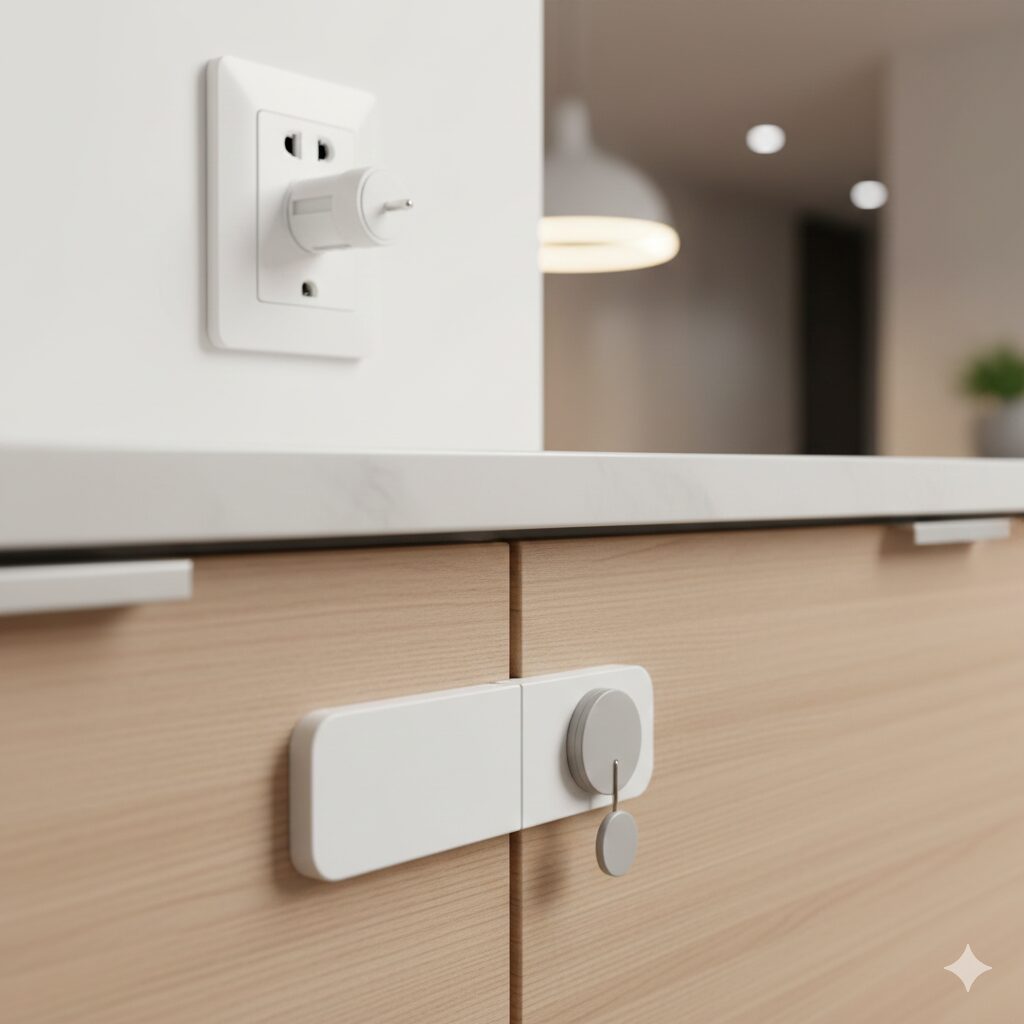
- Bumping/Trapping: Babies often bump into sharp furniture edges or get their fingers trapped in drawers while pulling up to stand. Corner protectors and drawer latches are essential.
- Electric Shock/Electrocution: Babies may chew on cords or touch outlets. All unused outlets must be covered with safety plugs, and cords should be organized out of reach.
3. Early Walking Stage (Post 12 Months)
Mobility expands vertically as babies pull themselves up on furniture.
- Furniture Tip-Overs: Accidents where TV stands, dressers, or bookshelves tip over when a toddler climbs or pulls on them are extremely dangerous. Securely anchor all heavy furniture to the wall or floor using anti-tip kits.
- Door Finger Traps: Fingers can get severely pinched in doors. Install door stoppers or pinch guards on all swinging doors.
🚨 Essential First-Aid for Emergencies (How-to Guide)
When an accident happens, staying calm and administering prompt, correct first aid can save your baby’s life.
1. Choking Emergency: Heimlich Maneuver for Infants
Use this if your baby cannot cough, cry, or breathe, or if their skin color is changing. If the baby is coughing or making noise, encourage them to cough it out.
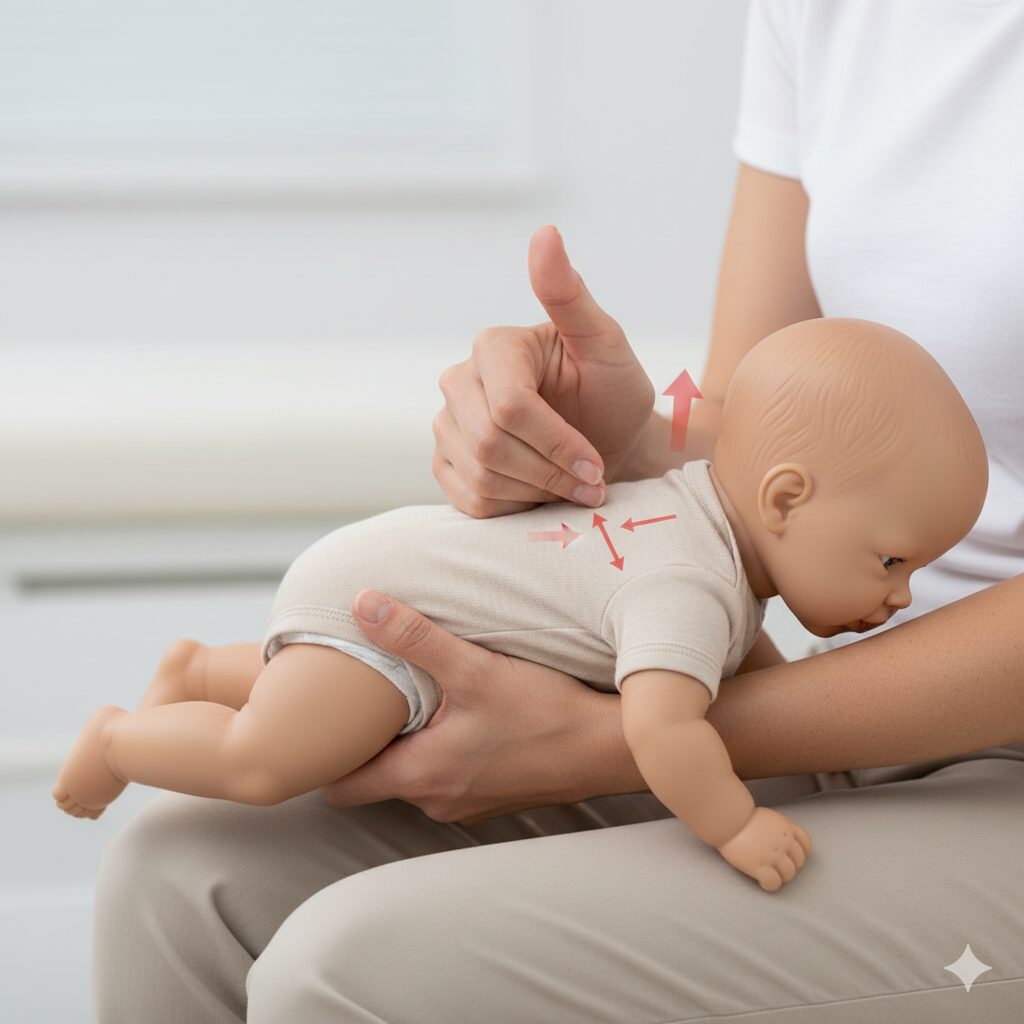
📌 Infant Heimlich Maneuver (Under 1 Year Old)
The procedure is different for infants under one year old.
- Step 1: Positioning
- Place the baby face-down on your forearm, with their head lower than their chest.
- Support the baby’s head and neck firmly with your hand.
- Step 2: Back Blows (5 Times)
- Using the heel of your free hand, deliver 5 sharp, quick blows between the baby’s shoulder blades.
- Step 3: Chest Thrusts (5 Times)
- Turn the baby carefully onto their back (still supported on your forearm).
- Use two fingers (index and middle) to deliver 5 rapid chest thrusts in the center of the chest, just below the nipple line.
- Repeat: Continue the cycle of 5 back blows – 5 chest thrusts until the object is expelled or the baby cries or breathes.
- Caution: If you see the object in the mouth, you may try to sweep it out. Do not perform a blind finger sweep if you cannot see the object, as you might push it further down.
2. Dealing with Falls
When a baby falls from a height, even if no visible injury is present, close observation is crucial.
- Immediate Checks: Assess the baby’s consciousness, crying (is it high-pitched or unusual?), movement of limbs, and check for lumps or bleeding on the head or body.
- When to Seek Medical Attention (Observe for 24 Hours):
- Vomiting more than twice or persistent nausea.
- Loss of consciousness or excessive sleepiness/difficulty waking up.
- Seizures or convulsions.
- Significant change in behavior or crying that is unusual for the baby.
- Inability to use one side of the body or a limp limb.
- First Aid: Apply a cold compress to any bumps or swelling. For bleeding, apply gentle pressure with a clean cloth.
3. Poisoning Incident (Detergents, Medication, etc.)
If your baby has ingested chemicals, medicine, or other toxic substances, immediate action is vital.
- Most Important: Identify the substance and the quantity!
- Take the container or packaging with you to the hospital or when calling emergency services.
- What NOT to Do:
- Do not force the baby to vomit (no finger down the throat!). Forcing vomiting can cause secondary damage to the esophagus, especially with petroleum products or strong acids/alkalines.
- Emergency Response:
- If the substance is mildly toxic (e.g., small amount of lotion): Rinse the baby’s mouth with clean water or milk immediately and call your pediatrician.
- The safest approach is to immediately call your local emergency number (e.g., 119/911/1339) or the Poison Control Center and follow their specific instructions.
🛡️ The Ultimate Home Safety Checklist
Prevention starts with preparation. Go through your home and check these safety points from your baby’s perspective!
| Checklist Item | Specific Check/Risk | Action Required |
| Falls/Access | * Are there safety gates blocking stairways or hazardous areas? | 🚪 Install and ensure safety gates are properly locked. |
| * Are heavy pieces of furniture (TV, dressers) secured to the wall? | 🔨 Install anti-tip furniture anchors on all tall/heavy items. | |
| Choking/Suffocation | * Is the floor clear of objects smaller than 3cm in diameter (coins, batteries, beads, tiny toys)? | 🗑️ Regularly sweep and check the floor; store small items out of reach. |
| * Are cribs free of loose blankets, pillows, or bumper pads? | 🛏️ Ensure a bare crib environment for safe sleep. | |
| Pinching/Bumping | * Are sharp furniture corners (tables, cabinets) protected? | 🩹 Apply corner guards/edge protectors. |
| * Are there locks or guards on drawers and doors to prevent finger injury? | 🔐 Install drawer latches and door pinch guards. | |
| Burn/Electrical | * Are unused electrical outlets covered? | 🔌 Cover all unused outlets with safety caps. |
| * Are hot items (irons, kettles, heaters) within the baby’s reach? | ♨️ Keep hot items high up, use safety gates/barriers around fireplaces/heaters. | |
| Poisoning Risk | * Are all medicines, cleaning supplies, cosmetics, and chemicals stored securely? | 🔒 Store all toxic items in locked cabinets or high, inaccessible locations. |
💖 Final Thoughts: Your Consistency is the Key
Your baby’s development happens incredibly fast. The key to accident prevention is consistency and anticipating your baby’s next stage of mobility.
Parenting often involves unforeseen challenges, but you have the strength to manage them! Rather than striving for perfection, focus on regularly checking this safety list and memorizing the basic emergency procedures. This preparation will give you confidence and keep your baby safer.
SoCooly wishes all parents peace and safety in their journey. You are doing a great job—keep up the fantastic work!
References:
- American Academy of Pediatrics (AAP): Safety & Prevention Information (https://www.aap.org)
- Centers for Disease Control and Prevention (CDC): Injury Prevention & Control (https://www.cdc.gov/injury)