Hello everyone, this is SoCooly! 😊
Lately, we’ve been hearing a lot of phrases like ‘Carbon Neutrality,’ ‘Climate Change,’ and ‘Energy Transition’ in the news, haven’t we? While these may not immediately affect our daily lives, these issues are crucial, potentially defining the future of humanity. We face a paradoxical situation: we must reduce fossil fuels, yet our need for electricity is constantly growing. We clearly need a ‘game-changer’ to resolve this.
It is precisely in this context that a technology is garnering the most heated attention: the SMR (Small Modular Reactor). Its name might be unfamiliar, but today, I want to delve into what SMRs actually are, why they are heralded as the hope for future energy, and most importantly, the question you are probably most curious about: ‘Are they truly safe?’
⚛️ Why SMR Became the Savior of Next-Generation Energy
Before diving into the SMR concept, let’s briefly review why we must seek new energy sources.
The world has set ambitious goals to achieve ‘Net Zero’ greenhouse gas emissions. However, relying solely on renewable energy sources like solar and wind makes meeting all these power demands difficult due to their inherent limitation of intermittency—they stop generating power when the sun sets or the wind dies down. We ultimately need an energy source that can stably generate large amounts of electricity 24/7 without emitting carbon dioxide. While nuclear power can fulfill this role, traditional large-scale nuclear power plants have suffered from several chronic issues:
- Astronomical Construction Costs and Time: Large reactors require trillions of won and more than a decade to build.
- Difficulty in Site Selection: Securing vast land and cooling water is essential, making optimal site selection extremely challenging.
- Public Anxiety over Large-Scale Accidents: Following the Fukushima disaster, public acceptance of large reactors has naturally declined.
SMRs emerged as a revolutionary solution designed to overcome the limitations of these traditional large-scale reactors.
🔬 What Exactly is an SMR (Small Modular Reactor)?
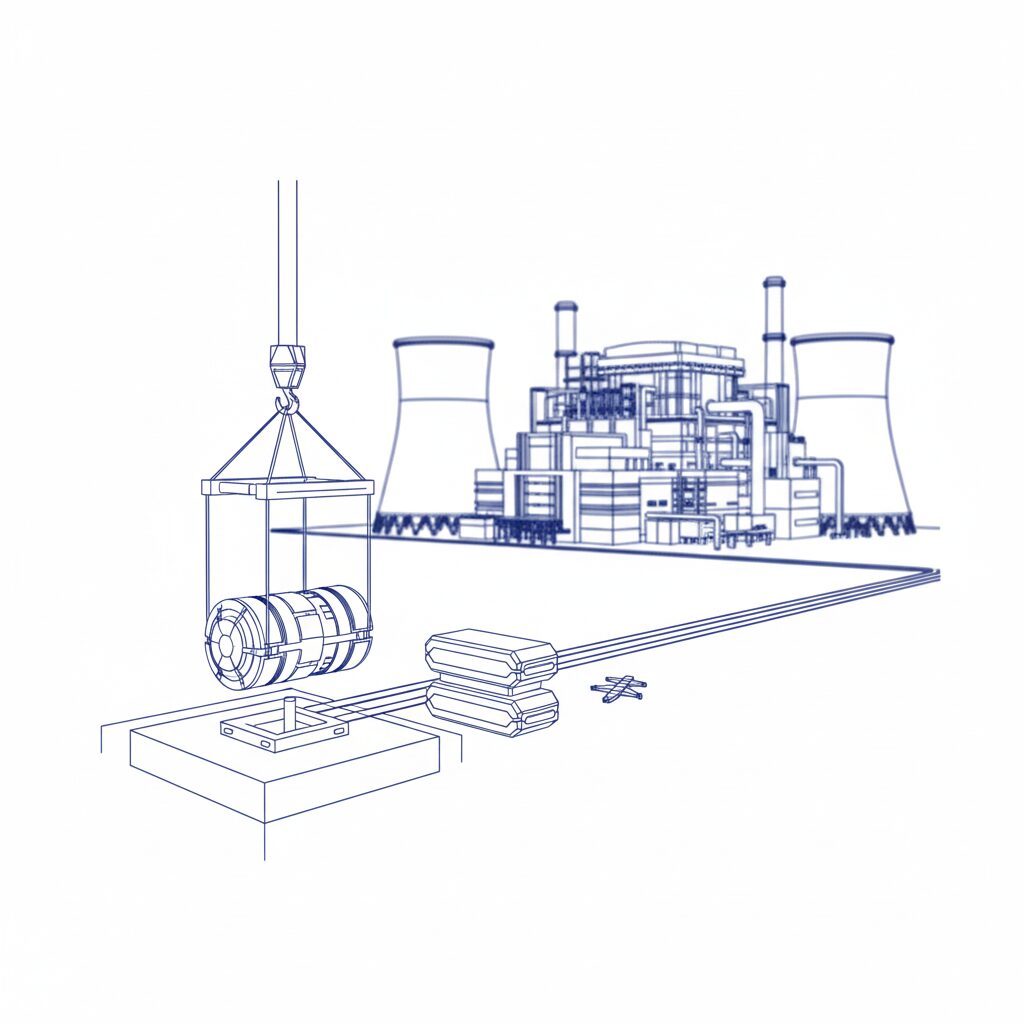
SMR stands for Small Modular Reactor, meaning a reactor that is small (Small) and uses components that are modularized (Modular), allowing it to be fabricated in a factory and assembled on-site (Reactor).
1. Small:
- Output: SMRs are generally classified as reactors with a generating capacity of less than 300 MW (megawatts). This is significantly smaller compared to traditional large reactors, which are usually over 1,000 MW.
- Applications: This small size allows for flexible deployment in remote areas, islands, industrial complexes, or near data centers that require high power consumption—places where large power plants cannot be built.
2. Modular:
- Production Method: The reactor’s main components are manufactured in a factory as standardized, modular units, much like building blocks.
- Advantage: This minimizes complex on-site construction work, cuts costs through mass production in a factory, and drastically shortens the construction period.
The combination of these two characteristics has made SMRs an innovative energy solution that can be deployed ‘at a lower cost, in a shorter time, and precisely where needed.’
🛡️ The Crucial Question: Is the SMR Truly Safe?
The first question most people ask about SMRs is, “It’s a small nuclear reactor, but what if it melts down?” It is understandable that memories of past major nuclear accidents (Chernobyl, Fukushima) cause a fundamental anxiety about nuclear power itself.
In short, SMRs are designed to fundamentally resolve the safety issues of previous generation reactors. One of the core innovations of the SMR is the ‘Passive Safety System.’
The Secret of the Passive Safety System
Traditional large reactors rely on an ‘Active’ safety system during an accident. This means they rely on electricity-powered pumps or valves to inject coolant to cool down the reactor. If the power supply is cut off during an emergency like an earthquake or tsunami (as happened at Fukushima), the cooling system stops, potentially leading to a severe meltdown.
In contrast, SMRs employ a ‘Passive’ safety system.
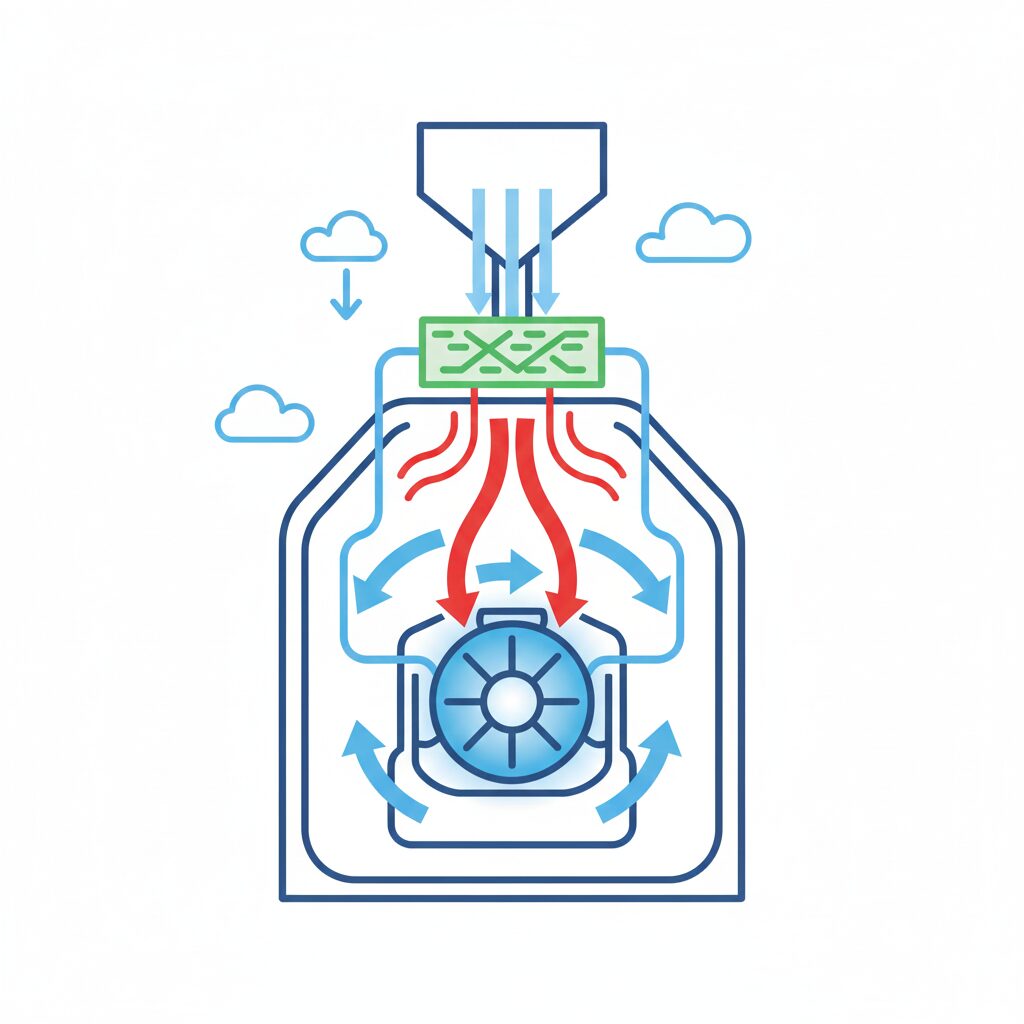
- Working Principle: They are designed to cool the reactor and safely shut it down using only natural physical principles (gravity, convection, evaporation, radiant heat, etc.) without the need for external power or human intervention.
- Emergency Response: Even in extreme situations where power is completely lost or communication is cut, the reactor can use the coolant naturally contained within itself or the surrounding environment to cool down and maintain a stable state. This is similar to how a thermos flask maintains its temperature without external power.
- Accident Potential: Thanks to this design, SMRs are evaluated to significantly lower the possibility of large-scale accidents, such as a core meltdown, or even completely eliminate it.
This innovative safety design leads to SMRs being developed with the goal of ‘Walk-Away Safety,’ meaning the reactor can ensure its own safety even if operators leave the site without taking any action.
🗺️ Global SMR Development Race and Commercialization Roadmap
SMRs are not just a technological innovation; they are central to the global competition to dominate the future energy market. Major countries including the United States, China, and Russia are pushing SMRs as a key strategy for achieving national energy security and carbon neutrality goals.
Key Global Project Case (NuScale Power)
One of the companies leading the SMR development race is the US-based NuScale Power.
- Key Achievement: NuScale Power’s SMR design has already received Design Certification from the U.S. Nuclear Regulatory Commission (NRC). This is the first SMR design worldwide to gain approval from the US regulatory body, signifying a crucial validation of its technological safety and reliability.
- Commercialization Roadmap: NuScale Power is preparing for the actual construction and commercial operation of power plants, targeting the early 2030s. Specific projects are underway in places like Utah, USA, demonstrating that SMRs are moving from science fiction to reality.
South Korea’s SMR Development Status
South Korea is also accelerating its SMR development. The country has been developing its unique SMR technology, ‘SMART (System-integrated Modular Advanced ReacTor),’ since 1997.
- SMART Features: It is designed as a multi-purpose reactor, capable of use in non-power generation fields like seawater desalination using heat and district heating.
- Commercialization Goal: South Korea aims to commercialize SMART by the mid-2030s and strengthen national support to export it to the overseas market.

🌊 Industrial and Societal Ripple Effects of SMRs
SMRs are more than just a power generation technology; they possess the potential to bring about revolutionary change in various sectors.
1. The Key to Clean Hydrogen Production:
- The hydrogen economy is crucial for the future energy transition, but producing hydrogen (especially ‘Green Hydrogen’) requires enormous amounts of electricity. SMRs can stably supply high volumes of carbon-free electricity and high-temperature heat, playing a decisive role in significantly reducing the cost of Green Hydrogen production.
2. Improved Energy Access and Energy Justice:
- SMRs can supply power to areas where building conventional large power plants was impossible, such as remote locations or developing countries. This can help alleviate energy poverty in regions with unstable power grids and ensure fair energy access.
3. Innovation in Shipbuilding and Construction Industries:
- Since SMRs are modularized and manufactured in factories, countries like South Korea, with advanced shipbuilding and construction technologies, are in a highly advantageous position. As the SMR market grows, it will become a new growth engine for related component and module manufacturing industries.
✍️ Remaining Challenges and SoCooly’s Perspective
While SMRs are highlighted as a solution for future energy, there are still hurdles to clear before commercialization is fully achieved.
- Regulation and Licensing: As a new concept reactor, it will take time for government regulators in each country to establish the safety verification and licensing procedures.
- Ensuring Economic Viability: The initial construction cost of SMRs has not yet demonstrated a decisive advantage over large reactors. Reducing the unit cost through mass production is essential.
- Social Acceptance: Despite all the assurances of safety, the psychological barrier created by the term ‘nuclear’ still exists. Gaining public trust through transparent information disclosure and safety validation is paramount.
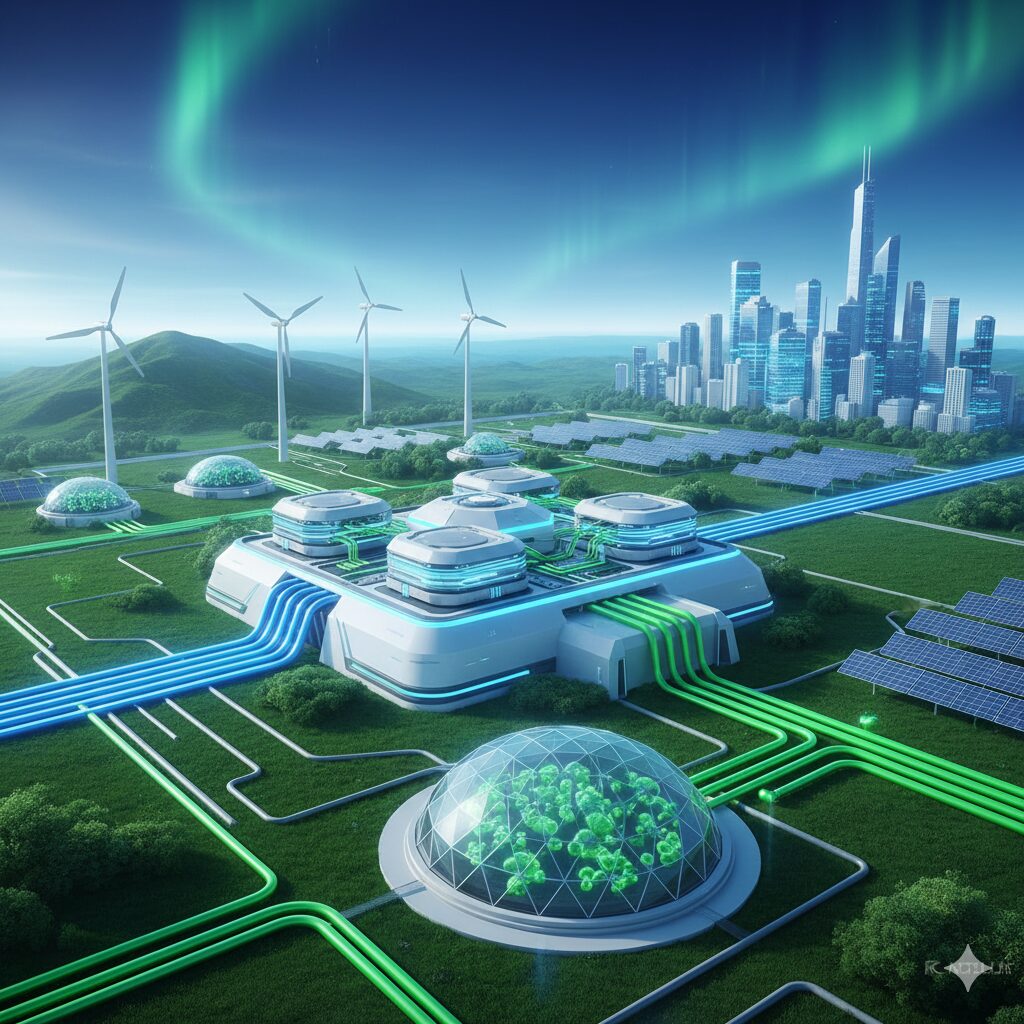
It is clear that SMRs are one of the most powerful weapons humanity has in confronting the immense challenge of climate change. The phrase ‘Good things come in small packages’ seems perfectly fitting for the SMR.
Please remember that this is a future technology we must all pay attention to and a key trend that will redefine the global energy market!
[Reference Sites]
- U.S. Nuclear Regulatory Commission (NRC): https://www.nrc.gov/
- Ministry of Science and ICT, Nuclear Energy Commission (South Korea): https://www.msit.go.kr/
- NuScale Power: https://www.nuscale.com/