Are you standing in front of your child’s dinner plate, sighing with worry again? 😥
“My child is a picky eater, could they be nutritionally imbalanced?”, “The neighbor’s kid is taking this, should mine too?” These are common concerns for every parent. When faced with the dazzling array of colorful children’s supplements, it’s hard to judge whether they are truly necessary or if we might be overdoing it.

Supplements are undoubtedly an excellent ‘auxiliary tool’ to fill nutritional gaps, but indiscriminate use can sometimes do more harm than good. Today, as a fellow parent and a diligent blogger, I want to provide you with a practical guide on what supplements our children truly need and how to choose them wisely and safely.

Do Supplements Matter? Setting the Standard for ‘Essential’ vs. ‘Optional’
To begin with, the good news is that most nutrients can be adequately obtained through a healthy, balanced diet. However, it’s true that modern lifestyles, environmental factors, and specific eating habits mean that a few key nutrients often require supplementation. Before you decide to give your child any supplement, it’s important to assess their individual situation.
✅ When Supplements are ‘Essential’
Supplementation becomes essential if your child has been diagnosed with a specific nutrient deficiency during a health checkup or pediatric visit, or if they have conditions (like chronic digestive disorders) that impair nutrient absorption. Additionally, infants who are exclusively breastfed are generally advised to supplement with Vitamin D and Iron. Children with severe, long-term picky eating habits that exclude major food groups (vegetables, meats, etc.) may also fall into this category.
✅ When Supplements are ‘Optional’
Supplements are optional when you want to provide extra support—for example, boosting immunity due to frequent minor illnesses, supporting bone health, or improving gut health with probiotics. Even in these cases, it’s best to consult with a healthcare professional for guidance.
The 4 Core Nutrients Critical for Child Development and Their Roles
Among the vast number of supplements available, there are four core nutrients that pediatricians consistently recommend parents consider. These nutrients play a critical role in the healthy development of growing children.
1. Vitamin D: Key to Bone Health and Immunity
- Role: Aids in the absorption of calcium, strengthening bones. It also activates immune cells, playing a significant role in preventing respiratory illnesses like the common cold.
- Why It’s Needed: Vitamin D is synthesized in the body when skin is exposed to sunlight. Modern children spend more time indoors and use sunscreen, making deficiencies common. Since sufficient amounts are hard to obtain from breast milk or regular meals alone, supplementation is highly recommended, especially from infancy.
- Form: Often given in liquid drops or gummy forms. The appropriate dosage should be determined in consultation with a professional, considering the child’s sun exposure level.
2. Iron: Essential for Smart Brain Development
- Role: Crucial for producing red blood cells that transport oxygen throughout the body. It is also vital for brain development and cognitive function. Iron deficiency can lead to anemia, poor concentration, and developmental delays.
- Why It’s Needed: Iron supply often becomes insufficient from breast milk or formula after 6 months of age. Deficiencies are common in children who start solids late or primarily consume vegetable-based diets.
- Caution: Iron overdose can cause gastrointestinal issues, so it must only be administered based on professional advice or test results.
3. Omega-3 (DHA/EPA): Brain and Vision Development Helper
- Role: A major structural component of brain cells. DHA, in particular, contributes to vision development and cognitive capacity enhancement.
- Why It’s Needed: Omega-3 is an essential fatty acid that the body cannot produce itself and must be obtained externally. Supplementation may be necessary for children who do not regularly eat oily fish.
- Form: Available as gummies or capsules. Products with added flavor and scent can be chosen for children sensitive to the ‘fishy’ smell.
4. Probiotics: Gut Health Equals Overall Health
- Role: Increases beneficial bacteria in the intestines, promoting smooth digestion and bowel movements. It strengthens the gut lining, directly supporting gut health, which is responsible for over 70% of the body’s immune system.
- Why It’s Needed: Useful for children who frequently suffer from constipation or diarrhea. Many parents choose to administer them regularly for general immune enhancement.
- Smart Choice: Check for sufficient ‘guaranteed CFU count’ (several billion or more) and if the product contains diverse strains (multi-strain).

3 Key Criteria for Choosing Children’s Supplements Wisely
Feeling overwhelmed by the sheer number of products? Just remember these three criteria to successfully choose the right supplement for your child.
Criterion 1: Check the Ingredient Content and Source Carefully
- Verify Recommended Intake: Use the daily recommended intake guidelines from the Food and Drug Administration (FDA) or your pediatrician to confirm if the actual dosage in the product is appropriate. “High potency” is not always better.
- Ingredient Source (Synthetic vs. Food-Derived): Supplements are broadly categorized into ‘synthetic (chemically manufactured)’ and ‘food-derived (extracted from food sources).’ Food-derived ingredients are often preferred for their higher absorption rates and perceived safety, but they can be more expensive. Regardless of your choice, select a product from a reputable manufacturer.
- Check for Bioavailable Forms: For Omega-3, forms like TG (Triglyceride) or rTG (Re-esterified Triglyceride) are known to have better absorption rates. Be sure to check the form of the raw ingredients.
Criterion 2: Choose the ‘Form’ Your Child Will Accept
The best supplement is one your child will actually take. Select the appropriate form based on your child’s age and preferences.
- Liquid (Drops): Suitable for infants, as they can be mixed into formula or baby food. (Commonly used for Vitamin D, Iron)
- Chewable/Gummies: Good for toddlers and older children who can chew. However, you must check the sugar content carefully.
- Powder: Can be mixed with water, juice, or yogurt, suitable for children who have trouble swallowing pills.
Criterion 3: Ensure It’s Free of Unnecessary Additives
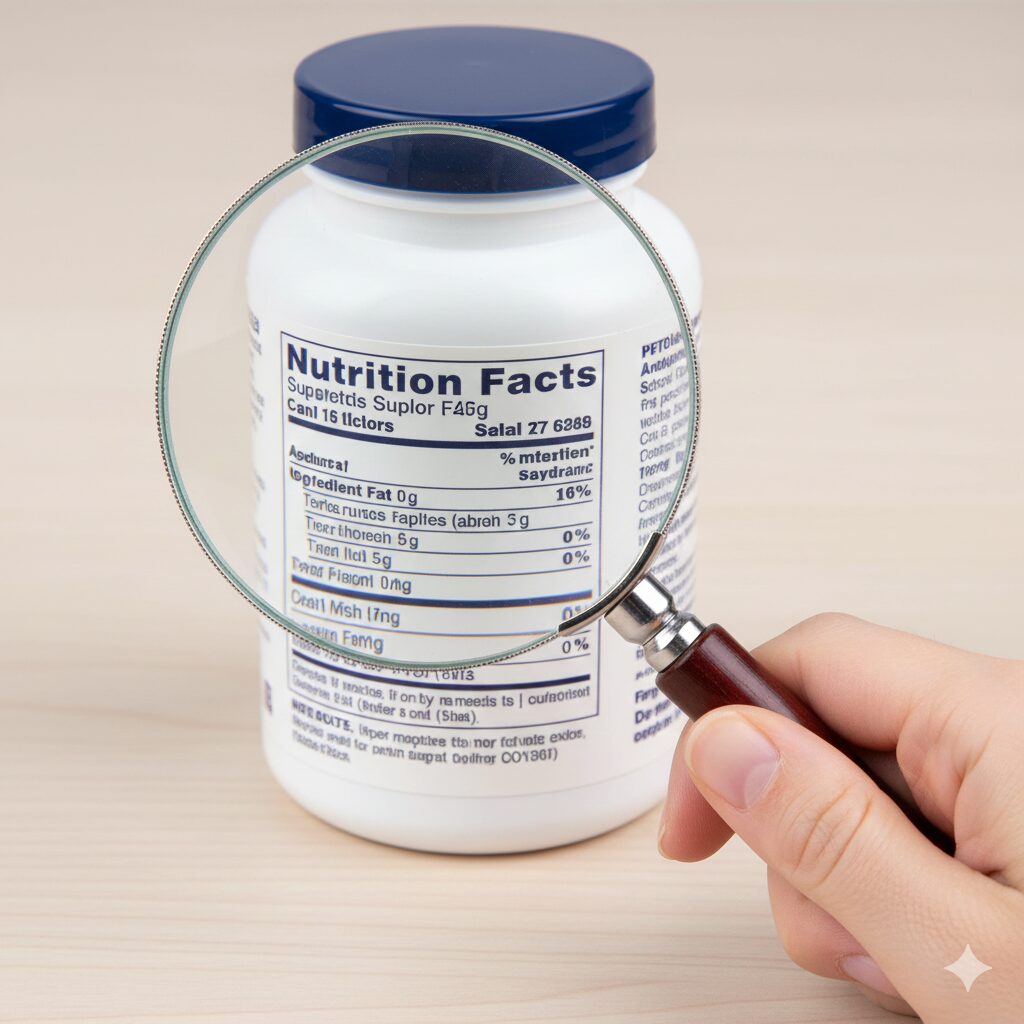
Many supplements contain artificial colors, synthetic sweeteners (like aspartame), artificial flavors, and preservatives to enhance taste and appearance. These additives may not have a beneficial long-term impact on a child’s health. Read the ingredients list closely and choose products with minimal additives, if possible. Look for ‘No Added’ or ‘Clean Label’ products.
Important Safety Tips for Parents When Giving Supplements
Remember this: Supplements are food aids, not medication. Never forget this crucial distinction.
⚠️ The Risk of Overdosing
Giving multiple supplements simultaneously with the mindset of “more is better” can lead to side effects. Fat-soluble vitamins (A, D, E, K), in particular, can accumulate in the body and cause toxicity, so you must strictly adhere to the recommended dosage. Since many supplements contain multiple vitamins, you should make a habit of calculating the total intake.
⚠️ Nutrition Through Diet Comes First
Supplements should only serve as a ‘gap-filler’ for what is missing in the diet. Relying on supplements should not lead to neglecting efforts to establish healthy eating habits. A balanced diet consisting of fresh seasonal fruits, vegetables, grains, and protein is the most powerful source of immunity for your child. Your most important role as a parent is not relying on supplements, but helping your child try new foods and develop healthy eating habits.

Final Thoughts: More Important Than Supplements is Love and Attention
I applaud all parents who research and worry about their child’s health. Choosing the right supplement can be tough, but I hope the core criteria shared today help you wisely determine what your child truly needs and how to fulfill that need safely.
Remember, the best supplement for a child is their parents’ warm love, attention, and enjoyable mealtimes! I encourage you to monitor your child’s nutritional status and work together to build healthy life habits starting today! 💪
References
- U.S. Food and Drug Administration (FDA): https://www.fda.gov
- American Academy of Pediatrics (AAP): https://www.aap.org
- National Institutes of Health (NIH) Office of Dietary Supplements: https://ods.od.nih.gov