Hello, neighbors and fellow parents! This is SoCooly. 😊
Today, I want to discuss an action that nearly all parents worry about at some point: “Why does my baby put everything into their mouth?” Perhaps you’ve watched your baby enthusiastically suck on their fingers or immediately pop a brand-new toy into their mouth, sparking worry.
The good news is that this behavior is a completely normal and vital part of development! We refer to this period as the Oral Stage. Through this article, I will kindly guide you through what the Oral Stage is, when it starts and ends, and how you, as parents, can help your baby navigate this crucial time safely and healthily.
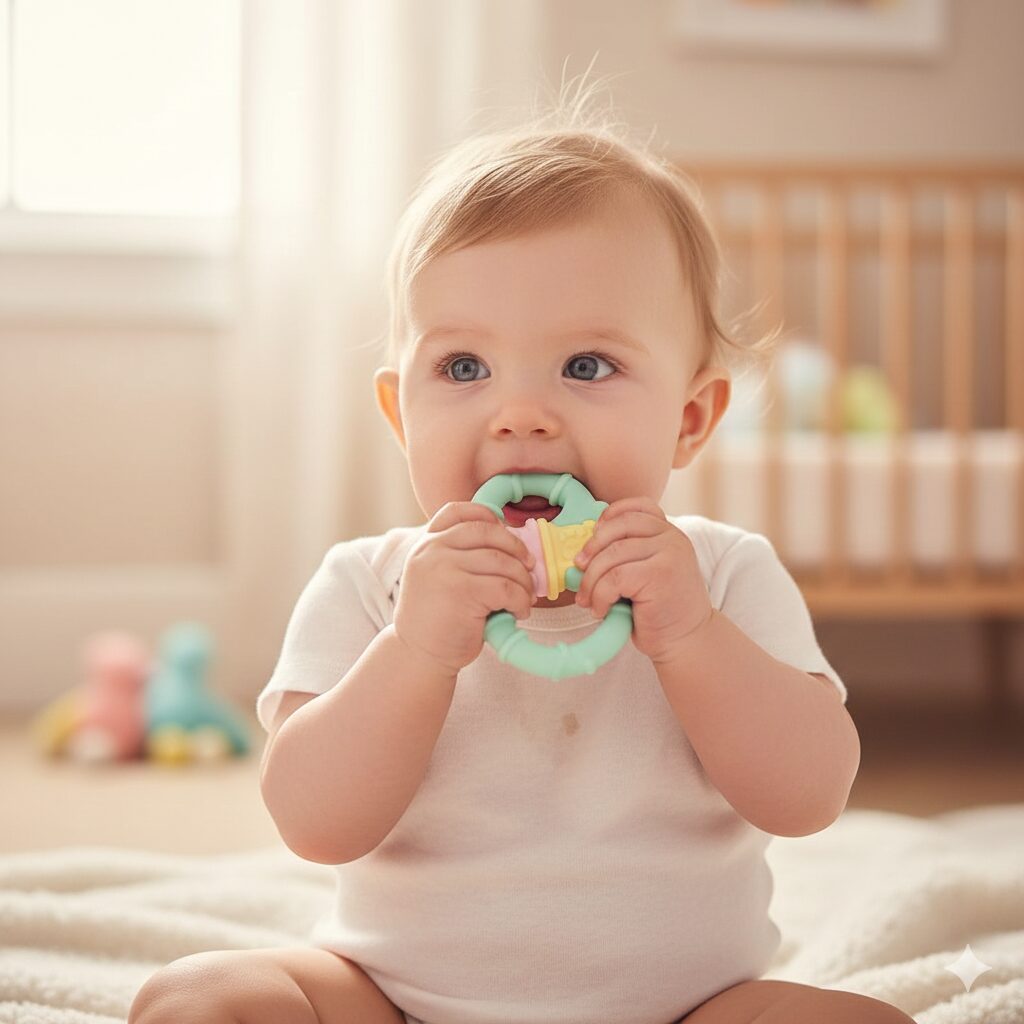
👶 The Oral Stage: Your Baby’s First Step in Learning about the World
Sigmund Freud, the psychologist who studied child development, defined the first psychosexual developmental stage, experienced from birth up to around two years of age, as the Oral Stage.
1. What Exactly is the Oral Stage?
The Oral Stage is the period when babies explore their environment and gain satisfaction and psychological security primarily through their mouths (oral cavity). For newborns, the mouth is not just a tool for survival (feeding) but also their most sensitive sensory organ for communicating with the world. By putting their hands, toys, and other objects into their mouths, babies begin to learn “what things are” by confirming their texture, taste, and shape.

2. How Long Does the Oral Stage Last?
Generally, the Oral Stage occurs from birth up to approximately 18 to 24 months of age (2 years).
- Early Phase (Birth ~ 6 months): Finger sucking is most prominent here. Since hand movements are not yet refined, babies seek comfort by sucking on their own hands or fists rather than grasping and exploring objects. This is often driven by reflexes.
- Later Phase (6 months ~ 24 months): As the baby starts to sit up and crawl, their range of activity widens. With developing dexterity, they actively take surrounding toys or objects to their mouths for exploration. This oral activity forms an important basis for cognitive development as they learn the characteristics of objects.
Of course, every baby develops at their own pace, so we can’t definitively say it stops exactly at 18 months. The most important thing is to understand that the child is achieving psychological security and cognitive development through this behavior.
🤔 Why Do Babies Put Things in Their Mouths? 3 Key Reasons
The act of putting objects in their mouths is not just a habit; it plays a vital role in your baby’s growth and development.
1. The “Mouth as a Tool” for Exploration (Cognitive Development)
A baby’s lips, tongue, and gums are as sensitive as an adult’s fingertips. In the infancy stage, when vision is not yet fully developed, babies grasp the object’s size, shape, and texture (hardness, softness, etc.) more effectively by sucking and biting with their mouths than by just looking. For the baby, the mouth serves as a kind of “second hand” and a crucial learning tool for object recognition.
2. Stress Relief and Psychological Security (Emotional Development)
Similar to the satisfaction gained from feeding, the act of sucking itself provides babies with psychological security. When feeling anxious, stressed, or in an unfamiliar environment, babies soothe themselves and relieve tension by sucking on their fingers or an attached object. This process teaches the baby Self-soothing methods to regulate their own emotions.
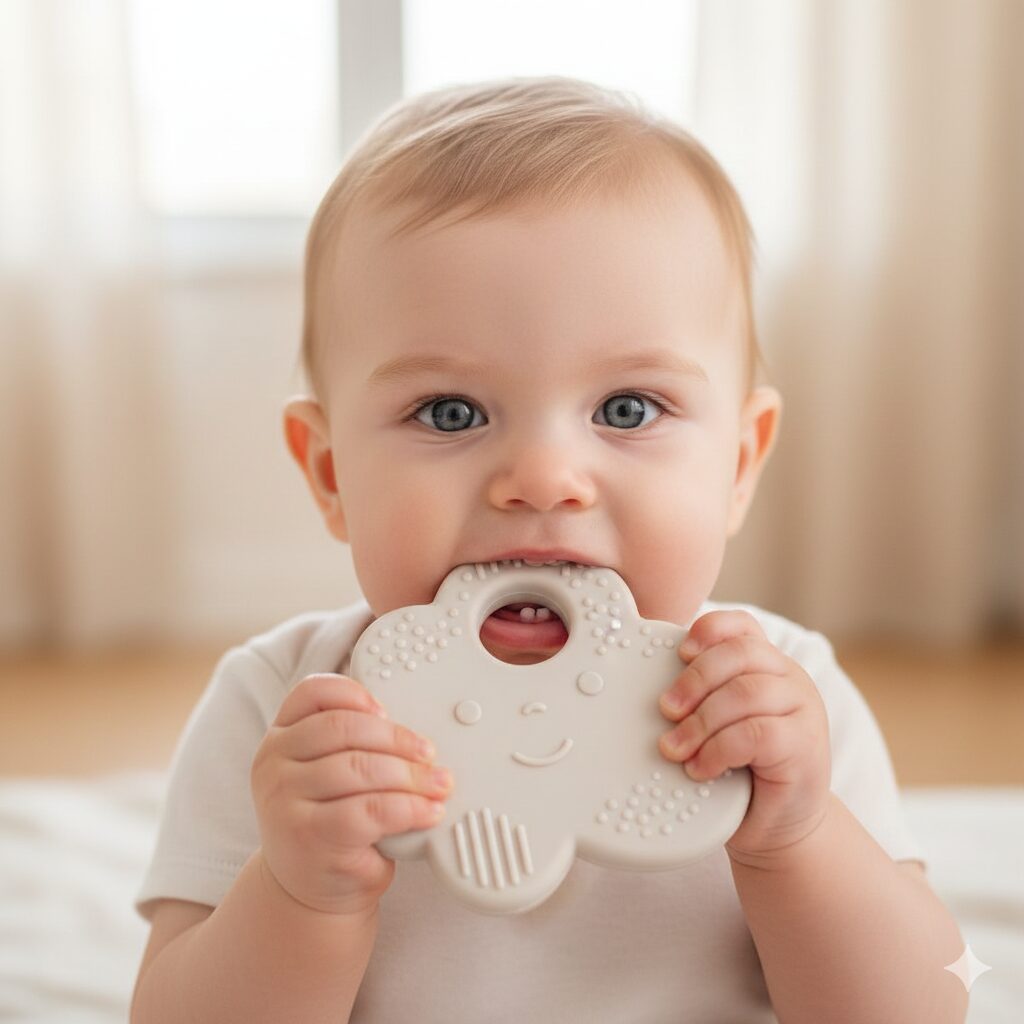
3. Preparation for Chewing Skills (Physical Development)
This period precedes the start of solid foods or transition to firmer foods. Oral activities, which involve using the muscles around the mouth, are necessary training for the development of mastication (chewing) skills. Specifically, biting on objects relieves gum itchiness when teeth are erupting, while also establishing the foundation for the act of chewing food.
✅ Safety Management Guide for New Parents During the Oral Stage
It is natural to worry about hygiene and safety, even knowing the importance of the baby’s sucking behavior. Here are ways to minimize worries and wisely navigate the Oral Stage.
1. When Should We Be Concerned about Sucking?
Most Oral Stage behaviors pass naturally, but caution is needed in the following cases:
- Unsafe Objects: When the baby tries to put objects into their mouth that pose a choking hazard (coins, button batteries, etc.), are sharp, or have toxic substances on them.
- Excessive Behavior: If the child is overly obsessed with sucking fingers or objects even after 3-4 years of age, and this results in noticeable issues with teeth alignment or jaw development (professional consultation is required in this case).
- Hygiene Issues: Especially during infectious disease outbreaks or when the baby attempts to put dirty objects in their mouth in public places.
2. Essential Oral Stage Gear and Hygiene Management
Safely satisfy your baby’s oral needs.
- Provide Safe Oral Items:
- Teethers: Offer teethers with various shapes and textures to provide opportunities for oral exploration. It’s good to offer diverse materials like silicone, rubber, or wood.
- Loveys/Blankies: Allow the baby to suck on or chew clean and safe comfort items to gain psychological security.
- Fingers: A baby’s hands are their cleanest toy. Instead of forcibly stopping the baby from sucking their own fingers, frequent hand washing is the most crucial action.
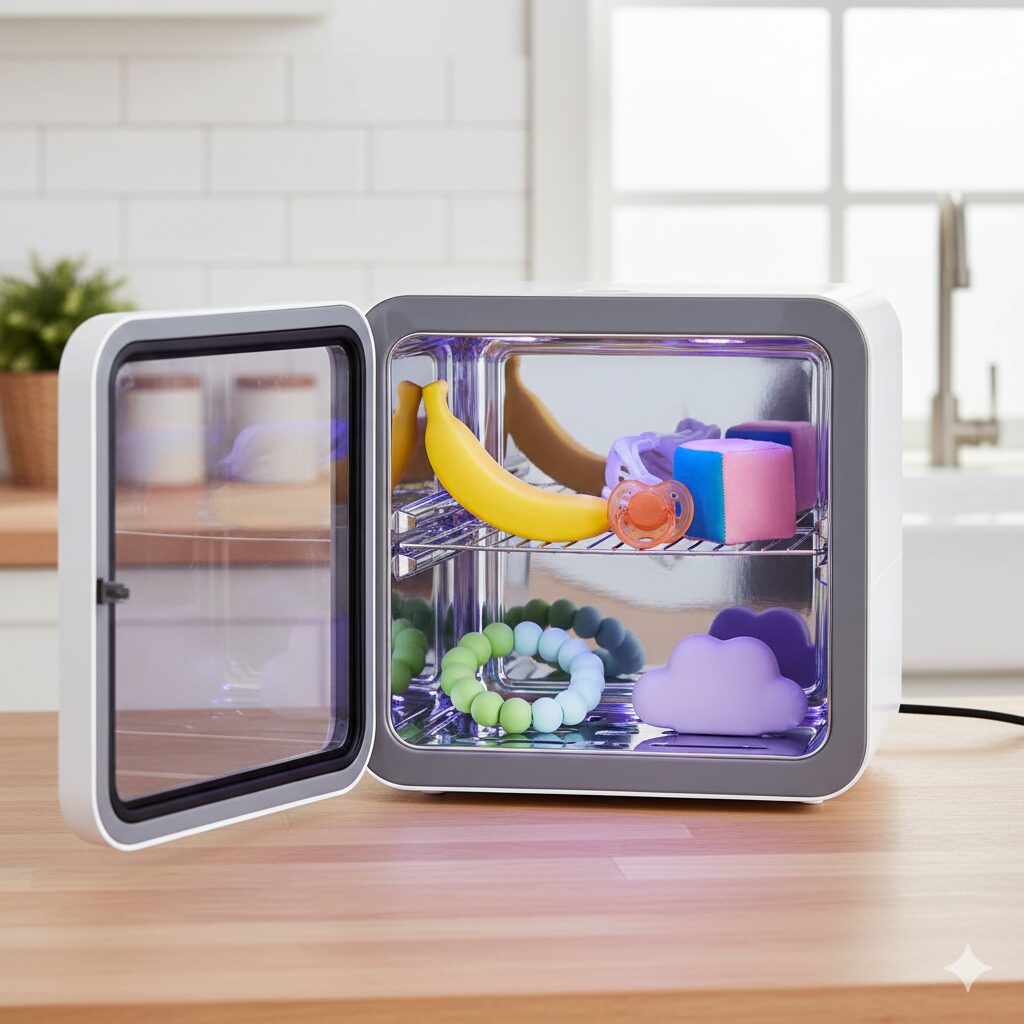
- Thorough Sterilization and Cleaning:
- All toys and items that your baby puts in their mouth should be frequently sterilized by boiling or cleaned with a toy cleaner daily or often to minimize the risk of bacterial infection.
- Pay extra attention to cleaning after outings.
3. Parents’ Appropriate Attitude and Response
The attitude of the parents is the most important factor.
- Do Not Forcibly Stop It: If you forcefully pull out their hand or scold them for sucking their fingers, the baby may feel anxious and become more fixated on the behavior. Acknowledge that it is a natural developmental process and allow it within safe limits.
- Offer Alternatives: When the baby tries to put an unsafe object in their mouth, don’t just snatch it away; gently swap it with a safe teether or toy.
- Sufficient Interaction: When the baby engages in sucking behavior due to stress or anxiety, providing psychological security through positive interaction, such as hugging or playing together, is key. The core is to make them feel adequately loved.
✨ A Final Word of Encouragement for Parents!
I hope this has helped answer your questions about the Oral Stage, my dear neighbors.
When your baby happily munches on their fingers or toys, it is a significant signal that your little one is expressing: “I am exploring and learning about the world!” This stage is a precious time for babies to learn how to communicate with the world, so instead of worrying too much, please focus on safety and hygiene management.
You, the parents, who support and cheer on your baby to safely navigate this period while protecting their curiosity, are truly the best! SoCooly cheers on all the moms and dads who have had a busy day of parenting today! Keep up the great work! 💪

References:
- American Academy of Pediatrics (AAP) – (https://www.aap.org/) : General child health and development information
- Centers for Disease Control and Prevention (CDC) – (https://www.cdc.gov/) : Infant health and disease information