For every parent raising a child, is there any topic that causes more stress than “picky eating”? You’ve probably tried the classic parental lines: “Eat all your veggies so you can grow big and strong!” You might have even tried forcing a bite or two, until mealtimes began to feel like a full-blown war. This is especially true for parents with toddlers aged between two and five.
But let me reassure you: you are not alone, and your child is perfectly normal. A child refusing certain foods is a natural part of development, and we can transform this process from a “war” into a “fun exploration.” As a fellow parent, I have gathered insights from expert research and real-life success stories to share practical, positive solutions that can help your child overcome selective eating.

🥗 The Root Cause: Why Is My Child a Picky Eater? Understanding Their Mind
Before labeling your child as “stubborn” or “difficult,” it’s crucial to understand the sensory and psychological reasons behind their food refusal. Children often reject food for reasons very different from those of adults.
1. The Instinctive Fear of New Foods (Food Neophobia)
It’s common for children to express discomfort when encountering a new food for the first time. Food Neophobia—the fear of novel foods—peaks roughly between the ages of 2 and 5. This hesitation is often an evolutionary instinct, a survival mechanism that historically helped humans avoid potentially poisonous or harmful foods. In modern terms, it’s why a child instinctively views that strange, bright green broccoli as “suspicious.”
2. Sensory Sensitivities to Texture or Smell
Some children are highly sensitive to the texture (mushy, sticky, rough) or strong smell of certain foods. This isn’t just a preference; it can be due to differences in their sensory processing system, where certain textures feel genuinely uncomfortable or overwhelming to chew. If your child struggles with texture, modifying the food’s consistency might be necessary.
3. Expressing a Need for Control (Developing Autonomy)
Around age three, children experience a surge in autonomy—the desire to make their own choices. Rejecting food during mealtimes, particularly when parents are being insistent, can be the child’s way of exercising control over their own body and decisions.
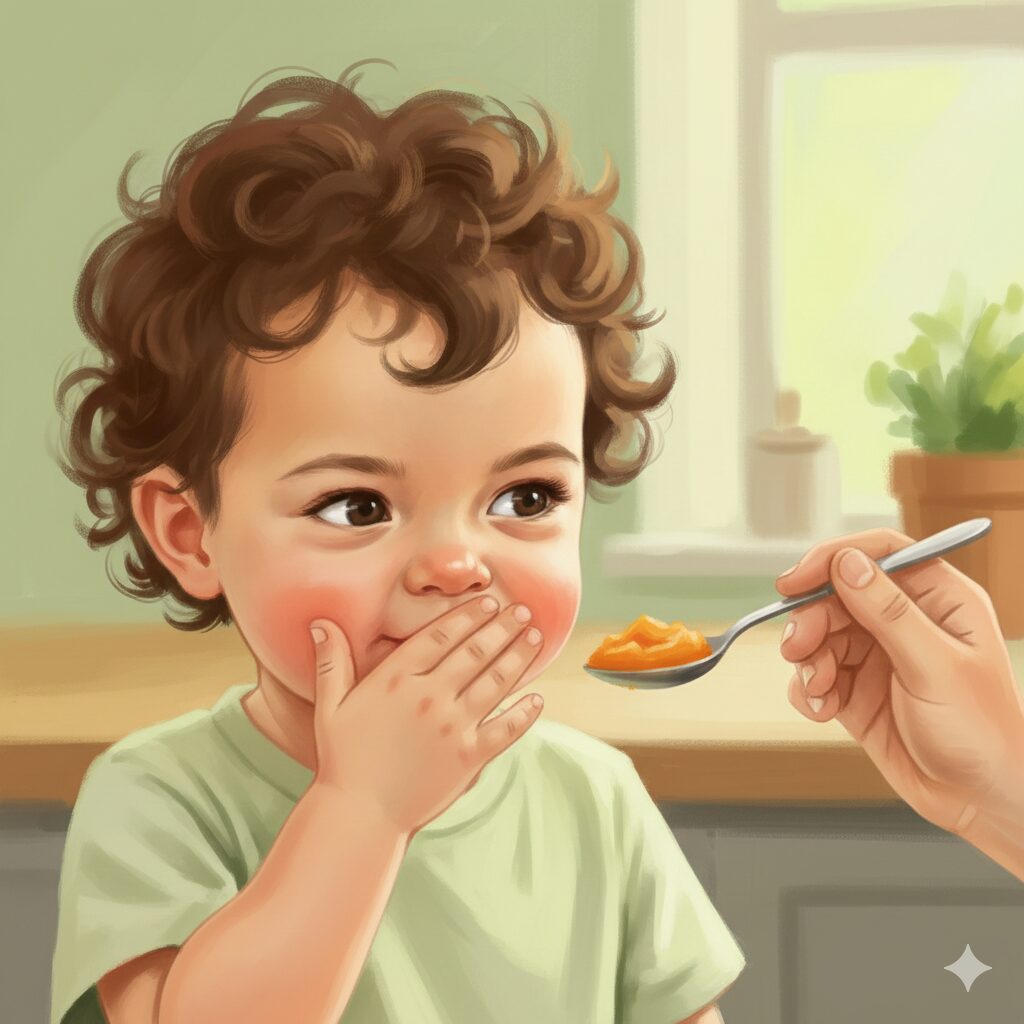
💬 Empathy Over Force: Positive Dialogue Techniques to End Pickiness
Forcing, threatening, or punishing over food might offer short-term success, but it often installs negative associations with mealtimes in the long run. Positive communication helps preserve your child’s self-esteem while encouraging them to explore foods on their own terms.
1. Validate Their Feelings Before Addressing the Food.
Instead of saying, “Why don’t you like this?” try saying, “That food looks a little strange to you, doesn’t it?” or “You don’t feel like eating right now. Mommy feels that way sometimes too.” Acknowledging their emotion reduces tension and builds trust.
2. Offer Choices to Respect Their Autonomy.
Rather than forcing a single item, give limited options within a safe range.
- Example: “Would you like the carrots or the broccoli on your plate today?”
- Example: “Should we eat the rice first, or try the soup first?”When children feel they’ve made the decision, their resistance to the food decreases significantly.
3. Provide Positive Feedback on Their Action, Not Just the Food.
Focus on making mealtimes pleasant. Praise their efforts and engagement, not the fact that they cleared their plate.
- Example: “Wow, you touched the green veggie! That’s brave of you!“
- Example: “I love how you are sitting so nicely while we eat.“
🎨 No More Fights! 5 Fun ‘Food Exploration Games’ to Encourage Acceptance
The most effective way to address selective eating is to create an environment where the child can encounter food naturally and playfully. Research suggests a child may need to be exposed to a new food 10 to 15 times before they are willing to try it.
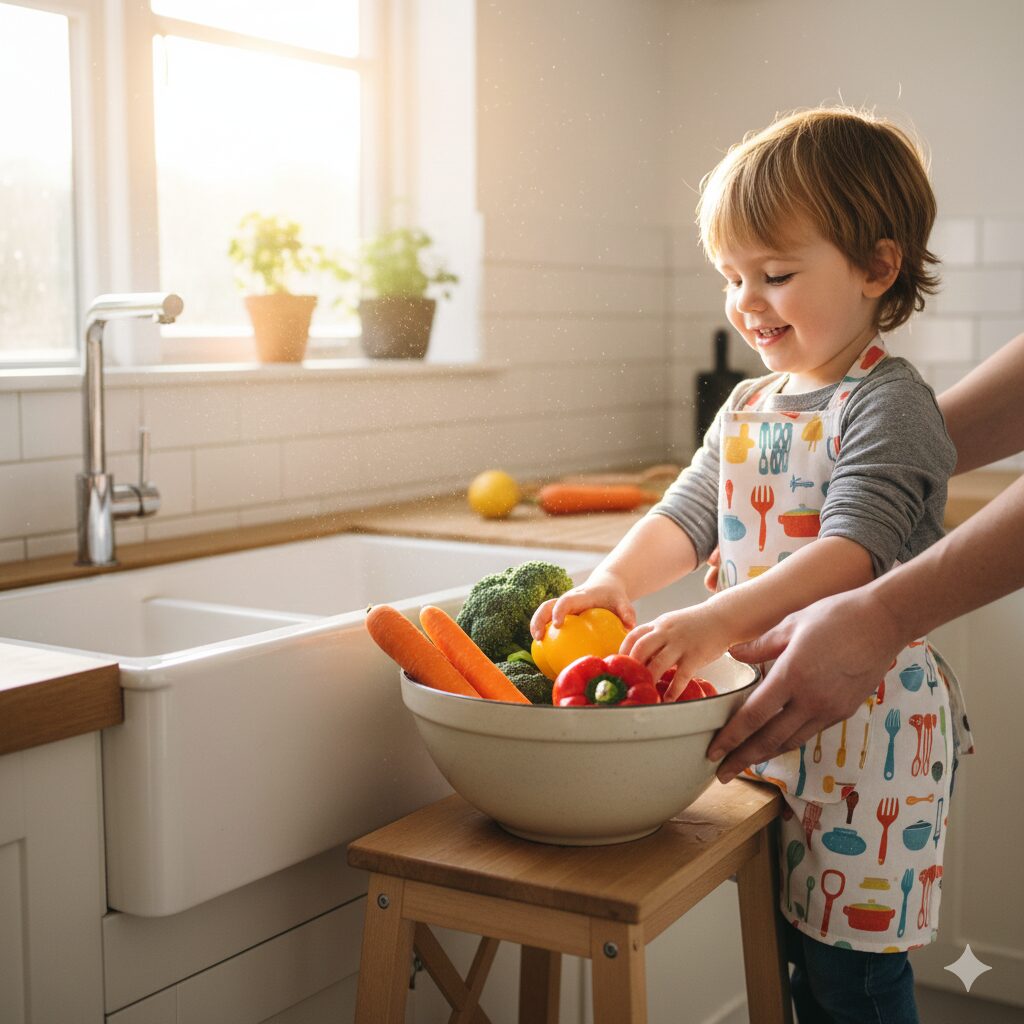
1. The Little Chef Game: Food Tastes Better When I Make It!
Involve your child in the simple steps of meal preparation. Touching, smelling, and washing food builds familiarity and lowers apprehension.
- Activity Examples: Letting the child tear clean lettuce leaves for a salad, kneading dough, or setting the spoons and plates on the table.
- Benefit: They gain a sense of ownership and achievement over the meal they helped create.
2. Sensory Play: No Pressure to Eat (Yet).
Place the food on their plate, but explicitly state that they do not have to eat it. Encourage them to explore it with their five senses.
- Activity Examples: Talk about the color (“This carrot is a bright orange!”), the texture (“The cucumber is smooth and a little wet!”), and the smell.
- Benefit: This helps the child become comfortable with the unfamiliar food in a safe, low-stress environment.
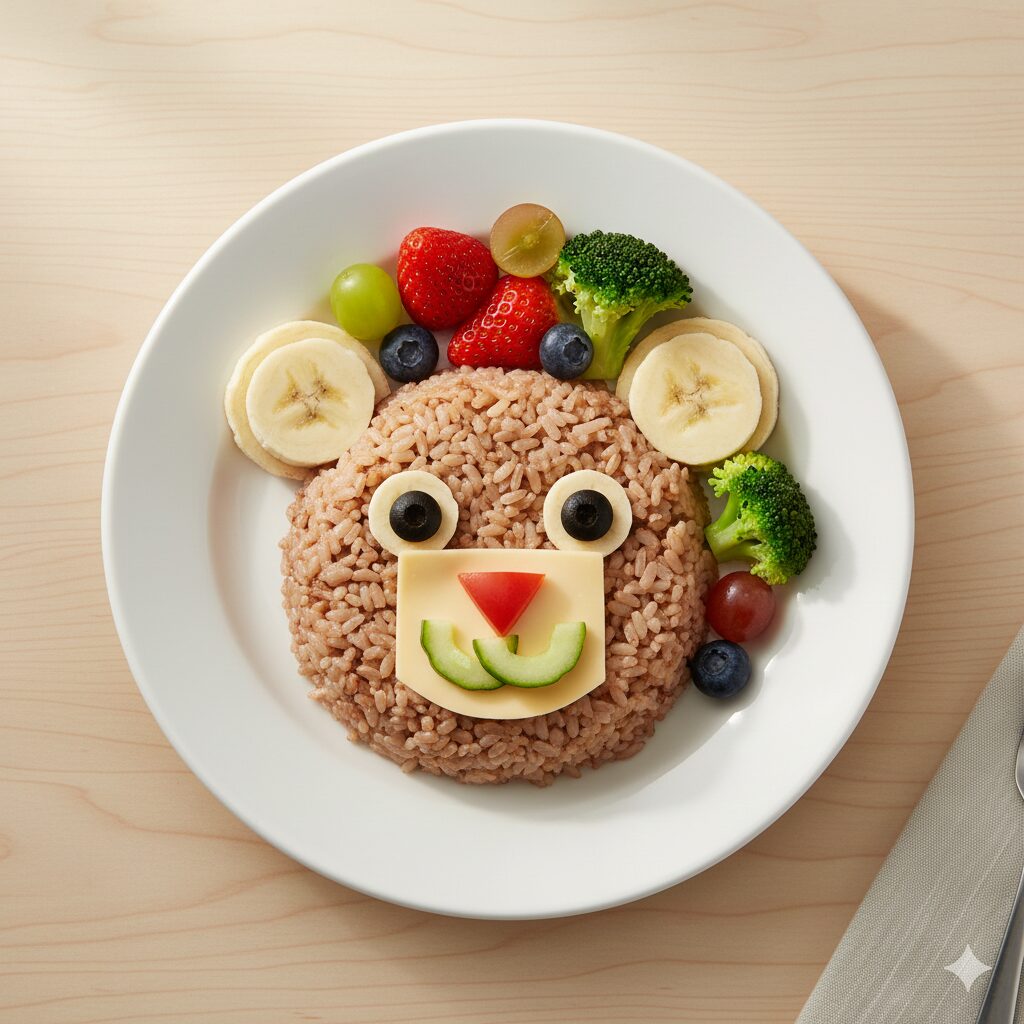
3. Plate Art: Drawing with Dinner.
Use food items to create fun shapes or faces on the plate. Turn broccoli into “trees” or cherry tomatoes into “red balls.”
- Activity Examples: Using cookie cutters to shape sandwiches, arranging rice and seaweed to make a funny face on the plate.
- Benefit: It creates a positive, playful association with the food itself, helping to break down resistance.
4. The One Bite Rule: Building Small Successes.
Set the goal of just “one bite.” If the child refuses, don’t force it. The focus is on small, achievable steps. If they do take a bite, celebrate it enthusiastically.
- Example Dialogue: “Let’s try just one tiny bite. Just a little ‘tap’ on your tongue. It’s okay if you don’t like it; you can spit it out if you need to.”
- Benefit: Small successes motivate them for the next mealtime attempt.
5. Indirect Exposure: Blend, Don’t Hide!
Adding disliked ingredients to favorite foods (like pureeing carrots into meatballs or sauces) is common, but be cautious not to make the child feel tricked.
- Recommended Approach: When blending vegetables, be honest. “We added some carrots to the sauce, but they are chopped very small so they are easy to chew.”
- Benefit: It ensures necessary nutrient intake while allowing the child to gradually get used to the flavor of the food.

💡 Key Takeaways for Parents: Consistency and Patience
Overcoming picky eating requires more than just a single trick; it demands consistency and patience from the parents. Please keep these three points in mind:
- Never Force It: Mealtimes should be happy and relaxed. Coercion creates stress, which counterproductively reinforces food refusal. If the child doesn’t eat, simply remove the plate and wait for the next scheduled meal.
- Be a Role Model: Children imitate their parents. Showing your child that you eat a variety of foods cheerfully is one of the most powerful teaching tools you possess.
- Give It Time (Time is Key): It can take months, sometimes years, for a child to comfortably accept a new food. It’s okay if things don’t change overnight. Don’t rush; just keep moving forward at your child’s pace.
To all the parents reading this, I hope peace returns to your dinner table soon. We are all fellow travelers on this challenging journey! Keep up the positive approach, and may your child explore the delicious world of food with joy. 💪
References
- American Academy of Pediatrics (AAP): https://www.aap.org (Official recommendations on infant and toddler nutrition and eating habits)
- National Health Service (NHS) – UK: https://www.nhs.uk (Health advice on children’s picky eating and diet)