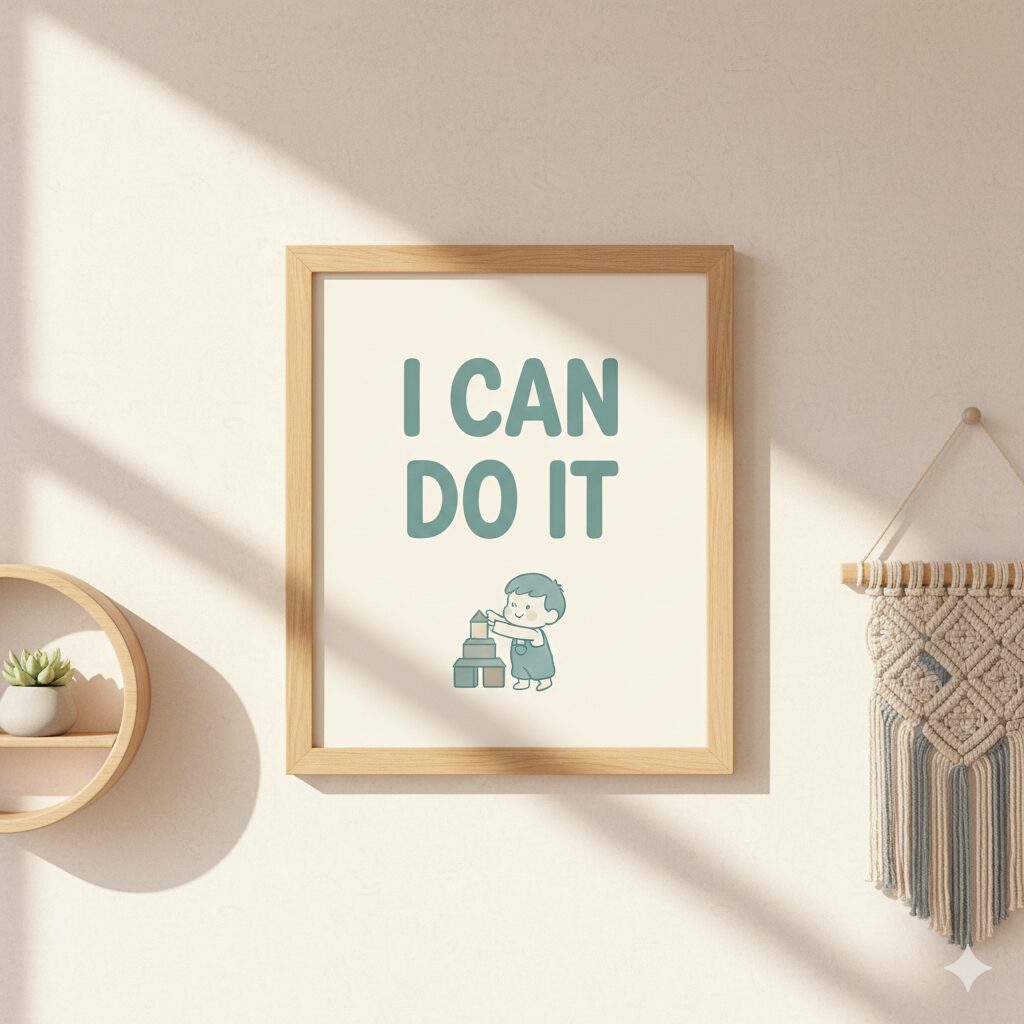
Have you noticed how much “Montessori” is being talked about among parents lately? To be honest, I used to think it was just about buying expensive wooden toys. But after doing some research, I realized the core of Montessori isn’t about the price tag—it’s about respecting your child as an independent person and creating an environment where they can say, “I can do it myself!”
Since we’re spending more time indoors during these colder months, I’ve put together some tips on how to decorate a Montessori-style room. It’ll boost your child’s independence and, as a bonus, make your home look beautifully organized!
Start the Magic at Their Eye Level
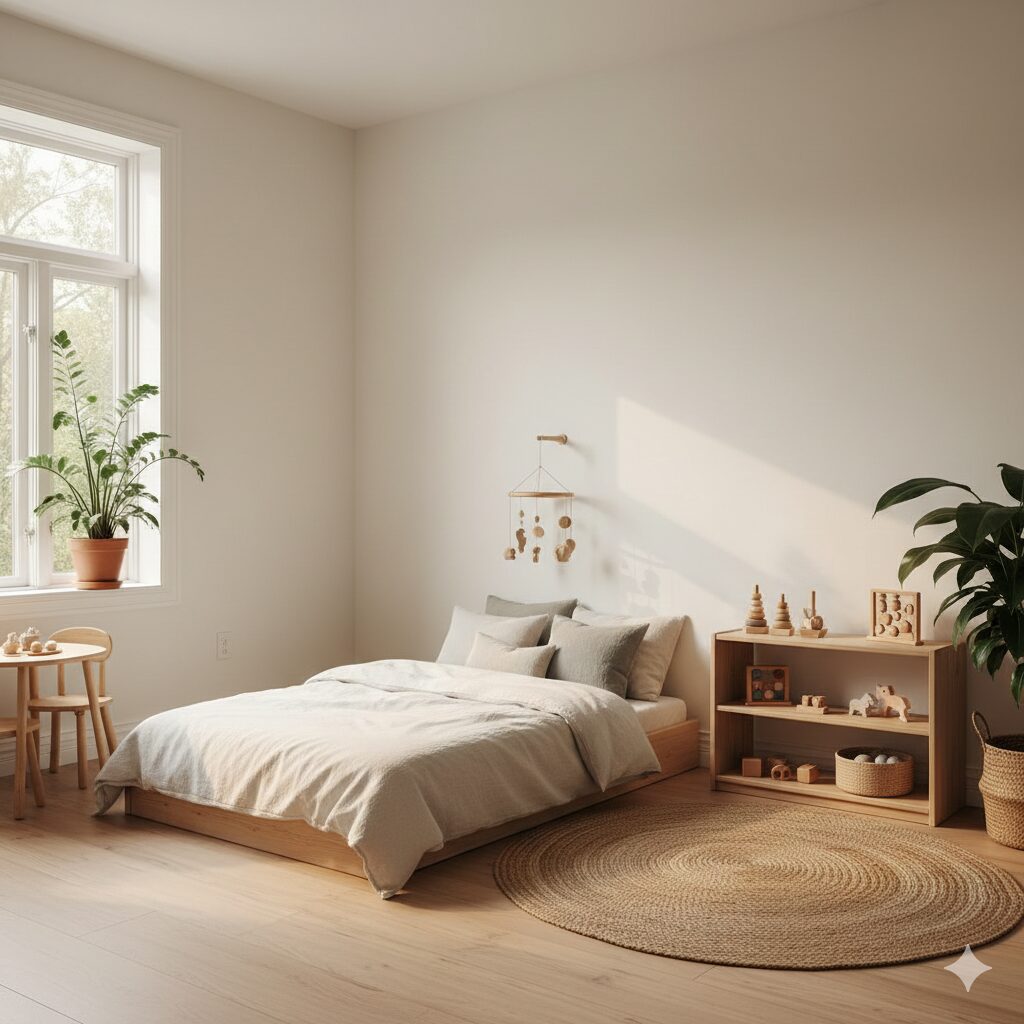
The golden rule of Montessori interior design is “the child’s eye level.” Imagine living in a world of giants where every shelf is above your head and you need help just to reach your clothes. It would be frustrating, right?
By simply lowering the furniture to match your child’s height, you give them the confidence to manage their own space.
- Floor Beds: Instead of a high crib with bars, try a floor bed or a mattress on the floor. When children wake up, they don’t have to cry for help to get out; they can freely choose to look at a book or play quietly until you arrive.
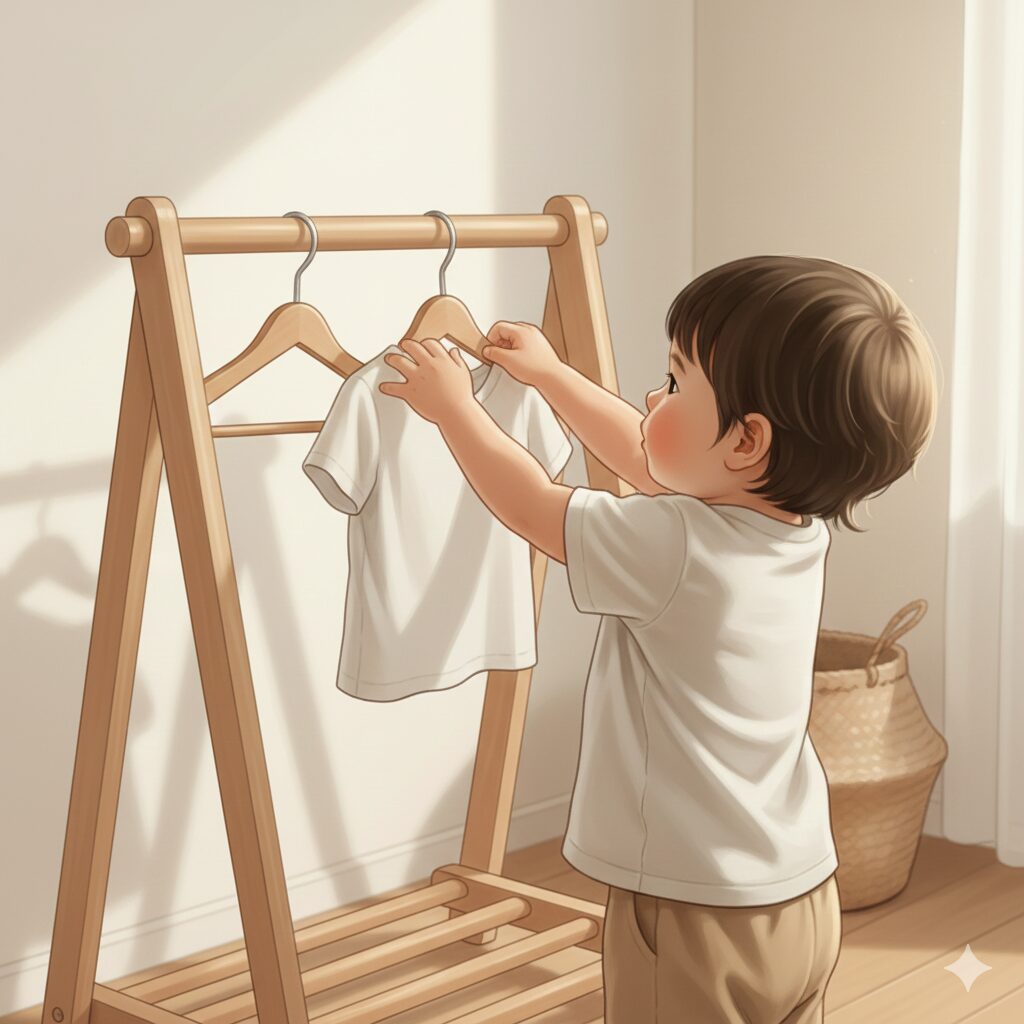
- Low Closets and Hangers: If you hang two or three pre-selected outfits on a low rack, your child can practice choosing and dressing themselves. They might get the buttons wrong at first, but that struggle is where the real learning happens!
Organizing as Part of Play: The Shelf Setup
We all have that giant toy box where everything is thrown together, right? In Montessori, we believe too many choices can actually overwhelm a child and break their focus.
Instead, use “low open shelving.” Place only one or two toys or activities on each shelf. This makes it easy for the child to see what they want to play with and, more importantly, easy for them to put back when they’re finished.
SoCooly’s Tip: Try “Toy Rotation.” Don’t put everything out at once. Keep some toys in storage and swap them every week. It makes old toys feel brand new again!
Must-Have Items to Spark Independence
Now that we’ve set the stage, here are a few “helping hand” items I’ve found through glowing reviews from other parents.
- Learning Tower: This is a safe stool that lets your child reach the kitchen counter or bathroom sink. It’s essential for washing hands together or helping with simple snacks.
- Self-Dressing Aids: Socks with wide openings or easy-to-grip loops make a huge difference. The look of triumph on a child’s face when they pull on their own socks is priceless.
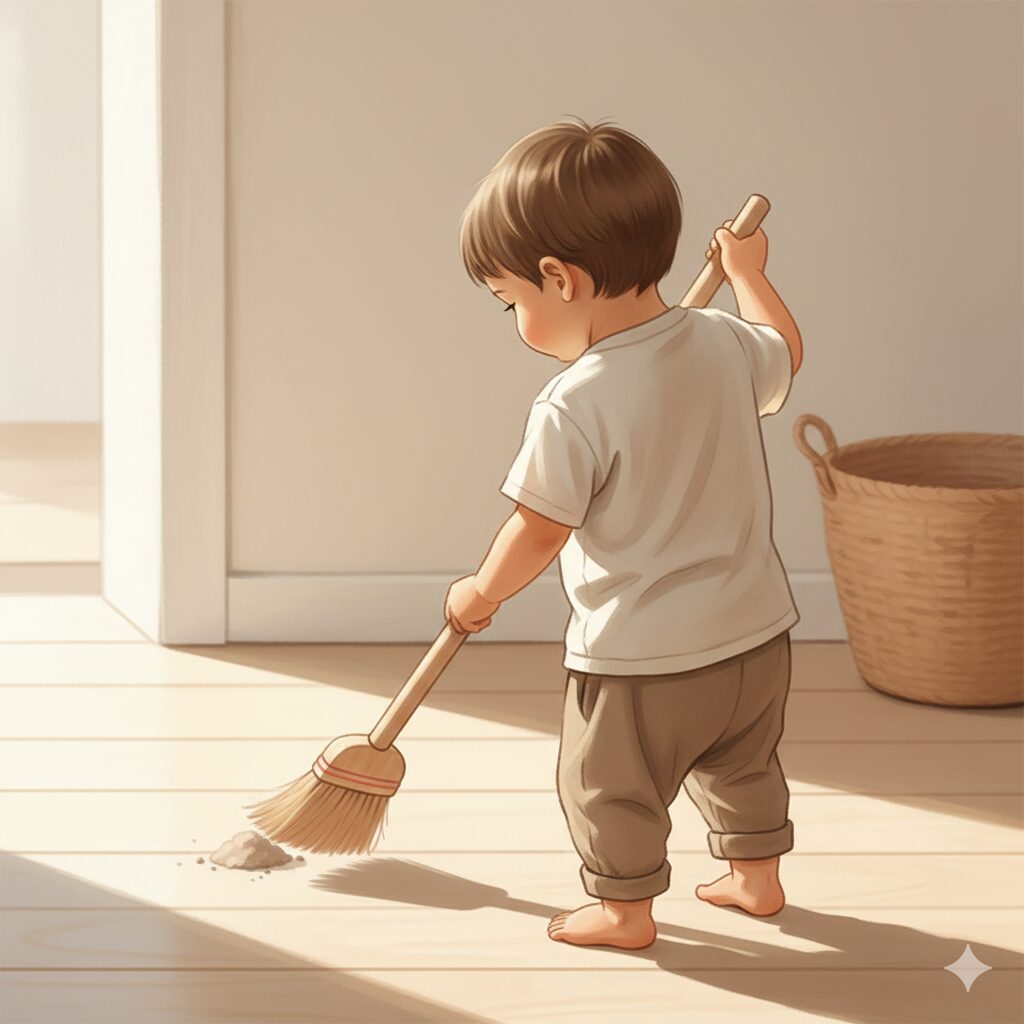
- Child-Sized Cleaning Set: Kids love mimicking adults! Giving them a small broom or a tiny spray bottle with water lets them take responsibility for their own messes (like those inevitable cracker crumbs).
Safety First, Perfection Second
When setting up a Montessori room, safety is the priority. Make sure low furniture is anchored to the wall and check for sharp corners.
But the most important “item” in the room is your patience. Your child will spill water. They will put their shoes on the wrong feet. Instead of rushing in to say “Let me do it!”, try asking “Do you need help?” or “Where should we wipe the water?” That patience is what truly completes the Montessori philosophy.
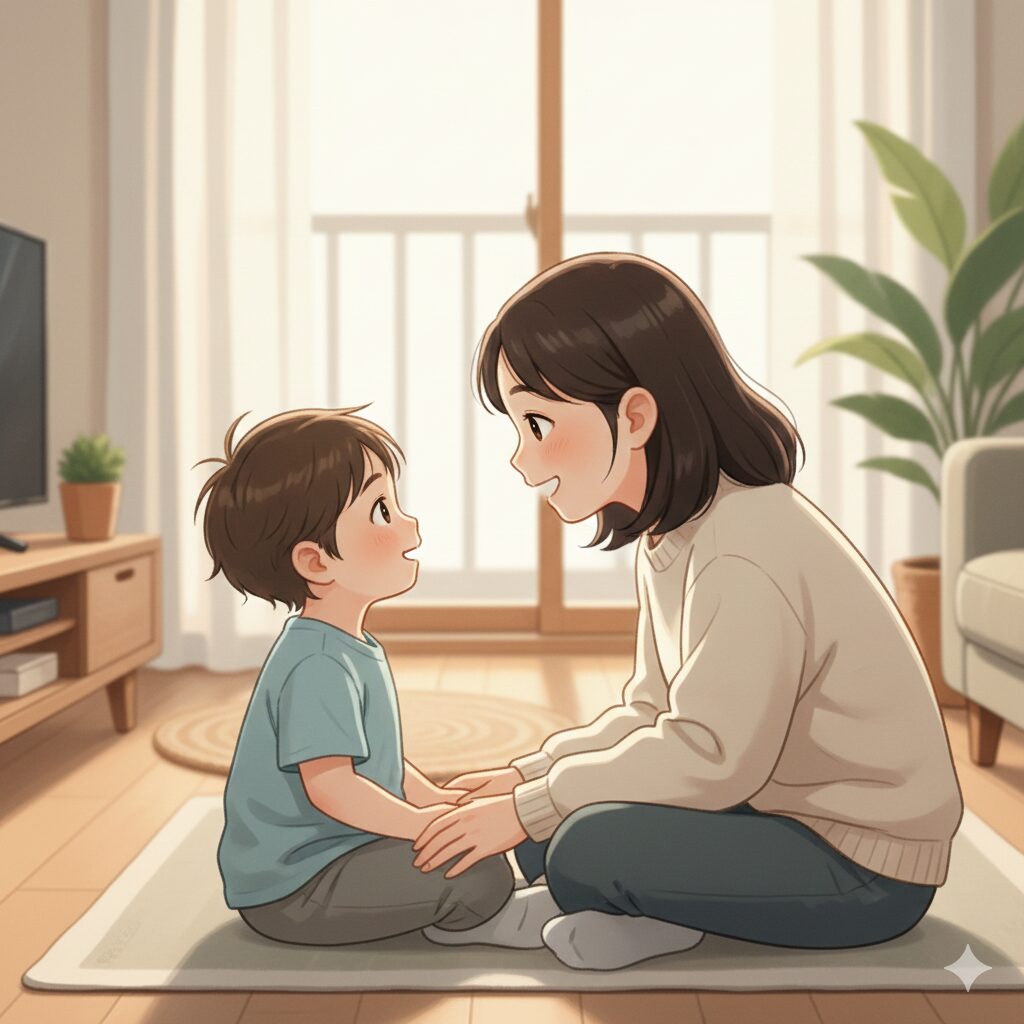
image 5 – A parent and child smiling at each other at eye level, sharing a happy moment.
Wrapping Up
Creating a Montessori space doesn’t have to be a major renovation. It can start with just moving a few things down to where your child can reach them. Those small moments of “I did it!” build the foundation for a lifetime of self-confidence.
To all the parents out there trying their best—you’re doing a great job. Why not take a look at your child’s room from their height today? You might see a whole new world of possibilities!
Reliable Resources:
- AMI (Association Montessori Internationale): Official information on Montessori philosophy and global standards. (https://montessori-ami.org/)
- Zero to Three: Expert development tips for infants and toddlers. (https://www.zerotothree.org/)