Have you ever felt like time is moving way too fast? One day you’re bringing them home from the hospital, and the next, they’re running around the backyard. We often wait for those “big moments”—the first steps, the first words, or the first day of school—to pull out the camera and celebrate. But as parents, we sometimes get so caught up in waiting for these major milestones that we miss the tiny, beautiful everyday victories happening right under our noses.
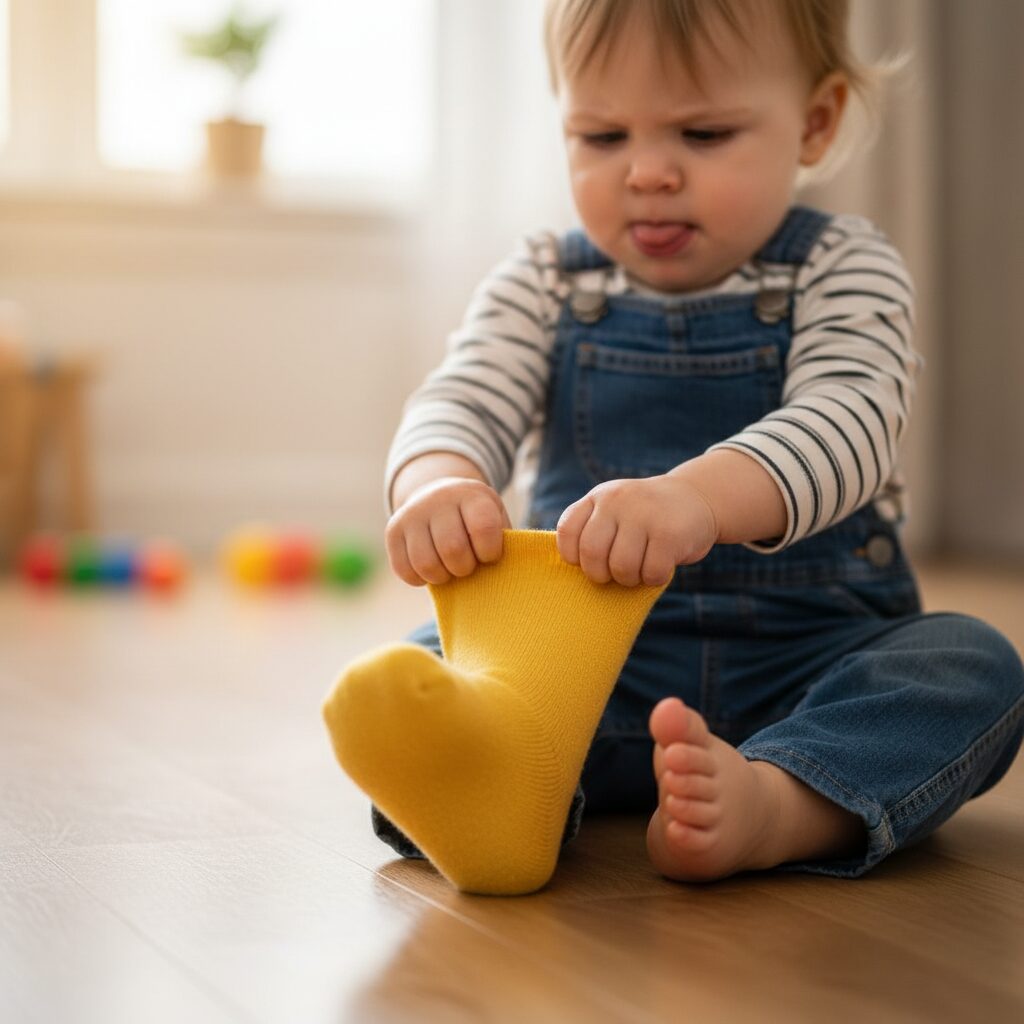
Lately, a heart-warming trend called “Micro-milestones” has been taking the global parenting community by storm. Instead of just focusing on the grand events, parents are now celebrating the “small stuff”—like the first time a toddler manages to pull on a single sock or the moment they decide to share a toy without being asked. Today, I want to dive deep into why these tiny moments are actually the secret to a happier home and a more confident child.
What exactly are Micro-milestones?
We all know the standard developmental charts: sitting at 6 months, crawling at 9, walking at 12. But growth doesn’t happen in jumps; it happens in millimeters. Micro-milestones are the microscopic bits of progress that fill the gaps between those big leaps.
Think about it this way: Using a spoon perfectly is a major milestone. But the first time your baby tries to grip the spoon, or the moment they successfully navigate a yogurt-covered utensil toward their ear instead of their mouth? Those are micro-milestones. It’s about noticing the attempt and the effort rather than just the finished result.
Why the ‘Small Wins’ Matter More Than Ever
In the age of social media, it’s so easy to fall into the comparison trap. You see a “prodigy” toddler on Instagram who can recite the alphabet in three languages, and suddenly you feel anxious because your little one is “just” playing with dirt. This “milestone anxiety” is real, and it can lead to serious parenting burnout.
This is where the magic of micro-milestones comes in. Recent psychological studies suggest that recognizing these tiny wins builds a child’s ‘Self-efficacy’—the internal belief that they are capable of handling tasks and challenges. When you cheer, “Wow, you opened that container all by yourself!”, you aren’t just praising a trivial act. You are telling your child, “You are a problem solver. You are capable.”
For us parents, it changes our perspective from “Are they hitting the targets?” to “Look at how much they tried today!” It turns the daily grind into a treasure hunt for joy.
How to Spot Your Child’s Micro-milestones
To find these moments, we have to slow down. If we are always rushing to the next activity, we miss the subtler signs of growth. Try watching your child’s day in ‘slow motion’ and look for these categories:
- Moments of Independence: When they try to do something they usually ask for help with, like zipping a jacket or climbing into their car seat.
- Emotional Regulation: That split second where they get frustrated but take a breath instead of immediately screaming.
- Social Awareness: Noticing someone else is sad or gently petting the dog instead of pulling its tail.
- Language Curiosity: Trying out a new sound, mimicking a sophisticated word, or even telling their first “joke” (even if it makes no sense!).
- Cognitive Spark: When you see them figure out that the square block doesn’t fit in the round hole and they pause to try a different one.

Simple and Fun Ways to Record the Journey
As a blogger who loves documenting life, I know that big baby books can feel overwhelming. You don’t need a 500-page journal to track micro-milestones. Here are some low-stress ways to do it:
- The ‘Small Wins’ Jar: Keep a jar and some scraps of paper in the kitchen. Whenever your child does something small but great, jot it down and drop it in. On New Year’s Eve or a birthday, read them all together.
- The Family Highlight Group Chat: If you have a partner or close relatives, create a dedicated chat just for “The Daily Tiny.” Post a 5-second clip of them trying a new food or a photo of their first “artistic” scribble.
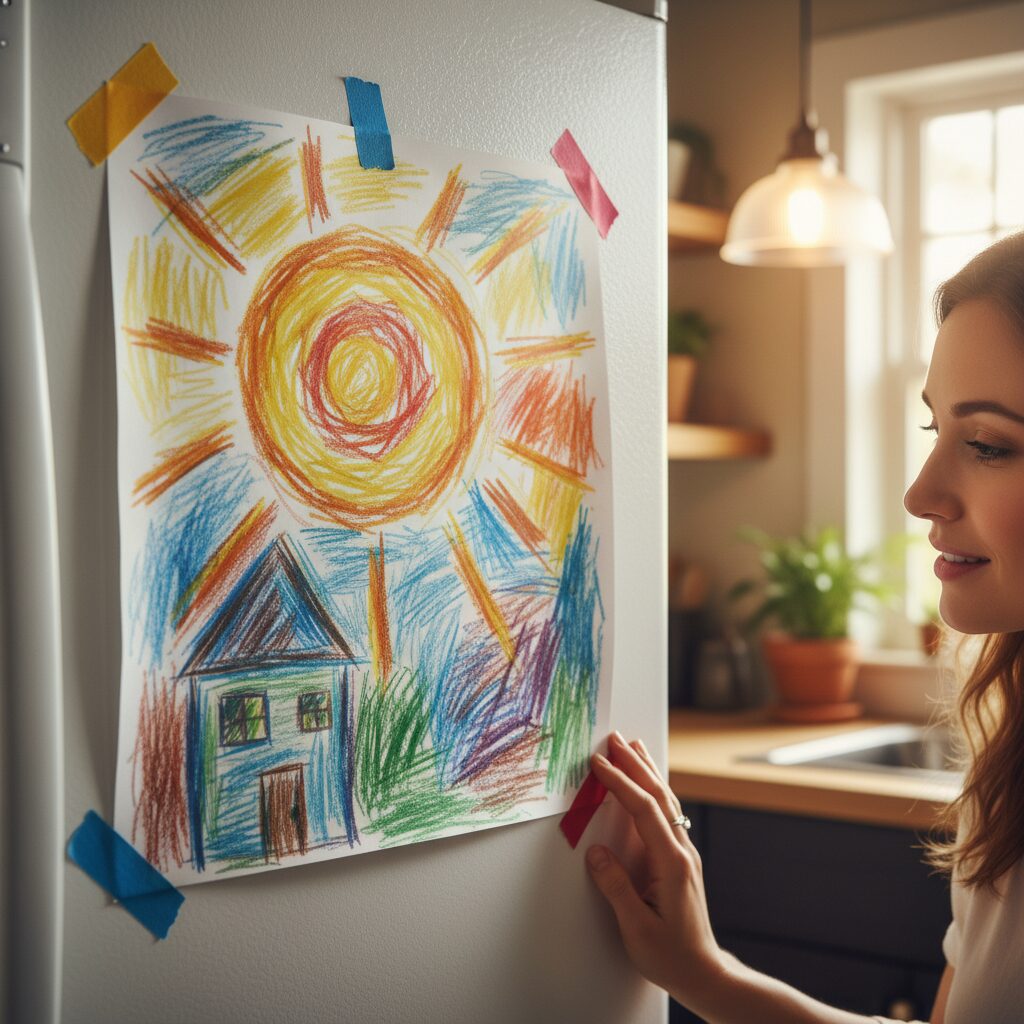
- The Fridge Gallery: Don’t just save the ‘perfect’ drawings. Tape up the first time they drew a circle that actually closed. It shows them that their progress is valued.
A Quick Note: Focus on Process, Not Just Perfection
One tiny piece of advice from my own research: try to praise the effort, not just the outcome. If your child tries to pour their own water and spills half of it, the micro-milestone is the initiative they took to be independent.
If we only celebrate when they succeed perfectly, they might become afraid to try new things. But when we celebrate the trying, we raise kids who aren’t afraid of challenges. Even a “failed” attempt is a step forward in their learning process.
You’re Doing a Great Job, Too
Parenting is a marathon, and sometimes it feels like you’re running uphill. We often forget that we have micro-milestones too! The day you kept your cool during a grocery store meltdown? That’s a milestone. The night you managed to cook a semi-healthy meal despite being exhausted? Huge win.
So, tonight, after you tuck them in, take a moment to reflect. What was one tiny thing your child did today that made you smile? And what was one thing you did that you’re proud of?
Remember, the “big moments” are great, but a life is built out of the small ones. Keep celebrating the little things—they are actually the biggest things of all.
Reliable Resources for Further Reading
- CDC’s Developmental Milestones (www.cdc.gov/ncbddd/actearly) – A great baseline to understand general growth stages.
- Zero to Three (www.zerotothree.org) – Comprehensive guides on the emotional and social development of babies and toddlers.
- HelpGuide.org: Child Development (www.helpguide.org) – Insights into how positive reinforcement shapes a child’s brain.
Note: ‘Micro-milestones’ is a term used to describe the subtle, granular steps of progress that occur between major developmental markers. Celebrating these helps foster a growth mindset in children and reduces pressure on parents.
👉 Related Posts
[Parenting Guide] Winning the Picky Eater Battle: 5 Positive Feeding Strategies & Dialogue Tips
Top 5 Sensory Home Activities for 6 to 12-Month-Old Babies: Essential Guide for New Parents