Have you ever wondered if the meals you prepare for your child are truly fueling their growing mind? As parents, we often find ourselves staring at a plate of half-eaten broccoli and wondering if our little ones are getting the right nutrients to thrive. It’s a common worry, and you are definitely not alone in this!
Today, we are diving into the fourth installment of our “My Child’s Food Prescription” series. After discussing gut health and immunity in our previous posts, we are now focusing on one of the most exciting topics for parents: Brain Power. We’re going to explore the world of “Brain Foods”—those magical ingredients that help build a foundation for focus, memory, and cognitive brilliance.
We aren’t just going to list “good” foods. We’ll look at why they work, which foods to avoid like the plague, and how to actually get your picky eater to take a bite. Let’s get started!
🧠 The Golden Window: Why What They Eat Now Matters Most
Did you know that a child’s brain reaches about 90% of its adult size by the age of six? It’s a staggering thought! During these early years, the brain is like a super-absorbent sponge, forming millions of neural connections every single second.
Think of your child’s brain as a high-performance engine. If you put low-quality fuel in a luxury sports car, the engine will eventually sputter and stall. The same applies to our kids. The nutrients they consume today are the literal building blocks of their brain architecture.
🐟 The Brain Boosters: Top Superfoods for Your Little Genius
Let’s break down the heavy hitters. These are the foods that provide the essential fats, vitamins, and minerals needed for neural development.
1. Fatty Fish: The DHA Powerhouse
Salmon, mackerel, and sardines are perhaps the most famous brain foods. Why? Because they are loaded with Omega-3 fatty acids, specifically DHA.
- Note: About 60% of the brain is made of fat, and DHA is a primary structural component of the human brain and retina. It helps improve communication between brain cells, which is vital for learning and memory.
2. Eggs: The Memory Maker
Eggs are often called “nature’s multivitamin,” but for the brain, the star of the show is Choline. Choline is an essential nutrient used to produce acetylcholine, a neurotransmitter that helps regulate mood and memory. Starting the day with an egg can help your child stay focused throughout their morning play and learning.
3. Berries: Tiny But Mighty Antioxidants
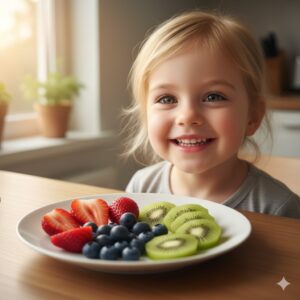
Blueberries, strawberries, and blackberries are packed with anthocyanins. These compounds have anti-inflammatory and antioxidant effects. They help protect the brain from oxidative stress and have been shown in some studies to increase blood flow to the brain, enhancing mental performance.
4. Nuts and Seeds: Brain Protection
Walnuts, almonds, and chia seeds are rich in Vitamin E. This vitamin acts as a shield, protecting brain cell membranes from damage. Walnuts even look like tiny brains—nature’s way of giving us a hint! They also provide a steady source of energy, preventing the mid-afternoon “fog.”
5. Leafy Greens: The Cognitive Foundation
Spinach and kale are rich in folate and vitamins. Folate is crucial for the production of DNA and the development of the nervous system. While greens can be a tough sell for toddlers, their role in preventing cognitive decline and supporting brain growth is unmatched.
🚫 The “Brain Drainers”: Foods That Can Slow Them Down
While we focus on adding the good stuff, it’s equally important to limit the things that can interfere with brain function.

1. Refined Sugars and High-Fructose Corn Syrup
We’ve all seen the “sugar rush,” but the “sugar crash” is much worse for the brain. Constant spikes in blood sugar can lead to irritability and a lack of focus. Over time, excessive sugar intake can actually impair the brain’s ability to form new memories and learn effectively.
2. Trans Fats and Highly Processed Foods
Packaged snacks, fried fast foods, and processed meats often contain trans fats and artificial preservatives. These can cause inflammation in the body, which isn’t just bad for the heart—it’s bad for the brain, too. It can lead to “brain fog,” making it harder for kids to process new information.
3. Artificial Food Dyes
Some studies have suggested a link between certain artificial food colors and increased hyperactivity or lack of attention in sensitive children. When choosing snacks, try to look for labels that use natural coloring like beet juice or turmeric.
🍳 Survival Tips: How to Feed a Picky Eater
Knowing what’s healthy is only half the battle. Getting a toddler to eat it is the real challenge! Here are some “SoCooly” tried-and-tested methods:
1. The “Undercover” Strategy 🕵️♂️
If your child refuses to touch a leaf of spinach, blend it! You can sneak a handful of spinach into a blueberry smoothie or finely grate carrots and zucchini into pasta sauce. They get the nutrients without the “green” drama.
2. Make it a Masterpiece 🎨
Kids eat with their eyes first. Use cookie cutters to turn sandwiches into stars or arrange fruit into a smiley face. A “tree” made of broccoli is much more exciting than a “vegetable.”
3. Invite Them into the Kitchen 👩🍳
Children are much more likely to try something they helped create. Let them wash the berries, stir the (cool) batter, or sprinkle the seeds. Use this time to talk about “brain fuel” in a fun way—tell them that the salmon they are helping prep will give them “super-fast thinking powers.”

🔬 The Science of the “Second Brain”
One of the most fascinating recent discoveries in nutrition is the Gut-Brain Axis. Research shows that our gut and our brain are in constant communication.
The gut produces about 90% of the body’s serotonin—the hormone responsible for happiness and stability. This means that a healthy gut (supported by fiber and probiotics) leads to a happier, clearer-thinking brain. When you feed your child yogurt or fiber-rich grains, you aren’t just helping their digestion; you are literally nurturing their mental well-being.
Parenting is a marathon, not a sprint. Please don’t feel guilty if your child had nuggets for dinner last night. What matters is the overall pattern of their diet. By incorporating even one or two of these brain-boosting foods a day, you are giving them a massive head start in life.
You are doing a great job, and your dedication to your child’s health is the most important ingredient of all. Let’s keep building these healthy habits together, one bite at a time!
Do you have a secret recipe that your kids love? Or perhaps a trick for getting them to eat fish? Share your stories in the comments below—we’re all in this together!
Reliable Resources for Further Reading
- Harvard Health – Foods linked to better brainpower
- Academy of Nutrition and Dietetics – Brain Foods for Kids
- WHO – Early Childhood Development and Nutrition
※ This post was developed with AI support for data gathering and initial structure, then extensively refined and verified by the author for quality and reliability.