Have you ever found yourself watching your child and wondering, “Why can’t they just sit still for five minutes?” or “Why does it take an hour to finish one page of homework?” 😅 If you have, believe me, you are definitely not alone. We’ve all been there, sitting on the edge of our seats, hoping our little ones will find that spark of focus.
The truth is, being energetic and a bit restless is a very natural part of being a kid! They are little explorers with so much to see and do. However, as parents, it’s only natural to worry if that restlessness is getting in the way of their learning or peace of mind. But here is a little secret I’ve discovered: the food they munch on throughout the day plays a much bigger role in their concentration than we might think.
Today, I want to share some “Brain Food” magic with you. We’re going to look beyond just filling their bellies and focus on nourishing their growing minds. I’ve put together three super simple, delicious recipes that are designed to calm the chaos and sharpen the mind. Let’s dive in! 🍎

Is it Just Energy, or a ‘Sugar Rush’?
We often reach for a quick granola bar or a piece of chocolate when we think our kids need a “pick-me-up.” But did you know that snacks loaded with refined sugar can actually be the enemy of focus? When a child eats high-sugar snacks, their blood sugar spikes rapidly, giving them a burst of hyper-energy, followed by a sudden crash. This “Sugar Rush” often leaves them feeling irritable, tired, and—you guessed it—more distracted than ever.
Recent studies have even suggested that certain artificial colors and preservatives found in processed snacks can contribute to overactivity in children. Instead of these “empty calories,” we want to provide nutrients that support the brain’s signaling system and help regulate emotions.
So, what does a “hungry” brain actually need?
- Omega-3 Fatty Acids: Think of these as the “oil” for the brain’s machinery. Since 60% of our brain is made of fat, DHA (a type of Omega-3) is crucial for helping brain cells communicate. You can find this in walnuts, flaxseeds, and fatty fish.
- Magnesium: Often called “nature’s tranquilizer,” magnesium helps relax the nervous system. It’s perfect for kids who feel a bit “wired” or anxious.
- Zinc and Iron: These minerals are the heavy lifters for cognitive function. A slight deficiency can lead to a noticeable drop in attention span.
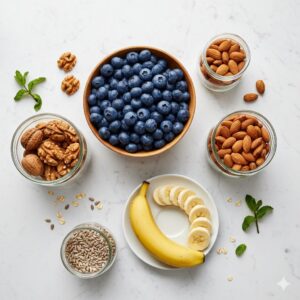
Recipe #1: The Brain-Boosting ‘Walnut Banana Nice Cream’
What kid doesn’t love ice cream? The problem is the mountain of sugar in the store-bought tubs. This “Nice Cream” is the perfect alternative—it’s naturally sweet, creamy, and packed with brain power.
- What you’ll need: 2 very ripe bananas, a handful of walnuts, 2 tablespoons of unsweetened almond milk (or regular milk).
- How to make it:
- Peel and slice the bananas, then freeze them until they are rock solid.
- Toss the frozen banana slices and milk into a blender. Blend until it reaches a smooth, soft-serve consistency.
- Gently fold in the crushed walnuts.
- Why it works: Bananas are rich in potassium, which helps reduce brain fatigue, while walnuts provide that essential Omega-3 boost. Plus, the act of crunching on the nuts helps increase blood flow to the brain! 🧠
Recipe #2: ‘Blueberry Yogurt Bark’ for Steady Focus
This is the ultimate snack for those long afternoon study sessions. It’s cold, refreshing, and looks like a treat, but it’s actually a nutritional powerhouse.
- What you’ll need: Plain Greek yogurt, a handful of frozen blueberries, 1 tablespoon of honey (optional), and some sunflower seeds.
- How to make it:
- Line a baking sheet with parchment paper and spread the yogurt about half an inch thick.
- Scatter the blueberries and sunflower seeds evenly across the top. Drizzle with a little honey if your child prefers it sweeter.
- Freeze for at least 3 hours. Once solid, break it into irregular “bark” pieces by hand.
- Why it works: Blueberries contain anthocyanins, which have been shown to improve blood flow to the parts of the brain developed for memory and attention. Sunflower seeds add a dose of magnesium to keep things calm and steady.

Recipe #3: Savory ‘Chickpea Popcorn’ (Roasted Chickpeas)
If your child craves something salty and crunchy like potato chips, this is for you. It provides a satisfying crunch without the greasy “brain fog” that follows fried snacks.
- What you’ll need: 1 can of chickpeas (rinsed and patted dry), 1 tablespoon of olive oil, a pinch of salt, and a dash of mild curry powder or cinnamon.
- How to make it:
- Make sure the chickpeas are completely dry—this is the secret to getting them crispy!
- Toss them in a bowl with olive oil and your chosen spices.
- Spread them on a tray and air-fry at 180°C (350°F) for 15-20 minutes, shaking the basket halfway through.
- Why it works: Chickpeas are high in protein and fiber, meaning they release energy slowly. This prevents the blood sugar spikes and crashes that lead to “zoning out.” It’s the perfect fuel for a long-lasting attention span.
Sometimes, a child’s restlessness is just their body’s way of saying, “I have too much energy and I don’t know where to put it!” or “I’m missing the fuel I need to stay on track.” Instead of getting frustrated and saying “Sit down!” for the hundredth time, let’s try changing what’s on their plate first.
But remember, as important as these recipes are, nothing beats the power of your presence. Making these snacks with your child can be a wonderful way to bond and talk about how food helps our bodies. That sense of connection is often the best “calming agent” of all.
I truly hope these little changes bring a bit more peace and focus to your home. You’re doing a great job, and your dedication to your child’s well-being is amazing. Hang in there, parents! We’re in this together. 👍

Helpful Resources
👉Related Posts