💡 3 Key Points of This Article
- A small amount of blood or clear discharge after the cord falls off is normal, but seek medical help if the skin turns red or smells bad.
- Drying is far more important than disinfecting. Fold the diaper down to keep the area exposed to air.
- An umbilical granuloma—a small red lump—is common and easily treated by a pediatrician if caught early.
What did you feel when your baby’s umbilical cord finally dropped? When it happened to my firstborn, I almost screamed. I was changing his diaper, and as I unwrapped the swaddle, a dark, shriveled little piece just fell onto the mat. It was a moment of mixed emotions—the final physical connection to the womb was gone. But then, I saw a tiny speck of blood where the cord used to be, and my hands started shaking.
Is this an emergency? Should we head to the ER? I spent the next three hours scouring parenting forums and staring at my sleeping baby, debating whether to wake up my wife. After raising two kids and talking to countless fellow parents, I finally realized something crucial: a tiny bit of blood or clear oozing after the cord falls off is a perfectly natural part of the healing process.
Don’t panic like I did. I’m here to clear up the confusion and give you a stress-free guide on how to care for that brand-new belly button, including the real “red flags” you actually need to worry about.
When is the cord supposed to fall off anyway?
Most babies lose their umbilical cord stump between 7 and 14 days after birth. However, this is just an average. My second child lost hers in exactly ten days, while my friend’s baby held onto theirs for nearly three weeks.
The timing matters much less than the appearance. The cord is essentially a collection of blood vessels that used to carry nutrients from mom. As it heals, those vessels constrict, and the tissue dries out, turning black and hard. This is a sign of a healthy, drying stump.
| Category | Normal Healing Process | Signs of Trouble |
| Color | Dries into a hard brown or black stump | Surrounding skin becomes bright red and swollen |
| Smell | Little to no odor, or slightly musty | Foul, pungent, or fishy smell |
| Discharge | Clear fluid or a tiny bit of dried blood | Yellow pus or persistent bleeding |
| Texture | Gradually detaches and stays dry | A soft, red fleshy lump grows inside |
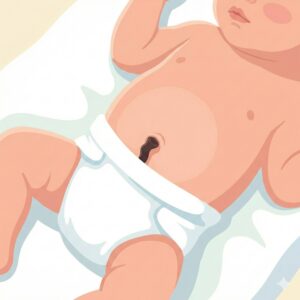
Many new parents worry that their baby is in pain as the cord dries and pulls away. I used to flinch every time the stump moved! But here is a relief: the umbilical cord stump has no nerve endings. Your baby doesn’t feel a thing when the cord is touched or when it eventually falls off. If your little one is fussy, it’s almost certainly because they are hungry, tired, or have a wet diaper—not because of their belly button.
However, the skin around the belly button is a different story. If that area becomes red and your baby screams when you touch the surrounding skin, that could indicate omphalitis—an infection of the umbilical area. While rare thanks to modern hygiene, it requires immediate medical attention.
Dry Care: The secret technique better than alcohol
In the past, the “gold standard” was to douse the belly button in rubbing alcohol every day. But if you check recent pediatric research, the advice has shifted. Studies now show that “Dry Care” actually helps the cord fall off faster and reduces the risk of irritation. Constant alcohol use can kill off good bacteria that help the healing process and can keep the stump moist for longer.
Here is my 3-step drying routine that worked wonders for both of my kids:
- The Diaper Fold Trick: This is the most important step. Always fold the top of the diaper outward so the belly button is completely exposed to the air. This prevents urine from soaking the area and allows constant airflow. Some newborn diapers even come with a “cord cutout” just for this purpose.
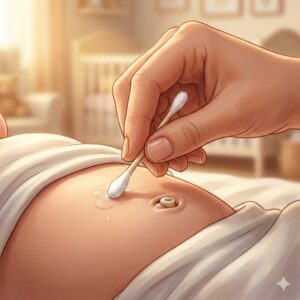
- The 3-Minute Post-Bath Routine: After a bath, you must ensure the area is bone-dry. Don’t rub it with a towel. Instead, use a dry cotton swab or a soft gauze pad to gently dab the moisture away. I used to let my babies air-dry for a minute or two before putting their clothes back on.
- Disinfect only when necessary: If the area looks particularly gunky or moist, you can use an alcohol swab once. The trick is to wipe in a single circular motion from the inside out. Don’t scrub back and forth, as you might just push external bacteria back into the wound.
I learned the hard way that sometimes, the “courage to do nothing” is better than over-grooming. The body knows how to heal itself.
Wait, is that a strawberry in there? The Umbilical Granuloma
Sometimes, after the cord falls off, a small, moist, pinkish-red lump of flesh remains. It looks a bit like a tiny strawberry. When I first saw this, my heart sank—I thought my baby’s insides were leaking out! This is called an umbilical granuloma.
My best friend’s son had one, and we spent hours worrying about it. It sounds scary, but it’s just an overgrowth of scar tissue during the healing process.
Self-Diagnosis: If you see a red, fleshy nub that keeps oozing clear or yellow fluid even after the cord is gone, it’s likely a granuloma.
The Fix: Don’t try to “pop” it or tie it off at home! That’s a recipe for infection. A quick trip to the pediatrician is all you need. They usually treat it with silver nitrate, which “cauterizes” or dries up the extra tissue. It doesn’t hurt the baby at all because there are no nerves in that tissue. It usually disappears after one or two treatments.
3 things you must NEVER do
In our eagerness to be perfect parents, we often do things that actually hinder the healing process. Here are three mistakes I’ve seen (and made):
- Forcing the drop: “It’s hanging by a thread! Let me just help it…” Stop right there! If you pull it off, you’ll cause bleeding and potentially leave the area open to infection. Let it fall off naturally, even if it’s dangling by a single fiber. That’s how you get the cleanest-looking belly button.
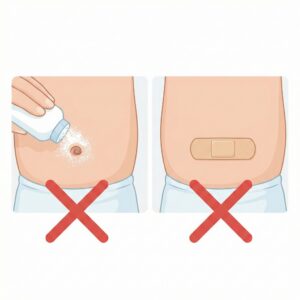
- Using baby powder: Some parents think powder will help keep it dry. It actually does the opposite. The powder mixes with the discharge to create a thick paste that traps bacteria. It can lead to a nasty infection.
- Bandages and tapes: Never cover the stump with a bandage or gauze tape. It needs to breathe. If you’re worried about discharge getting on the clothes, just use a slightly looser onesie.
When to call the doctor immediately (The Checklist)
If you’re still feeling anxious, use this checklist. If you check any of these boxes, call your pediatrician. A quick professional opinion is worth its weight in gold for your peace of mind. 🏥
[ ] The skin around the belly button is red and feels warm to the touch.
[ ] There is yellow, foul-smelling pus oozing from the area.
[ ] Your baby screams or seems in pain whenever the area is touched.
[ ] The area continues to bleed significantly even after the cord is long gone.
[ ] Your baby develops a fever or seems unusually lethargic.
Redness that spreads away from the belly button (about the size of a coin or larger) is a major sign of infection that needs to be seen by a doctor immediately. However, a tiny bit of dried blood or a small pinkish hue right at the base is usually just part of the normal healing scab.
A little note of encouragement for new parents
I know exactly how it feels to have your heart race over something as small as a belly button. With my first child, I was convinced every little crust was a disaster. By the second, I was much more relaxed. You are doing an amazing job. This tiny piece of tissue falling off is just the first of many milestones where your baby shows you how strong and capable they are of growing on their own.
Take a deep breath. Focus on keeping the area dry and letting the air do its magic. Before you know it, you’ll be looking at a perfectly normal, cute little belly button.
How are you feeling today? Is your baby’s cord still holding on, or did it just drop? If you have any tips of your own or a funny story about the “day the cord fell,” please share them in the comments! We’re all in this together. 💬

Q&A: Your most common questions answered
Q1. Can I still give my baby a bath?
A1. Yes! You don’t have to avoid water entirely. While many people recommend “sponge baths” until the cord falls off, a quick dip in the tub is fine as long as you don’t soak the stump for too long. The key is to be extremely diligent about drying it thoroughly afterward.
Q2. Will my baby have an “innie” or an “outie”?
A2. This is a common myth! The way the cord is cut or how you care for it doesn’t determine the shape. It depends on how the abdominal muscles close up. Unless there is an umbilical hernia (which your doctor can check), most belly buttons eventually tuck themselves in during the first year.
Q3. What if there is a scab?
A3. Don’t pick at it! Scabs are natural bandages created by the body. They protect the new skin forming underneath. If you pick it off, you might cause bleeding or introduce bacteria. It will fall off on its own in the diaper eventually.
Q4. What kind of disinfectant should I buy?
A4. Plain 70% isopropyl alcohol (rubbing alcohol) is what most pharmacies carry. Individual alcohol swabs are the most hygienic and convenient. Avoid using povidone-iodine (Betadine) on newborns, as it can potentially affect their thyroid function through skin absorption.
Sources and References
- American Academy of Pediatrics – Umbilical Cord Care (http://www.healthychildren.org)
- Mayo Clinic – Newborn Care: 10 tips for parents (http://www.mayoclinic.org)
- CDC – Parent Portal: Infant Health (http://www.cdc.gov)
👉 Related Posts