One of the biggest anxieties for any parent is their child’s safety, especially when accidents happen. That terrifying moment when they fall and hit their head or body—the heart-stopping sound, the shock, and the immediate panic—it’s something every parent dreads. 😭
I’ve been there too, multiple times, and in those moments, my mind went blank. “Are they okay?” “Is this serious?” Being prepared with the right information can make all the difference, helping you stay calm and accurately assess whether the situation requires a simple hug or an immediate trip to the emergency room.
Today, I want to share a guide, written from one parent to another, focusing on practical steps to evaluate your child’s condition right after a fall or collision, and how to handle the critical moments afterward.

👶 Phase 1 Assessment: Identifying ‘Normal’ Reactions vs. ‘Caution Required’
The very first thing you need to check is your child’s immediate reaction following the impact.
1. Observe the First 30 Seconds
In most cases, children stop, get shocked, and then burst into loud tears. If your child cries loudly, then calms down within a short time, and exhibits the following normal behaviors, you can likely breathe a sigh of relief for the moment:
- Crying vigorously, but calming down within 5–10 minutes: This is a typical reaction to shock and pain.
- Attempting to return to play or familiar activities: This suggests clear consciousness and normal behavior patterns.
- Showing pain when the spot is touched, but moving limbs normally: Likely a minor contusion or bruise.
- Despite being fussy, maintaining normal feeding/eating and sleep patterns.
📌 Quick Tip! Differentiating ‘Normal Vomiting’ from ‘Dangerous Vomiting’
If the child cries very hard, the straining (like a strong cough) can cause them to vomit once or twice. This can be due to shock or strain. However, if the child vomits repeatedly over time, or if the vomit is projectile (spraying forcefully), you must seek immediate medical attention.
2. Immediate First Aid: Cold Compress is Essential!
Right after the impact, especially on the head, apply a cold compress.
- How to Apply: Use an ice pack wrapped in a thin cloth or a cold, wet towel. Apply it to the injured area for about 10–20 minutes.
- Purpose: This helps minimize internal bleeding and reduces swelling and pain.
- Caution: Never apply ice directly to the skin, as it can cause frostbite. Always use a protective layer like a towel.
⚠️ Critical Warning Signs You Must Not Ignore (Go to ER Immediately)
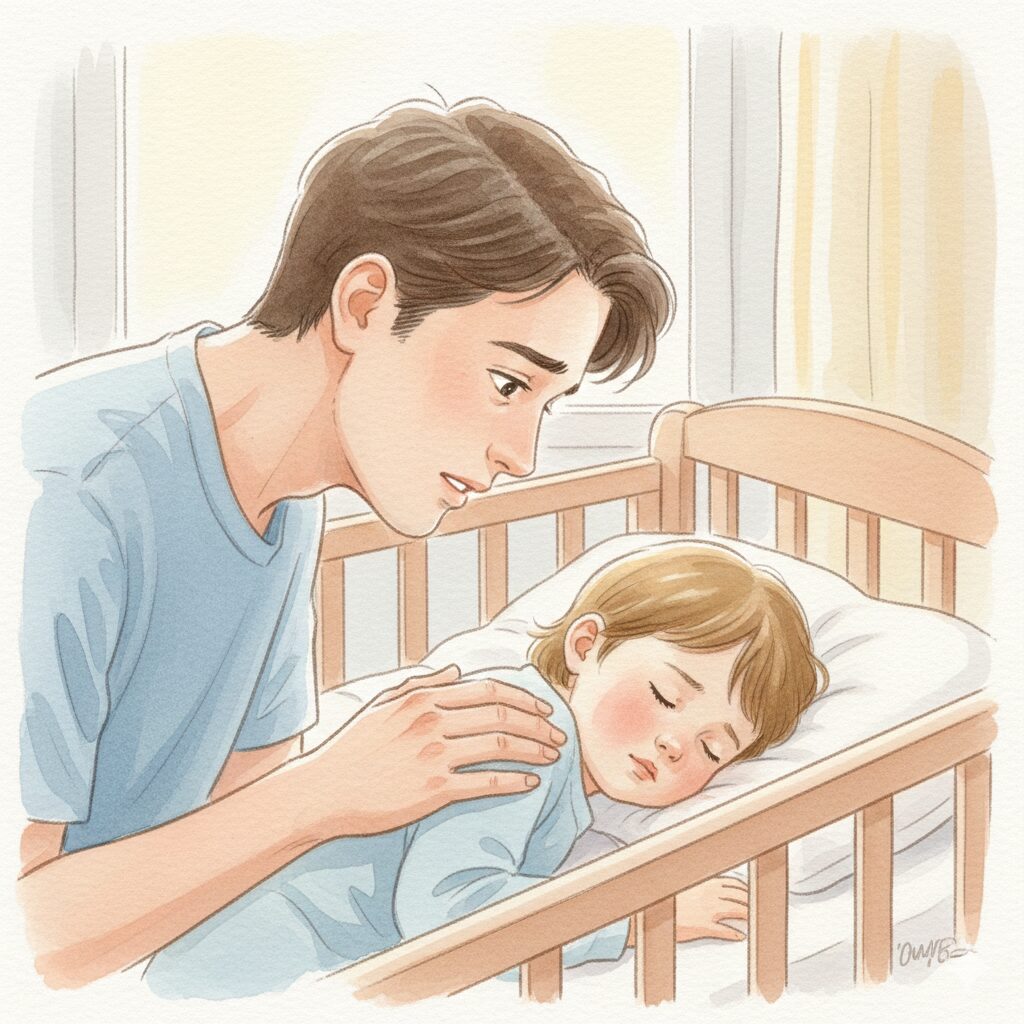
After a fall, you must observe your child carefully for at least 24–48 hours. Even if they seem fine at first, symptoms can develop over time. If you notice any of the following signs, do not hesitate—go to the emergency room or urgent care immediately.
- Changes in Consciousness or Lethargy:
- The child is excessively sleepy or unusually difficult to wake up (more than normal for them).
- They respond slowly to their name, or can’t answer simple questions.
- They look dazed or have a vacant, unfocused stare.
- Repeated Vomiting:
- The child vomits repeatedly (three or more times) after a delay from the initial impact, or the vomiting is projectile (forceful).
- Seizures or Convulsions:
- The child’s limbs shake uncontrollably, or they become rigid and unresponsive.
- Abnormal Crying or Irritability:
- The child has a persistent, high-pitched, or inconsolable scream that is unlike their usual cry (this can be a sign of increased pressure in the brain).
- Physical Abnormalities:
- Clear fluid or blood is leaking from the child’s nose or ears (possible cerebrospinal fluid leak).
- There is a visible deep cut or depressed/dented area on the skull or body.
- Extensive dark bruising around the eyes or behind the ear (known as ‘Raccoon Eyes’ or ‘Battle Sign’—serious internal bleeding).
- Eyes cross, or the size of the pupils in each eye is unequal.
- Movement or Balance Issues:
- A walking child suddenly cannot stand or walk properly, or they stagger and lose balance (a sign of concussion).
- Inability to move an arm or leg, suggesting potential fracture or nerve damage.
💡 Parent Documentation is Key: When you arrive at the hospital, medical staff will need to know the time of the injury, the mechanism of the fall (height, position), the child’s immediate reaction, and their current symptoms. Write a quick note on your phone to keep these facts straight.
🎨 Reading the Bruise: Interpreting Color and Location
While the size or color of a bruise alone cannot diagnose the severity of an internal injury, understanding the stages can help you monitor the healing process.
| Bruise Stage | Bruise Color | What It Means | Action & Observation |
| Immediate ~ Day 1 | Red/Dark Red | Blood vessels have burst, and blood is leaking under the skin. Swelling and pain may be at their peak. | Continue cold compresses to reduce swelling. You may administer an approved pain reliever (like acetaminophen) if pain is severe, as prescribed by a pediatrician. |
| Day 2 ~ Day 6 | Blue/Purple | The blood is clotting and changing color as it deoxygenates. This is when the bruise looks darkest. | As swelling decreases, switch to warm compresses to promote circulation and help the body absorb the blood faster. |
| Day 7 Onward | Green/Yellow | The body is breaking down and absorbing the trapped blood. This is the healing stage, and the bruise should soon disappear. | Continue gentle warm compresses or light massage to aid absorption. |
📍 Location-Specific Considerations:
- Head/Face: Due to the high number of blood vessels, even minor bumps can cause a large swelling or ‘goose egg.’ While large bumps look scary, focus more on the child’s behavior change than the bump’s size.
- Joints (Knees, Elbows): Injury near joints raises the possibility of a fracture. If the child refuses to use the injured limb, cannot bear weight, or continues to complain of severe pain, they should be checked for a fracture.
- Abdomen/Back: A strong blow to the torso, where vital organs are located, can cause internal injury even without a visible bruise. If the child complains of severe belly pain or their urine turns dark or reddish, seek urgent care immediately.
🛡️ Handling the Situation: Preventing Secondary Injury and Maintaining Calm
When your child is hurt, your reaction is critical. If you panic, your child will become more distressed. A parent’s calm demeanor is the best immediate first aid.
- Reassure the Child: Hold them close and speak in a soft, soothing voice. “It’s okay, you’re safe. Mommy/Daddy is here.” This helps them calm down quickly.
- Create a Stable Environment: Move the child to a quiet, comfortable spot. Minimize loud noises and bright lights. If they hit their head, it is often best to lay them down with their head slightly elevated above the heart level.
- Check for Bleeding: If there is bleeding, apply gentle, firm pressure with a clean cloth or gauze for at least 10 minutes. If the wound is deep after the bleeding stops, stitches may be needed, so visit a clinic.
- Monitor During Sleep (Crucial): While it’s an old myth not to let a child sleep after a head injury, they will naturally be tired. If they hit their head, you must wake them up every 2–3 hours to check their level of consciousness. If they wake up easily, recognize you, and respond normally, they are likely fine. If they are extremely difficult to rouse or are only irritable when woken, seek medical help.

Falls and bumps are inevitable parts of childhood. But by arming yourself with the knowledge of what signs to watch for, you can act decisively and protect your child from potential harm. Remember these ‘okay-to-stay-home’ criteria and the ‘red flag warning signs,’ and you will be well-equipped to handle the bumps on your child’s path! 🙏
References
- Centers for Disease Control and Prevention (CDC): Head’s Up on Concussion in Youth Sports (Related to general head injury awareness) (URL: https://www.cdc.gov/headsup/index.html)
- American Academy of Pediatrics (AAP): Information on Minor Head Trauma in Children (URL: https://www.aap.org/)
- Mayo Clinic: First Aid for Bruises (Related to contusion treatment) (URL: https://www.mayoclinic.org/)
)
* **American Academy of Pediatrics (AAP):** Information on Minor Head Trauma in Children (URL: [https://www.aap.org/](https://www.aap.org/))
* **Mayo Clinic:** First Aid for Bruises (Related to contusion treatment) (URL: [https://www.mayoclinic.org/](https://www.mayoclinic.org/))
* image 4 - A simple illustration of a well-stocked first aid kit with a 'Parent Guide' label](http://global.socoolday.com/wp-content/uploads/sites/3/2025/12/Gemini_Generated_Image_iff5weiff5weiff5.jpg)