The most meaningful souvenir you can bring home from a family trip isn’t a mass-produced magnet or a generic keychain; it is the connection you build by prioritizing local, independent artisans over global retail chains. “Local-first” tourism is shifting from a niche interest to a necessary evolution in how we travel, allowing families to move beyond the superficial “tourist bubble” and contribute directly to the economic health of the communities they visit.
Key Takeaways for the Conscious Traveler
- Economic Impact: Spending with local artisans ensures that your travel budget directly supports families and preserves traditional cultural practices.
- Educational Depth: Engaging with craftspeople provides children with hands-on learning experiences that global brands simply cannot replicate.
- Authentic Connection: Local-first travel encourages a slower pace, reducing the stress of “checklist tourism” and fostering genuine human interaction.
If you have spent the last few years feeling like your family vacations have become a blur of airport terminals, hotel chains, and the same souvenir shops found in every city from Tokyo to London, you are not alone. There is a palpable sense of fatigue among parents in their 30s and 40s regarding the “cookie-cutter” travel experience. We want our children to see the world, but we also feel the weight of our ecological footprint and the ethical implications of supporting multinational corporations that strip-mine the unique character of local cultures.
The “local-first” movement is essentially a rebellion against this homogenization. It is a philosophy that asks us to treat our travel itinerary as a map of potential connections rather than a list of photo opportunities. When we choose to buy a hand-carved toy from a village woodworker instead of a plastic trinket made in a factory thousands of miles away, we are voting with our wallets for a more sustainable, vibrant, and human-centered future.
Understanding the Shift: Why Local Matters Now
The rise of local-first tourism is not just a trend; it is a reaction to the extreme convenience-seeking behavior that defined the early 2000s. We are currently seeing a global trend where travelers are increasingly valuing “authenticity” over “accessibility.”
For the average family, this shift involves a fundamental change in logistics. It requires moving away from the convenience of international hotel chains and standardized tour packages. It requires the courage to wander into neighborhoods where you might not speak the language fluently and where the goods on sale aren’t wrapped in plastic packaging with a “Made in [Country]” sticker that implies mass production.
Why is this happening now? The primary driver is the awareness of the “economic leakage” effect. In many tourist-heavy regions, a significant portion of the money spent by visitors flows out of the local economy and back to the headquarters of international travel conglomerates. By contrast, when you purchase a product directly from an artisan, the revenue stays within that family and that community, funding education, infrastructure, and the preservation of heritage crafts.
The Practical Guide to Integrating Artisans into Your Itinerary
Planning a trip with a focus on local artisans requires a different kind of preparation. You cannot simply rely on the “top 10” lists generated by global travel aggregators, as these often prioritize the most heavily marketed (and often most commercialized) locations.
1. Researching Beyond the Guidebooks
Before you even pack your bags, look for regional craft guilds or artisan associations. Many countries have government-backed or non-profit organizations that certify local craftspeople. These resources are goldmines for families looking to find workshops or studios that are open to visitors.
2. The “Slow Travel” Approach
You cannot effectively support local artisans if you are rushing between three cities in five days. Local-first tourism demands a slower pace. Consider spending a full week in one region rather than hopping between major hubs. This allows you the time to build rapport with shopkeepers, learn about the materials they use, and perhaps even participate in a family-friendly workshop.
3. Managing Expectations with Kids
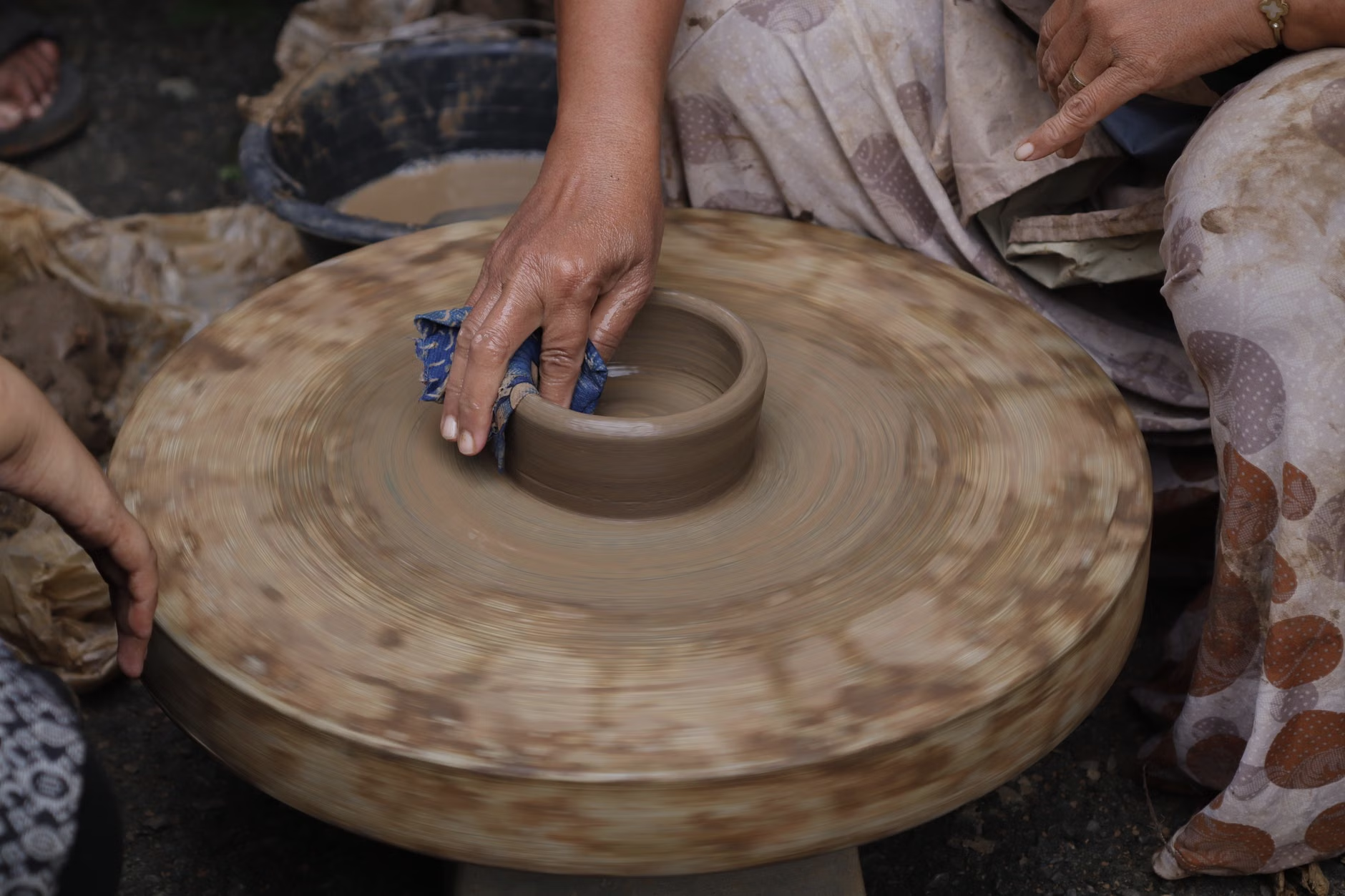
Children are naturally curious, but they have a limited attention span for “shopping.” The key is to turn the artisan visit into an experience rather than a transaction. Instead of just buying a item, ask the artisan if they can demonstrate their process. Most craftspeople are proud of their work and are happy to show a child how a loom works or how clay is shaped on a wheel. This transforms a mundane shopping trip into a memorable educational encounter.
| Activity | Standard Tourist Approach | Local-First Approach |
|---|---|---|
| Souvenir Shopping | Airport duty-free or mass-market kiosks | Visiting workshops or local craft markets |
| Activity Planning | Large-scale theme parks or chain tours | Local craft workshops or village experiences |
| Dining | Global fast-food or hotel restaurants | Family-run eateries sourcing local ingredients |
The Educational Value of Craft for the Next Generation
As parents, we are constantly looking for ways to teach our children about the world without resorting to textbooks. Local-first tourism provides a masterclass in global citizenship. When a child sees the time, effort, and skill required to create a simple wooden spoon or a hand-woven basket, they develop a profound appreciation for the value of labor and the importance of sustainability.
This is the antithesis of the “disposable culture” that plagues modern parenting. By showing our children that objects come from a person’s hands rather than a “Buy Now” button, we are instilling a sense of mindfulness. They learn that every purchase has a story, a history, and an environmental impact.
It would be disingenuous to claim that local-first tourism is always straightforward. There are pitfalls to navigate, and it is important to be realistic about the challenges of traveling this way.
The “Tourist Trap” Disguise
Some commercial enterprises are very good at mimicking the “local artisan” aesthetic. You will find shops that sell mass-produced items labeled as “handmade.” How do you spot the difference? Look for the tools. Does the shop have a workshop area? Is the craftsperson actually there, or is the shop filled with identical items in every color and size? True artisan work is often imperfect, varied, and limited in quantity.
Language and Logistics
When you step off the beaten path, you will inevitably encounter language barriers. This is not a failure; it is part of the experience. Use translation apps, but do not rely on them exclusively. Non-verbal communication—a smile, a nod of appreciation, pointing at a tool—is often more effective than a clumsy digital translation. Also, ensure you have a plan for how to transport fragile items home. Support local shipping services if possible, or invest in high-quality packing materials before you leave.
Budgeting for Quality
Handmade goods are almost always more expensive than mass-produced versions. This is because you are paying for the labor, the materials, and the survival of a craft. Adjust your budget accordingly. You might buy fewer items, but those items will have a longevity and personal value that plastic trinkets never will.
The Long-Term Impact: Building a Legacy of Travel
Why go through all this effort? Because the way we travel defines the way we see the world. If we continue to patronize global chains, those chains will continue to replace the unique cultural markers of our destinations. If we choose to support independent artisans, we are actively helping to keep local traditions alive.
This is not about being a “perfect” traveler. It is about being a conscious one. It is about acknowledging that our presence has an impact and choosing to make that impact positive. It is about teaching our children that they have the power to influence the world through their choices, no matter how small those choices might seem.

As you plan your next trip, take a moment to look at your itinerary. Does it include spaces for the unexpected? Does it prioritize human connections? If the answer is no, consider carving out a few days to get lost in a local neighborhood, find a craft workshop, and support the people who make our world a more interesting place to inhabit. Your family will return home with something far more valuable than a suitcase full of souvenirs—you will return with a deeper understanding of the world and a story that truly belongs to you.
Frequently Asked Questions
1. How can I distinguish between authentic local crafts and mass-produced souvenirs?
Authentic items typically show slight variations, as they are handmade. Look for the presence of the artisan or their tools in the vicinity. If a shop sells thousands of identical, perfect items, it is likely mass-produced. Ask questions about the materials and the process; a true artisan will be able to explain how they created the piece.
2. Is local-first tourism more expensive for a family?
It can be, but it is also more scalable. You don’t need to buy a souvenir for everyone you know. By focusing on quality over quantity, you can support local craftspeople without necessarily blowing your budget. Think of the purchase as an investment in a memory or an experience rather than a simple consumer good.
3. How do I find reputable artisans when I don’t speak the local language?
Focus on local craft guilds, cultural centers, or government-run tourism offices. They often have directories of local artists. You can also ask your hotel host or a local café owner for recommendations—they are usually the best source of information for hidden gems that aren’t listed on mainstream travel blogs.
For further reading on sustainable travel practices, you can consult resources such as the Global Sustainable Tourism Council or the World Tourism Organization (UNWTO), which provide guidelines on how to travel responsibly and support local economies.