The modern community library is no longer just a quiet place for books; it has rapidly transformed into a “Library of Things,” a sustainable hub that allows families to borrow everything from high-end power tools and camping gear to expensive educational toys.
- Economic Relief: By borrowing tools and toys, families can save hundreds of dollars annually while avoiding the clutter of items used only once or twice.
- Environmental Impact: Sharing resources significantly reduces individual consumption and landfill waste, supporting a circular economy at the neighborhood level.
- Community Building: These spaces act as social anchors, fostering connection and skill-sharing among residents beyond the traditional silent library environment.
How many times have you bought a specialized kitchen gadget, a high-end power drill, or a “must-have” developmental toy, only to see it gather dust in a closet three months later? It is a common frustration for anyone in their 30s or 40s. We are constantly balancing the desire to provide the best for our families with the practical constraints of limited home storage and shrinking household budgets. This is where the modern “Library of Things” movement steps in as a quiet, yet powerful, solution to the pressures of modern consumption.
The Evolution of the Public Library
Historically, libraries were designed as repositories for knowledge—mostly in the form of printed pages. However, the mission of the library has always been about democratizing access. In the 21st century, that mission has expanded. If the goal is to provide citizens with the tools they need to lead productive, informed lives, then why should that be limited to books?
The shift began with digital media, such as DVDs and e-books, but the current wave is physical. Libraries are now curating collections that reflect the actual needs of their patrons. For a parent, this might mean a telescope for a weekend science project. For a homeowner, it might mean a carpet cleaner or a stud finder. This evolution is not just about convenience; it is about addressing the “access over ownership” model that is increasingly popular in our digital-first world.
When we look at the data, the necessity is clear. According to various municipal reports, the average power drill is used for a total of 13 to 15 minutes over its entire lifetime. That is an incredibly inefficient use of a physical object. By pooling these resources, communities ensure that one high-quality tool serves fifty households instead of one, maximizing the utility of every manufactured item.
Why Toy Libraries are a Game-Changer for Parents
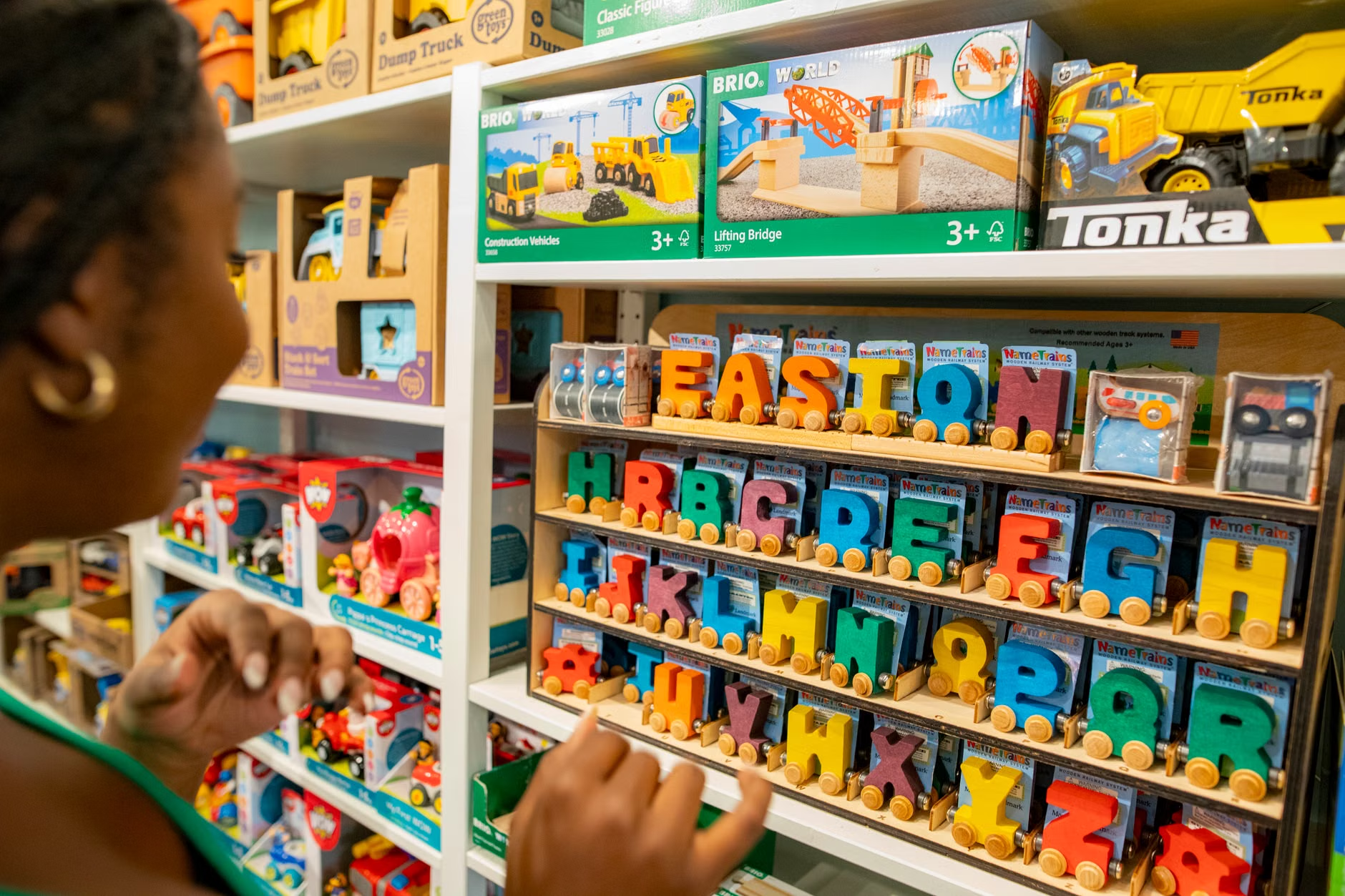
If you have children under the age of ten, you know the cycle: a child becomes obsessed with a specific type of building block or a complex board game, only to lose interest after a few weeks. The financial cost of keeping up with these developmental stages is staggering, not to mention the environmental cost of plastic toys that end up in landfills.
Toy libraries function much like book libraries. You sign up, browse a curated selection of age-appropriate, high-quality toys, and check them out for a set period. This model offers several distinct advantages:
| Benefit | Description |
|---|---|
| Financial Savings | Reduces the need to purchase expensive, short-term use items. |
| Reduced Clutter | Keeps your home living space clear of unused bulky toys. |
| Developmental Variety | Allows children to explore new interests without long-term commitment. |
| Sustainability | Encourages the reuse of toys, lowering the demand for new plastic manufacturing. |
Beyond the practicalities, there is an educational component. Teaching children that items are shared communal resources rather than personal property they must own is a lesson in sustainability and civic responsibility. It changes the narrative from “I want to buy this” to “I wonder if we can borrow this for our next project.”
Tool Libraries: DIY Made Accessible
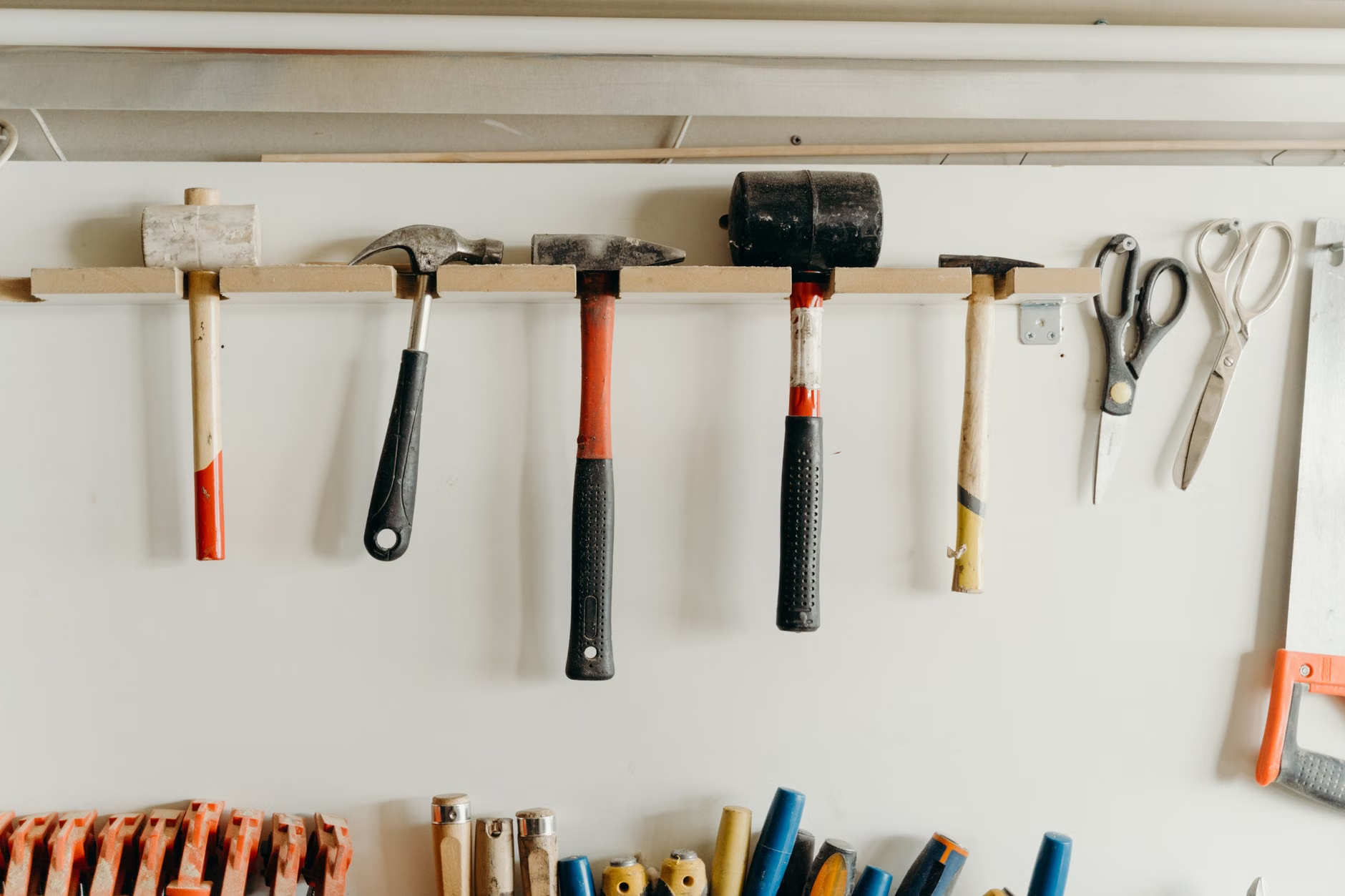
Home maintenance is often intimidating for the average person. Between the high cost of hiring professionals and the high cost of buying professional-grade tools, many minor repairs go ignored. Tool libraries bridge this gap by providing access to equipment that would otherwise be cost-prohibitive for the average household.
Most of these libraries operate with a strict membership model. You provide proof of residency, sign a liability waiver, and receive an orientation on how to use the equipment safely. This is a critical aspect: it is not just about lending the hammer; it is about providing the knowledge to use it correctly. Many libraries now host workshops, taught by local volunteers or contractors, on how to fix a leaky faucet or install a shelf.
This creates a sense of empowerment. When you own your home or even rent, being able to perform basic maintenance is a massive stress reliever. The library becomes a partner in your ability to maintain your living environment, rather than just a place to study.
Addressing the Skepticism: Quality and Hygiene
A frequent concern among potential users is the state of the items. “Are these toys broken? Is the equipment safe?” It is a valid question. However, libraries that run “Library of Things” programs take maintenance very seriously. They often have dedicated staff or volunteer mechanics who inspect, clean, and repair items between loans.
For toys, this usually involves industrial-grade cleaning protocols that ensure items are sanitized before they are returned to the shelf. For tools, it involves checking for electrical safety and mechanical integrity. In many cases, the items available at a library are of higher quality than what a casual user would buy at a big-box store. Because these tools are designed for repeated communal use, they are often professional-grade, making your DIY tasks easier and more efficient.
How to Start Using Your Local Resources
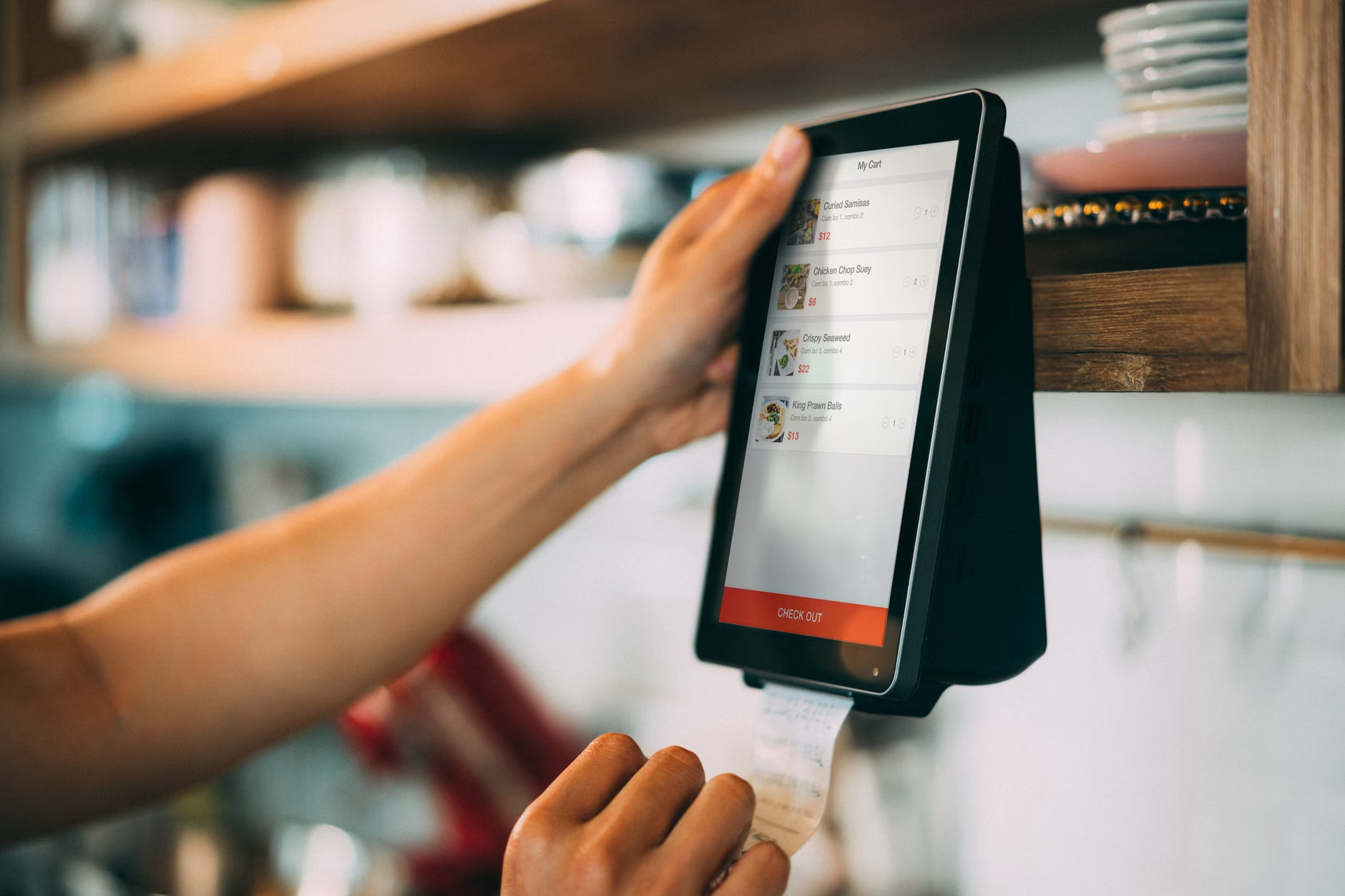
If you are interested in exploring these services, the first step is to look beyond the physical building of your local library. Many libraries now maintain online catalogs for their “non-traditional” collections. Start by visiting your municipal library website and searching for keywords like “Library of Things,” “Tool Loan,” or “Toy Library.”
If your local library doesn’t have such a program yet, you might be surprised to find that there are independent organizations that do. Many communities have established standalone “Tool Sheds” or “Sharing Hubs” that operate independently but with similar membership models. You can also advocate for these services. Libraries are highly responsive to patron requests; if enough people ask for a toy or tool collection, they often find the budget and space to make it happen.
The Broader Implications for Our Daily Lives
The “Library of Things” is a symptom of a larger cultural shift. We are moving away from the hyper-consumerism of the late 20th century toward a more circular, resource-conscious way of living. For those of us in our 30s and 40s, this is particularly relevant. We are often at the peak of our financial responsibilities, managing mortgages, childcare, and career growth. Finding ways to reduce the “friction” of daily life—the need to own, store, and maintain hundreds of items—is a form of self-care.
When you borrow a sewing machine for a one-off repair instead of buying one, you aren’t just saving money. You are reclaiming shelf space in your home. You are reducing your carbon footprint. You are participating in a local ecosystem that values community over individual consumption. This is a quiet revolution, but it is one that makes our daily lives significantly lighter and more manageable.
Moreover, these libraries serve as a “third space.” As our lives become increasingly digital and isolated, having a physical location where you can interact with neighbors while picking up a bread maker or a set of blocks is valuable. It breaks down the silos of the nuclear family unit and reminds us that we are part of a larger, interconnected community.
Challenges and Considerations
While the movement is growing, it is not without its challenges. Logistics is the biggest hurdle. Storing a lawnmower or a large telescope takes up significantly more space than storing a book. Libraries that implement these programs must navigate complex issues regarding insurance, liability, and space management. This is why you will often see these programs start small—perhaps with a collection of board games or basic hand tools—before expanding to larger or more complex items.
As a user, you also have a responsibility. Returning items in good condition, on time, and with all parts included is essential to the longevity of these programs. The “Library of Things” works only if the community treats the items with the same care they would their own property. It requires a mindset of stewardship. When we borrow, we are essentially acting as temporary custodians of a resource that belongs to everyone.
Summary and Moving Forward
The community library is evolving to meet the complex needs of modern life. By providing access to tools, toys, and household items, these spaces are helping families save money, reduce waste, and build stronger neighborhoods. It is an invitation to rethink what we truly need to own and what we can simply share. As you look for ways to simplify your home and support your local community, start by checking what your library has to offer. You might find that the solution to your next home project or child’s playtime isn’t at the store—it’s just a checkout away.
For further reading on the circular economy and community resource sharing, consider exploring resources from the American Library Association or local municipal sustainability offices which often document the impact of these sharing programs.
Frequently Asked Questions
- Do I need a special membership to borrow tools or toys?
Most libraries require a standard library card, but some “Library of Things” programs may require an additional waiver or a specific age verification for safety-sensitive items like power tools. Always check your local branch’s policy online first. - What happens if I accidentally break an item I borrowed?
Policies vary by location. Generally, libraries understand that wear and tear happen. However, you should inform the staff immediately. Most libraries have a replacement or repair policy, and it is rarely punitive if you are honest and responsible. - How can I suggest new items for my library to include?
Most public libraries have a “suggest a purchase” form on their website. If you feel there is a community need for a specific type of resource—like musical instruments or gardening tools—don’t hesitate to submit a request. Libraries are always looking for ways to better serve their patrons.
Note: Always prioritize safety when using borrowed tools. If you are unfamiliar with a specific piece of equipment, look for the library’s instructional manuals or ask staff if they offer introductory tutorials.