The most successful day trip isn’t the one where you cram the most activities into a single afternoon, but the one where you actually arrive at your destination without a headache or a parking-related meltdown. By prioritizing public transit over the car, you reclaim the “lost” time of driving, turning a commute into a shared experience and significantly lowering the logistical friction of a family outing.
Three Key Takeaways
- Ditch the car: Driving forces you to be a navigator; public transit lets you be a traveler.
- The 60-Minute Rule: For a day trip with family, aim for a transit time of under one hour to keep morale high.
- Offline Preparation: Always download offline maps and transit schedules to avoid being stranded by spotty mobile data.
We’ve all been there: you spend three hours in a car, white-knuckling the steering wheel through heavy traffic, only to spend another forty minutes circling a parking lot in a town you’ve never visited. By the time you actually get out of the vehicle, the kids are cranky, you’re drained, and the “fun” part of the day feels like a chore. It’s a common frustration for parents in their 30s and 40s who are trying to squeeze meaningful experiences into a weekend schedule.
Transitioning to a “transit-first” mindset isn’t just about environmental impact or saving money on gas—it’s about changing the rhythm of your day. When you take the train or bus, the trip becomes part of the adventure. You can read, play a game, or simply look out the window. Here is how to build a transit-first itinerary that actually works.
Choosing the Right Destination for a Car-Free Trip
Not every destination is created equal when it comes to public transport. If you are starting your journey from a major urban hub, your best candidates are “terminal towns” or “transit-oriented hubs.” These are locations where the train station or bus terminal drops you off in the heart of the action, not in an industrial park on the outskirts.
Start by looking at your local transit authority’s map. Don’t look for the most famous landmark; look for the most connected one. Use a simple heuristic: if you have to take a bus, then a train, then a shuttle, then walk for twenty minutes, you are setting yourself up for failure. A “transit-first” trip should involve, at most, two legs of travel. If you can get there on a single direct line, that is your golden ticket.
When evaluating a potential location, check for “walkability scores.” Many cities now provide this data. A location with a walkability score of 80 or above means you can likely reach restaurants, parks, and museums on foot from the station. This is critical because if you have to rely on ride-sharing apps (like Uber or Lyft) once you arrive, you’ve essentially re-introduced the stress of car travel back into your day.
The Anatomy of a Transit-First Itinerary
A good itinerary is a living document, not a rigid prison. When traveling with children, flexibility is your greatest asset. However, flexibility requires a baseline structure. I recommend the “10:00 to 16:00” rule for day trips. Aim to arrive at your destination by 10:00 AM and aim to be back on the train by 4:00 PM. This avoids the frantic “must-do” pressure and gets you home before the evening fatigue sets in.
Start by identifying your “Anchor Activity.” This is the one thing you absolutely want to do—perhaps a specific museum, a botanical garden, or a historic walking tour. Place this in the middle of your day. Everything else you do should be a “satellite activity.” If you get to the satellite activities, great. If you don’t, you’ve still achieved your primary goal.
| Phase | Focus | Tip |
|---|---|---|
| Morning | Arrival & Coffee | Find a cafe near the station first. |
| Midday | The Anchor Activity | Book tickets in advance to skip lines. |
| Afternoon | Leisurely Exploration | Keep it low-stakes; a park or a bookstore. |
| Departure | Buffer Time | Always aim for a train 30 minutes earlier than needed. |
Managing the Logistics: Gear and Preparation
The biggest mistake most people make when switching to transit is overpacking. When you have a car, the trunk is an extension of your living room. When you are on a train, everything you bring must be carried by you. If you are a parent, this is the ultimate test of “minimalist parenting.”
Focus on a “One-Bag” rule for the family. One backpack for the essentials: water bottles (refillable), a portable power bank, snacks that don’t crumble, and a light jacket for everyone. If you need a stroller, make sure it is a “travel-ready” model—the kind that folds with one hand. You will be getting on and off platforms, and you don’t want to be wrestling with a bulky frame while the doors are closing.

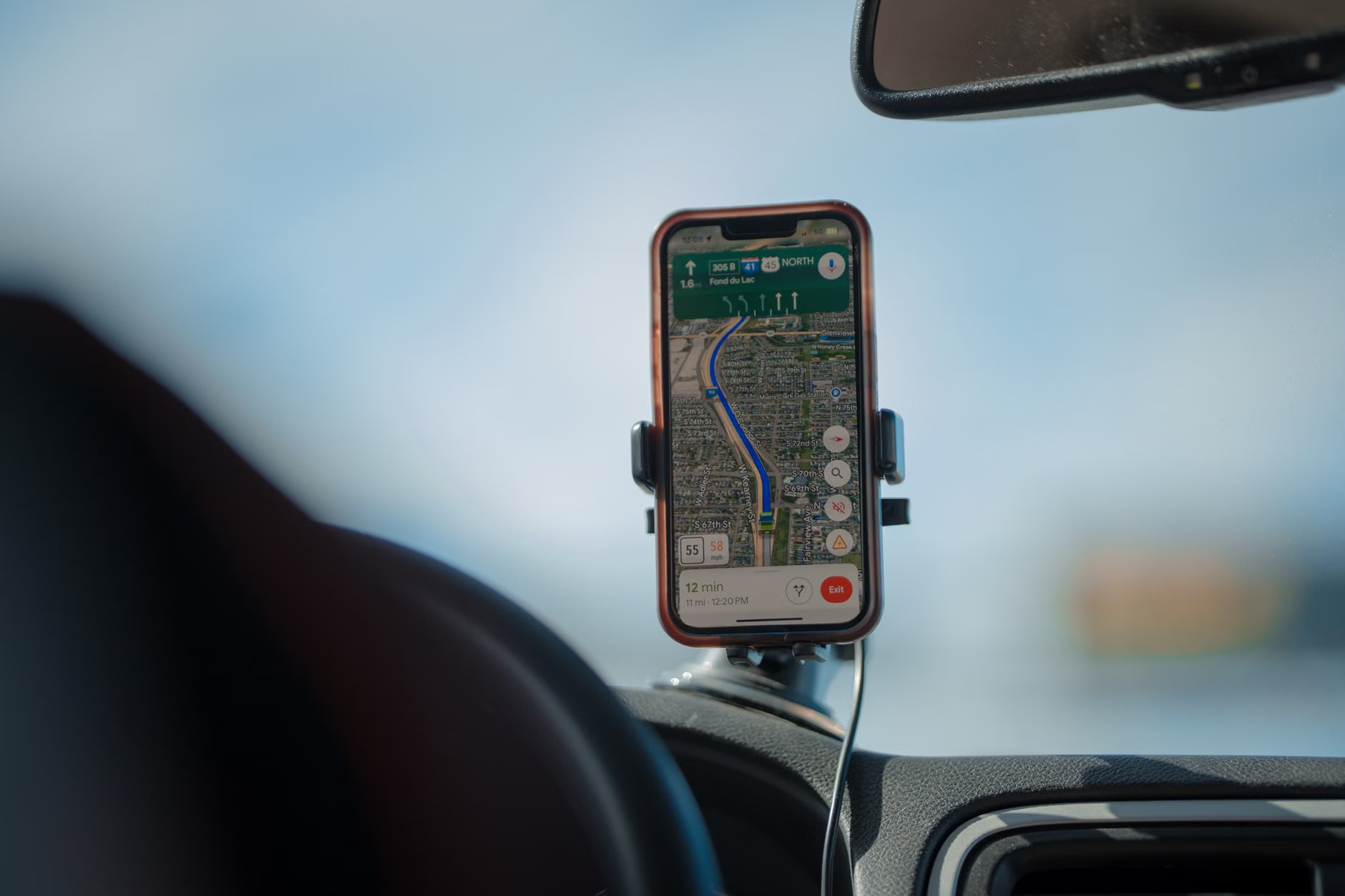
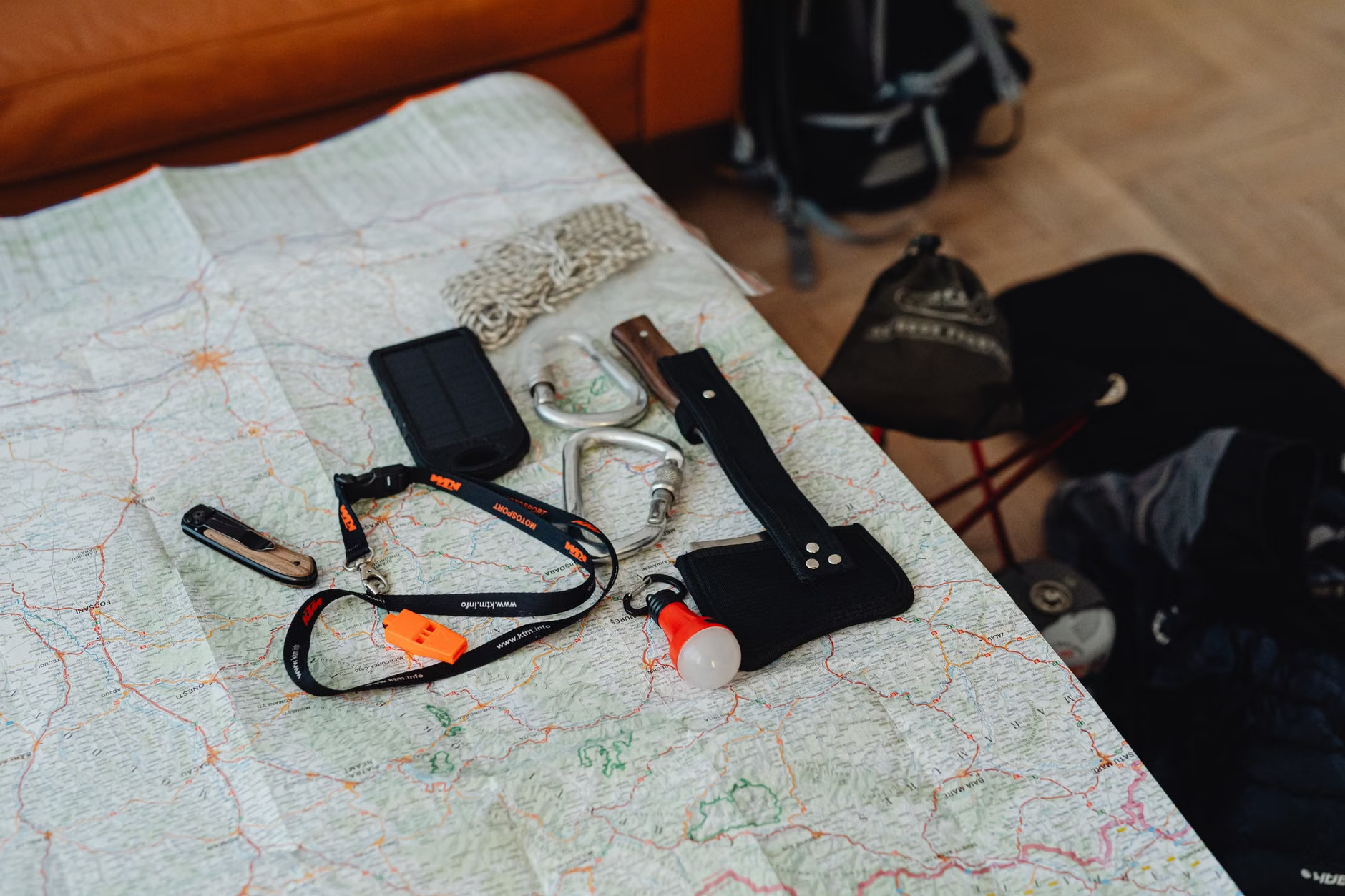
Technology is your friend, but don’t over-rely on it. While Google Maps and Citymapper are indispensable, they can fail you when you lose signal in a tunnel or your battery dies. Carry a physical map or a screenshot of the route. Yes, it feels old-fashioned, but it’s a fail-safe that has saved many a trip from becoming a disaster.
Dealing with the “What-Ifs”
What if the train is delayed? What if the kids have a meltdown? What if it starts to rain? The transit-first lifestyle requires a shift in attitude. When you drive, a delay is a frustration. When you are on a train, a delay is just… time. Use that time to play a card game, read a book, or watch the world go by.
The most important part of a transit-first itinerary is the “buffer.” Never plan your return trip for the last possible train of the night. If you miss that, you are in trouble. Always plan to be on a train that leaves at least two hours before the final departure of the day. This gives you a massive margin of error for delays, long lunches, or unexpected detours.
Also, consider the “Exit Strategy.” Know where the nearest taxi rank is, or have a backup ride-share app installed and ready to go. If the trains are suspended for maintenance, you need to know how to get back to your starting point without panicking. Knowing your options reduces the anxiety of the unknown.
Why This Matters for Your Sanity
There is a specific kind of cognitive load associated with driving. You have to monitor traffic, look for parking, deal with road rage, and navigate complex interchanges. By delegating the driving to a professional operator, you are freeing up mental bandwidth. You can talk to your partner, actually listen to your children, or just stare at the clouds.
This is about reclaiming your time. In our 30s and 40s, we are often pulled in a dozen different directions. A day trip should be a restoration of your energy, not a depletion of it. When you arrive at your destination refreshed rather than stressed, you are a better parent and a better partner. It sounds like a small shift, but it changes the quality of the entire day.
Frequently Asked Questions
How do I handle public transit with young children who need naps?
The key is to embrace the “motion nap.” Most children fall asleep easily to the rhythmic hum of a train. Plan your return journey to coincide with their natural nap time. If they are older and don’t nap, keep the afternoon activities low-energy—a quiet museum or a movie—to prevent an evening crash.
Is it really cheaper to take public transport for a family?
When you factor in fuel, parking fees (which can be exorbitant in city centers), and the wear and tear on your vehicle, public transit is almost always cheaper. Plus, you avoid the “hidden” cost of stress. Check if your local transit authority offers “family passes” or “weekend group tickets,” which can significantly lower the price for a group of four or more.
What if I live in an area with poor public transport?
If your local area is truly a transit desert, look for a “Park and Ride” facility. Drive to the nearest major transit hub—usually a suburban train station—park your car in a secure, long-term lot, and take the train for the remainder of the journey. This gives you the convenience of the car for the first leg and the ease of transit for the final approach.
Building a transit-first itinerary is a skill that improves with practice. Start with small, local trips and gradually expand your radius as you get more comfortable with the schedules and the rhythms of your local network. It might feel daunting at first, but once you experience the freedom of arriving at your destination without having to worry about where to park, you will likely never want to go back to the stress of the highway.
For more information on planning your next route, check the American Public Transportation Association for general resources or your local municipal transit website for specific schedules and fare information. Keep your plans light, your expectations realistic, and your snacks plentiful. Happy traveling.