By 2026, the global shift toward cleaner energy will move from policy documents to your monthly utility bill, making heat pumps and smart home efficiency not just “green” choices, but the most practical ways to protect your family’s budget. As we approach this turning point, the conversation is shifting away from abstract environmental goals toward the concrete reality of how we keep our homes comfortable without breaking the bank.
- The End of Cheap Fossil Fuel Reliance: Global trends indicate that gas heating is becoming more expensive and increasingly regulated; electric alternatives are becoming the standard.
- Efficiency is the New Currency: Upgrading your home’s “envelope”—insulation and windows—is now more cost-effective than simply buying a bigger heater or AC unit.
- Smart Tech as a Buffer: Using smart home energy management systems allows you to shift power usage to off-peak hours, mitigating the volatility of modern energy prices.
If you are in your 30s or 40s, you likely remember a time when your parents didn’t worry much about the specific “source” of their home heating. You turned the dial, the furnace kicked in, and the house got warm. It was simple, if not particularly efficient. Today, the landscape is radically different. We are balancing the rising costs of living with the need to maintain a comfortable environment for our children, all while hearing constant news about carbon taxes, grid stability, and the phase-out of traditional combustion heating.
It can feel overwhelming. Every time you open a browser, there is a new report about why your current system is outdated. But let’s cut through the noise. This isn’t just about saving the planet—though that’s a nice bonus—it’s about future-proofing your home so you aren’t caught off guard by the energy policies that will be standard by 2026.
The Reality of the 2026 Energy Landscape
By 2026, many regions will have fully implemented stricter building codes that prioritize electrification. The “electrification of heat” is the industry term for moving away from gas or oil furnaces toward high-efficiency heat pumps. But what does this actually mean for a family living in a suburban home or a city apartment?
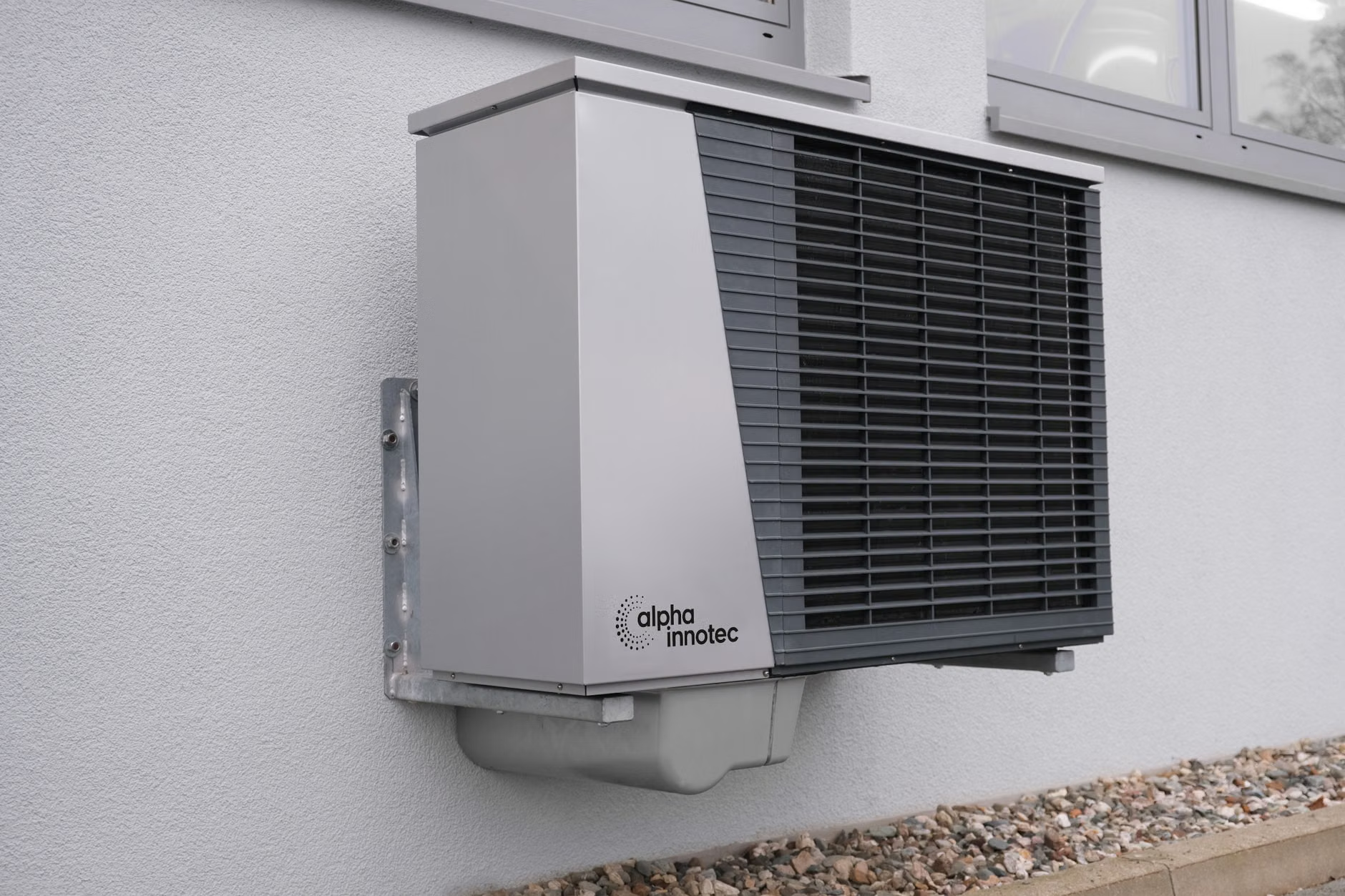
In simple terms, a heat pump doesn’t “create” heat by burning fuel. It moves heat from the outside air into your home (even when it’s cold outside) or pulls it out of your home to cool it down. Because it’s moving energy rather than generating it via combustion, it is significantly more efficient. By 2026, many governments are expected to offer increased rebates or tax incentives for these systems, specifically to encourage the transition before traditional gas systems become too expensive to maintain due to rising carbon levies.
Think of it like the transition from internal combustion cars to electric vehicles. At first, it seemed like a niche hobby for tech enthusiasts. Now, it is becoming a mainstream financial decision. The same is happening with how we control the climate inside our walls.
Why Your Home’s “Envelope” Matters More Than Your HVAC
One of the biggest mistakes homeowners make is focusing entirely on the “machine”—the heater or the air conditioner—while ignoring the “box” it’s sitting in. If you have a state-of-the-art heat pump but your windows are drafty and your attic insulation is thin, you are essentially trying to heat the great outdoors.
Efficiency in 2026 will be defined by the “Passive House” philosophy, even if you aren’t living in a certified passive home. The goal is to keep the air you’ve already paid to heat or cool inside your house for as long as possible. Before you consider replacing your HVAC system, look at these three areas:
| Area | Practical 2026 Fix | Estimated Impact |
|---|---|---|
| Attic Insulation | Increase R-value to current regional standards | High (Reduces heat loss by 20-30%) |
| Window Sealing | Professional weatherstripping or double-glazing | Medium (Stops drafts/moisture) |
| Smart Thermostats | Installing AI-driven climate controllers | Medium/High (Optimizes usage patterns) |
When you seal your home properly, you don’t just save money on bills. You also allow yourself to downsize your HVAC equipment. A smaller, more efficient unit can handle the load of a well-insulated home, which often means lower installation costs and fewer mechanical parts that can break down later.
We see a lot of “smart” tech marketed to parents. It’s easy to be skeptical. Do you really need a thermostat that learns your habits? In the context of 2026, the answer is increasingly “yes.”
As the energy grid becomes more complex, utility companies are moving toward “time-of-use” pricing. This means electricity might be cheaper at 2:00 PM when solar production is high, and significantly more expensive at 7:00 PM when everyone is home, cooking, and doing laundry. A smart thermostat can communicate with the grid to “pre-heat” or “pre-cool” your house when electricity is cheap, then coast through the expensive peak hours without the unit turning on.
This isn’t about giving an algorithm control over your life; it’s about using technology to act as a buffer against volatile market prices. For a family of four, these small, automated adjustments can translate into hundreds of dollars in savings annually. It’s a set-it-and-forget-it strategy that pays off.

The Financial Pivot: Is Now the Time to Upgrade?
The “energy transition” sounds expensive, and often, it is. However, the cost of inaction is also rising. If you live in a house with a furnace that is 15 years old, you are currently living on borrowed time. When it breaks in the middle of a cold snap in 2026, you will be forced into an emergency replacement, which rarely allows for the best pricing or the most efficient system selection.
If you are planning a renovation, prioritize the heating and cooling system upgrades early. Look for:
- Government Rebates: Many countries are expanding subsidies for heat pumps specifically to meet 2026 climate targets. Check your local energy authority’s website before you sign any contracts.
- Total Cost of Ownership (TCO): Don’t look at the sticker price of the unit. Look at the expected energy savings over 10 years. A unit that costs $2,000 more upfront but saves $400 a year will pay for itself in five years.
- Durability: With fewer moving parts than traditional combustion systems, modern heat pumps often have a longer service life, provided they are maintained correctly.
Common Misconceptions About Modern Heating
There is a lot of misinformation circulating about heat pumps. A common myth is that they “don’t work in cold climates.” This was true 20 years ago, but it is demonstrably false today. Modern “cold-climate” heat pumps are designed to operate efficiently even when temperatures drop well below freezing. They are currently being installed in places like Scandinavia and Canada, where winters are notoriously harsh.
Another myth is that electric heating is “too expensive.” This ignores the fact that heat pumps are 300% to 400% efficient. For every unit of electricity they use, they move three to four units of heat. Compare that to a gas furnace, which is at best 95% efficient, and you can see why the math is shifting in favor of electricity.
Practical Steps for Families
You don’t need to overhaul your entire life to prepare for the 2026 energy shift. Start with a phased approach:
- The Home Audit: Most utility companies offer free home energy audits. They will send a professional to use an infrared camera to see exactly where your house is losing heat. This is the single most valuable thing you can do.
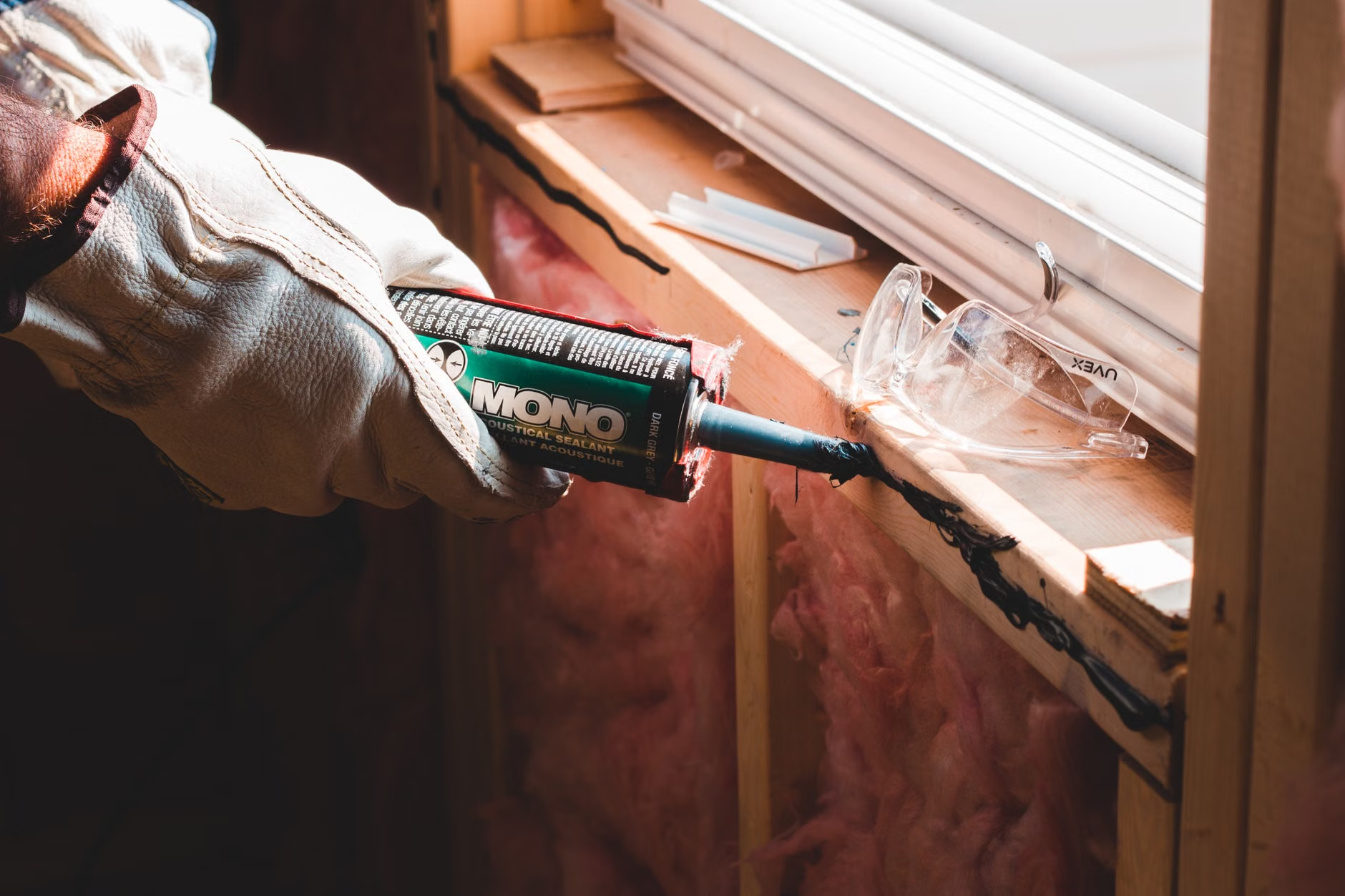
- Seal the Gaps: Before upgrading to a new system, spend a weekend with your partner or older kids sealing windows and doors. It’s a low-cost, high-impact project that improves comfort immediately.
- Smart Management: If you haven’t already, install a smart thermostat. Even if you don’t use the advanced features, the ability to control your home’s temperature from your phone while you’re out at soccer practice or work is a game-changer for reducing waste.
- Plan for the Transition: If your furnace or AC is over 10 years old, start a “replacement fund” now. When the time comes to switch, you’ll have the budget to choose a high-efficiency model rather than being forced to pick the cheapest, least efficient option available.
The Bigger Picture: Comfort and Stability
Ultimately, the energy transition isn’t just about labels like “green” or “carbon-neutral.” It’s about creating a home environment that is stable, reliable, and affordable. As we move toward 2026, the global energy market is becoming more decentralized and, in some ways, more volatile. By taking control of your home’s efficiency, you are insulating your family from the shocks of that volatility.
It’s easy to feel like these changes are being forced upon us, but if you look at the benefits—cleaner indoor air, more precise temperature control, and lower long-term costs—it’s clear that this is a transition worth embracing. You aren’t just buying a new machine; you are investing in a more comfortable, predictable future for your family.
Be cautious of contractors who try to “upsell” you on unnecessary features. Always get at least three quotes, and ensure that the contractor is experienced specifically with heat pump technology, as the installation requirements are different from traditional HVAC systems. A poorly installed heat pump will never reach its efficiency potential, no matter how good the unit is.
Take it one step at a time. You don’t need to do everything this year. By staying informed and making small, intentional choices now, you’ll be ready for whatever 2026 brings to your doorstep.
Frequently Asked Questions
1. Will my electricity bill skyrocket if I switch to a heat pump?
Generally, no. While your electricity usage will increase, your total energy bill (electricity plus gas/oil) usually decreases because you are no longer paying for a secondary fuel source. The high efficiency of heat pumps helps offset the cost of electricity.
2. Can I install a heat pump in an older home without major renovations?
Yes, in most cases. “Ductless” mini-split heat pumps are an excellent solution for older homes that lack existing ductwork. They are highly efficient and can be installed in individual rooms, allowing for zone-based heating and cooling.
3. How often do heat pumps need maintenance?
Heat pumps require similar maintenance to traditional AC units—cleaning or replacing filters every 3–6 months and an annual professional check-up to ensure the refrigerant levels and coils are clean. Regular maintenance is key to their longevity and efficiency.
For further reading on residential energy efficiency and local rebate programs, visit the International Energy Agency (IEA) or your national government’s energy department website.