Investing in energy-efficient home upgrades is no longer just a trend for the eco-conscious; it is a strategic financial move that can directly increase your property’s resale value while lowering your monthly cost of living.
- Value Premium: Homes with high energy-efficiency ratings (like LEED or EPC certifications) often sell for a measurable premium compared to standard homes.
- Green Mortgages: Many lenders now offer “Green Mortgages” with lower interest rates or better terms for homes that meet specific environmental standards.
- Long-term Savings: Beyond resale, the immediate reduction in utility bills provides a steady return on investment that outweighs the initial capital expenditure over time.
If you are in your 30s or 40s, you are likely juggling the “sandwich” years—balancing career advancement, raising children, and managing a household that seems to grow more expensive by the day. When you look at your home, you probably don’t just see a place to sleep. You see your biggest asset, your primary savings account, and, let’s be honest, a never-ending to-do list of repairs and upgrades.
The conversation around “green” housing has shifted. A decade ago, it was about solar panels as a statement piece. Today, it is about the “Green Mortgage” and how energy performance certificates (EPCs) or home energy scores are becoming as important to buyers as the number of bathrooms or the size of the kitchen island. But does spending thousands on insulation or high-efficiency HVAC systems actually pay off when it’s time to put the “For Sale” sign in the yard?
Understanding the Green Mortgage Landscape
Before we dive into the paint and insulation, let’s look at the financial product that is driving this trend: the Green Mortgage. In many parts of the world, banks have realized that owners of energy-efficient homes are statistically lower-risk borrowers. If your heating and cooling bills are 30% lower than your neighbor’s, you have more disposable income to cover your monthly mortgage payments.
Because of this lower risk, lenders are increasingly incentivized to offer preferential rates. These loans are designed to encourage homeowners to either purchase energy-efficient properties or renovate their current homes to meet higher energy standards. For a parent managing a family budget, a 0.25% or 0.5% reduction in interest rates on a 30-year loan is not just “green”—it is a significant amount of money that stays in your pocket.
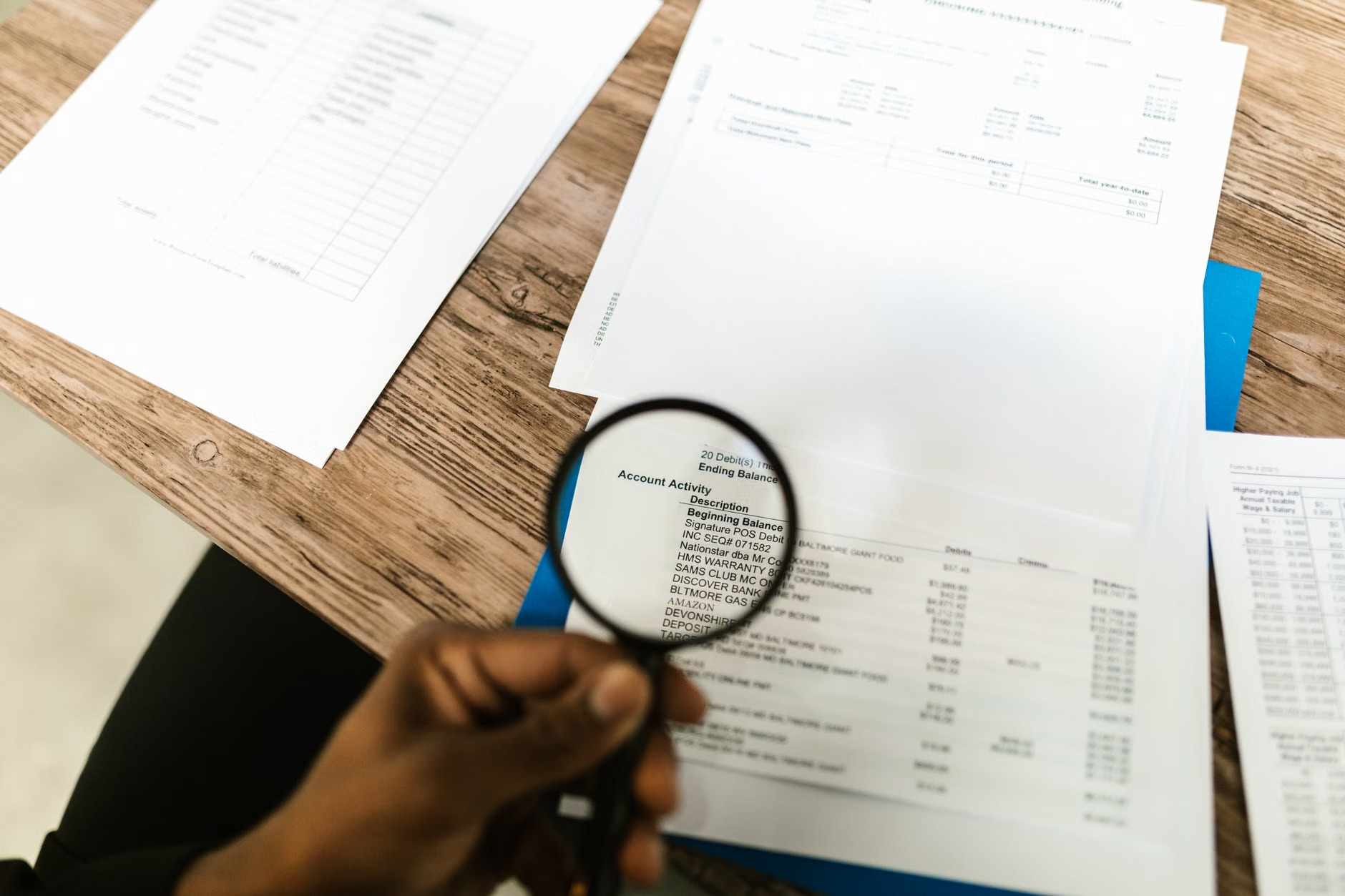
To qualify, you usually need a certified energy rating. This is where it gets technical, but manageable. You are essentially paying for an audit—a professional assessment of your home’s “envelope” (how well it keeps air in or out) and its mechanical systems. Think of it as a health check-up for your house. The report that comes back gives you a score, and that score is your ticket to better financing.
The ROI of Energy-Efficient Upgrades
Not all upgrades are created equal. If you are looking to boost resale value, you need to prioritize projects that offer the best “bang for your buck.” It is easy to get distracted by flashy tech, but the boring, behind-the-scenes work usually yields the highest financial return.
1. Insulation and Air Sealing: This is the gold standard of home efficiency. It is not glamorous, and nobody will notice your new attic insulation during an open house. However, it is the most effective way to reduce energy demand. A home that stays warm in the winter and cool in the summer with minimal effort is a huge selling point for savvy buyers.
2. High-Efficiency HVAC Systems: Replacing an aging furnace or air conditioning unit with a modern, high-efficiency heat pump is a major selling point. In many markets, buyers are specifically looking for homes that do not require an immediate, expensive mechanical replacement. They will pay more for a “move-in-ready” home that won’t cost them a fortune in the first year of ownership.
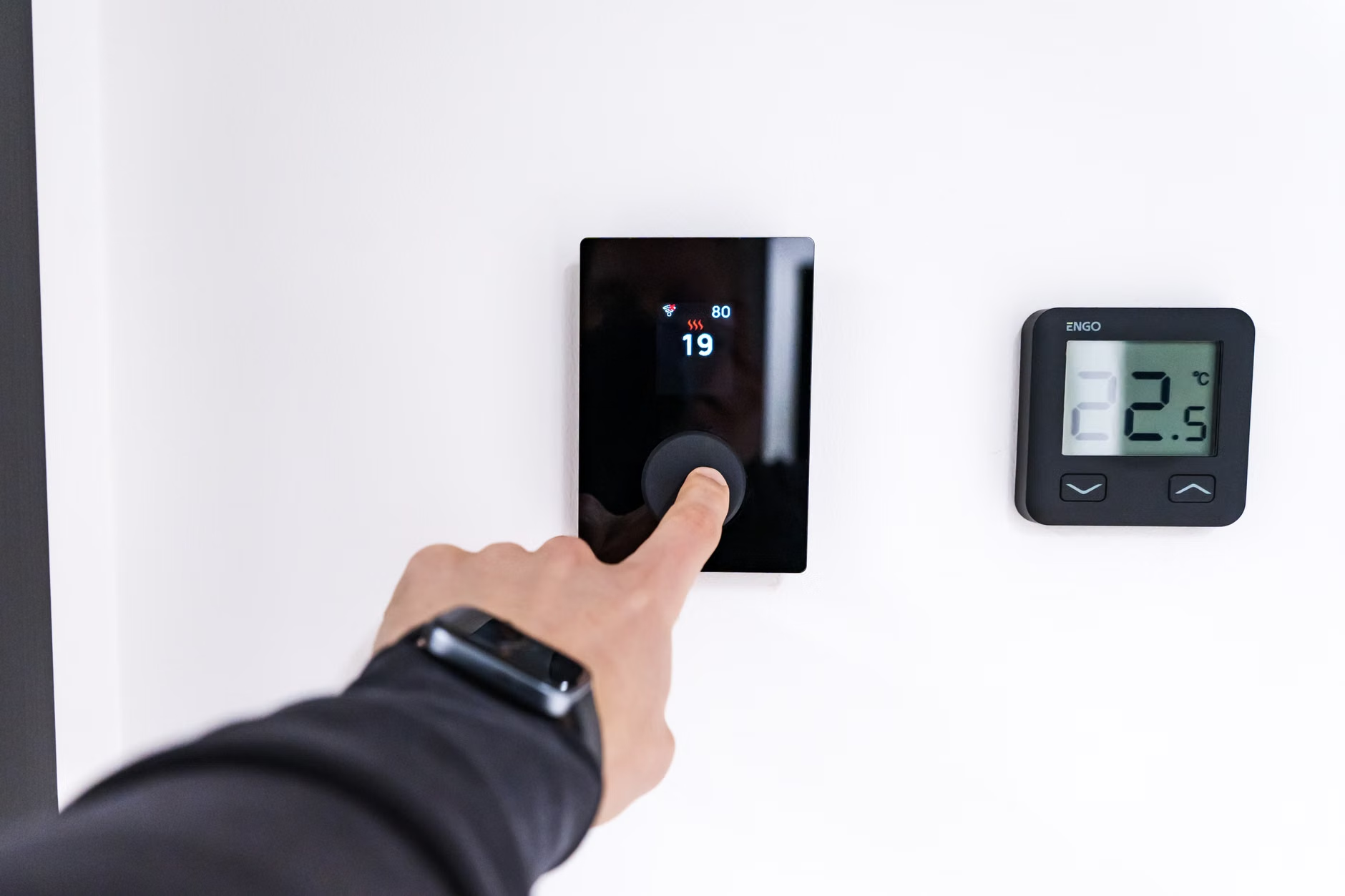
3. Smart Home Technology: Smart thermostats and energy monitoring systems are the “visible” upgrades. While they don’t provide the same structural efficiency as insulation, they offer the homeowner control. Being able to show a prospective buyer your historical energy usage data is a powerful way to demonstrate value.
| Upgrade | Resale Value Impact | Efficiency Gain |
|---|---|---|
| Attic Insulation | High | High |
| Energy-Star Windows | Medium | Medium |
| Smart Thermostat | Low/Medium | Low |
| Heat Pump Installation | High | High |
Why Buyers Are Prioritizing Efficiency
Why are buyers in their 30s and 40s suddenly obsessed with EPC ratings? It comes down to predictability. If you have children, you know that the “unforeseen expense” is the enemy of a peaceful life. When a young family tours a house, they are not just looking at the aesthetic appeal; they are calculating the “cost of ownership.”
A home that requires a $500 monthly heating bill is significantly more expensive than an identical house that only requires $150. Over the course of a year, that is $4,200 in savings. Over a 10-year period, that is $42,000. When you frame it this way, energy efficiency is not just about being “green”—it is about smart, long-term financial management.
Furthermore, there is a growing trend of “future-proofing.” With energy prices fluctuating globally, buyers are wary of properties that are dependent on volatile fossil fuel markets. Homes that can generate their own power or that are so well-insulated they barely need external input are seen as safer, more stable assets.
Avoiding the Pitfalls: What Not to Do
It is important to approach these upgrades with a critical eye. Just because an upgrade is “eco-friendly” does not mean it is a good investment for your specific property. I have seen homeowners spend thousands on high-end solar panels for a roof that is shaded by large trees, or install top-tier triple-pane windows in a house that has massive air leaks in the basement.
Before you spend money, you need a plan. Here are three common traps to avoid:
- The “Green-Washing” Trap: Don’t buy gadgets simply because they have a green label. If it doesn’t solve a specific thermal or efficiency problem in your home, it is just clutter.
- Over-Improving for the Neighborhood: If every house in your area is standard, and you are the only one with a $50,000 geothermal heating system, you may not recoup that cost. You want your home to be the most efficient on the block, but you don’t want to be so far ahead of the market that you price yourself out of a sale.
- Ignoring Maintenance: An energy-efficient home that is poorly maintained is still a bad investment. Energy upgrades should be the final step after you have addressed basic structural issues like roof leaks, foundation cracks, or plumbing problems.
The Step-by-Step Implementation Framework
If you are ready to start, don’t try to do it all at once. Treat your home like a project management task. Start with the data, move to the structural fixes, and finish with the tech.
Step 1: The Audit. Hire a professional to perform a blower door test and thermal imaging. They will tell you exactly where your house is “bleeding” energy. This costs a few hundred dollars but can save you thousands in wasted construction costs.
Step 2: The Envelope. Fix the leaks. Seal the attic, insulate the walls, and replace weather stripping around doors and windows. This is almost always the most cost-effective step.
Step 3: The Systems. Once the house is sealed, look at your HVAC and water heating. A smaller, more efficient system will work better in a house that has been properly insulated.
Step 4: The Generation. Only after you have minimized your energy demand should you look at solar panels or other generation methods. If you reduce your demand first, you won’t need to buy as large of a (very expensive) solar array.
The Long-Term Perspective
Ultimately, the “green” in green mortgage refers to both the environment and your wallet. As we navigate our 30s and 40s, we are in the prime years for building equity. Every dollar spent on efficiency is a dollar that contributes to a more stable, comfortable, and valuable asset.
It is important to remember that the market is changing. As governments worldwide implement stricter building codes and energy transparency laws, homes that are inefficient will eventually become “stranded assets”—properties that are harder to sell and more expensive to maintain. By starting your journey toward efficiency now, you aren’t just saving on your monthly bills; you are protecting your future financial health.
Take it one step at a time. Do your research, prioritize the “invisible” work like insulation, and keep your eye on the long-term utility savings. Your home is a living, breathing system, and with the right approach, it can be the best investment you ever make.
Frequently Asked Questions
1. Does a green certification actually increase my home’s sale price?
Research suggests that homes with verified energy ratings often sell for a premium. While the exact percentage varies by region, the real value lies in the “days on market.” Energy-efficient homes tend to sell faster because buyers perceive them as lower-risk and lower-cost to operate.
2. Are green mortgages available everywhere?
Green mortgages are becoming increasingly common, but they are not yet universal. Check with your local bank or credit union to see if they offer “energy-efficient mortgage” (EEM) programs. These often require a professional energy audit as part of the application process.
3. Is it worth upgrading an older home, or should I just buy a new one?
This depends on the “bones” of the house. If the structure is sound, retrofitting an older home with modern insulation and high-efficiency systems can be a fantastic way to add value. However, if the house has significant structural issues, the cost of a full energy retrofit might be better spent on a newer, more efficient build.
For further reading and official data on energy efficiency standards, you can refer to resources from the International Energy Agency (IEA) or your local government’s energy department, which often provides regional guides on tax incentives and green home programs.