The secret to surviving a family vacation without a total meltdown isn’t perfect planning or expensive resorts; it is the ability to practice co-regulation, where you act as an external nervous system to help your child return to a state of calm when their emotions become overwhelming.
- Co-regulation is biological: Your own nervous system state dictates your child’s ability to calm down.
- Preparation beats reaction: Anticipate “emotional hotspots” by building in sensory breaks and predictable routines.
- The “Pause” is a superpower: Taking ten seconds to regulate yourself before addressing a child’s outburst is the most effective intervention you have.
We have all been there. You are three hours into a flight, or perhaps navigating a crowded museum in a foreign city, when suddenly, the wheels fall off. Your child is spiraling, the stares of fellow travelers are burning into your back, and your own cortisol levels are hitting the red zone. It is the classic paradox of modern parenting: we spend thousands of dollars and months of planning to create “core memories,” only to find ourselves trapped in a cycle of frustration and exhaustion.
In these moments, our instinct is often to “fix” the behavior. We bargain, we scold, or we try to distract with screens. But when a child is in the throes of a “big emotion”—what researchers call dysregulation—they lack the neurological capacity for logic. They aren’t being “naughty”; their prefrontal cortex has effectively gone offline. Here is how to navigate these moments using the science of co-regulation.
Understanding the Biology of the Meltdown
To understand why travel triggers such intense responses, we have to look at the brain. When a child is in a new environment, their brain is constantly scanning for threats. Even if you are at a beautiful beach resort, the lack of familiar smells, the change in food, the disrupted sleep schedule, and the sheer volume of sensory input create a state of high alert.
When this threshold is crossed, the nervous system shifts into “fight, flight, or freeze.” In this state, a child cannot “listen to reason.” They cannot understand that you are in a hurry to catch a train or that the museum is closing in twenty minutes. Their body is flooded with stress hormones. As parents, our role is to act as their external regulator—to lend them our calm until they can find their own.
Think of it like a thermostat. If your child’s emotional temperature is skyrocketing, they need someone else to be the cool, steady temperature in the room. If you match their intensity—by getting angry, loud, or anxious—you are essentially turning the heat up further. Co-regulation is the act of staying “cool” so the room can eventually stabilize.

The “Pre-Flight” Strategy: Building an Emotional Buffer
The best way to handle big emotions is to prevent them from becoming “tectonic plate” level events. This starts with understanding your child’s unique “sensory profile.” Some children are sensory-seekers, needing movement and noise; others are sensory-avoiders, quickly overwhelmed by crowds and bright lights.
Before you even leave the house, create a “Regulation Kit.” This isn’t just about snacks (though snacks are crucial). It is about sensory tools that help the nervous system reset. For a sensory-avoider, this might include high-quality noise-canceling headphones. For a sensory-seeker, it might be a fidget toy or a heavy backpack that provides proprioceptive input (the feeling of pressure on the body, which is naturally calming).
Table 1: The Travel Regulation Checklist
| Category | Tool | Purpose |
|---|---|---|
| Auditory | Noise-canceling headphones | Reduces sensory overwhelm in transit hubs. |
| Proprioceptive | Weighted lap pad or backpack | Provides calming pressure during long sits. |
| Oral | Chewable jewelry or crunchy snacks | Chewing is a natural nervous system regulator. |
| Visual | Digital photo album of the itinerary | Reduces anxiety by providing predictability. |
The Art of the “Pause”: Regulating Yourself First
The hardest part of co-regulation is that you cannot give what you do not have. If you are stressed about the flight delay, your child will sense it. Their mirror neurons—the brain cells that help us understand the intentions and emotions of others—are constantly “downloading” your emotional state. If your nervous system is erratic, theirs will be too.
When the meltdown begins, your first step is to check in with yourself. Take a breath. Drop your shoulders. Lower your voice. By slowing down your own physiological responses, you are sending a non-verbal signal to your child that “the situation is under control, and we are safe.”
This is not about ignoring the child’s distress; it is about providing a container for it. You might say, “I see you are having a really hard time right now. I am here with you.” Notice that you aren’t trying to “stop” the crying. You are simply offering presence. This is the difference between “managing” a child and “co-regulating” with them.
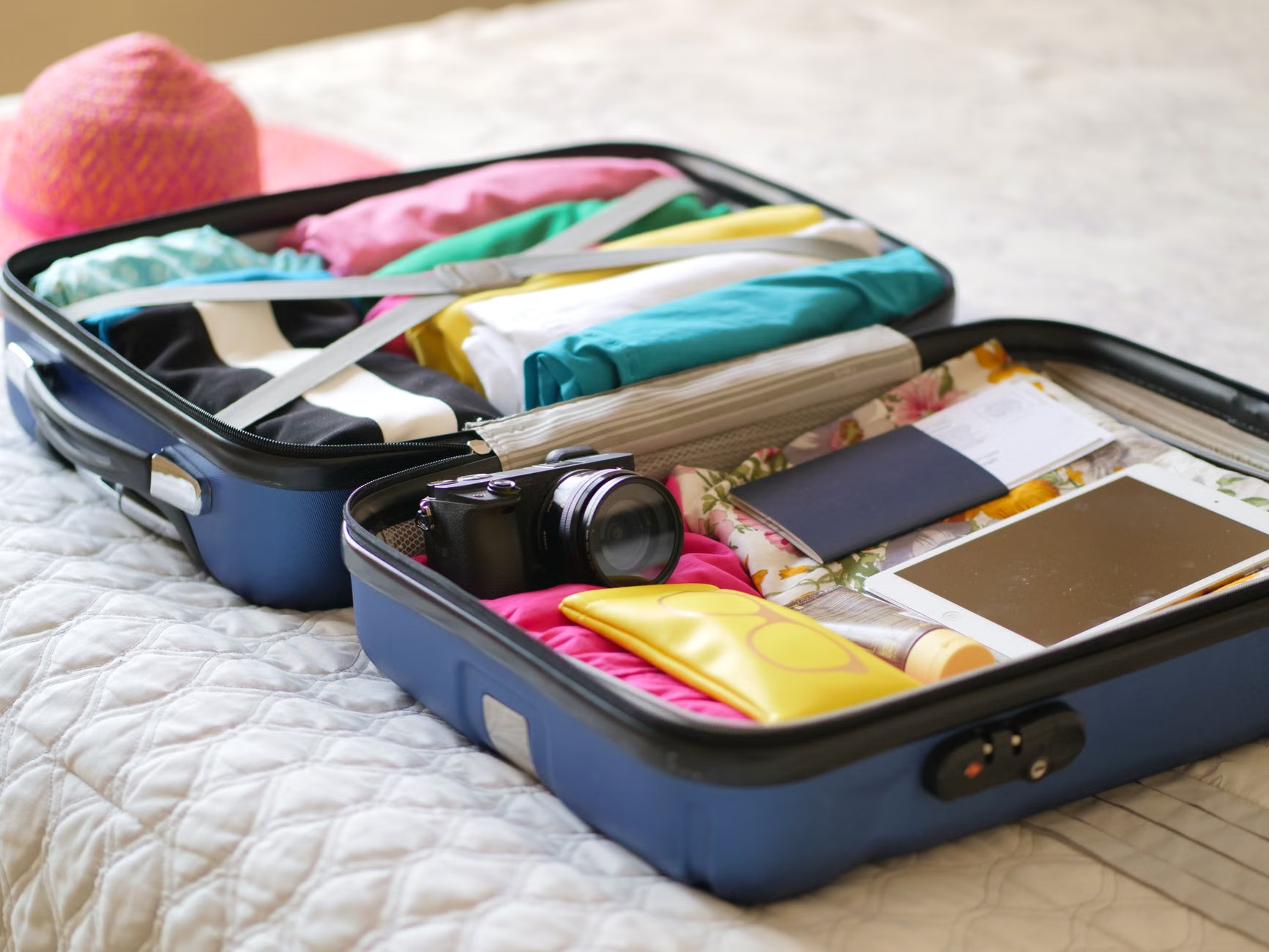
Airports are perhaps the most challenging environments for children. They are loud, bright, full of strangers, and require long periods of sedentary behavior. The “hurry up and wait” nature of air travel is the antithesis of what a regulated child needs.
When you are in an airport, treat it like a mission. Do not assume you can sit at the gate for two hours and expect your child to remain calm. Move. Walk the terminal. Let them carry their own small bag to feel a sense of agency. If you see the signs of a meltdown—the fidgeting, the whining, the “glazing over”—do not wait for the explosion. Pivot immediately.
If you are in a situation where you cannot move—like on a plane during takeoff—the goal shifts to “micro-regulation.” Use deep breathing exercises together. Lean into the “heavy work” of pushing against the seat or squeezing a stuffed animal. Use the “5-4-3-2-1” grounding technique (identify 5 things you see, 4 things you can touch, etc.) to pull their brain out of the emotional center and back into the analytical, sensory-processing center.
Handling the “Public Eye” and Parental Shame
One of the biggest contributors to parental stress is the fear of judgment. When your child has a meltdown in a quiet cafe or on a train, the “public eye” feels like a spotlight. We often feel compelled to react quickly to “show” others that we are in control. This is a trap.
Your child’s behavior is not a reflection of your parenting, and it is certainly not a reflection of your worth as a human being. When you prioritize the comfort of strangers over the emotional needs of your child, you are choosing to escalate the situation. If a meltdown occurs, stay focused entirely on your child. If you feel the need to say something to a bystander, keep it brief and neutral: “They are having a tough moment, we are working through it.” Then, turn back to your child.
Remember, most people are either empathetic or completely oblivious. The small percentage of people who might judge are not part of your inner circle, and their opinions have zero impact on your child’s long-term development. Protecting your child’s nervous system is far more important than protecting your reputation in a random airport terminal.
Building Resilience Through Predictability
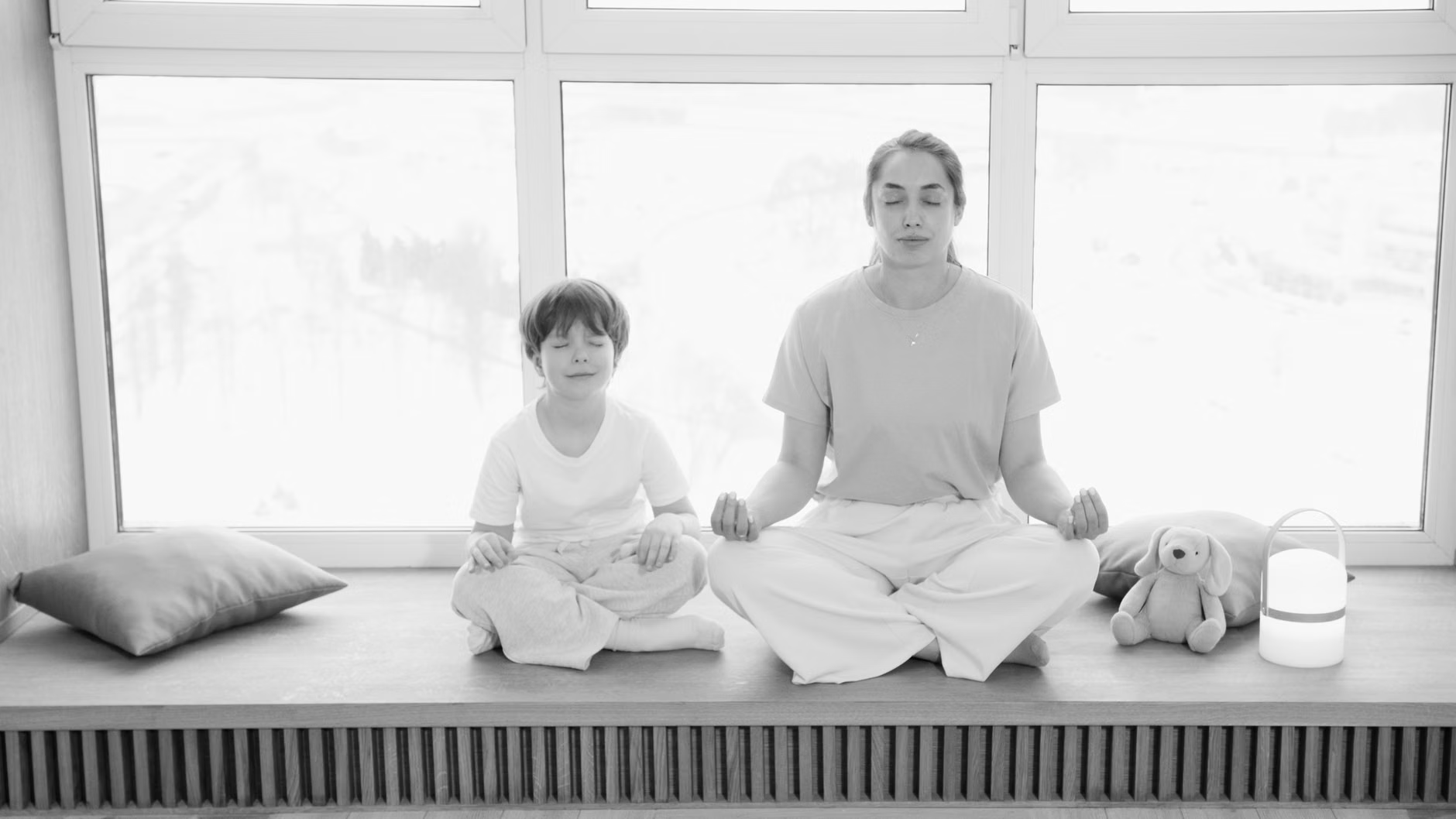
Travel is inherently unpredictable, but you can create “islands of predictability.” Even when you are in a foreign country, keep small rituals consistent. Maybe it’s a specific song you listen to before bedtime, or a specific way you say goodnight. These rituals act as anchors for the nervous system.
When you arrive at a new hotel or rental, do not try to see all the sights immediately. Give your child time to “decompress” in the new space. Let them explore the room. Let them unpack their own bag. The more they feel a sense of control over their immediate environment, the less likely they are to experience the “big emotion” spike that comes from feeling powerless in a strange place.
Furthermore, involve them in the planning. Even a young child can choose between two options: “Do we want to go to the park or the museum first?” When children feel like they have agency, their nervous systems are naturally more settled. They are no longer just “being taken” to places; they are participating in the travel experience.
The Post-Meltdown Reflection
Once the dust has settled, don’t rush to move on. After a big emotion, the body is often exhausted. This is the time for “repair.” Offer a drink of water, a snack, or a quiet period of rest. You don’t need to lecture them on why the meltdown was “bad.” They already know it felt bad. Instead, validate the experience: “That was a really big feeling you had back there. It’s hard to be in a new place sometimes. I’m glad we’re taking a break now.”
This type of reflection helps the child build “emotional literacy.” They start to recognize the physical signs of their own stress before it becomes a full-blown meltdown. Over time, you will find that the frequency of these events decreases because they have learned how to signal to you—and to themselves—that they need a break.
Common Mistakes to Avoid During Travel
Even with the best intentions, we all make mistakes. Here are a few common pitfalls to keep on your radar:
- Over-scheduling: Trying to hit three tourist sites in a day is a recipe for disaster. Aim for one “anchor” activity and leave the rest of the day flexible.
- Ignoring “Hunger-Anger”: Children are often terrible at recognizing when they are hungry. Carry snacks that are high in protein and fat, which provide sustained energy compared to sugar.
- Forgetting the “Exit Strategy”: Always know where the quietest place in your current environment is. If you are at a theme park, find the “quiet zones” on the map before you even enter.
- Comparing to Others: You don’t know the temperament of the other children you see. Focus only on your child’s needs, not the perceived ease of other families.
The Long-Term Value of Co-Regulation
Teaching a child to regulate is one of the most significant skills you can impart. It isn’t just about making your vacation smoother; it is about providing them with a toolkit for life. When they learn that their emotions are manageable, and that they have a partner who will help them navigate the storm, they develop a secure attachment and a sense of internal safety that will follow them into adulthood.
Travel provides a unique, albeit challenging, laboratory for this. The intensity of the experience forces us to confront these moments more often than we might at home. By shifting your perspective from “managing behavior” to “supporting regulation,” you turn a stressful trip into an opportunity for deep connection.
If you find yourself in the middle of a difficult moment, remember: you are not failing. You are doing the hard work of parenting in real-time. Take a breath, stay present, and trust that the moment will pass. Your calm is the most powerful tool you have.
Frequently Asked Questions
1. How do I know if my child is just tired or actually dysregulated?
While exhaustion is a common trigger, dysregulation usually manifests as a complete loss of coping mechanisms. A tired child might be grumpy, but a dysregulated child often loses the ability to communicate, has trouble with transitions, or experiences emotional responses that feel “too big” for the situation. If you see the “fight, flight, or freeze” response, it is likely dysregulation.
2. Should I apologize to strangers if my child has a meltdown?
You can offer a polite, non-defensive acknowledgment if you feel it helps lower your own stress, but you are not obligated to apologize for your child’s humanity. A simple “They are having a tough time, thank you for your patience” is sufficient. Do not feel the need to explain or justify yourself.
3. What if I am also dysregulated? How do I “co-regulate” when I am at my limit?
This is where the “Pause” is critical. It is perfectly acceptable to say, “I am feeling overwhelmed right now, I need to take a minute to breathe.” If you are in a safe environment, step away for a moment to regain your composure. Modeling how to handle your own frustration is actually a fantastic lesson for your child in emotional management.
For further reading on the science of nervous system regulation, you can explore resources from the American Psychological Association on childhood emotional development or look into the work of Dr. Stuart Shanker regarding self-regulation in children. Always remember that every child is different, and what works for one may need adaptation for another.