By 2026, Open Banking has evolved from a niche financial regulation into the backbone of effective family financial coordination, allowing parents to finally view their total household liquidity in real-time without the agony of manual spreadsheet entry.
Key Takeaways
- Unified Visibility: Open Banking allows you to aggregate disparate accounts into a single dashboard, creating a “single source of truth” for family expenses.
- Automated Reconciliation: The manual chore of tracking shared bills is largely obsolete, as modern apps automatically categorize and sync transactions across linked accounts.
- Privacy-First Architecture: By 2026, the shift toward “read-only” access and granular user permissions ensures that you can share data without granting anyone the ability to move your money.
If you are in your 30s or 40s, you likely remember the “spreadsheet era” of household finance. One partner would download CSV files from three different bank portals, someone else would try to remember if they paid the utility bill, and the result was usually a Friday night argument over why the savings account looks thinner than expected. It is 2026, and while the bills haven’t stopped coming, the way we manage them has undergone a quiet revolution.
What Exactly is Open Banking in 2026?
At its core, Open Banking is a technology framework that allows third-party financial service providers to access your financial data—but only if you give them explicit permission. Think of it like a digital key you hand to an app, saying, “You can look at my balance and transaction history, but you cannot touch the vault.”
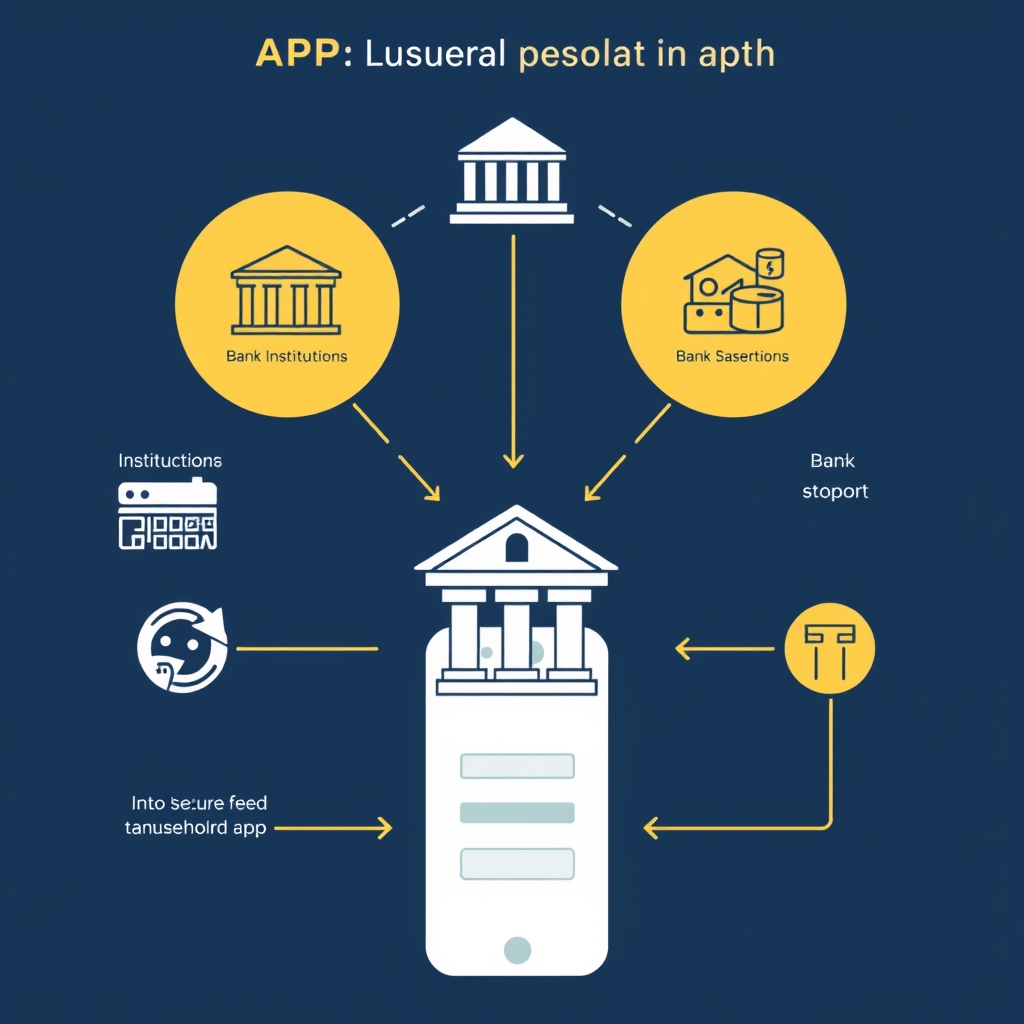
Years ago, the concept was clunky. You had to provide your actual bank login credentials to a third-party app, which was a massive security risk. Today, the system uses something called APIs (Application Programming Interfaces). An API is like a secure tunnel. Your bank provides a specific, limited window of data to the app you trust. The app doesn’t “know” your password; it just receives the data you authorized it to see.
For a family, this means the “who paid for what” mystery is solved. You can have a mortgage at one bank, a credit card at another, and a joint checking account at a digital-only neobank. Through Open Banking, a single dashboard can pull all this information into one interface, giving you a 360-degree view of your net cash flow for the month.

Why This Changes the Parenting Financial Load
Managing a household is effectively running a small business. You have recurring overhead (mortgage, insurance), variable operating costs (groceries, fuel), and occasional capital expenditures (home repairs, school trips). When you and your partner are working from different data sets, friction is inevitable.
In 2026, the “Open” part of Open Banking acts as a neutral mediator. Because the data is pulled directly from the source—the bank—there is no room for the classic “I thought you paid that” defense. The ledger doesn’t lie.
Breaking Down the Benefits for Busy Households
The primary value isn’t just in seeing the numbers; it is in the reduction of cognitive load. Parenting is mentally exhausting. Having to manually track shared expenses adds a “tax” on your brain that you don’t need. Here is how the landscape has shifted:
| Feature | The “Old” Way (Pre-2023) | The 2026 Standard |
|---|---|---|
| Transaction Tracking | Manual entry or CSV export | Automatic real-time sync |
| Account Aggregation | Multiple logins, multiple apps | Single dashboard view |
| Security | Credential sharing (risky) | Tokenized API access (secure) |
| Budgeting | Guesswork and estimates | Data-driven insights |
How to Choose the Right Setup for Your Family
Not every app is built for a dual-income, multi-account family. When you are looking for a financial management tool in 2026, you need to look past the “flashy” features and focus on structural integrity. Here is a checklist for vetting your next financial app.
1. The “Read-Only” Audit
Ensure that the service you choose uses a read-only connection. You should never be required to share your actual bank password with the app. If an app asks for your primary bank login credentials and doesn’t offer a secure OAuth (Open Authorization) redirect to your bank’s website, move on. Secure apps will redirect you to your bank’s own site to verify your identity before the bank grants the app a “token” to see your data.
2. Multi-User Synchronization
Does the app allow for two distinct users to view the same “household” view? Some apps are designed for individuals and make shared management a nightmare. Look for features specifically labeled as “Shared Household” or “Family Vault.” This allows you and your partner to invite each other to a shared group where you can see the combined data without necessarily seeing every private transaction.
3. Granular Data Categorization
In 2026, AI-driven categorization is the standard. However, it isn’t perfect. A good app allows you to create custom “tags” for your family life. For example, you might want to tag all expenses related to “Summer Camp” or “Soccer Season” across different accounts. Being able to run a report on these custom tags is what turns raw data into actual financial strategy.
Common Pitfalls and How to Avoid Them
Even with the best technology, human error remains the biggest threat to financial harmony. Here are the traps I’ve seen people fall into when setting up their family systems.
The “Sync Lag” Fallacy: While most Open Banking connections are near-instant, some smaller regional banks still only update their API data once every 24 hours. If you are trying to balance your budget to the penny on a Friday night, that 24-hour lag can cause confusion. Always check the “last synced” timestamp on your dashboard before making a big decision.
The Over-Categorization Trap: Don’t try to categorize every single purchase. If you spend 20 minutes a day managing your app, you have created a new job for yourself. Focus on the big-ticket items and recurring bills. Use the “Other” category for small, infrequent purchases. Your goal is to manage your money, not to become a professional accountant.
Security Complacency: Just because the app is secure doesn’t mean your phone is. Ensure your device has biometric locks (FaceID or fingerprint) and that your financial apps are protected by an additional layer of authentication. If you are sharing a household account, make sure both partners have equally robust security protocols on their devices.
The Future: From “Open Banking” to “Open Finance”
We are currently witnessing the transition from Open Banking to Open Finance. In 2026, it isn’t just about your checking and savings accounts. We are seeing more integration with investment portfolios, pension funds, and even insurance policies.
Imagine a scenario where your financial dashboard doesn’t just tell you that you spent $500 on groceries; it suggests that based on your current spending and savings rate, you are on track to hit your retirement goal—or tells you exactly how much you need to cut to get there. This is the next frontier. It’s not just about looking backward at what you spent; it’s about using that data to model your future.
For parents, this is a game-changer. We often feel like we are living in the “now,” constantly putting out fires. Having a system that looks at the “later” is incredibly grounding. It shifts the conversation from “We are broke this month” to “We are slightly over our discretionary budget, let’s pull back on dining out for two weeks.” It removes the emotional sting of financial discussions by making them objective.

Practical Steps to Get Started This Weekend
If you feel overwhelmed, don’t try to change everything overnight. Start with this three-step plan:
- Identify your “pain points”: Is it the monthly rent/mortgage confusion? Is it the grocery bill? Pick one area where you and your partner constantly feel misaligned.
- Select one tool: Choose one reputable, highly-rated financial aggregator that supports the banks you both use. Don’t sign up for three. Keep it simple.
- Set a “Financial Coffee” date: Once a month, sit down for 15 minutes with a coffee (or a glass of wine) and look at the dashboard together. Discuss the big trends, not the individual coffee purchases.
The goal of using these tools isn’t to be perfect. It’s to be informed. When you both have the same information, you can make better decisions as a team. And in the chaotic, high-speed environment of parenting in the 2020s, that is a massive win.
A Note on Privacy and Trust
I know, I know—giving an app access to your bank account feels weird. Even in 2026, the idea of “sharing” financial data can trigger a defensive response. It is important to remember that you are the owner of your financial data. Under current regulations (such as the GDPR in Europe or the Dodd-Frank Act provisions in the US), you have the right to revoke access at any time.
If you ever feel uncomfortable, you can go into your bank’s settings and kill the “token” or “connection” instantly. The third-party app will lose access immediately. This is the beauty of the modern API-first world. You are always in the driver’s seat. If an app starts acting up, or if you simply lose trust in the service, you can cut the cord with a single click.
Final Thoughts
Open Banking in 2026 is less about the “tech” and more about the “team.” By automating the data collection, you are removing the friction that leads to unnecessary friction in relationships. It’s not a magic wand that will make your money grow, but it is a flashlight that helps you see where you are standing.
Take it slow, prioritize security, and remember that you are doing this to make your life easier, not more complicated. Your budget should serve your family, not the other way around.
Frequently Asked Questions
Q: Is it safe to connect my bank accounts to these apps?
A: Yes, provided the app uses secure API connections and you never share your actual login credentials. Look for apps that use “OAuth” protocols, which ensure the app only receives a limited token rather than your password.
Q: What if my bank doesn’t support Open Banking?
A: While most major financial institutions now support open APIs, some smaller credit unions or local banks may still be behind. If your bank isn’t supported, check if they offer a “manual sync” or “file upload” feature within the app to bridge the gap until they modernize their infrastructure.
Q: Will my spouse be able to see my personal spending?
A: This depends on the app. Most family-oriented apps allow you to choose which accounts to “link” to the shared view. You can choose to link your joint checking account while keeping your personal savings or individual credit card accounts private. Always check the privacy settings before linking.
For further reading on the evolution of global financial standards, you can check the official documentation on Open Banking Implementation and the Consumer Financial Protection Bureau (CFPB) guidelines regarding data access and consumer rights.