- Prioritize mechanical simplicity and high-denier fabrics over “smart” features that fail after one season.
- Invest in modular systems that adapt to a child’s changing needs rather than age-specific gear that expires in months.
- Maintenance is the secret to sustainability; learn to clean and repair your gear to ensure it survives the “sibling cycle.”
The secret to surviving family travel without losing your mind—or your budget—is realizing that most “kid-specific” travel gear is designed for a single lifespan, not a generational one. If you are in your 30s or 40s, you’ve likely experienced the frustration of a cheap stroller wheel snapping mid-trip or a polyester bag fraying after a single international flight. When you have more than one child, the goal shifts from simply owning gear to building a “legacy kit” that can survive the wear and tear of multiple growing adventurers.
Investing in sustainable, long-lasting gear isn’t just about saving the planet; it is about reclaiming your time and sanity. Every piece of equipment that breaks is a puzzle you have to solve while you should be enjoying your vacation. Let’s look at how to curate a travel kit that stands the test of time.
The Philosophy of Mechanical Simplicity
When you are scanning product pages for strollers, carriers, or travel luggage, your instinct might be to look for the version with the most “bells and whistles.” Does it have a built-in Bluetooth speaker? Does it fold with a complex, motorized mechanism? Stop. In the world of long-term gear, complexity is the enemy of longevity.
Every hinge, every electronic component, and every proprietary latch is a potential point of failure. When you are traveling, especially internationally, you want gear that you can fix with a simple tool or a piece of duct tape if things go south. Look for items with manual folding mechanisms and standard hardware. If a bolt comes loose on a simple design, you can tighten it. If a proprietary plastic clip snaps on a “smart” stroller, you are often stuck waiting weeks for a replacement part that may not even be in production anymore.
Criteria for long-term gear:
- Metal over plastic: Look for aluminum frames rather than molded plastic joints.
- Standardized parts: Can you find a replacement screw or wheel at a local hardware store?
- Repairability: Does the company offer a repair program or sell individual components like replacement wheels or fabric covers?
Fabric Matters: Why Denier is Your Best Friend
If you have ever wondered why some bags look brand new after five years while others look shredded after one trip, the answer is usually “denier.” Denier is a unit of measurement that describes the linear mass density of fibers. In plain English: it tells you how thick and tough the fabric is.
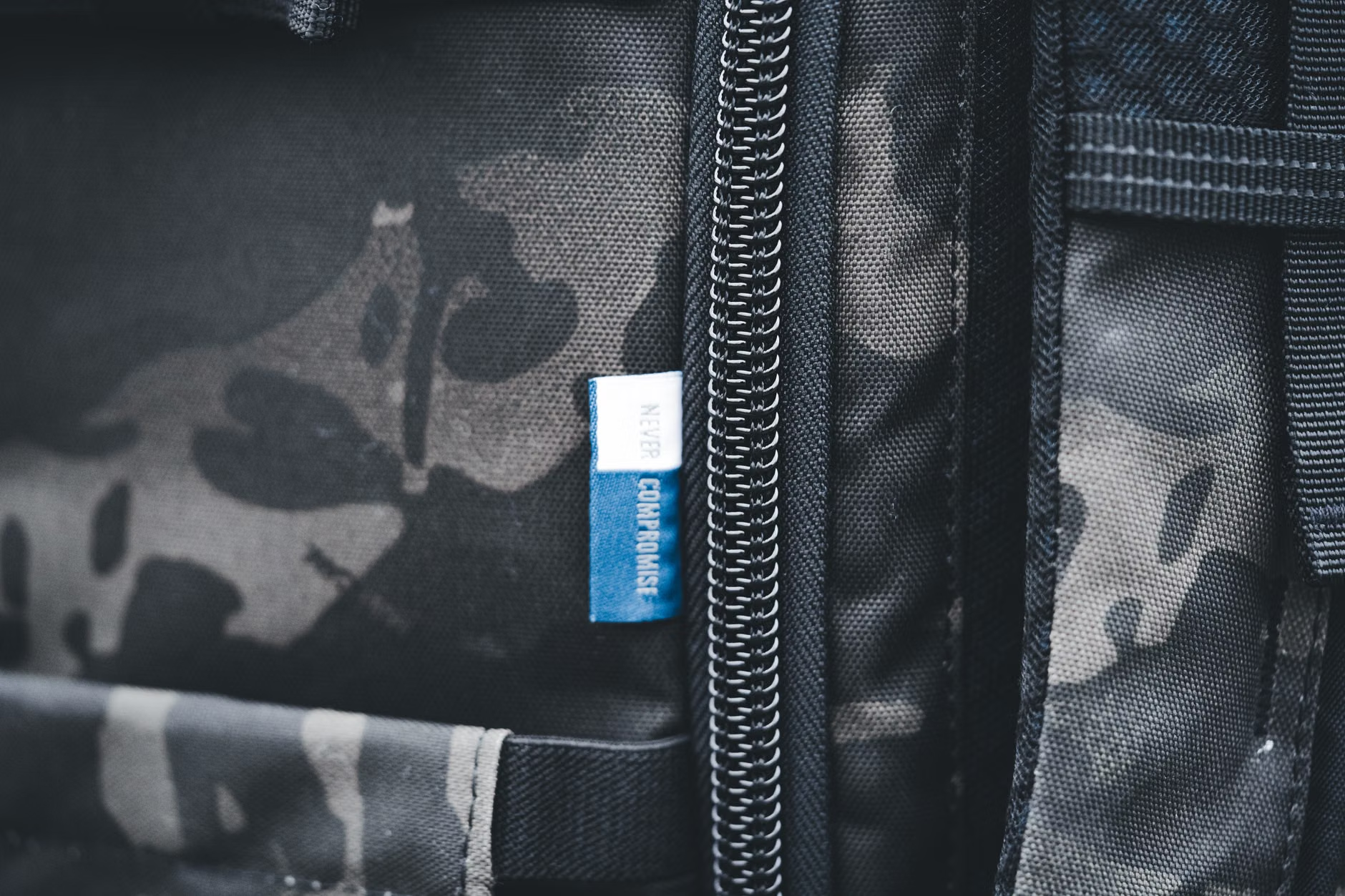
For travel gear that needs to last through siblings, you want to look for packs and carriers made from 600D to 1000D (denier) Cordura or high-grade ballistic nylon. These fabrics are resistant to tears, scuffs, and abrasions. They are also easier to clean. If a toddler spills juice or snacks on a cheap, thin synthetic bag, the stain often sets into the fibers permanently. Higher denier fabrics are typically treated with DWR (Durable Water Repellent) coatings, meaning they resist liquids and can be wiped clean with a damp cloth.
Don’t be fooled by “lightweight” marketing. While saving weight is important, there is a tipping point where you sacrifice durability for the sake of a few grams. For family travel, the extra pound of weight provided by a robust, high-denier bag is worth the peace of mind that it won’t rip open in the overhead bin.
Modular Systems: Growing With Your Children
The biggest mistake parents make is buying “age-appropriate” gear. You buy a carrier for a newborn, then a different one for a toddler, then a booster seat for a five-year-old. Before you know it, your garage is a graveyard of single-use plastic. Sustainable travel gear is modular.
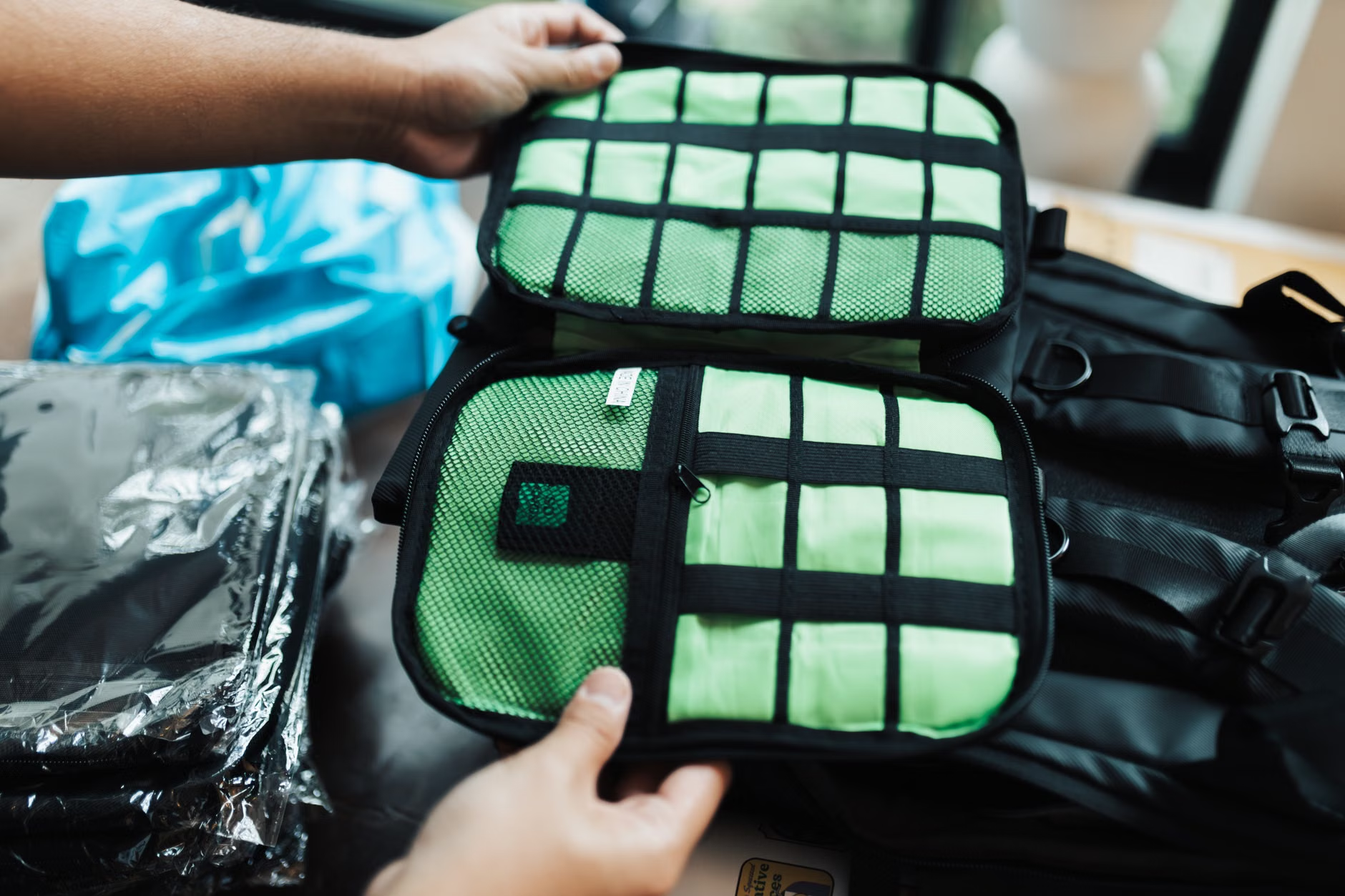
Look for systems that allow you to swap components. For example, a high-quality travel backpack should have internal modular packing cubes. When the kids are small, these cubes hold diapers and onesies. When they are older, the same cubes hold electronics, charging cables, or extra layers. By focusing on the system rather than the container, you ensure that the core piece of gear remains relevant for a decade or more.
The “Sibling Cycle” Checklist
Before you commit to a purchase, run it through this checklist. If it doesn’t pass these four questions, it’s likely not going to make it to your second child.
| Feature | The “Sibling” Standard | The “Disposable” Trap |
|---|---|---|
| Frames | Anodized aluminum or reinforced steel | Molded plastic or thin-wall aluminum |
| Zippers | YKK or equivalent industrial-grade | Unbranded, small-toothed plastic |
| Cleaning | Removable, machine-washable fabrics | Spot-clean only or non-removable |
| Warranty | Lifetime or multi-year comprehensive | 90-day or limited manufacturing defects |
Maintenance: The Secret to Longevity
Even the most expensive, well-built bag will fail if you treat it like a disposable item. You wouldn’t drive a car for five years without an oil change, yet we expect our travel gear to survive years of airport baggage handlers and toddler tantrums without any maintenance.
To make gear last, you need to establish a “gear hygiene” routine. After every major trip, take 30 minutes to do a post-trip inspection. This is the time to spot-clean spills, check for loose stitching, and lubricate any moving hinges or wheels with a silicone-based lubricant.
If you notice a small tear in the fabric, repair it immediately with a patch kit. A small hole in a piece of luggage is like a cavity in a tooth; if you don’t fill it, it grows. By treating your gear with care, you aren’t just saving money—you are preserving the history of your family’s travels. A well-maintained bag that has traveled with your eldest child becomes a badge of honor for the younger one.
Understanding Warranty and Brand Ethics
When you are spending a premium on gear, you are often paying for the company’s commitment to their product. Look for brands that offer “lifetime warranties” that actually mean something. If a company requires you to pay shipping and handling that costs more than the item itself to get a repair, they aren’t actually standing behind their product.
Research the company’s “sustainability” claims. Are they just using recycled polyester, or do they offer a trade-in or repair program? The most sustainable bag is the one that stays in use, not the one that is made of recycled plastic but thrown away after two years. Look for brands that have dedicated repair centers or that provide clear instructions and parts for self-repair.
It is also worth checking forums and reviews from the perspective of parents who have owned the gear for three or more years. Many products look fantastic in an unboxing video, but the real test is how they hold up after 500 hours of travel and a few cycles of being tossed into a rental car trunk.
Common Mistakes When Selecting Gear
One of the most common pitfalls is the “trend trap.” You see a viral video of a piece of gear that promises to make travel “effortless.” Often, these products are backed by venture capital firms looking for a quick exit, not by engineers looking to build a heritage product. If a product seems like it’s solving a problem that doesn’t really exist, or if it is being marketed heavily by influencers who have only used it for a weekend, be skeptical.
Another mistake is prioritizing aesthetics over function. While we all want our travel gear to look sleek and modern, a matte black finish that scratches off after one trip is going to look terrible by the time your second child is old enough to use it. Opt for colors and textures that hide wear well. Darker, textured fabrics are much more forgiving than light-colored, smooth surfaces.
The Emotional Value of “Passed-Down” Gear
There is something special about handing down a piece of gear that has been part of your family’s story. When your second child uses the same travel backpack their older sibling used, it’s not just a bag—it’s a connection to their past. It’s the bag that held the favorite stuffed animal on their first flight to visit grandparents. It’s the bag that survived the rainy trip to the coast.
By choosing high-quality, durable items, you are creating a sense of continuity. You are showing your children that we value quality and care for the things we own. It is a quiet lesson in sustainability that they will carry with them into their own lives.
Practical Tips for International Travel
When traveling internationally, the stakes are higher. If your gear fails in a remote location, you are at the mercy of whatever is available locally. This is why I always recommend carrying a “travel repair kit.” This should include:
- Tenacious Tape: For patching holes in nylon or canvas.
- Zip ties: The ultimate temporary fix for broken clips or zippers.
- A small multi-tool: To tighten screws or pry open a jammed latch.
- Duct tape: Wrapped around a pen or a small card to save space.
These simple items can save a trip. If a wheel breaks, you can often rig a temporary solution with a zip tie and some padding. If a zipper pull snaps, a small key ring or a bit of paracord can replace it instantly. These aren’t just “hacks”; they are the tools of a seasoned traveler who knows that gear is meant to be used, and occasionally, it needs a little help to keep going.
Building Your Legacy Kit
Start by identifying the one or two pieces of gear that you use the most. For many, this is the main suitcase or the child carrier. Instead of trying to upgrade everything at once, focus your budget on these core items. A cheap, lightweight suitcase is fine for a one-off trip, but your primary luggage—the one that carries your essentials—needs to be a fortress.
Don’t be afraid to buy used, either. Many high-quality brands (like Osprey, Patagonia, or Deuter) have robust second-hand markets. Because their gear is built to last, a five-year-old bag is often just getting broken in. Buying used is the ultimate form of sustainable travel—you are extending the life of a product that has already proven its worth.
Remember that the goal is not perfection; it is resilience. You will have scratches, you will have stains, and you will have moments where you wish your gear was slightly different. But by choosing items that are built for the long haul, you are setting yourself up for years of travel that are focused on the experience, not the logistics of broken equipment. When the kids are grown and you look back at the photos, you won’t remember the brand of the bag they were carrying, but you will be glad that the gear didn’t get in the way of the memories you were making.
Frequently Asked Questions
Q: Is it really worth spending double or triple the price for “durable” gear?
A: It depends on your frequency of travel. If you only travel once every few years, mid-range gear may suffice. However, if you travel multiple times a year, the cost-per-use of high-quality gear is significantly lower. Plus, you avoid the hidden costs of replacing broken items while on the road, which is always more expensive and stressful.
Q: How do I know if a brand’s “lifetime warranty” is legitimate?
A: Look for user reviews that specifically mention the warranty process. Search for “[Brand Name] warranty experience” on forums like Reddit or travel blogs. If you see recurring complaints about denied claims or expensive shipping costs, the warranty is likely more marketing than substance.
Q: What is the single most important feature to look for in a piece of luggage?
A: Beyond the fabric, look at the wheels and the handle mechanism. These are the most common points of failure in luggage. Look for replaceable wheels—if you can unscrew a wheel and put on a new one, the suitcase can last for decades. If the wheels are riveted into the frame, the entire bag becomes trash the moment a wheel breaks.
For further reading on sustainable manufacturing and gear standards, you can check resources from organizations like the OEKO-TEX Association for textile safety or the bluesign® system, which focuses on sustainable chemical management in the textile industry. While these focus on materials, they are excellent indicators of a company’s commitment to long-term quality and environmental responsibility.
Choosing the right gear is a balancing act, but it’s one that pays off in every airport terminal and hotel lobby you encounter. Focus on quality, embrace maintenance, and build a kit that grows with your family. Your future self—and your bank account—will thank you.