The most important takeaway for any family traveling in 2026 is that medical care abroad is no longer just about having an insurance card; it is about having a digitized, accessible health history that can be verified instantly by clinicians regardless of the country you are visiting.
- Digital Health Portability: Ensure your family’s vaccination records and chronic condition summaries are stored in a secure, cloud-based format that complies with international privacy standards.
- Beyond Standard Insurance: Supplement your primary travel insurance with a medical evacuation membership, as standard policies often have gaps in rural or remote regions.
- Localized Triage: Always identify the nearest JCI-accredited (Joint Commission International) facility before you arrive at your destination to bypass language barriers and quality concerns.
We have all been there: the 2 AM fever spike in a hotel room where the labels on the local medicine cabinet are written in a language you do not speak. As traveling families in 2026, we are more mobile than ever, but the complexity of accessing high-quality healthcare remains a significant hurdle. Whether you are taking a gap year, working remotely, or just planning a three-week summer break, the “winging it” approach to health is officially a thing of the past.
The Evolution of Medical Access in a Post-Pandemic World
In the mid-2020s, the global healthcare landscape has shifted toward integration. The days of carrying a thick binder of paper health records are effectively over. Now, we are seeing the rise of “Interoperable Health Records.” This means that in many major cities, a digital profile can be accessed by authorized medical professionals if you provide the necessary permissions. However, this is not universal, and relying on it without a backup is a rookie mistake.
When you are in your 30s or 40s, you are likely managing your own health along with the unpredictable needs of children. This dual-layer of responsibility requires a proactive stance. You are not just looking for a doctor; you are looking for a system that understands the nuances of your family’s medical history. The primary challenge in 2026 is not finding a doctor—it is finding one who can communicate effectively with your primary care physician back home.
Building Your Family’s Digital Health Dossier
Before you leave, you need to create a “Medical Passport.” This isn’t a government document, but a curated digital folder stored on a secure, offline-accessible device. It should include:
- Current Medication List: Include the generic names of all drugs. Brand names change from country to country, but generic chemical names are universal.
- Allergy Profiles: Clearly marked with dates of last reactions.
- Vaccination Records: Keep digital copies of both routine and travel-specific vaccines (like Yellow Fever or Japanese Encephalitis).
- Provider Contact Info: Email and encrypted messaging contact for your home doctor.
Why go to this effort? Because in an emergency, your cognitive load is high. You will not want to be searching through emails for a child’s last antibiotic dosage. Having this data at your fingertips saves precious minutes and prevents clinical errors.
Understanding the Difference Between Travel Insurance and Medical Evacuation
Many travelers make the mistake of assuming that “travel insurance” covers everything. It usually covers the cost of seeing a doctor or staying in a hospital. However, it rarely covers the $50,000+ cost of a medical flight back home if you or your child requires specialized care not available in your current location.
| Feature | Standard Travel Insurance | Medical Evacuation Membership |
|---|---|---|
| Primary Purpose | Reimbursement for care | Transport to a facility of choice |
| Coverage Scope | Local clinics and hospitals | Air ambulance, specialized transport |
| Cost Structure | Per trip or annual | Annual membership fee |
| When to use | Minor illness/injury | Critical condition/inadequate local care |
For families, I strongly recommend a hybrid approach. Use a comprehensive, high-deductible travel insurance policy to keep premiums low, and pair it with a specialized medical evacuation membership. This ensures that you are covered for the small stuff (a broken arm) and the “worst-case scenario” (a serious illness requiring specialist intervention).
Locating High-Quality Care: The JCI Standard
When you are in a foreign country, how do you know if a hospital is “good”? In 2026, the gold standard remains the Joint Commission International (JCI) accreditation. JCI is a non-profit organization that evaluates hospitals worldwide based on safety, quality, and patient-centered care. If a hospital has a JCI seal, it means they meet standards comparable to the best facilities in the US or Europe.
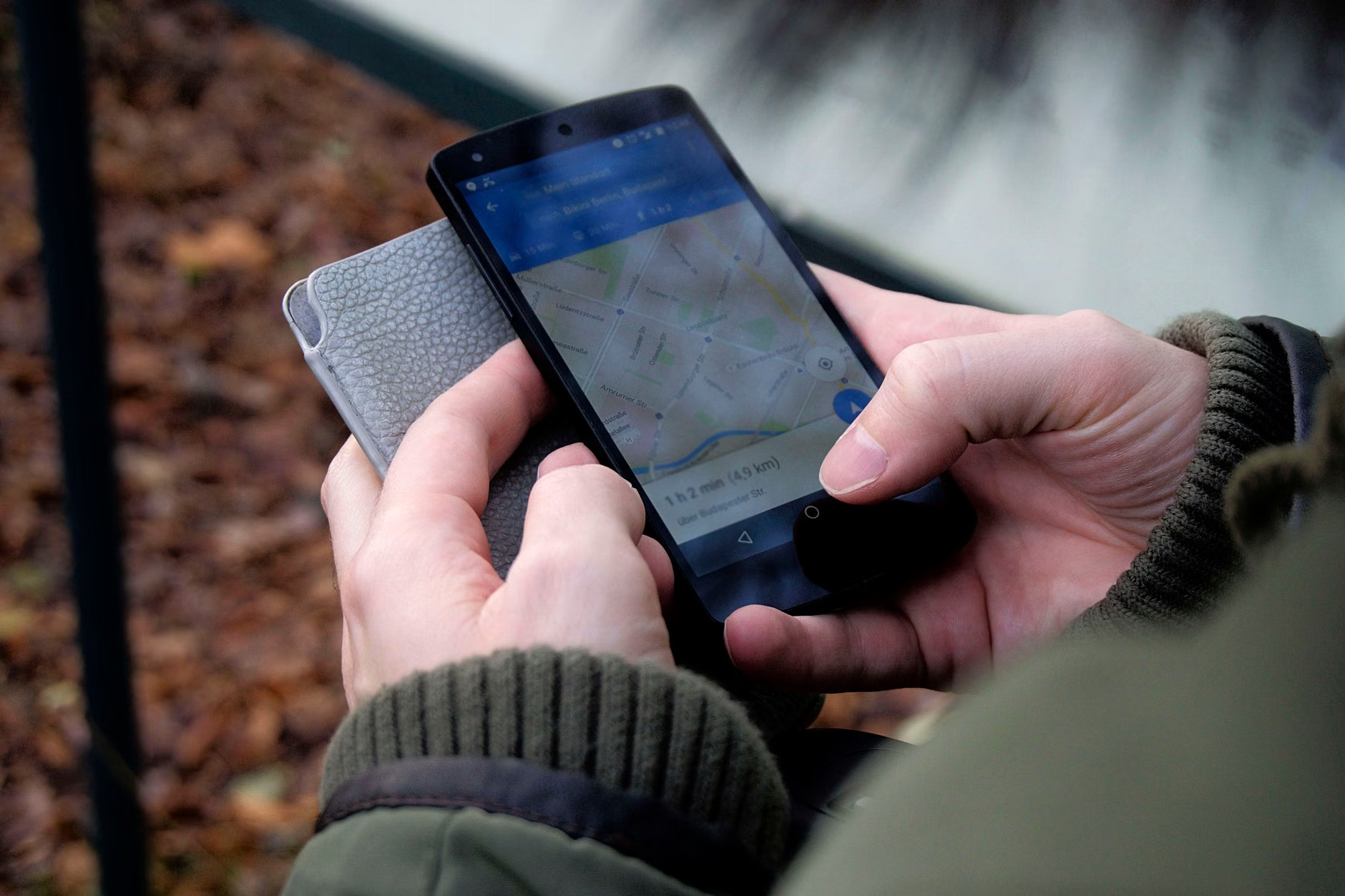
You can search for JCI-accredited hospitals directly on their website before you book your trip. Once you have a list of accredited facilities in your destination, pin them in your digital map app. If a child gets sick at 11 PM, you do not want to be scrolling through search results; you want to look at your map and head straight to the nearest verified facility.
The “Medicine Cabinet” Strategy: What to Pack
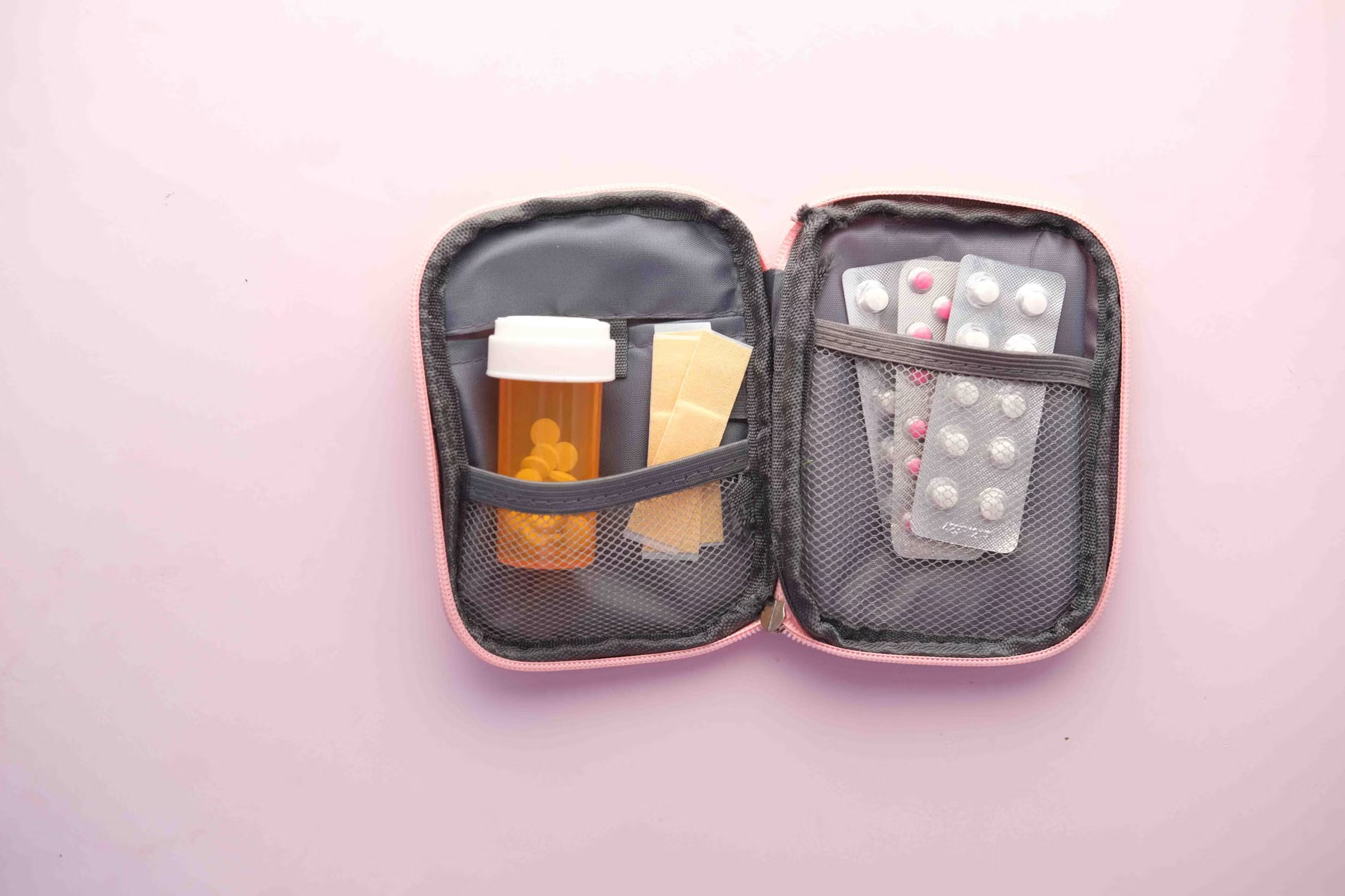
Never rely on local pharmacies for everything. While many countries have excellent pharmacists, they may not carry the specific formulations your family is accustomed to. Your travel kit should be a “bridge” kit—enough to treat symptoms for 48–72 hours until you can see a professional.
Essential items for your 2026 travel kit:
- Digital Thermometer: Preferably one that can track trends over time.
- Oral Rehydration Salts (ORS): Essential for children dealing with gastrointestinal issues, which remain the #1 health complaint for traveling families.
- Broad-Spectrum Antibiotic: Consult your pediatrician about a “just in case” prescription for travelers’ diarrhea or skin infections.
- Multi-tool: A small pair of sterilized scissors and tweezers is surprisingly useful.
- Basic wound care: Hydrocolloid bandages are superior to standard ones for travel because they stay on longer and protect against infection in humid climates.
A quick note on packing medication: Always keep it in original packaging. Some countries have strict customs laws regarding prescription medication. A loose bag of pills can look suspicious at an airport security checkpoint. If you have a prescription, bring a copy of the doctor’s note, even if you think you won’t need it.
Managing Chronic Conditions While Abroad
If a family member has a chronic condition—like asthma, diabetes, or a severe allergy—traveling requires a higher level of preparation. The 2026 “best practice” is to secure a “letter of medical necessity” from your specialist. This document explains the condition, the required medications, and the necessary equipment (like a CPAP machine or an insulin pump) in a format that is universally understood by airport security and medical staff.
Furthermore, check for international equivalents of your medication. If you use a specific insulin pen, verify if that brand is available in your destination. If it isn’t, you need to bring your entire supply for the duration of the trip. Never assume you can “just pick it up there.”

Communication: The Language of Health
Language barriers are one of the biggest risks to medical safety. In 2026, AI-powered translation tools have improved, but they are not perfect for medical contexts. If you are traveling to a region where you do not speak the language, keep a “medical translation card” in your wallet.
This card should have basic phrases translated into the local language: “My child has a severe allergy to peanuts,” “We need an interpreter,” or “Is this medicine safe for a child?” Having these written down by a professional translator or a native speaker before you leave is much safer than relying on a phone app that might lose battery or fail to connect to the internet.
Handling the “What-If” Moments
There is a psychological component to medical care. When you are a parent, the stress of a health issue abroad is magnified. It is easy to panic. The best advice I have gathered is to establish a “triage protocol” before you leave home.
Step 1: Assess if it is an emergency. If it is life-threatening, call local emergency services immediately. Do not try to solve this with a blog post or an app.
Step 2: If it is not life-threatening, contact your travel insurance company’s 24/7 help line. They often have local contacts and can direct you to an English-speaking doctor who is already in their network. This saves you from paying out-of-pocket and dealing with insurance claims later.
Step 3: Document everything. Keep every receipt, every lab report, and every doctor’s note. In the digital age, take photos of these documents the moment you receive them. If you lose a paper receipt, you might lose the ability to get reimbursed.
The Future of Telehealth for Families
Telehealth has matured significantly by 2026. Many insurance providers now offer “Global Tele-consulting.” This allows you to speak with a physician from your home country via video call, even if you are on the other side of the world. This is a game-changer for parents. Sometimes, you just need a professional to tell you that the rash is normal and that you don’t need to go to the hospital. Using a tele-consultant can save you a stressful, expensive, and unnecessary trip to an emergency room.
Before you travel, check if your current health insurance or travel insurance includes a telehealth benefit. If not, consider adding a standalone service for the duration of your trip. The peace of mind alone is worth the modest monthly fee.
Common Mistakes to Avoid in 2026
Even with the best planning, travelers fall into the same traps. Let’s avoid these three common pitfalls:
- The “I’m Only Gone for a Week” Trap: You don’t need a medical kit for a week, right? Wrong. An infection or a bad reaction can happen in an hour. Even for short trips, keep a basic kit in your carry-on.
- Ignoring Local Climate Risks: If you are traveling to a tropical region, you need to research malaria or dengue fever prevention. This is not just about bug spray; it is about knowing the peak feeding times and wearing appropriate clothing.
- Underestimating Dehydration: It sounds simple, but dehydration is the leading cause of “travel fatigue” and minor illness. When you are in a new environment, you often forget to drink enough water. Make it a rule: everyone drinks a bottle of water before every meal.
Refining Your Strategy: A Step-by-Step Checklist
To summarize the practical implementation of these ideas, use this checklist in the month leading up to your trip:
- Month Out: Review all vaccinations and schedule boosters if necessary.
- Three Weeks Out: Check your insurance policy. Does it cover medical evacuation? If not, buy a supplemental membership.
- Two Weeks Out: Assemble your medical kit. Ensure all medications are in original packaging.
- One Week Out: Create your digital health dossier. Save it to a secure, offline-accessible location.
- Three Days Out: Locate the nearest JCI-accredited hospital in your destination and pin it on your map.
- Day of Travel: Ensure your phone is charged and you have a portable power bank for emergencies.
Implications and Final Thoughts
Global healthcare access for families in 2026 is about empowerment. When you take the time to prepare, you remove the “unknown” from the equation. It doesn’t mean you won’t encounter health issues—traveling with children is always an adventure—but it means you will have the tools to handle them with confidence rather than fear.
Remember that the goal of travel is to experience the world, not to worry about what could go wrong. Do the heavy lifting of preparation now, so that when you are on the ground, you can focus on the memories you are creating with your family. Stay cautious, stay informed, and enjoy the journey.
Frequently Asked Questions
Q: Should I use my home-country health insurance while traveling abroad?
A: Most home-country insurance plans offer very limited or no coverage for international medical care. Always verify with your provider before you leave. In almost all cases, a dedicated travel insurance policy is required to ensure you are covered for international costs.
Q: What is the most reliable way to find an English-speaking doctor in a non-English speaking country?
A: Contact your country’s embassy or consulate in the destination country. They almost always maintain a list of pre-vetted, English-speaking medical professionals and facilities for their citizens.
Q: Are there any specific apps I should download for global health?
A: While there are many, I recommend focusing on apps provided by your insurance carrier, as they often have integrated “find a doctor” features. Additionally, keeping a offline-accessible document app (like Google Drive or Apple Notes with offline access enabled) for your health records is essential.
For further information on international travel safety and health standards, please consult the official resources provided by the World Health Organization (WHO) and the Centers for Disease Control and Prevention (CDC). These platforms provide up-to-date information on country-specific health risks and vaccination requirements.