You don’t need a two-week itinerary or a massive budget to experience the restorative power of travel; the “micro-adventure” trend proves that small, intentional outings can provide the exact mental reset busy parents in their 30s and 40s are desperate for.
Key Takeaways
- Accessibility: Micro-adventures require minimal planning, making them ideal for parents balancing demanding careers and childcare.
- Psychological Reset: Shifting your environment for just a few hours can significantly lower cortisol levels and combat “parental burnout.”
- Low Barrier to Entry: You don’t need expensive gear; the goal is to find novelty in your immediate surroundings.
If you are in your 30s or 40s, you likely remember a time when “travel” meant boarding a plane, booking a hotel, and perhaps even needing a passport. Today, however, between the demands of a high-pressure career, the relentless logistics of parenting, and the rising costs of traditional tourism, the idea of a “big trip” often feels less like a vacation and more like an additional project to manage. It’s no wonder that the concept of the micro-adventure—a short, local, and low-cost excursion—has gained significant traction globally.
The term was popularized by British adventurer Alastair Humphreys, who argued that adventure isn’t defined by the distance you travel, but by the spirit in which you undertake the journey. For a parent, this is a game-changer. It shifts the focus from “planning the perfect trip” to “finding a moment of wonder.”
Why the ‘Micro-Adventure’ Fits the Modern Parent’s Life
We are currently living in an era of “time poverty.” When you have a 9-to-5 job and children who need to be at soccer practice or piano lessons, the time left for yourself is often spent scrolling through your phone on the couch. A micro-adventure is the antidote to this passive leisure. It forces a change of scenery without the logistical nightmare of airport security or hotel check-in times.
The beauty of this trend lies in its flexibility. A micro-adventure can be as simple as taking a different route to the local park, having dinner by a nearby stream, or sleeping in a tent in the backyard. It satisfies our biological need for novelty—the brain’s craving for new information and experiences—without the exhaustion that comes with major travel.
The Science of the ‘Reset’
Research into environmental psychology suggests that even short bursts of exposure to nature or new urban environments can have measurable impacts on our cognitive function. Studies have shown that “attention restoration theory” (ART) works best when we step away from our usual high-focus environments—like the office or the kitchen—and enter a space that demands “soft fascination.” This is exactly what a short hike, a visit to a local museum, or even a walk in an unfamiliar neighborhood provides.
For parents, the benefits are even more pronounced. Being in a different environment with your children changes the dynamic of your interaction. When you are at home, you are often in “manager mode”—reminding kids to do homework, clean up toys, or brush their teeth. When you are on a micro-adventure, you move into “explorer mode.” The power dynamic shifts, and you become teammates navigating a trail or discovering a hidden corner of your city.
Planning Your First Micro-Adventure: A Step-by-Step Guide
The biggest mistake people make when trying to start a micro-adventure is over-planning. If you find yourself spending more time researching the “best” spot than actually going out, you have already lost the plot. The goal is to maximize spontaneity and minimize friction.
| Step | The “Micro” Mindset | The “Major Trip” Mindset |
|---|---|---|
| Duration | 2 to 12 hours | 3 to 14 days |
| Planning | Less than 30 minutes | Weeks or months |
| Budget | Almost zero | Significant investment |
| Objective | Mental clarity | “Perfect” memories |
To get started, follow this simple framework:
- The 10-Mile Radius Rule: Limit your search for locations to within a 10-mile radius of your home. This forces you to look at your own backyard with fresh eyes. You’ll be surprised at how many parks, trails, or local landmarks you’ve ignored simply because they were “too close.”
- The “What If” Scenario: Pick a day (or a few hours on a Saturday) and commit to it, regardless of the weather. If it rains, you buy an umbrella or put on a raincoat. The goal isn’t comfort; it’s the experience of doing something different.
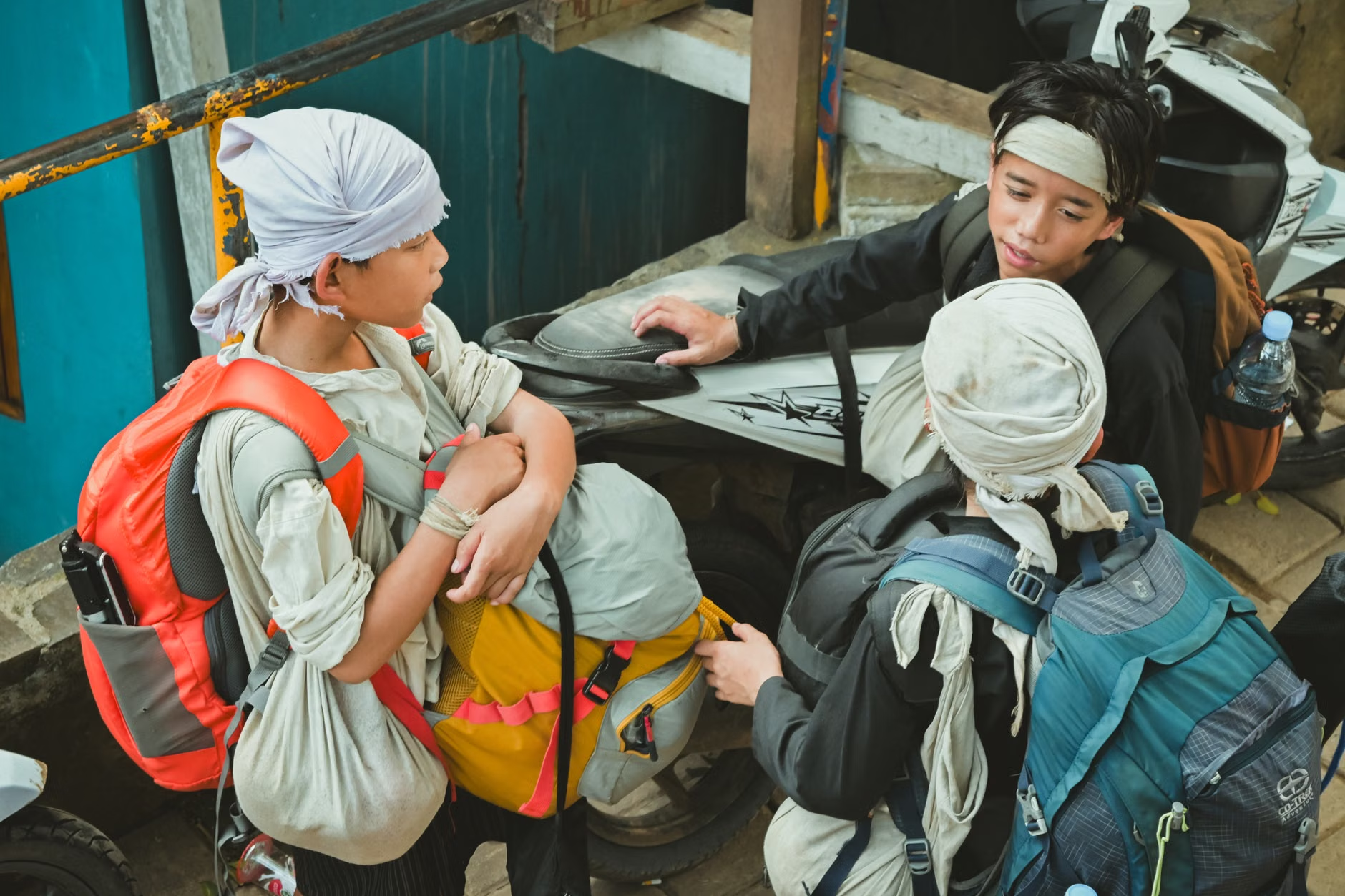
- Simplify the Gear: If you need to pack a suitcase, you are doing it wrong. A micro-adventure should be possible with a single backpack. If you are taking the kids, they should be responsible for their own small bag.
Common Pitfalls to Avoid
Even with something as small as a micro-adventure, you can run into hurdles. The most common one is the “expectations trap.” Many parents go on a short trip expecting a cinematic, joyful experience where everyone is smiling and holding hands. When the kids get cranky or you get lost, the disappointment hits hard.
Remember that the “adventure” part of the name implies that things might not go perfectly. If you get lost, that’s not a failure; that’s a detour. If the kids complain about walking, that’s an opportunity to teach them about persistence. The goal is to build resilience and shared history, not to create a highlight reel for social media.
Why Your 30s and 40s Are the Prime Time for This
In your 30s and 40s, you are likely at a point where your professional life is demanding and your domestic life is full. This is exactly why you need micro-adventures. You don’t have the luxury of “finding yourself” on a month-long trip to Southeast Asia anymore. You need to find yourself in the gaps between the school drop-off and the Monday morning meeting.
This phase of life is often characterized by a loss of identity. You are a “parent,” a “manager,” a “spouse,” but who are you as an individual? Micro-adventures allow you to reclaim a small part of your identity that is not tethered to your responsibilities. Whether it’s a solo sunrise walk or a Saturday afternoon bike ride with the family, these small acts of rebellion against the status quo are vital for your mental health.
The Economic Advantage
We are living through a period of economic uncertainty. Inflation and the rising cost of living have made traditional vacations a source of financial stress for many. A micro-adventure costs almost nothing. The price of a train ticket, a bag of sandwiches, or a cup of coffee is a fraction of the cost of a hotel stay. By shifting your travel habits to include more micro-adventures, you can actually save money while improving your quality of life.
Furthermore, the environmental impact of local travel is significantly lower. In a world where we are increasingly conscious of our carbon footprint, opting for a local bike ride or a hike over a short-haul flight is a small but meaningful choice. It aligns your leisure time with your values, which is an important aspect of modern lifestyle design.
How to Cultivate the Adventure Habit
Consistency is key. If you treat micro-adventures as a “once in a blue moon” event, they won’t have the restorative effect you need. Try to build them into your routine. Perhaps the first Saturday of every month is designated as “Adventure Day.” Or maybe you commit to one “after-work” adventure every two weeks where you take the kids to a park you’ve never visited before.
You can also gamify it. Create a map of your local area and mark off spots you’ve visited. Use apps like Google Maps or local hiking apps to find “hidden gems” near you. The more you look, the more you will find. The world is full of interesting places, and most of them are likely within a short drive or bike ride from your front door.

The Role of Technology
While the goal is to get away from the screens, technology can be a useful tool for planning. Use apps to find local trails, check the weather, or even look for historical markers in your area. The key is to use technology as a map, not as a destination. Once you arrive, put the phone away. The goal is to be present, not to document the experience for others.
Also, consider the role of “slow travel.” Even if you are only going 5 miles away, try to take a slower mode of transport. If you usually drive, take the bus or ride your bike. The journey itself becomes part of the adventure. You notice things you would otherwise miss at 40 miles per hour.
The Long-Term Impact on Family Dynamics
When you involve your children in micro-adventures, you are teaching them that happiness is not something that requires a high price tag or a long-distance flight. You are teaching them to be observant, to be curious, and to be comfortable with the unknown. These are life skills that will serve them far better than any expensive theme park trip.
Think about the memories you have from your own childhood. Are they the big, expensive vacations, or are they the simple times spent exploring the woods behind your house or having a picnic in the park? Often, it’s the latter. The lack of pressure in a micro-adventure creates a space where authentic connection can happen. There is no itinerary to force, no “must-see” attractions to visit, and no pressure to have the “perfect” day. There is just you, your family, and the time you have together.
Summary and Final Thoughts
The rise of the micro-adventure is not just a passing trend; it is a necessary reaction to the pressures of modern life. By redefining what an adventure looks like, we can find ways to prioritize our mental health, deepen our connections with our families, and rediscover the joy of our local environments without the stress of traditional travel.
Start small. Don’t worry about the gear, the perfect destination, or the “right” way to do it. Just head out the door, turn in a direction you don’t usually go, and see what you find. You might be surprised at how much is waiting for you right outside your own front door.
Note: Always prioritize safety when exploring new areas, especially with children. Check local weather reports, inform someone of your plans if heading into remote areas, and ensure you have basic supplies like water and a first-aid kit. For more information on outdoor safety, you can visit resources like the National Park Service’s trail safety guidelines or your local equivalent.
Frequently Asked Questions
- How do I define a “micro-adventure” exactly?
There is no strict definition, but it is generally an adventure that is short, local, and inexpensive. It is designed to be a “mini-break” from your daily routine, typically lasting a few hours to an overnight stay.
- What if I don’t live near a forest or mountain?
That is perfectly fine! Micro-adventures are about novelty, not just nature. A city-based micro-adventure could involve visiting a neighborhood you’ve never explored, finding a local historical landmark, or trying a new cuisine in a part of town you rarely visit.
- How can I keep the kids engaged if they are bored?
Give them a mission. Instead of just “going for a walk,” turn it into a scavenger hunt, a photography challenge, or a “map-making” exercise where they have to draw the route you take. When children have a role in the adventure, they are much more engaged.