Buying second-hand travel gear is no longer just about saving money; it has become the smartest way for families and frequent travelers to access high-end, durable equipment without the premium retail price tag or the environmental guilt.
- Quality over Price: High-end travel gear is designed to last for decades, making second-hand items often superior to brand-new, budget-tier alternatives.
- The “Resale Value” Mindset: Buying pre-loved allows you to test expensive gear and resell it at a similar price if it doesn’t fit your needs, effectively making your rental cost near zero.
- Strategic Inspection: Knowing exactly what to look for—such as stress points, zipper integrity, and mold—is the difference between a great find and a wasted purchase.
If you have spent any time scrolling through parenting forums or travel groups lately, you might have noticed a shift. Five years ago, the conversation was dominated by “What is the newest, lightest stroller on the market?” Today, the conversation has pivoted toward, “Where can I find a high-quality, pre-owned carrier that still has life in it?”
As we navigate our 30s and 40s, we find ourselves in that classic squeeze: we have the desire to travel and the need for reliable gear, but we also have a house to run, kids to feed, and a budget that doesn’t always stretch to the latest $800 technical backpack or $600 travel crib. The second-hand market has grown from a niche hobby for thrifters into a massive, professionalized ecosystem. But how do you navigate it without ending up with someone else’s broken junk?
Why the Shift Toward Pre-Loved Gear is Accelerating
The primary driver here isn’t just frugality. It is a combination of product longevity and the sheer volume of “one-trip wonders.” Many people buy expensive, high-performance gear for a single vacation—a two-week trek or a month-long trip with a toddler—and then never use it again. This gear often ends up in a closet for years before being listed online at a fraction of the original price.
For the buyer, this is a goldmine. Technical gear from reputable outdoor brands is engineered to withstand extreme conditions. If a backpack is designed to survive a summit attempt in the Himalayas, it is more than capable of handling a flight to London or a weekend camping trip with the family. When you buy these items second-hand, you are often buying gear that is still in its functional prime, even if it has a few cosmetic scuffs.
Furthermore, we are seeing a “circular economy” shift. Platforms that were once just digital garage sales are now implementing buyer protection, authentication, and standardized rating systems. This professionalization has lowered the risk for the average consumer, making it much easier to trust that the description matches the reality.
The Hierarchy of Second-Hand Travel Gear: What to Buy vs. What to Avoid
Not all gear is created equal when it comes to the secondary market. Some items are “safe bets,” while others require extreme scrutiny or should be avoided entirely for hygiene or safety reasons.
| Category | Verdict | Why? |
|---|---|---|
| Hard-shell Luggage | Safe | Easy to clean, durable construction. |
| Technical Backpacks | Highly Recommended | Built to last; high depreciation makes them cheap. |
| Car Seats | Avoid | Safety integrity is impossible to verify if dropped. |
| Soft Carriers/Strollers | Conditional | Check for mold and structural fabric damage. |
The “Avoid” list is usually dictated by safety standards. Car seats, for example, have expiration dates and internal structural integrity that cannot be seen from the outside. If a car seat has been in a minor accident, it may no longer protect your child as intended, even if it looks perfect. Never compromise on safety items where the history is unknown.
On the flip side, hard-shell luggage and technical backpacks are the “blue-chip” stocks of the second-hand market. These items are designed to be abused. A scratch on the exterior of a high-end suitcase doesn’t affect its ability to protect your belongings, yet it can knock 60% off the retail price. For the practical traveler, this is an incredible value proposition.
The Art of the Inspection: How to Spot a “Lemon” Online
When you are shopping on platforms like eBay, Facebook Marketplace, or specialized outdoor gear exchanges, you are essentially acting as a detective. Since you cannot touch the item, you have to rely on the quality of the listing. Here is your checklist for vetting a seller and their gear.
1. Scrutinize the “High-Stress” Points
If you are looking at a backpack, ask for photos of the underside, the bottom corners, and the area where the shoulder straps meet the frame. These are the first places to show wear. If the seller refuses to provide close-up photos of these areas, walk away. They are likely hiding fraying stitches or fabric fatigue.
2. The Zipper Test
Zippers are the Achilles’ heel of travel gear. A broken zipper can render a $300 bag useless. Ask the seller specifically: “Do all zippers glide smoothly without catching or splitting?” If they seem evasive, assume the zippers are on their last legs. If you are buying in person, open and close every single zipper at least twice.
3. Beware of “Stored in Garage” Smells
This is a subtle but critical point. If a seller mentions the item has been stored in a garage, basement, or attic, ask about humidity. Mold and mildew are notoriously difficult to remove from high-tech synthetic fabrics. They can cause respiratory issues and leave a lingering scent that you simply cannot wash out. If there is even a hint of a “musty” smell, it is usually not worth the effort.
The Economics of Resale: Why Second-Hand is Actually an Investment
One of the most compelling arguments for buying quality second-hand gear is the concept of “cost-per-use.” If you buy a brand-new, mid-tier travel backpack for $150, it might last you three years before the material starts to degrade. If you buy a top-tier, used, professional-grade pack for the same $150, it could last you another ten years.
Furthermore, high-end gear holds its value. If you purchase a high-quality travel item and find it doesn’t quite suit your needs, you can often re-sell it on the same platforms for nearly what you paid. Essentially, you are “renting” the gear for the price of shipping. This is a game-changer for parents who are trying to figure out which stroller or carrier works for their specific lifestyle. Instead of buying three different items over two years, you can buy one, test it, and rotate it out.
This strategy requires a bit more effort—you have to manage the listing, respond to buyers, and ship the item—but for those of us balancing busy lives, it’s a way to keep our gear closet lean and our bank accounts healthier. It also encourages a more intentional approach to consumption. You stop buying things just because they are on sale and start buying them because you have a specific, validated need for them.
Setting Up Your Digital Search Strategy
The best deals are often snapped up within minutes. If you are looking for specific, high-demand items—like a specific model of a travel stroller or a discontinued, legendary backpack—you need a system. Don’t just browse; automate.
Use saved searches on platforms like eBay or Mercari. Set up alerts for specific keywords. If you are looking for a “Patagonia Black Hole Duffel,” save that search and turn on push notifications. When a new listing hits, you’ll be the first to know. This is how the “power users” of the second-hand market operate. They don’t spend hours scrolling; they let the alerts come to them.
Also, consider joining specialized community groups. Many outdoor gear brands have dedicated fan groups on social media where members sell their gear to other enthusiasts. These groups are often more reliable than generic marketplaces because the members care about the reputation of the items and the brand. You are more likely to find well-cared-for items here than on a general-purpose site where the seller might just be trying to clear out their clutter.
Maintaining Your Pre-Loved Gear for the Long Haul
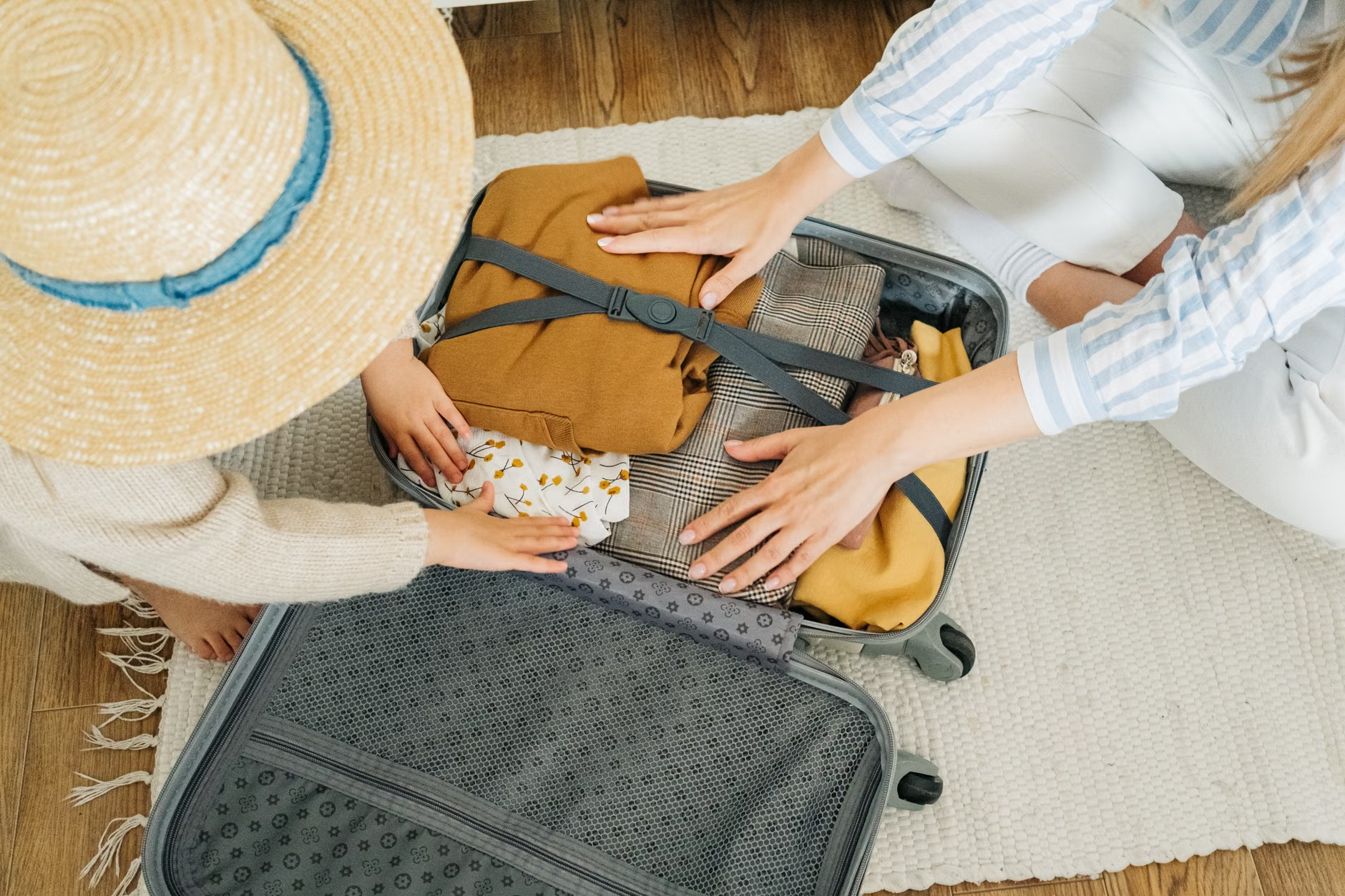
Once you’ve acquired your second-hand treasure, your job isn’t done. You need to treat it with the care that the previous owner might have neglected. First, give everything a thorough cleaning. For backpacks, this means a gentle hand wash in a bathtub with mild, technical-fabric-safe detergent. Never put your technical gear in a standard washing machine unless the manufacturer explicitly states it is safe, as the agitator can destroy the structural integrity of the internal frames and padding.
Check for “re-waterproofing.” Many technical fabrics lose their DWR (Durable Water Repellent) coating over time. A simple spray-on treatment can restore this, making your used gear perform like it just came off the assembly line. This is a small, inexpensive maintenance task that significantly extends the lifespan of your gear.
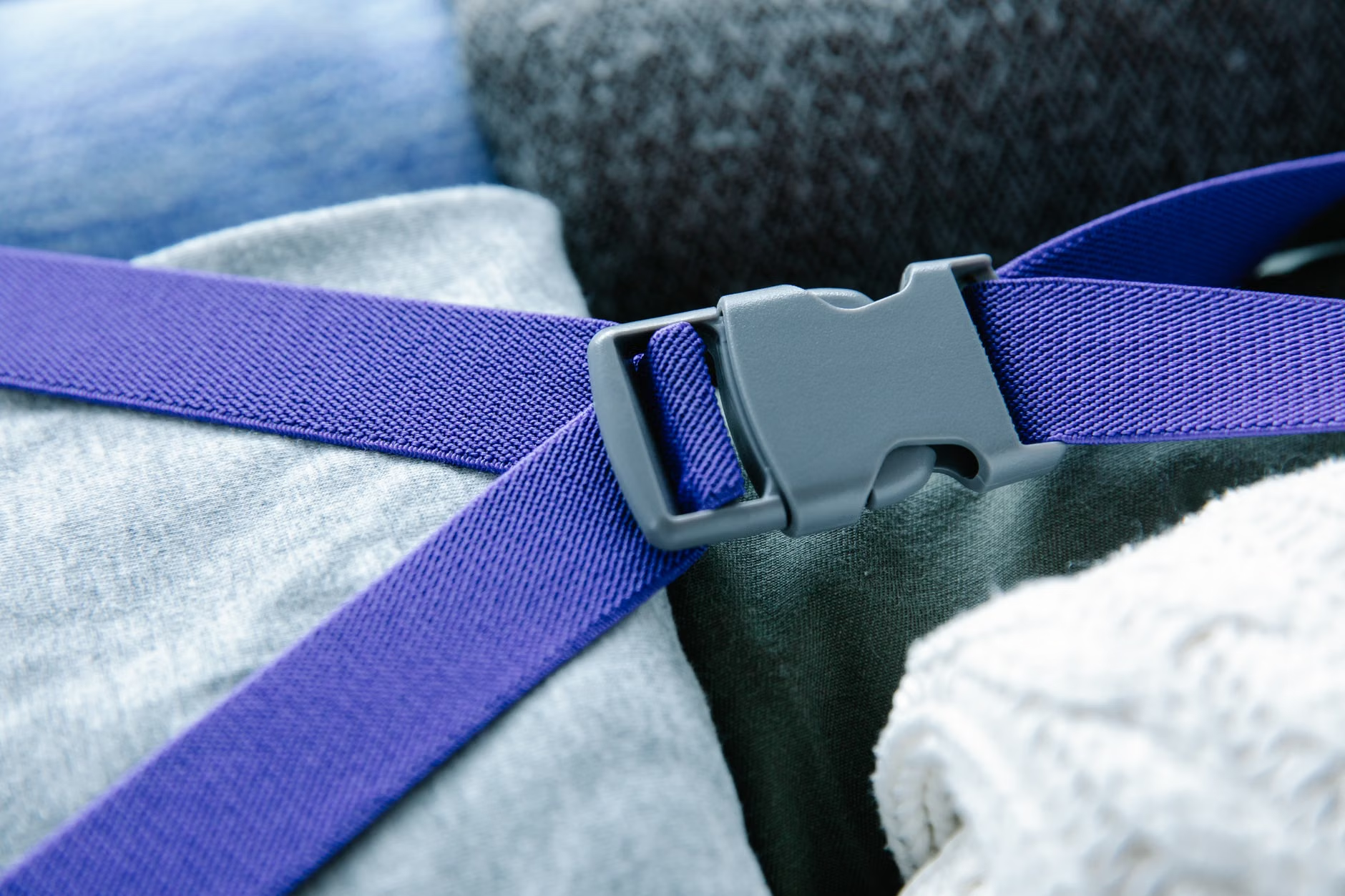
Lastly, keep an eye on the hardware. If a plastic buckle snaps, don’t throw the bag away. You can buy replacement buckles online for a few dollars. Replacing a buckle is a ten-minute job that can save you from having to replace a $200 bag. Learning these minor repair skills is part of the “second-hand lifestyle”—it makes you more self-reliant and less reliant on constant replacement.
Addressing Common Misconceptions About Pre-Owned Equipment
There is a lingering stigma that buying used means buying “lesser” or “dirty.” It is time to move past that. In the outdoor and travel industry, “used” often implies “proven.” A backpack that has been on three continents and still looks great is a much better bet than a brand-new, unproven budget bag that might fail on its first trip.
Many travelers in their 30s and 40s are also concerned about the “ick factor.” Let’s be realistic: if you are buying a used soft-sided item, you should always expect to clean it. Treat the purchase price as the base cost, and budget a few dollars for cleaning supplies. Once you’ve sanitized a piece of gear, it is yours. The history of the item is gone, and only the utility remains.
Another misconception is that it is too time-consuming. While browsing can be a rabbit hole, the “search-alert-purchase” method is actually a time-saver. By focusing your search on specific, high-quality items, you avoid the decision fatigue that comes with comparing dozens of low-quality, generic options on big-box retail sites. You know what you want, you know what it should cost, and you wait for the right deal to appear. It is a more disciplined, focused approach to shopping.
The Environmental Impact of Your Choice
While we often focus on the financial benefits, we shouldn’t ignore the environmental footprint. The textile industry is a massive contributor to global waste. Every piece of gear you buy second-hand is one less item that needs to be manufactured, shipped across the ocean, and eventually dumped in a landfill.
By choosing pre-loved, you are extending the lifecycle of high-carbon-footprint items. A single backpack requires an enormous amount of energy, water, and raw materials to produce. When you use that item for ten years instead of two, you are effectively dividing its environmental impact by five. For families trying to live more sustainably without sacrificing the ability to explore the world, this is a tangible, impactful way to make a difference.
You don’t have to be a hardcore environmentalist to appreciate the logic here. It is simply good housekeeping for the planet. As we teach our children about the value of the places we visit, it feels right to also teach them about the value of the gear we use to get there. It is a small but meaningful part of the travel experience.
Final Thoughts on Building Your Travel Kit
The second-hand market is a tool, not a compromise. It allows you to build a kit of professional-grade equipment that you might otherwise never be able to justify. By being patient, knowing what to look for, and maintaining your gear properly, you can travel with confidence, comfort, and a bit more cash in your pocket.
Start small. Don’t try to overhaul your entire travel kit overnight. Pick one item—maybe a carry-on suitcase or a daypack—and try to find a high-quality, pre-owned version. Once you see the quality difference between high-end gear and entry-level retail items, you will likely never look back. The gear you buy today will likely be the gear you are still using in ten years, and perhaps even passing down to your own kids when they start their own adventures.
Travel is about the experiences, not the things. But the right things certainly make the experiences easier to manage. Keep your kit lean, keep your standards high, and enjoy the journey.
Frequently Asked Questions
1. Is it safe to buy used baby travel gear like strollers or carriers?
Yes, but with caution. For carriers, check all buckles, stitching, and fabric for any signs of fraying or stress. For strollers, ensure the folding mechanism is smooth, the brakes engage firmly, and there is no rust on the frame. Avoid used car seats entirely, as their crash history and structural integrity cannot be verified.
2. How do I handle hygiene concerns when buying second-hand luggage?
Hard-shell luggage is easy to sanitize with standard household disinfectants. For soft-sided bags, you can often use a fabric-safe upholstery cleaner or a gentle hand wash. If the item has a strong odor that doesn’t dissipate after airing out, it is best to avoid it, as deep-seated odors in synthetic fabrics can be very difficult to remove.
3. What are the best platforms for finding high-quality travel gear?
For general gear, eBay and Mercari are excellent due to their buyer protection policies. For high-end outdoor equipment, look at dedicated sites like Geartrade or specialized Facebook groups for brands like Patagonia, Osprey, or Arc’teryx. These community-focused platforms often feature better-maintained items from enthusiasts who understand the value of their gear.
Official resources for further reading:
NHTSA: Car Seat Safety and Inspection Guidelines
EPA: Tips for Reducing Waste and Sustainable Consumption