Community-supported food models, such as Community-Supported Agriculture (CSA) and food cooperatives, are effectively transforming the way modern households handle their grocery needs by prioritizing seasonal quality and local supply chains over the convenience of traditional big-box supermarkets.
- Financial Predictability: While CSA shares require an upfront investment, they often stabilize your food budget against the volatile inflation seen in retail grocery chains.
- The ‘Surprise’ Factor: These models require a shift in mindset; you are cooking based on what is harvested, not just what you planned, which can be a hurdle for rigid meal planners.
- Environmental Impact: By cutting out the middleman and long-haul transportation, these systems significantly reduce your household’s carbon footprint while supporting local farm economies.
If you are in your 30s or 40s, you probably know the feeling of the “Sunday Scaries” all too well. It isn’t just the looming work week—it’s the realization that you have a fridge full of wilted spinach, a half-empty carton of almond milk, and absolutely no plan for what to feed the family for dinner on Tuesday. We’ve all been there, scrolling through grocery delivery apps, feeling the sting of premium delivery fees and the disappointment of receiving bruised fruit that looked perfect on the screen.
The “community-supported” trend isn’t just a buzzword for foodies; it is a pragmatic reaction to the inefficiencies of the modern food supply chain. Whether it’s a CSA subscription, a food co-op, or a neighborhood buying club, these models are gaining traction because they offer something that a standard supermarket cannot: a direct connection to the source of your dinner.
Understanding the Basics: What Exactly Is Community-Supported Grocery?
At its core, community-supported grocery—most commonly represented by Community-Supported Agriculture (CSA)—is a subscription model. You pay a local farm or a network of farms at the beginning of the growing season. In exchange, you receive a regular “share” of the harvest throughout the season. Think of it as investing in your local food system. You aren’t just a customer; you are a stakeholder.
But the model has evolved. Today, we also see the rise of food cooperatives, which are member-owned grocery stores or buying clubs. Unlike traditional retailers that focus on maximizing profit for shareholders, co-ops focus on providing high-quality, often organic or locally sourced goods to their members at the lowest sustainable price. It’s a shift from a “transactional” relationship with food to a “relational” one.
For parents juggling school runs, career demands, and the endless mental load, this shift can feel daunting. Why would you want to add the “inconvenience” of seasonal produce to an already busy schedule? The answer lies in the quality of the ingredients and the reduction of decision fatigue. When you sign up for a share, the choice of what to buy is largely made for you. For many, that’s not a burden; it’s a relief.
The Financial Reality: Is It Actually Cheaper?
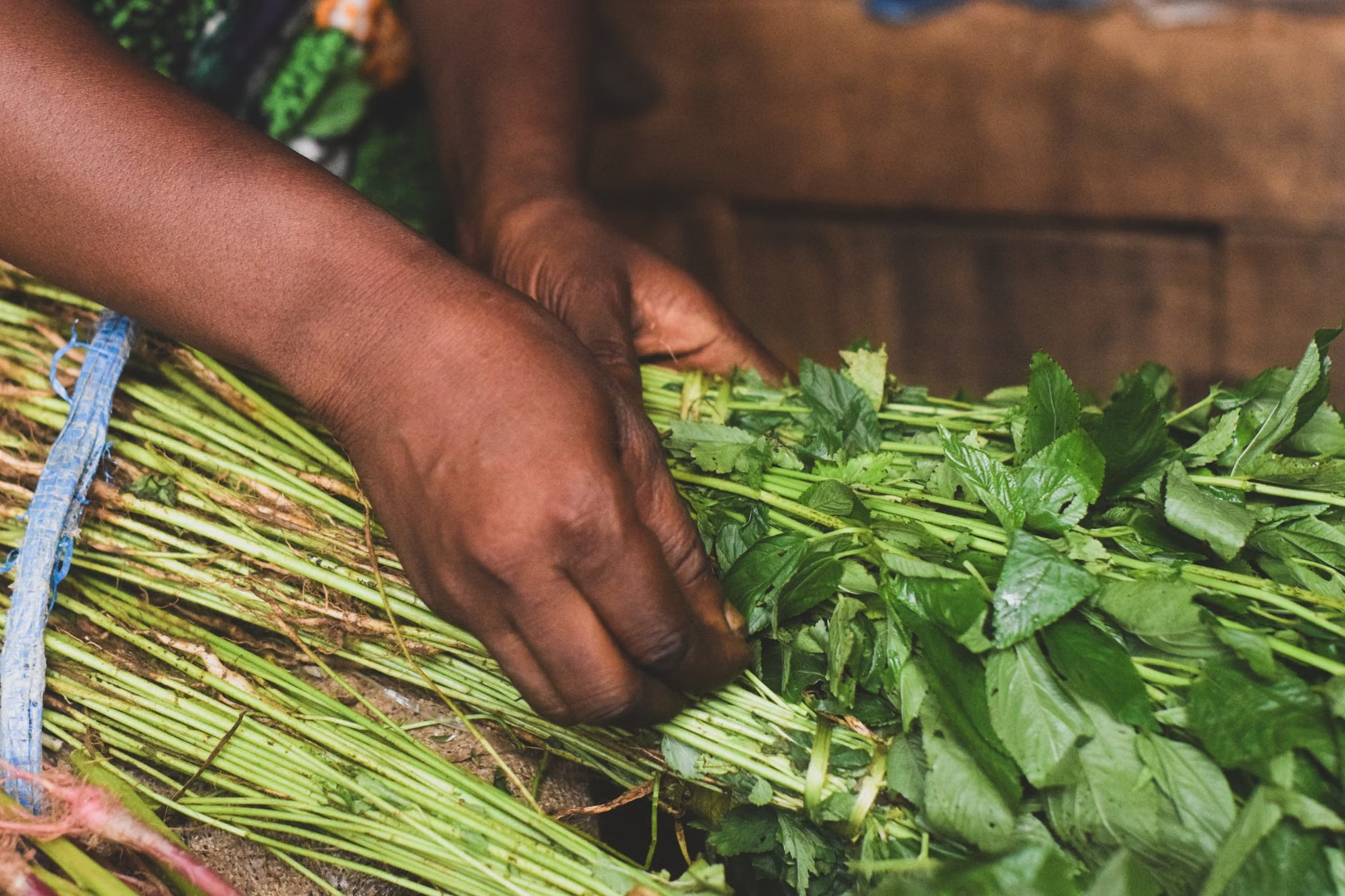
One of the biggest misconceptions about community-supported grocery is that it is strictly for the wealthy. While it’s true that some artisanal co-ops carry premium price tags, a CSA share is often surprisingly competitive when you break down the cost per pound of produce. When you shop at a high-end organic supermarket, you are paying for the brand, the fancy display, the lighting, the rent, and the massive supply chain overhead.
In a CSA model, you are cutting out the middleman. You are paying the farmer directly. However, it is important to look at the numbers objectively. Let’s look at a comparison of typical costs:
| Factor | Supermarket | CSA/Co-op |
|---|---|---|
| Cost Structure | Variable/Weekly | Fixed/Seasonal |
| Waste | High (Impulse buys) | Low (Use what you get) |
| Quality | Consistent, but aged | High, seasonal |
The primary financial advantage is waste reduction. We’ve all tossed out a bag of salad mix that turned into liquid sludge before we could eat it. With a CSA box, you are forced to use the produce while it’s fresh. You learn to preserve, to roast, and to integrate ingredients into your weekly routine. This isn’t just about saving money; it’s about maximizing the value of every dollar you spend on food.
Overcoming the ‘Box Anxiety’: How to Manage Seasonal Produce
The most common complaint from new CSA members is “box anxiety.” This happens when you receive a massive bag of kale, five pounds of radishes, and three heads of cabbage, and you have no idea what to do with them. If you’re used to buying exactly what you need for a specific recipe, this can feel like an overwhelming chore.
To succeed here, you need to change your cooking framework. Instead of “I need a recipe for this, so I will go buy these ingredients,” you adopt the “What is in my kitchen right now?” approach. This is the secret to low-stress cooking.
Start by keeping a few staples on hand: high-quality olive oil, sea salt, garlic, onions, and a reliable grain like quinoa or farro. Almost any vegetable, no matter how obscure, can be turned into a delicious meal with those five items. Roast it, sauté it, or blend it into a soup. If you can’t get to it, learn the basics of quick-pickling or freezing. A quick-pickled radish takes ten minutes and lasts for two weeks in the fridge.
Assessing the Logistics: Time vs. Convenience
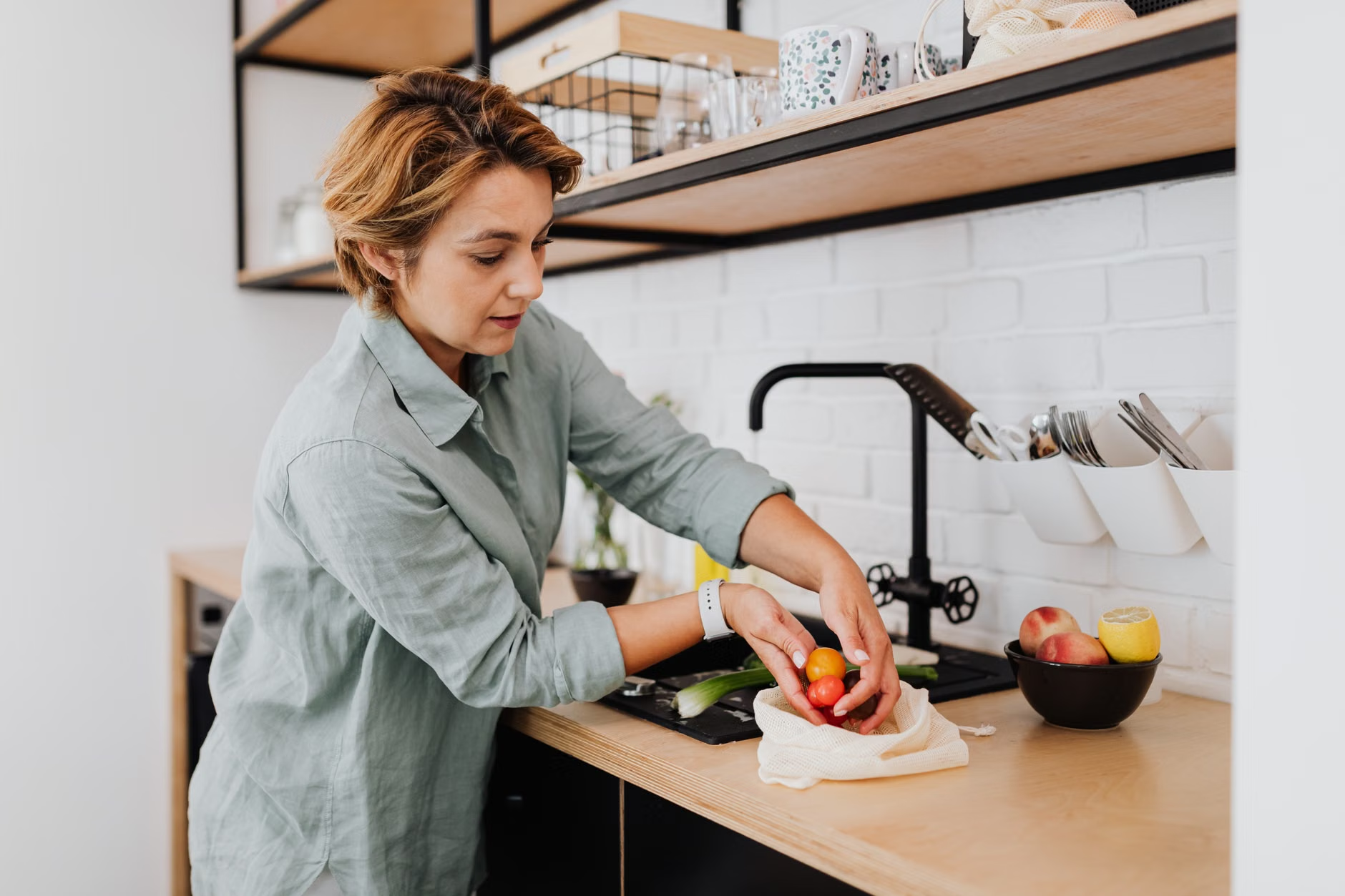
We are all time-poor. The allure of the one-stop-shop supermarket is powerful. You walk in, you get your milk, your bread, your meat, and your produce in one go. Community-supported grocery often requires a more fragmented approach. You might pick up your produce at a central drop-off point, buy your dry goods at a co-op, and still need to hit a traditional store for the occasional pantry item.
Is this efficient? It depends on your priorities. If your goal is to minimize time spent shopping, the supermarket wins. If your goal is to minimize time spent thinking about food quality, sourcing, and meal planning, the local food model actually wins. By automating your vegetable intake, you remove the guesswork from your weekly shopping list.
Consider your personal bandwidth. If your life is currently in a state of high-stress transition—perhaps a new job or a new baby—this might not be the right time to overhaul your grocery system. However, if you are looking for a way to simplify your routine and improve the nutritional quality of your family’s meals, the initial setup effort pays dividends in the form of healthier habits and less mental clutter.
Common Pitfalls and How to Avoid Them
The biggest mistake people make is overcommitting. Don’t start with a “Large Family Share” if you are a single person or a couple who travels often. Most programs offer half-shares or flexible subscriptions. Start small. Test the waters for one season. If you find yourself consistently overwhelmed by the amount of produce, it is perfectly acceptable to split a share with a neighbor or a friend.
Another pitfall is the assumption that everything will be “perfect.” Local, seasonal produce is not waxed, polished, or genetically modified for uniform size. You will find dirt. You will find the occasional bug. You will find carrots that look like they’ve been doing yoga. This is part of the experience. Embracing these imperfections is a great way to model a more grounded, realistic relationship with food for your children.
Finally, be wary of “greenwashing.” Just because a service calls itself a “co-op” or “farm-to-table” doesn’t mean it’s transparent. Always ask where the food comes from. A true community-supported model will be able to tell you the name of the farm and, in many cases, provide information about their growing practices. If they can’t answer these questions, they are likely just another retailer using clever marketing.
Building a Sustainable Future for Your Household
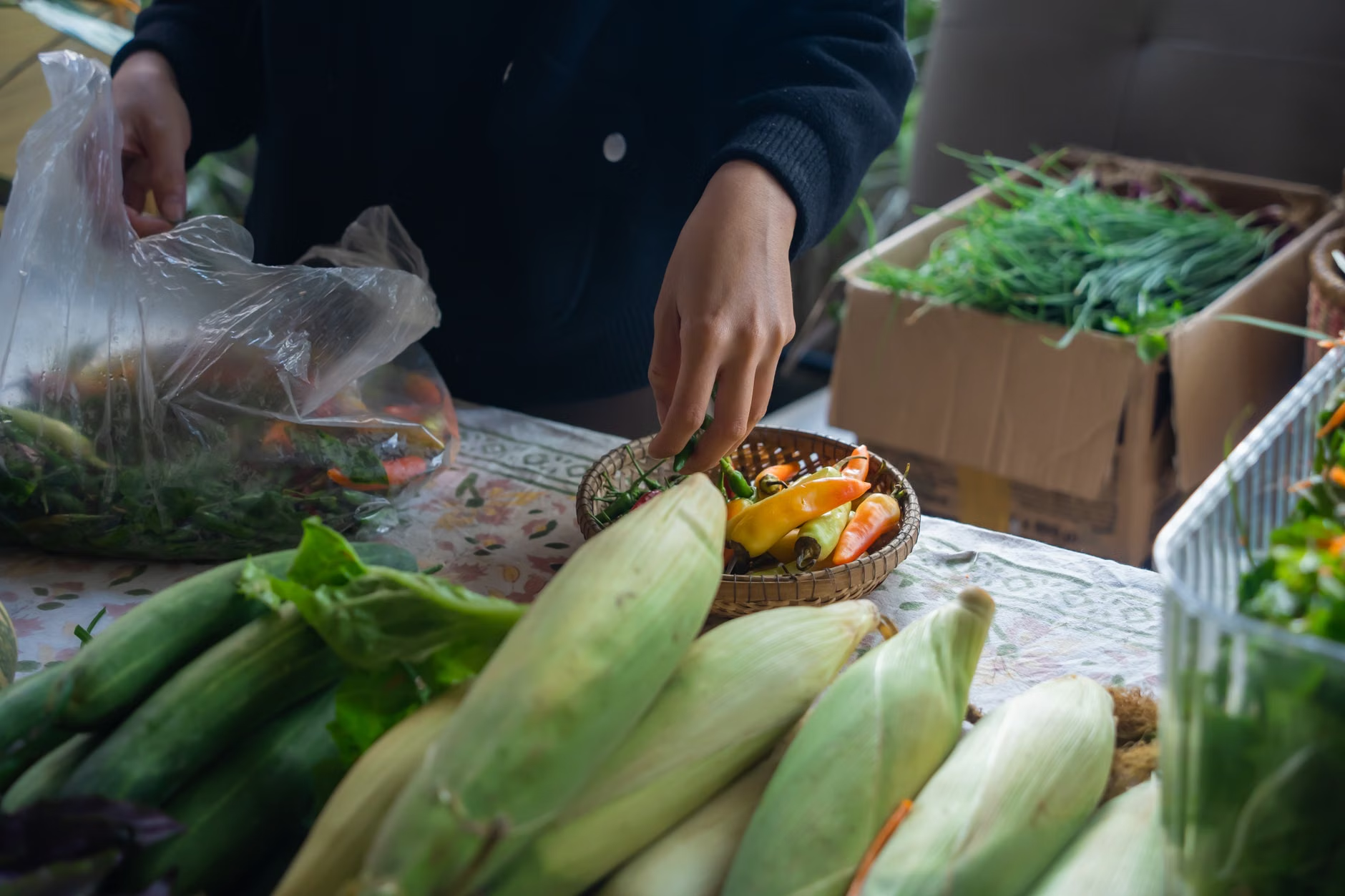
Transitioning to community-supported grocery is not just about the food; it’s about the habit of intentionality. By choosing to source your food through local systems, you are opting out of the high-intensity, high-waste cycle of modern industrial retail. You are choosing to eat what the land provides, which is a powerful way to reconnect with the rhythms of the year.
It’s important to remember that you don’t need to go 100% “off the grid” to benefit. Many families find a hybrid model works best: a CSA for the bulk of their fresh produce, and a standard supermarket for the pantry staples and specialty items they can’t live without. This flexibility is the key to longevity. If you try to be a purist, you will likely burn out. If you treat it as a tool to improve your life, you will likely find that it becomes an indispensable part of your routine.
As you navigate this, be kind to yourself. Some weeks, the box will sit on the counter until Friday night. That’s okay. We are aiming for progress, not perfection. The goal is to create a food environment that supports your health, your budget, and your community without adding unnecessary layers of stress to your already full plate.
For further reading on how to find a CSA near you or to understand the impact of local food systems, I recommend checking out resources like the USDA’s guide on Community-Supported Agriculture or the Agricultural Marketing Service for data on local food trends.
Frequently Asked Questions
Q: What if I don’t know how to cook the vegetables in my box?
A: Most CSA programs provide weekly newsletters with recipes and storage tips. Additionally, there are countless online communities and apps dedicated to “seasonal cooking.” If you have a specific vegetable you’ve never seen before, a quick search for “how to prep [vegetable name]” will yield hundreds of results. Remember, simple roasting with olive oil and salt is almost always the best way to start.
Q: Is a CSA subscription worth it if I travel frequently?
A: It can be, but you need to check the provider’s policy. Many farms allow you to “skip” a week or donate your share to a local food bank if you are out of town. Some even allow you to designate a friend to pick up your share in your absence. Always ask about the “vacation policy” before you sign the contract.
Q: How do I find a reputable food co-op or CSA in my area?
A: Use directories like LocalHarvest or your local farmers market association website. These platforms allow you to filter by zip code and see reviews from other members. Don’t be afraid to visit a few farmers markets in person; the farmers themselves are usually the best source of information about their own CSA programs.
The journey toward a more intentional grocery routine is a marathon, not a sprint. Take your time, experiment with what works for your family, and enjoy the process of discovering new flavors that you simply won’t find in the aisles of a traditional supermarket.