The most important takeaway for busy parents considering a “local-only” ingredient box is that while these services drastically improve the flavor profile and nutritional density of your family’s meals, they require a significant shift in your mental approach to meal planning compared to traditional grocery store shopping.
- Seasonality as a Constraint: Local-only boxes force you to cook with what is currently in harvest, which builds culinary creativity but limits your ability to rely on “pantry staples” like year-round tomatoes or imported avocados.
- The Hidden Cost of Logistics: While the food is often competitively priced against organic grocery store aisles, you are paying for the convenience of farm-to-door delivery, which changes your household budget structure.
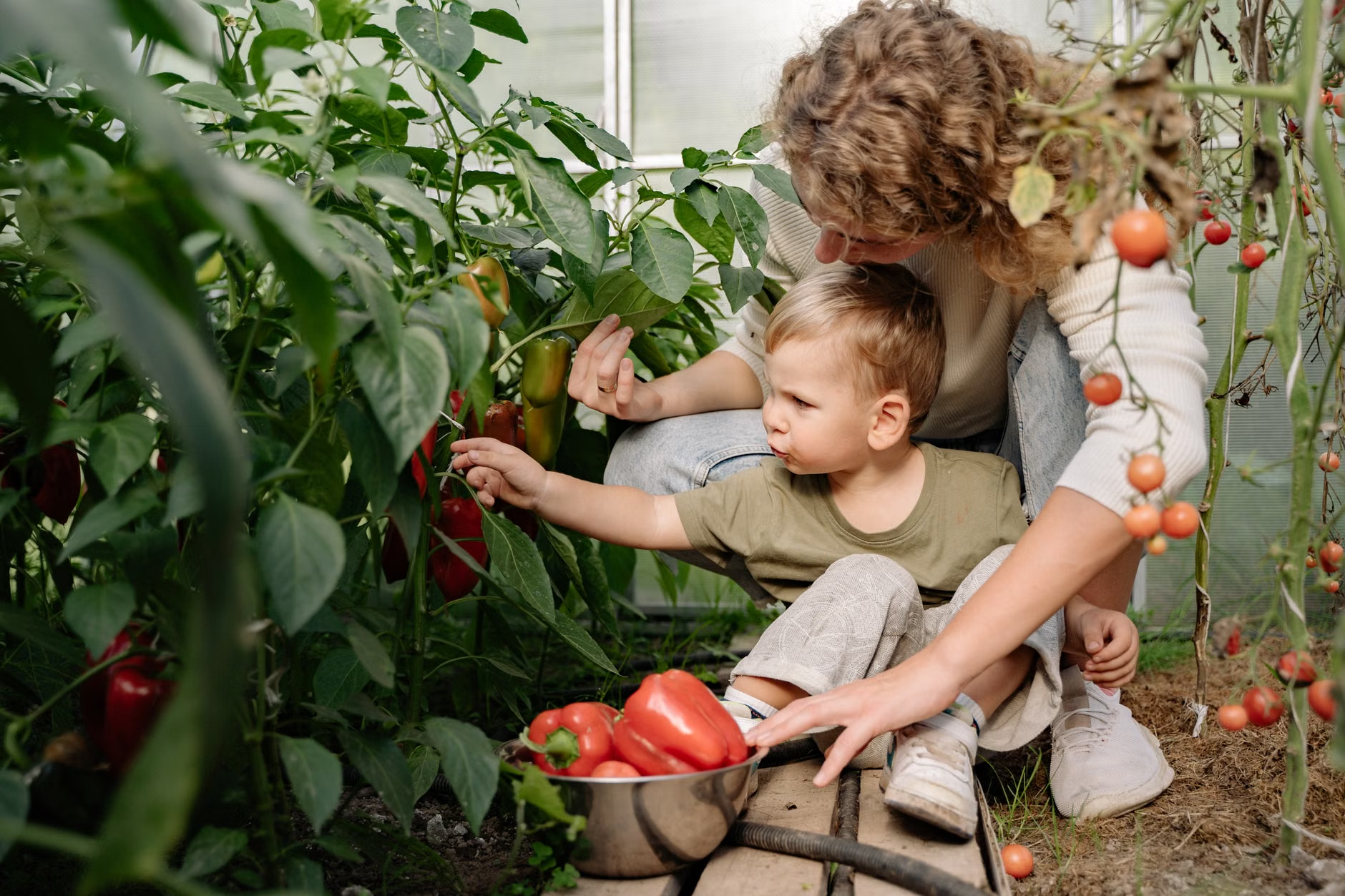
- Educational Value: These boxes provide a tangible way to teach children about food sources, seasonality, and the environmental impact of food miles, turning dinner prep into a mini-science lesson.
If you are like most parents in their 30s and 40s, your grocery routine has likely become a repetitive cycle of “what can I get done in twenty minutes before the kids lose their minds?” We have all been there. You walk into the supermarket, grab the same five boxes of pasta, a bag of salad greens that will probably wilt by Wednesday, and a few pre-marinated proteins to save time. It is efficient, but it is also—let’s be honest—a little uninspired.
Enter the “local-only” ingredient box. These services have surged in popularity recently, promising a return to the roots of cooking. Instead of picking up produce that has traveled thousands of miles in a refrigerated shipping container, you are getting items that were likely in the ground or on the vine within the last 48 hours. But is this just another subscription service destined to become a source of “subscription guilt,” or is it a genuine upgrade for your family’s dinner table?
The Mechanics of ‘Local’ vs. ‘Convenience’
To understand why these boxes are taking off, we first have to look at what they actually are. Unlike standard meal kits—which provide pre-portioned, often heavily packaged ingredients for specific recipes—local-only boxes are usually curated “shares” of seasonal produce, dairy, and sometimes meat or baked goods. Think of them as a modern, digitized version of a Community Supported Agriculture (CSA) program.
The core difference is the philosophy of “supply-led” versus “demand-led” shopping. In a supermarket, you demand what you want, and the store ensures it is there, regardless of whether it is currently growing in your region. With a local-only box, you accept what is available. This sounds restrictive, but for many, it is liberating. You stop asking “What do I want to eat?” and start asking “What can I create with these beautiful ingredients?”
The Nutritional and Flavor Payoff
There is a scientifically backed reason why that local heirloom tomato tastes better than the one from the supermarket. Fruits and vegetables begin to lose their nutrient density and sugar content the moment they are harvested. When produce is picked at peak ripeness—as opposed to being picked green and gassed with ethylene to “ripen” in transit—the flavor profile is drastically different.
For parents, this is a secret weapon. It is much easier to get a toddler to eat a carrot when that carrot actually tastes like something other than wet fiber. The sweetness of locally grown, seasonal produce can turn a simple roasted vegetable dish into a meal that even the pickiest eaters might actually tolerate, if not enjoy.

Is Your Household Ready for the Transition?
Before you hit ‘subscribe,’ there are some logistical realities to consider. Transitioning to a local-only model is not just about changing where you shop; it is about changing your relationship with the kitchen.
| Feature | Standard Grocery Store | Local-Only Box |
|---|---|---|
| Planning | High control, rigid lists | Flexible, reactive |
| Food Miles | High (Global) | Low (Regional) |
| Preparation | Predictable, standard | Requires creative improvisation |
One of the biggest hurdles for busy parents is the “prep-time tax.” Local produce often comes with more dirt, tops, and stems. You aren’t just opening a bag of pre-washed spinach; you are washing actual kale leaves that might have a stray bit of soil on them. While this might sound like a burden, many families find it acts as a “slow down” moment. It forces you to engage with the food before the cooking even begins. It’s a small, tangible way to ground yourself after a frantic workday.
Managing the “What Do I Do With This?” Anxiety
The most common complaint about these boxes is the “mystery ingredient.” You might get a bundle of kohlrabi or a massive amount of Swiss chard and have zero idea what to do with it. This is where your research skills come in. The best local-only providers include digital recipe guides or access to a community group where you can swap ideas. If your service doesn’t, don’t worry. A quick search for “seasonal [vegetable name] recipes” is your best friend. Embracing the unknown is part of the fun.
The Environmental and Economic Argument
We often hear about “food miles,” but for the average parent, the environmental impact of our grocery habits feels abstract. By choosing a local box, you are effectively cutting out the middleman and the long-haul logistics. This reduces your carbon footprint, yes, but it also has a more immediate benefit: it supports the local economy. When you buy from a local farm, more of your money stays in your region rather than being absorbed by massive distribution networks.
Economically, it is a trade-off. You are likely paying a premium for the convenience of delivery and the higher quality of the produce. However, many families find that because they are eating more fresh produce, they are wasting less. How many times have you thrown away a bag of supermarket salad that turned into slime in the crisper drawer? Because local produce is fresher, it typically has a longer shelf life in your fridge, which offsets some of the higher upfront costs.

Practical Tips for Success
If you decide to take the plunge, do not go “all in” immediately. Most services offer different frequency options or box sizes. Start with a bi-weekly box to see if the rhythm works for your family’s schedule. If you find yourself overwhelmed by the amount of produce, look for services that allow you to “pause” or skip weeks easily via their app.
Another tip: invest in a few good storage solutions. Because you are getting fresh produce, you will need better containers than the plastic bags the food arrived in. Glass containers, produce keepers with ventilation, and even simple beeswax wraps can significantly extend the life of your fresh greens and root vegetables.
When to Stick to the Supermarket
Let’s be realistic: no one is suggesting you get *everything* from a local box. It is entirely okay to use the box for your fresh produce, dairy, and eggs, while still hitting the grocery store for your pantry staples like grains, oils, spices, and cleaning supplies. In fact, this “hybrid” approach is usually the most sustainable for busy families. It prevents the burnout of trying to be a “perfect” locavore while still ensuring your family gets the nutritional benefits of fresh, seasonal food.
Be wary of “subscription fatigue.” If you find that the boxes are piling up and you’re throwing food away, cancel or downgrade. The goal is to make your life easier and your food better, not to add another chore to your to-do list. If it feels like a burden, it is not the right service for you, regardless of how “ethical” or “fresh” the marketing claims it to be.
Addressing Common Misconceptions
There is a persistent myth that eating locally is “too expensive” or “only for the elite.” While it is true that some high-end boutique boxes are pricey, many local farm cooperatives offer competitive pricing because they aren’t paying for fancy retail shelf space or massive national advertising campaigns. When comparing prices, make sure to look at the weight and the quality. A locally grown organic bunch of carrots is fundamentally a different product than a mass-produced, chemically treated bag of baby carrots. You are paying for density, flavor, and agricultural practices that prioritize soil health.
Another misconception is that you cannot eat “well” without exotic, imported ingredients. We have been conditioned to expect year-round access to every vegetable known to man. But if you look at traditional diets across the globe, they were almost entirely based on what was available seasonally. Learning to cook with the seasons is a skill, and like any other skill, it takes practice. The first time you try to make a winter soup without tomatoes might feel strange, but the resulting flavor—using root vegetables and seasonal herbs—is often more satisfying and authentic to the time of year.
The Future of Family Meal Planning
The rise of these boxes reflects a broader shift in how parents in their 30s and 40s are viewing their role as consumers. We are more conscious of where our food comes from, not just for the sake of the environment, but for the health of our children. We want to know that the milk we are pouring into their cereal came from a farm where the cows are treated well, and that the apples in their lunchbox weren’t sitting in a warehouse for six months.
This is not about being a “foodie” or trying to win an award for the most sustainable household. It is about simplifying the complex, often opaque world of food supply. It is about reclaiming a bit of our autonomy. When you know the farmer who grew your potatoes, the act of cooking dinner changes. It becomes less of a chore and more of an act of stewardship.
As you navigate your own journey with these services, remember to keep your expectations grounded. Some weeks will be wonderful, filled with fresh inspiration and vibrant meals. Other weeks, you might be busy, the kids might be sick, and that box of beautiful produce might just sit in the fridge for a few extra days. That is okay. The goal is progress, not perfection. If you can manage to incorporate more local, seasonal food into your family’s routine, you are already ahead of the curve.
Frequently Asked Questions
What happens if I receive an ingredient I or my children absolutely refuse to eat?
Most reputable local ingredient box services allow for some level of customization. Check if your provider lets you set “dislike” preferences or swap out items in your digital dashboard before the box is packed. If they don’t, treat it as an opportunity for “culinary experimentation”—a hidden ingredient in a stew or blended into a sauce is often the best way to introduce new flavors without the resistance.
Are these boxes really more environmentally friendly than buying local produce at a supermarket?
Generally, yes. Supermarket “local” produce still often goes through a centralized warehouse and distribution hub, which adds significant food miles. A direct-from-farm box skips the distribution centers, significantly reducing the carbon footprint associated with transport, storage, and multiple handling steps. However, the packaging (cardboard, liners, cooling packs) is a factor; look for services that prioritize reusable or truly compostable packaging.
Is it possible to maintain a healthy diet strictly through a local-only box?
It is possible, but it requires a pantry that is well-stocked with staples. You will need to keep items like dried grains (rice, quinoa, lentils), high-quality oils, vinegars, nuts, and spices on hand. The box provides the “star” of the show—the fresh produce and proteins—but your pantry provides the foundation for those ingredients to become a complete meal. Treat the box as the primary source of nutrition and the pantry as your support system.
For further reading on the impact of food systems and local agriculture, you may want to explore resources from the USDA Local & Regional Food Sector or similar regional agricultural extension programs in your area, which provide data on the benefits of short food supply chains.
Ultimately, the choice to subscribe to a local-only box is a personal one. It is a decision to value quality and community over pure convenience. If you are ready to experiment and don’t mind a bit of unpredictability, it might just be the change your kitchen needs. Start small, stay curious, and don’t forget to enjoy the process of cooking with what the earth provides right now.