The most important thing to understand about the 2026 economic landscape is that while prices are stabilizing in some sectors, the “hidden” cost of living—often manifested as smaller packages for the same price—is the new baseline that parents need to navigate with their children.
- Inflation is the “price creep”: It is the general increase in the cost of goods over time, which affects your weekly grocery haul and utility bills.
- Shrinkflation is a stealth move: Companies keep the price the same but reduce the quantity or quality of the product to protect their profit margins.
- Financial literacy starts at home: Using these concepts as teaching moments helps children understand the value of a dollar and the importance of critical shopping habits.
If you have been to the supermarket lately, you have likely experienced that quiet moment of frustration: you grab your usual brand of snacks, only to find the box feels oddly light. You check the price—it is the same $4.99 you paid last month—but when you look at the fine print, you realize you are getting two ounces less. This isn’t your imagination playing tricks on you; it is a textbook case of shrinkflation, and for parents in their 30s and 40s trying to manage a household budget in 2026, it is a constant, nagging reality.
Explaining these concepts to children can feel daunting. We often want to shield our kids from the stresses of adult responsibilities like inflation, but financial literacy is a vital skill. By breaking down these complex economic forces into relatable, bite-sized lessons, we can turn a grocery store annoyance into an educational opportunity.
What Exactly Is Inflation? (The “Everything Gets Pricier” Concept)
At its simplest level, inflation is what happens when money loses a bit of its “punch.” Think of it like a balloon that is slowly losing air. A few years ago, a $10 bill could buy a specific amount of groceries. Today, that same $10 bill buys a little less. The quality and quantity of the goods haven’t changed, but the amount of money required to acquire them has.
When explaining this to a child, avoid abstract macroeconomic jargon. Instead, use the “Allowance Analogy.” If your child receives $5 a week for chores, and last year that $5 could buy five chocolate bars, but this year it only buys four, that is inflation. It isn’t that the chocolate bars became “better”; it is that the cost of the ingredients, the labor to make them, and the fuel to transport them to the store has risen. When everyone in the economy starts charging more, the value of that $5 bill effectively shrinks.
In 2026, we are living through a period of “sticky” inflation. While the extreme spikes we saw in previous years have leveled off, many prices have settled at a higher “new normal.” This means families are not just dealing with temporary price jumps; they are dealing with a permanent shift in the cost of living.
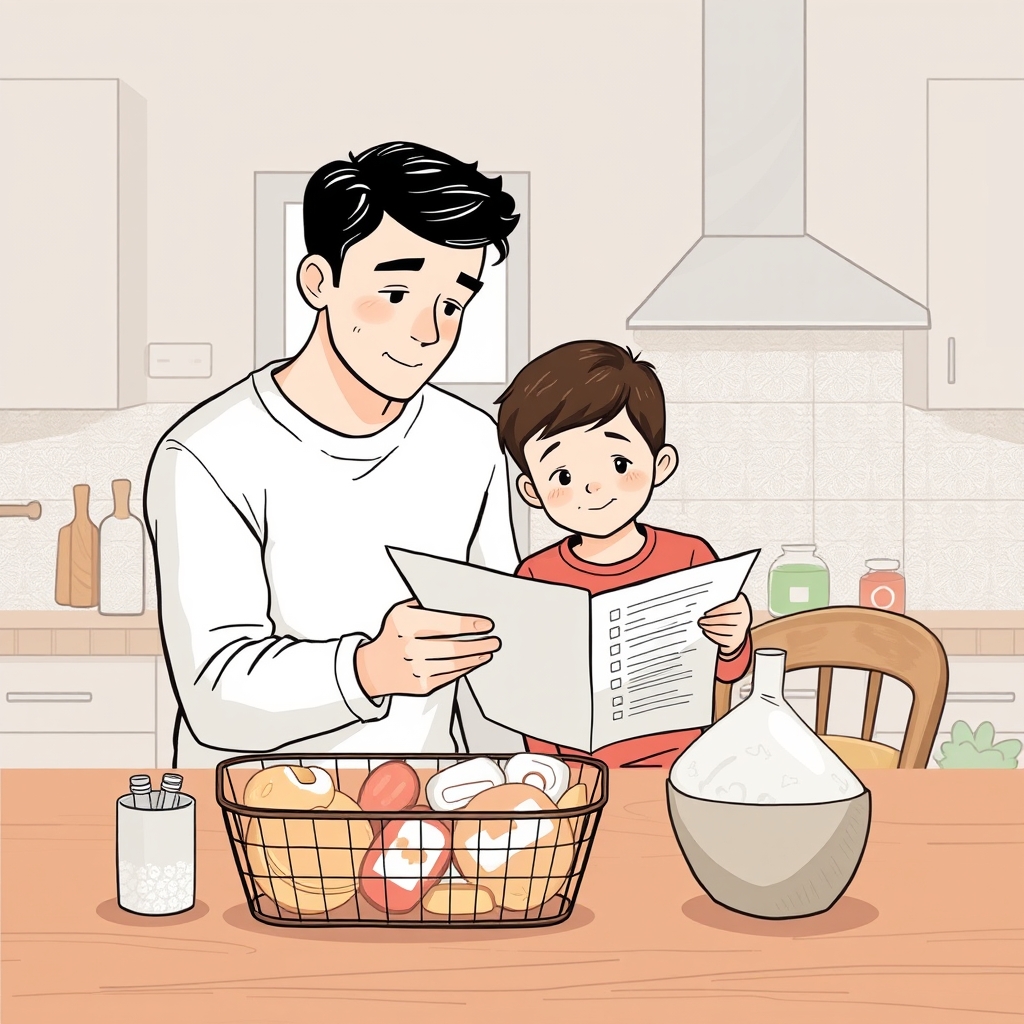
Decoding Shrinkflation: The Stealthy Price Hike
Shrinkflation is perhaps more confusing to children than standard inflation because it feels like a trick. If a candy bar company keeps the price the same but makes the bar 10% smaller, they are effectively raising the price per ounce without the customer noticing the change at the register. It is a psychological game played by manufacturers to avoid the “sticker shock” of raising the price on the tag.
To explain this to your children, use a visual experiment. Take two oranges or two pieces of toast. Cut one slightly smaller than the other. Ask them: “If I charge you the same amount for both, which one is the better deal?” This helps them understand that the price tag is only half the story. You have to look at the “unit price”—the price per ounce, gram, or count—which is usually printed in tiny font on the store shelf label.
Why Do Companies Do This?
It is important to be fair in your explanation. Companies are not necessarily “evil” for practicing shrinkflation; they are businesses trying to survive. When the cost of cocoa, flour, or electricity goes up, they have two choices: raise the price and risk losing customers who might switch to a cheaper brand, or keep the price the same and reduce the portion size. Many choose the latter because consumers are more sensitive to price changes than they are to package size changes.
| Strategy | How it Works | Impact on Family |
|---|---|---|
| Inflation | The price on the tag goes up. | Obvious; easier to track in a budget. |
| Shrinkflation | Price stays same, product gets smaller. | Hidden; leads to “buying more” to fill the gap. |

Now that your kids understand the “why,” it is time to involve them in the “how” of managing your family budget. This turns a stressful chore into a collaborative mission. Here are three actionable strategies you can implement right now:
1. The Unit Price Hunt
Turn shopping into a scavenger hunt. Teach your children to look for the “price per ounce” or “price per 100g” label on the shelf. This is the ultimate equalizer. Even if one box of cereal is “Family Size” and another is “Standard,” the unit price tells you which one is actually cheaper per serving. This is a life skill that will serve them long after they leave home.
2. The “Generic” Challenge
Often, name-brand companies use shrinkflation more aggressively because they have to pay for expensive marketing and advertising. Compare the ingredients list of a name-brand product with the store-brand version. You will often find they are nearly identical. If you can save 20% by switching to the store brand, you have effectively “beaten” inflation for that item.
3. Bulk Buying and Portioning
If you have storage space, buying in bulk can mitigate the effects of shrinkflation. When you buy a large bag of rice or a giant tub of yogurt, you are paying for the product, not the individual, smaller-sized packaging. Have your kids help you portion these out into reusable containers. It reinforces the idea that you are taking control of the quantity yourself.

Common Pitfalls and How to Avoid Them
When teaching kids about money, it is easy to accidentally induce anxiety. Avoid framing the economy as a “doomsday” scenario. Instead, focus on the idea of resourcefulness. If you make it sound like the world is collapsing, children will naturally feel insecure. If you make it sound like a puzzle to be solved, they will feel empowered.
Another common mistake is being too rigid. If you are constantly saying “we can’t afford that because of inflation,” it can make your child feel like your family is in a state of scarcity, even if you are just being budget-conscious. Instead, use phrases like, “We are choosing to spend our money on X instead of Y, so we can save for our vacation.” This teaches prioritization, which is the cornerstone of all financial health.
The Long-Term Perspective
Inflation and shrinkflation are not new; they have been part of the economic cycle for decades. By 2026, we have just become more adept at noticing them because of the digital tools at our disposal. We can compare prices online, read reviews, and track our spending with apps. Use these tools in front of your children. Let them see you logging an expense or checking a price comparison site.
When kids see that their parents are thoughtful, intentional, and calm about financial changes, they learn that money is a tool to be managed, not a source of fear. You are not just teaching them how to survive 2026; you are teaching them how to be critical thinkers in a marketplace designed to distract them.
Keep the conversations open. If they ask about a price hike at their favorite local café or why their school lunch portions seem different, answer honestly but simply. “The cost of the ingredients went up, so the store had to make a choice.” It demystifies the world and gives them a sense of agency.
Frequently Asked Questions
Is shrinkflation illegal?
Generally, no. As long as the manufacturer clearly states the weight or count on the package, they are not breaking the law. It is considered a marketing strategy. However, consumer protection agencies do monitor for misleading or deceptive labeling, such as significantly changing the package shape to make it look larger than it is.
Should I stop buying my favorite brands?
Not necessarily. If a brand provides high value, quality, or convenience that you cannot find elsewhere, it may still be worth the money. The goal is not to buy the cheapest item every time, but to be aware of what you are paying for. If the price-to-value ratio is no longer there, that is when you should consider switching.
How can I track if inflation is affecting my specific household?
The best way is to keep a simple spreadsheet or a physical notebook of your “staple” items. Track the price of milk, bread, eggs, and your go-to snacks over three to six months. You will quickly see which items are rising in price and which are shrinking in size. This data will help you make better shopping decisions and identify when it is time to look for alternatives.
For more information on tracking economic trends and consumer rights, you can visit the Federal Trade Commission (FTC) for guidance on consumer rights, or check your local government’s Bureau of Labor Statistics for data on the Consumer Price Index (CPI), which tracks the average change over time in the prices paid by urban consumers for a market basket of consumer goods and services.
Remember, the goal isn’t to be a perfect economist; it is to be a steady guide for your children. You’ve got this.