The most effective way to reclaim your sanity during a family vacation is to swap the high-stress environment of international airports for the rhythmic, predictable, and remarkably scenic world of European train travel.
- Predictability: Trains eliminate the “hurry up and wait” culture of flying, offering more room for kids to move and parents to breathe.
- City Center Access: You arrive directly in the heart of the city, skipping the expensive and stressful hour-long taxi rides from remote airports.
- Cost Efficiency: When you factor in baggage fees, airport transfers, and the cost of food, regional train passes often provide better value for families.
If you are in your 30s or 40s, you likely remember a time when travel meant spontaneity. These days, travel often feels like a logistical military operation. You have the stroller, the snacks, the tablet, the spare clothes, and the lingering fear that your toddler will have a meltdown in the middle of the security line. We’ve all been there—trying to juggle a passport while a flight attendant asks if you’ve pre-ordered the children’s meal.
Slow travel isn’t just a buzzword for digital nomads; it’s a survival strategy for parents. It turns the journey into a part of the vacation rather than a hurdle you have to clear to start it. European rail networks are arguably the best in the world for this, offering a sprawling web of connections that can take you from the Mediterranean coast to the heart of the Alps without a single liquid-limit check.
Why Trains Are the Secret Weapon for Modern Parenting
Let’s be honest: flying with children is rarely about the destination; it’s about surviving the transit. Airports are designed to extract money and induce stress. Train stations, conversely, are designed for the flow of people. When you board a train, you aren’t forced into a seat for four hours with the threat of “turbulence” keeping you buckled in. You can stand up, walk to the dining car, visit the restroom without climbing over a stranger, and actually look at the scenery.
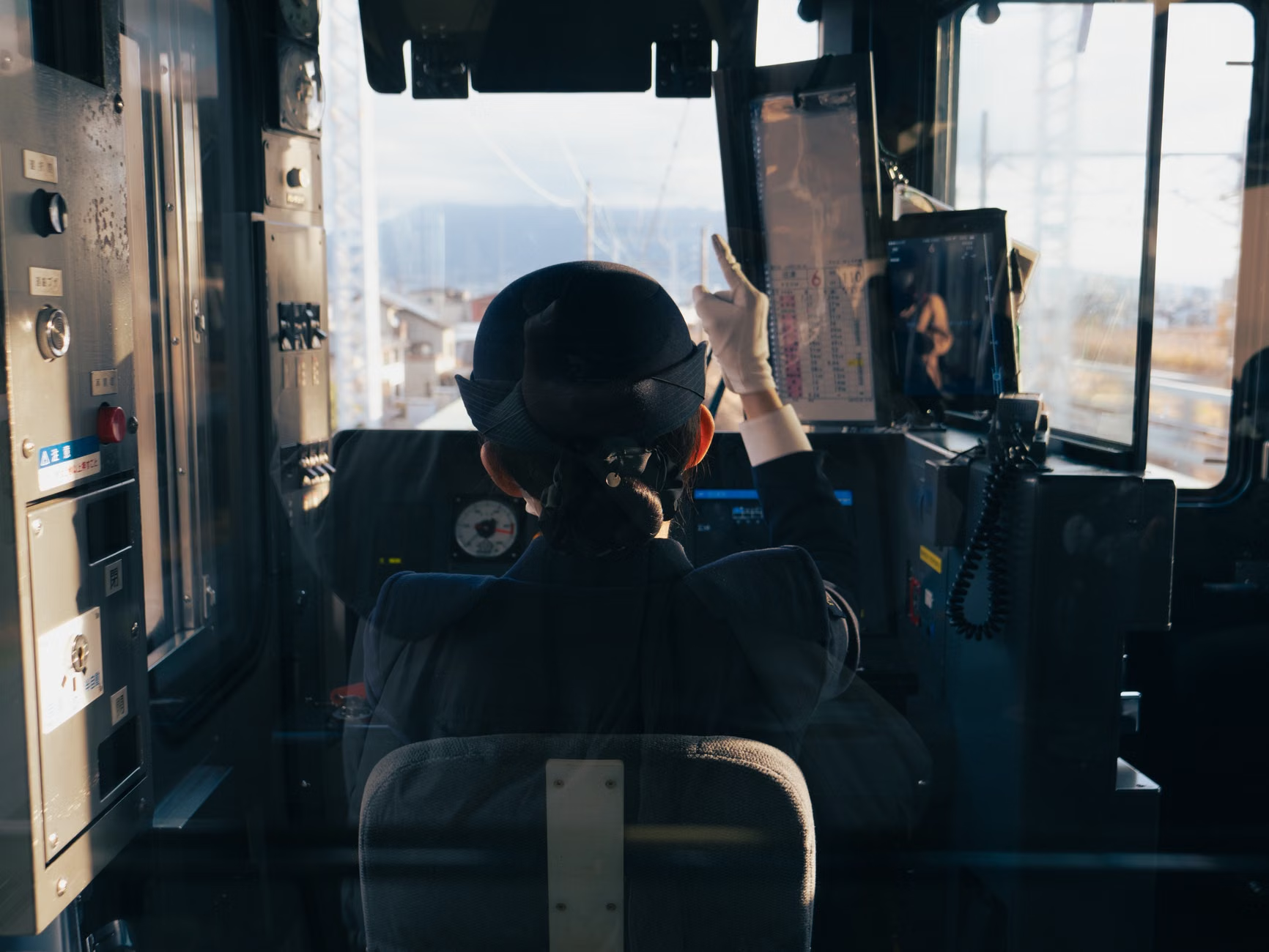
Beyond the physical comfort, there is the psychological benefit of “slow travel.” The concept is simple: stop trying to see five countries in seven days. Instead, pick a route, take the train, and actually see the landscape change outside your window. For children, the train is an adventure. For parents, it’s a mobile living room.
Mapping Out Your Route: Where to Go and Why
Not all train routes are created equal. If you are traveling with children, you want to prioritize routes that offer high-frequency service, comfortable seating, and enough visual interest to keep the kids engaged. Here are three distinct types of routes that work wonders for families.
1. The Alpine Crossing (Switzerland to Northern Italy)
This is the gold standard for scenic rail travel. The Gotthard Panorama Express or the Bernina Express routes take you through tunnels, over viaducts, and past lakes that look like they belong on a postcard. The best part? The train is so smooth that even the most motion-sick child usually fares better than they would on a winding mountain road.
2. The Coastal Medley (Southern France to Spain)
If your family craves the beach, the TGV network in France combined with the Spanish Renfe lines offers a seamless transition from the French Riviera to the coast of Catalonia. These trains are incredibly fast, meaning you spend less time in transit and more time building sandcastles. The coastal views are breathtaking, and the train stations are usually located right in the city centers, just a short walk from local transit.
3. The Imperial Capitals (Vienna to Prague to Budapest)
This is for the family that wants a bit of history without the fatigue of constant car rentals. These cities are connected by the Railjet network, which is exceptionally family-friendly. Many of these trains feature dedicated “family carriages” with small play areas, which is a game-changer if you have kids who need to burn off energy.
The Logistics: Making the Trip Actually Work
Researching the train is one thing; executing the trip is another. To avoid the common pitfalls, follow this breakdown of how to prepare for your journey.
| Step | Actionable Tip |
|---|---|
| Booking | Book seat reservations early, especially for “family carriages” or tables. |
| Luggage | Pack one “day bag” with all essentials (snacks, chargers, meds) to keep under your seat. |
| Transit | Use local apps (like Trainline or Omio) to track real-time platform changes. |
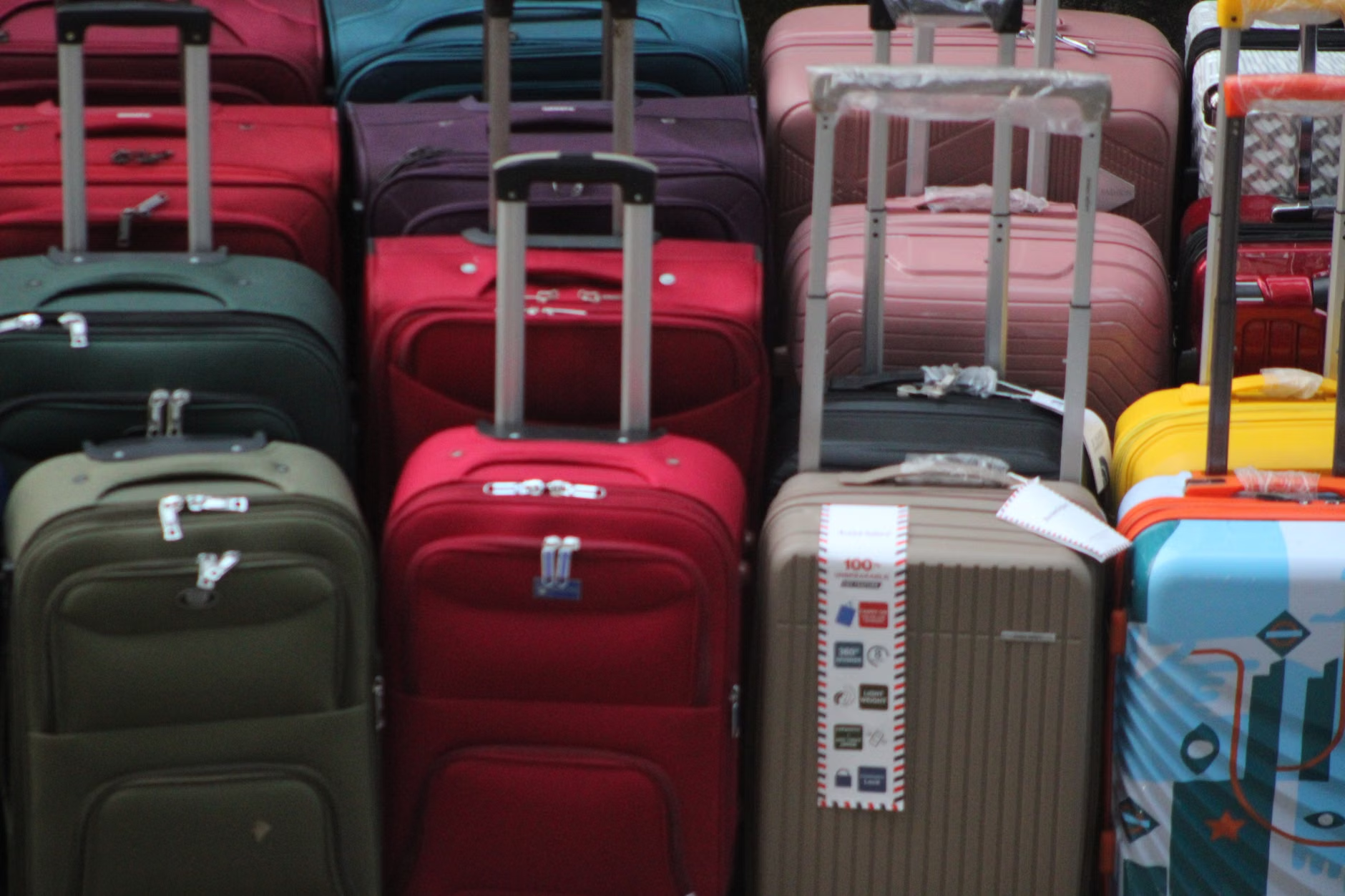
One of the biggest mistakes parents make is overpacking. Unlike a car where you can just shove extra bags in the trunk, or an airplane where you can check bags for a fee, you are responsible for carrying your own luggage on and off the train. If you can’t lift your suitcase above your head, you have too much stuff. Aim for one carry-on sized bag per person, plus one shared bag for overflow items.
Managing Expectations and the “Meltdown” Factor
Even on the best train route, things will go wrong. Your child might decide that the train seat is the perfect place for a tantrum. The Wi-Fi might be spotty. You might miss a connection. The beauty of the train is that it is forgiving. If you miss a train, there is almost always another one in an hour or two. You aren’t stranded in a remote airport terminal.
When the pressure starts to mount, remember that you are in a public space. It’s okay to acknowledge that the kids are tired. Bring noise-canceling headphones for yourself—not to ignore them, but to lower the sensory input so you can respond with patience rather than frustration. And always, always have a supply of non-messy snacks. A hungry child is a loud child, and a train dining car isn’t always open when you need it to be.
Tech and Apps: Your Digital Travel Assistant
In 2024, you shouldn’t be wandering around a station looking for a paper timetable. Most European rail operators have excellent apps. I recommend downloading the app for the primary carrier you are using (e.g., DB Navigator for Germany, SNCF Connect for France) and a third-party aggregator like Trainline. These apps provide platform information, delay alerts, and digital tickets, which saves you from fumbling with paper in a crowded station.
Additionally, keep a power bank handy. While many modern trains have power outlets at every seat, older carriages might have them only in the hallway or not at all. A fully charged tablet with pre-downloaded movies is your best friend for a three-hour stretch through the countryside.
Common Mistakes to Avoid
The most common mistake is trying to cram too much into the itinerary. If you are traveling with kids, one city every three or four days is the absolute maximum pace. If you try to change cities every day, you will spend your entire vacation packing and unpacking. The “slow” in slow travel is the point. Spend three nights in one place, explore the local park, find a favorite bakery, and let the kids adjust to the rhythm of the city.
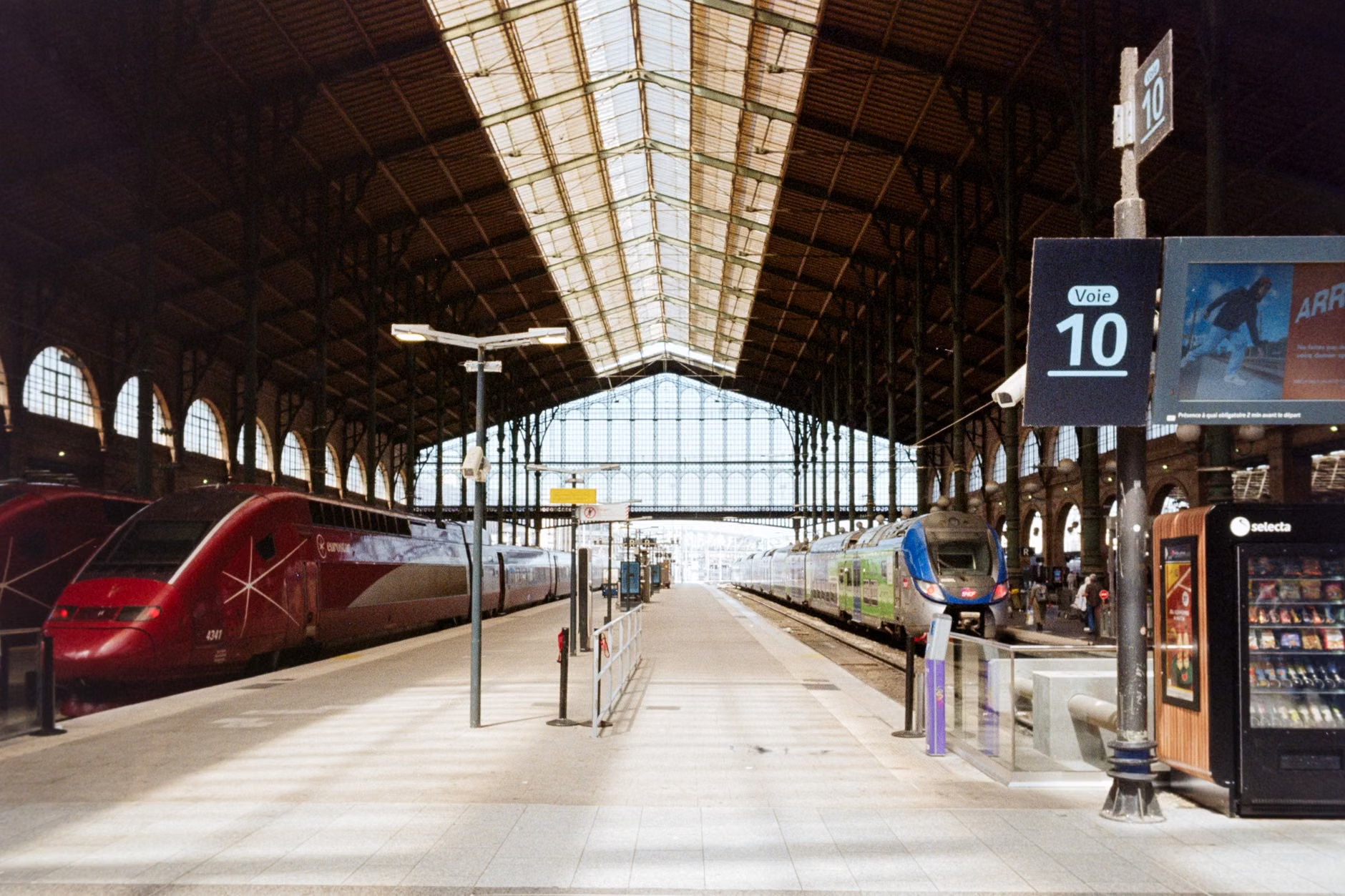
Another mistake is ignoring the station location. Some high-speed trains arrive at “out-of-town” stations (like Marne-la-Vallée for Paris). Before you book, check that your arrival station is actually in the city center. If it isn’t, factor in the time and cost of the local shuttle or taxi into your planning.
The Financial Reality of Rail Travel
People often assume that flying is cheaper. If you book a budget airline flight three months in advance, that might be true. But when you add up the cost of getting to the airport, the baggage fees, the mid-flight snacks, and the taxi into the city center, the train often ends up being more cost-effective. Furthermore, many European rail companies offer “Family Passes” or significant discounts for children under 12, which can drastically reduce your total spend.
For those living in Europe or visiting for a longer period, an Interrail pass (or Eurail for non-European residents) can be a fantastic way to keep costs predictable. It allows you to hop on and off trains within a certain period, giving you the flexibility to change your plans if the kids are tired or if you fall in love with a particular town.
Final Thoughts for the Journey
Choosing to travel by train is an act of reclaiming your vacation. It is a decision to prioritize the experience of the trip over the efficiency of the arrival. Yes, it takes longer. Yes, it requires a bit more planning. But there is something deeply satisfying about watching the world shift from urban sprawl to rolling hills while your children play, read, or nap beside you. You aren’t just moving from point A to point B; you are experiencing the geography of the world in a way that is impossible from 30,000 feet.
Be patient with yourself and your family. If you arrive a little late, or if the kids get a bit rowdy, remember that you are doing something that creates memories far more vivid than a sterile airport gate ever could. Pack light, keep your plans flexible, and enjoy the ride.
Frequently Asked Questions
Q: Is it difficult to navigate train stations with a stroller?
A: Most major European train stations are accessible with elevators and ramps. However, smaller, older stations may have stairs. Check the “accessibility” features on the train operator’s website for your specific stations before you travel. Using a lightweight, foldable travel stroller is highly recommended.
Q: What happens if we miss our train connection?
A: If you booked a “flexible” or “semi-flexible” ticket, you can usually jump on the next train for a small fee or no extra cost. If you have a “non-refundable/non-exchangeable” ticket, you might need to buy a new one. Always check the ticket conditions, but remember that rail networks are much more frequent than flights, so you are rarely truly stuck.
Q: Are there food options for picky eaters on the train?
A: Most long-distance European trains have a bistro or restaurant car. However, the selection can be limited and expensive. It is always better to visit a local bakery or supermarket near the station before you board to stock up on snacks and meals that you know your children will eat.
Useful Resources for Planning:
- Trainline: For comparing routes and booking tickets across multiple European countries.
- Eurail/Interrail: For information on rail passes if you plan on traveling through multiple countries.
- The Man in Seat 61: The definitive guide for rail travel advice and logistics worldwide.