The most effective way to maintain your sanity while juggling a full-time career and active parenting is no longer to fight for work-life balance, but to merge them through the strategic use of dedicated work-cation hubs.
- Redefining Location: Work-cation hubs are specifically designed to offer high-speed connectivity alongside childcare or kid-friendly amenities.
- The Infrastructure Gap: Successful trips depend on vetting internet reliability and workspace ergonomics rather than just the scenic view.
- Planning for Success: Balancing productivity and family time requires a structured daily schedule, often involving “split-shift” parenting.
If you are in your 30s or 40s, you likely remember a time when “working from home” was a rare luxury, and “taking a vacation” meant being completely unreachable. Today, that binary has dissolved. For many of us, the ability to work from anywhere is a double-edged sword: we have the freedom to travel, but we are also tethered to our Slack notifications and Zoom meetings regardless of our surroundings.
This is where the rise of the “work-cation” hub comes in. It isn’t just about taking your laptop to a beachside cafe. True work-cation hubs are ecosystems that cater to the specific, often messy, reality of working parents. They bridge the gap between a standard hotel and a full-time remote office, providing the infrastructure that allows you to be a professional by morning and a present parent by afternoon.
What Exactly Makes a Destination a ‘Work-cation Hub’?
It is tempting to look at a photo of a bungalow in Bali or a cabin in the Alps and assume it’s a perfect work-cation spot. However, “work-cation” is a term that gets thrown around loosely. A real work-cation hub for families needs more than just a Wi-Fi password. It requires a specific set of operational pillars that keep your career on track while ensuring your children aren’t just sitting in front of a screen while you try to finalize a spreadsheet.
First, there is the infrastructure of connectivity. This means verified, high-speed, symmetrical internet. In many tourist-heavy areas, Wi-Fi is designed for browsing, not for hosting a high-definition video call with your executive team. A true hub will have redundant connections or a dedicated fiber line.
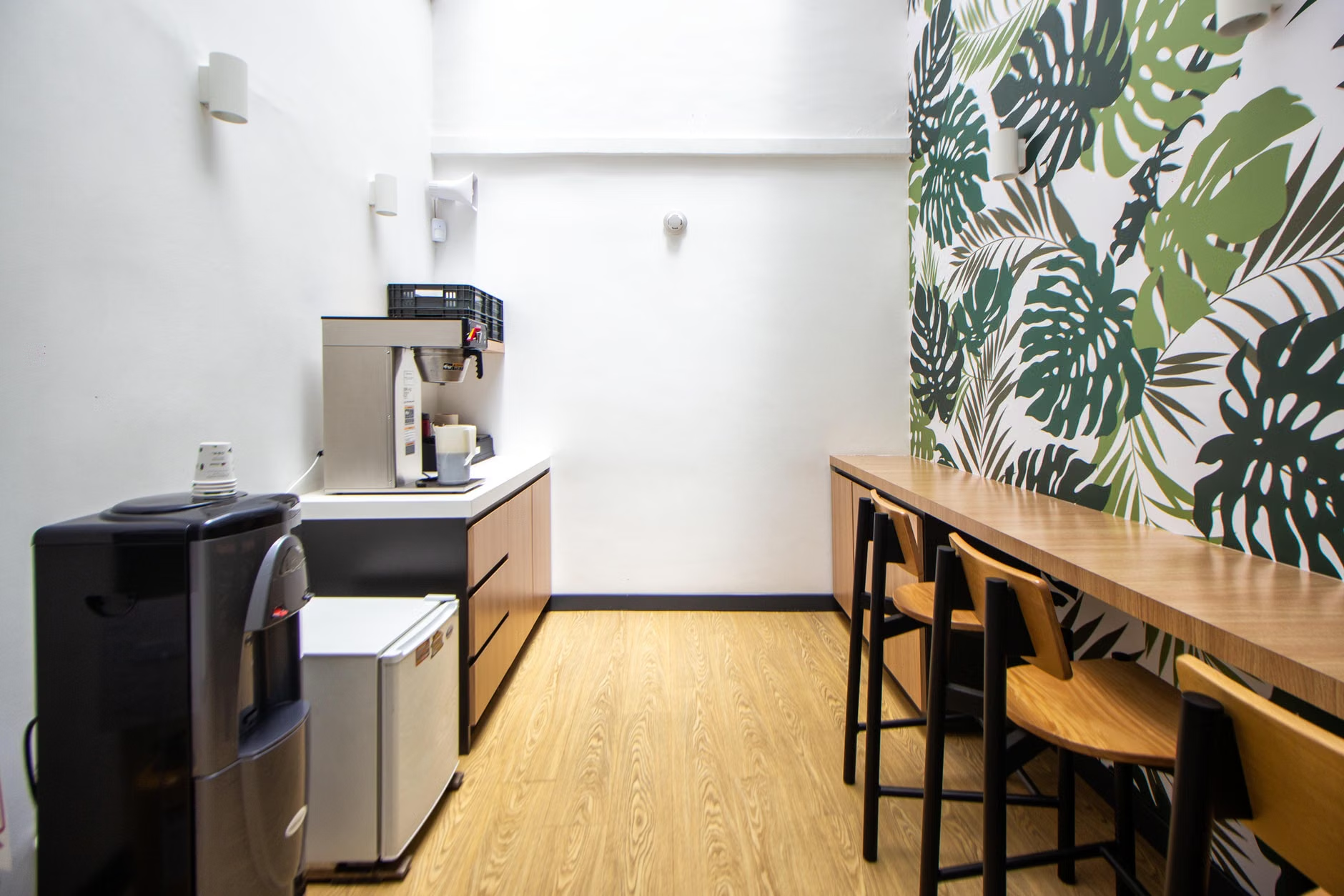
Second, there is the ergonomic environment. Working from a bed or a low coffee table is fine for a weekend, but for a week-long work-cation, it is a recipe for chronic back pain and decreased focus. Reliable hubs offer proper desk heights, supportive chairs, and—crucially—a physical separation between “work” and “living” zones.
Third, and perhaps most importantly for families, is the social infrastructure. This includes access to childcare, co-working spaces that are “kid-friendly” (or at least kid-tolerant), and proximity to family-oriented activities that don’t require a two-hour drive. If you are spending four hours a day commuting from your vacation rental to a quiet place to work, you aren’t on a work-cation; you are just working in a different zip code.
The Practical Reality: Managing the ‘Split-Shift’
The biggest mistake parents make when planning their first work-cation is attempting to work a standard 9-to-5 schedule while simultaneously parenting full-time. Unless you have brought a nanny or have access to local childcare, this is mathematically impossible. This is where the concept of the “split-shift” becomes essential.
Many successful families in the remote work space have adopted a staggered schedule. Parent A takes the morning shift (8:00 AM to 1:00 PM) to focus on deep work, while Parent B engages the children in outdoor activities or local excursions. After lunch, they swap. This ensures that both parents can maintain their output, and the children get quality time with at least one parent throughout the day.
To make this work, you need to be transparent with your team. This doesn’t mean telling them you are at the beach, but it does mean setting clear expectations about your availability. If you are in a different time zone, leverage that to your advantage. If you are three hours behind your main office, use that morning time for deep focus before your colleagues even sign on. If you are ahead, use the afternoon to wrap up tasks while your team is still active.

Vetting Your Destination: A Checklist for Parents
Before you book that “digital nomad friendly” listing, you need to perform a technical audit. Do not take the host’s word for it when they say the internet is “great.”
| Category | Requirement | Why it matters |
|---|---|---|
| Connectivity | Speed test result > 50Mbps up/down | Video calls require stability, not just high download speeds. |
| Workspace | Dedicated desk with height-adjustable chair | Prevents long-term posture issues during extended work hours. |
| Childcare | Proximity to local camps or reliable sitters | You cannot be a productive employee and a full-time caregiver simultaneously. |
| Safety | Fenced outdoor area or low-traffic zone | Allows for independent play without constant, high-stress supervision. |
When you start researching, look for “coliving” spaces that specifically cater to families. These are becoming increasingly popular in regions like Portugal, Costa Rica, and parts of Southeast Asia. Unlike a standard Airbnb, these venues often have communal dining areas where you can meet other working parents. The benefit here is social; your children make friends, and you find a support network of other adults who understand the specific struggle of having a toddler interrupt a board meeting.
The Hidden Costs and Common Pitfalls
It is easy to romanticize the work-cation, but it comes with distinct challenges. The first is context switching. If you are working in a beautiful setting, the mental effort required to pivot back to a stressful work project can be jarring. You might find yourself resenting the work, or worse, feeling guilty that you aren’t enjoying the scenery enough. This is a common psychological hurdle that takes practice to overcome.
Another pitfall is the “always-on” trap. Because you are technically “on vacation,” you might feel pressure to answer emails during dinner or check your phone while at the playground. To combat this, you must set strict boundaries. Treat your work-cation exactly like your home office. When the “office door” (or the mental boundary) closes, work stops. If you don’t enforce this, you will end up exhausted and burnt out, which defeats the entire purpose of traveling in the first place.
Finally, consider the logistical overhead. Traveling with children is hard enough; traveling with children, their school supplies, your office gear, and a stable internet connection is a logistical operation. Pack light, but prioritize the gear that makes your life easier: noise-canceling headphones, a portable monitor, and a reliable power bank. If your children are school-aged, you also need to account for their educational needs. Is there reliable internet for their remote schooling? Is there a space where they can focus?

Why This Trend is Here to Stay
The rise of the work-cation isn’t just a reaction to the pandemic; it is a fundamental shift in how professionals view the relationship between geography and productivity. For the 30-to-45 demographic, who are often in the “sandwich generation” of caring for young children while managing demanding career growth, the flexibility to change one’s environment is a massive mental health benefit.
Data from various remote-work platforms suggests that productivity often increases when employees are granted the autonomy to choose their workspace. When you are in a location that brings you joy, you are often more energized. This energy spills over into your professional life. You aren’t just surviving the work week; you are integrating your life into a broader, more interesting context.
However, this transition requires a shift in mindset. You are not “vacationing” in the traditional sense. You are living your life in a different place. It requires discipline, planning, and a willingness to accept that things will not always go according to plan. You might have a Wi-Fi outage during a major presentation, or your child might get sick in a foreign country. These are risks you have to be prepared to mitigate.
Building Your Own Framework
If you are ready to take the plunge, start small. Don’t book a month-long trip to another continent as your first attempt. Start with a “weekend-cation” within a few hours of your home. This allows you to test your technical setup, see how the family adjusts to a new environment, and identify what items you absolutely need versus what you can live without.
Use this time to refine your “Work-cation Protocol.” This is a simple document you and your partner can agree upon. It should cover:
- The Core Hours: When is the absolute “no-interruption” time for each parent?
- The Tech Contingency: What is the backup plan if the primary internet fails? (Always have a mobile hotspot ready).
- The “Switch-Off” Ritual: How do you signal to each other and the children that the workday is officially over?
- The Emergency Protocol: Where is the nearest medical facility, and how do you access local support if needed?
By treating your work-cation like a professional project, you remove the chaos and replace it with structure. This structure is what allows for the freedom you are seeking. Without it, you are just inviting stress into a place where you should be finding peace.
Ultimately, the goal of a work-cation is to improve your quality of life, not to add more complexity to your day. If you find that the effort to coordinate the trip exceeds the benefit of being there, it is okay to scale back. There is no shame in a “stay-cation” where you simply work from a local coffee shop or a quiet park for a few hours. The spirit of the work-cation is about control over your own environment, not about stamp-collecting locations on a map.
As you plan your next move, remember that the most successful work-cations are the ones where you return home feeling refreshed, not depleted. Keep your expectations grounded, your technology reliable, and your family’s needs at the center of your decision-making process. The world is becoming an office, but it is still, first and foremost, a place to live.
Frequently Asked Questions
1. How do I handle potential Wi-Fi failures in remote locations?
Never rely solely on the venue’s Wi-Fi. Always carry a secondary connection method, such as a high-speed mobile hotspot or a local SIM card with a generous data plan. Before finalizing any booking, ask the host to send you a screenshot of a speed test (like Fast.com or Speedtest.net) taken at the specific desk where you plan to work.
2. How can I balance parenting during work hours without extra help?
The “split-shift” method is the industry standard for remote-working parents. By dividing the day into blocks where one parent is “on” and the other is “off,” you ensure that work gets done without requiring constant childcare. If your children are school-aged, prioritize destinations that offer international schools or local hobby camps that can occupy them for 3-4 hours a day.
3. Are there specific legal or tax implications for working abroad?
For short-term work-cations (usually under 30-90 days), most countries do not require a special work visa. However, if you plan to stay longer or work for a local company, you must check local labor laws. Always consult your employer’s HR department, as some companies have specific policies regarding “tax nexus” (where you are legally allowed to work) that could affect your employment status.
For more information on digital nomad regulations and global connectivity standards, you can refer to the OECD’s latest reports on remote work trends and Nomad List for community-verified data on internet speeds and family-friendliness in various global hubs.