The secret to finding a truly quiet beach in the age of social media isn’t just luck; it is a combination of strategic timing, off-season travel, and the willingness to trade convenience for solitude.
- Prioritize Accessibility: Beaches that require a hike or a non-motorized boat are naturally self-selecting, keeping the crowds at bay.
- The 48-Hour Rule: Avoid weekends and public holidays at all costs; if you must travel during peak times, look for coastal areas at least two hours away from major urban centers.
- Leverage Satellite Tools: Use modern mapping technology to identify coves and inlets that aren’t marked as “tourist beaches” on major travel aggregators.
If you are in your 30s or 40s, you probably remember a time when a beach trip meant a cooler, a couple of towels, and maybe a frisbee. Today, a trip to the coast often feels like a tactical military operation. You spend forty minutes circling for parking, another twenty hauling gear through a crowded boardwalk, and the final hour fighting for enough sand to lay down a towel without feeling like you are part of a human jigsaw puzzle.
For parents, the frustration is doubled. You aren’t just managing your own comfort; you are managing a small, energetic, and often loud entourage. The dream of a “quiet beach” isn’t about being anti-social—it’s about finding a space where you can actually hear the waves instead of your neighbor’s Bluetooth speaker. Let’s break down the realistic, actionable steps to finding those elusive, tranquil spots.
Why Your Usual Search Methods Are Failing You
Most of us start our search by typing “best beaches in [Region]” into a search engine. This is your first mistake. The results you see are almost always ranked by popularity, accessibility, and proximity to tourist infrastructure. By definition, if a beach is listed on a “Top 10” list, it is not going to be secluded.
Travel aggregators and SEO-optimized blogs prioritize “convenience” because that is what the average traveler demands. They want restrooms, snack bars, lifeguards, and paved parking lots. When you prioritize those amenities, you are also signing up for crowds. To find the quiet, you have to be willing to sacrifice the “convenience” factor.
Think of it as a spectrum. On one end, you have the “Resort Beach” with high amenities and high density. On the other end, you have the “Wild Beach” with zero amenities and low density. If you want quiet, you need to shift your search parameters toward the latter. This means accepting that you might have to pack your own trash out, carry your own water, and perhaps walk a bit further than you are used to.

The Geography of Isolation: How to Read a Map for Privacy
To find a quiet beach, you need to think like a surveyor. Instead of looking at travel brochures, look at satellite imagery. Open up a map application and look for stretches of coastline that lack major road access. If a road runs parallel to the beach for miles, it will be busy. If the road stops a mile or two inland, you have a candidate for a secluded spot.
Look for “access friction.” This is a term I use to describe the physical barriers that prevent the casual beachgoer from arriving. Common barriers include:
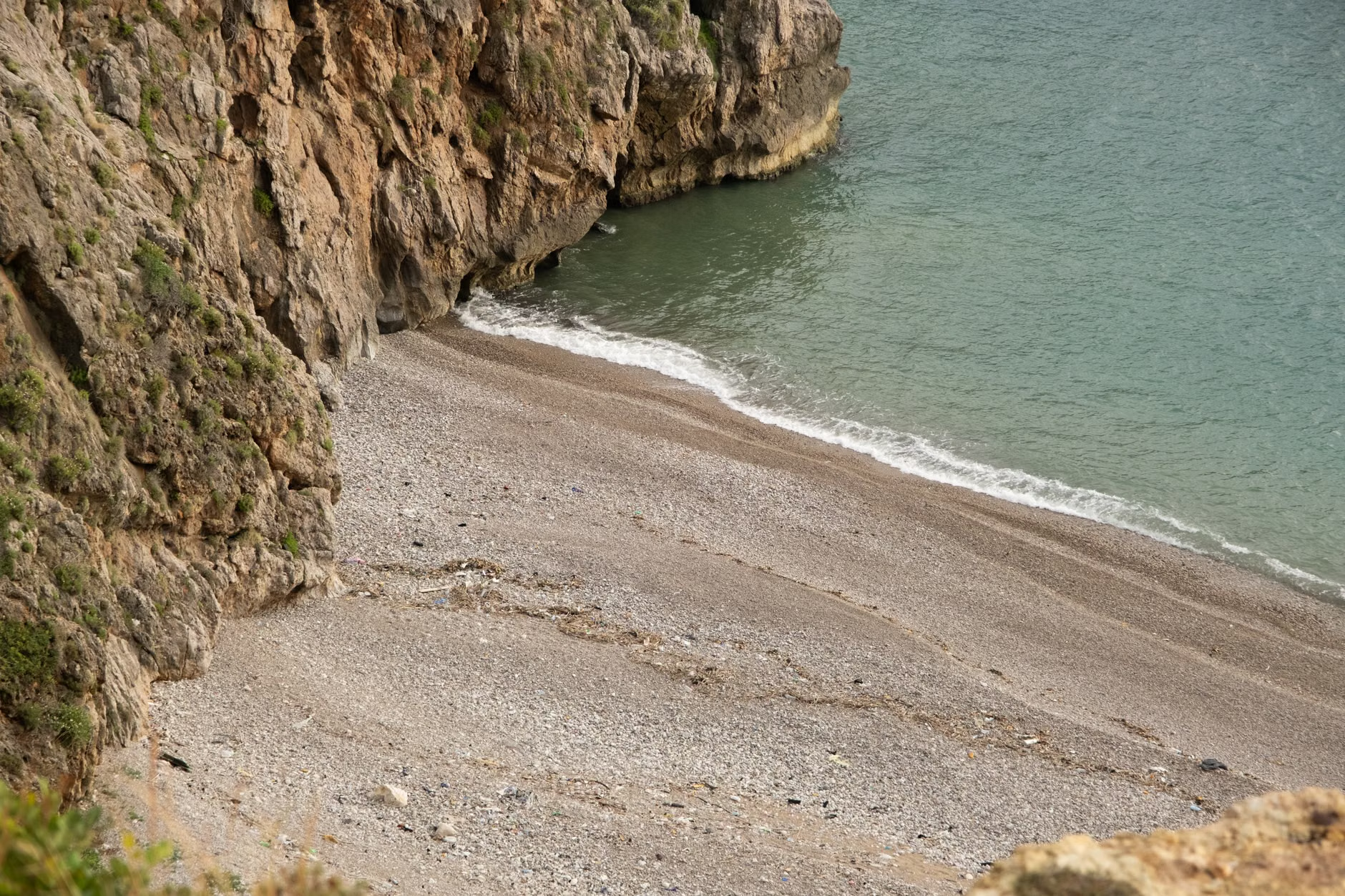
- Steep Coastal Cliffs: If the only way down is a steep, unmarked trail, the average family with a massive rolling cooler will skip it.
- Long Boardwalks or Trails: A 15-minute walk through dunes or forest acts as a natural filter.
- Limited Parking: If a beach has only ten parking spots, it can only support ten parties at a time.
- Inaccessible Inlets: Areas that are only reachable by kayak or canoe are almost always empty, even in the middle of summer.
When scouting, use a satellite view to identify these friction points. If you see a beautiful stretch of sand that isn’t connected to a town center and lacks a major parking lot, do some research on the local hiking trails. Often, these beaches are the endpoints of public-access coastal paths. They aren’t “hidden” in the sense that they are secret, but they are “secluded” because they require effort to reach.
Timing Your Escape: The Reality of Peak vs. Off-Peak
Even the most hidden beach can become crowded if you visit on a Saturday in mid-July. If you are constrained by school schedules or work, you have to find “micro-windows” of opportunity. The most effective strategy is the “mid-week morning” approach.
Most families and tourists arrive at the beach between 11:00 AM and 1:00 PM. If you can get to your destination by 8:00 AM, you will have three or four hours of absolute peace before the midday rush. By the time the crowds arrive, you are ready to pack up and head to lunch. It’s a simple shift in schedule that yields massive returns in tranquility.
Another factor to consider is the “shoulder season.” In most temperate climates, the water is perfectly swimmable in late May or early September, but the crowds drop off by 70%. If you can shift your vacation dates by just two weeks, you often move from “peak chaos” to “peaceful bliss.”
| Strategy | Crowd Level | Effort Required |
|---|---|---|
| Standard Weekend Trip | High | Low |
| Early Morning Mid-Week | Low | Moderate |
| Off-Season Weekday | Very Low | Low/Moderate |
| “Hike-In” Coastal Spot | Minimal | High |
Packing for the “Wild” Beach
When you choose a secluded beach, you are choosing a lack of infrastructure. This means you need to be self-sufficient. This is particularly important if you are bringing children. You cannot pop into a shop for a forgotten hat or a snack. Your packing list needs to be more robust than a typical day at the local beach.
The “Self-Sufficient” Checklist:
- Ample Water: Carry 50% more than you think you need. Heat and sun exposure increase hydration needs significantly.
- Portable Shelter: Without a lifeguard stand or a nearby cafe, you are fully exposed. A lightweight, pop-up sun shade is essential for families, especially during the middle of the day.
- Leave-No-Trace Kit: Since there are rarely trash cans at remote beaches, bring a heavy-duty trash bag. Everything you bring in must come out.
- Footwear: If you are hiking to a beach, flip-flops are not enough. Bring sturdy sandals or light hiking shoes. You don’t want a twisted ankle to be the reason your trip ends early.
- First Aid Essentials: A basic kit with bandages, antiseptic, and itch-relief cream. Remote locations sometimes mean more insects or brush-related scrapes.
Managing Expectations: The “Quiet” Trade-Off
It is important to be realistic about what a “secluded beach” offers. If you are looking for a beach bar, a loud music scene, or a place to rent jet skis, you will not find it in a secluded cove. These spots are for reading, swimming, exploring tide pools, and having actual conversations with your partner or kids. If your family needs constant stimulation, a secluded beach might be a tough sell.
Talk to your family before you go. Explain that there won’t be a snack bar or a bathroom every hundred feet. Involve them in the “adventure” aspect. Make it a game of finding the path or identifying sea creatures in the tide pools. If you reframe the lack of amenities as an adventure, the kids are often more engaged than they would be at a standard, crowded beach.
Also, keep in mind that “quiet” does not always mean “safe.” Because these beaches are often unpatrolled, you must be hyper-vigilant about water safety. Always check local tide charts and weather forecasts before you set out. Rip currents are the biggest danger on remote beaches, and without a lifeguard, you are your own rescue team. Never underestimate the ocean, even on a calm day.
The Ethics of the “Hidden” Gem
There is a fine line between finding a quiet spot and ruining it. One of the biggest challenges in modern travel is the “Instagram effect,” where a previously unknown spot becomes flooded with visitors after a few viral posts. If you do find a pristine, empty beach, be a steward of that space.
Do not geotag specific, fragile locations on social media. If you want to share your experience, keep the location general. Encourage the practice of “Leave No Trace.” If everyone followed these principles, we could keep these spots quiet for years to come. The goal isn’t to gatekeep; it’s to preserve the environment and the solitude that makes these places special.
Remember that many of these secluded areas are also important habitats for birds and marine life. Keep your noise levels down, stay on marked trails when approaching the beach, and avoid disturbing local wildlife. Being a responsible visitor is the best way to ensure that these places remain open to the public.

Digital Tools to Help Your Search
While I suggested avoiding standard travel sites, there are some technical tools that can help you verify your research. Use tools like Google Earth to look at the terrain in 3D. This helps you understand the incline of the path and the actual size of the beach. Sometimes a beach looks huge on a flat map but is actually quite narrow when the tide comes in.
Check the local government’s environmental or parks department websites. They often have maps of “lesser-known” trails or coastal access points that aren’t aggressively marketed. These sites often provide crucial information about parking restrictions and trail conditions. If a park is listed as “day use only” with limited parking, that is a strong indicator of a lower-traffic area.
Finally, look at tide charts. A beach that looks like a vast expanse of sand at low tide might disappear completely at high tide. Knowing the tide cycle is essential for your safety and for ensuring you have a place to sit for the day. Apps that provide real-time tide data are indispensable for the serious beach scout.
Synthesizing Your Strategy
To summarize, the journey to a quiet beach is a process of elimination. You are eliminating the easy, the popular, and the convenient to find the peaceful. Start by identifying coastal regions that are geographically “difficult.” Use satellite imagery to find potential spots. Check local park websites for access rules and parking limitations. Finally, choose times that avoid the peak tourist rush.
It requires more planning than simply driving to the nearest resort town, but the payoff is worth it. There is a profound difference in the quality of your rest when you aren’t constantly managing the stress of a crowd. For those of us balancing the demands of work and parenting, these pockets of silence are not just luxury—they are a necessity for recharging.
Be patient with the process. You might strike out on your first attempt, finding that a beach is either closed or more popular than the map suggested. That’s okay. The exploration is part of the experience. Keep a notebook or a digital list of the places you’ve tried and what you learned. Eventually, you’ll build your own personal map of quiet getaways.
Remember, the goal is not to find the perfect, undiscovered paradise that no one else knows about—that doesn’t really exist anymore. The goal is to find a space that is quiet enough for your family to enjoy, where you can breathe, relax, and reconnect. And that is a perfectly achievable goal if you are willing to do the legwork.
Frequently Asked Questions
How can I tell if a beach is safe for swimming if there are no lifeguards?
Safety at unpatrolled beaches is entirely your responsibility. Before heading out, check the local weather forecast for wind speeds and wave heights. Use an app or website that provides real-time marine forecasts for your specific area. When you arrive, observe the water for at least 15 minutes. Look for signs of rip currents—areas where the water looks darker, calmer, or has a different texture than the surrounding waves. If in doubt, stay in the shallows or stay on the sand. Never let children enter the water without direct supervision, even if it looks perfectly calm.
Are there any specific apps or websites you recommend for finding these spots?
Rather than relying on travel review sites, use tools designed for outdoor enthusiasts. Apps like AllTrails are excellent for finding coastal paths that lead to hidden coves. Google Earth is your best friend for scouting terrain. For tide data, use official government sites (like NOAA in the U.S. or local meteorological services) rather than generic weather apps, as they are significantly more accurate. Local hiking forums or coastal conservation group websites are also goldmines for finding less-trafficked access points.
What should I do if I get to a “secluded” beach and find it is already crowded?
Have a “Plan B.” Before you leave the house, identify two or three potential backup locations within a reasonable driving distance. If your primary spot is full, don’t try to force your way in or settle for a cramped spot near the entrance. Move on to your secondary location. The flexibility of having a backup plan keeps the stress levels low and ensures that you don’t end up spending your day in a location that doesn’t meet your needs for peace and quiet.
Official guidance on beach safety and coastal access can often be found through your local government’s Department of Parks and Recreation or equivalent coastal management agency. Always check for local parking regulations and seasonal beach closures, as these change frequently and can significantly impact your plans. Stay safe, respect the environment, and enjoy the quiet.
For further reading on coastal conservation and responsible tourism, you may find resources at NOAA (National Oceanic and Atmospheric Administration) or your local coastal authority’s website. These organizations provide valuable data on tides, marine safety, and environmental protection that every beachgoer should be aware of.