Three Key Takeaways:
- Significant Savings: Accessing expensive, one-time-use tools through a library eliminates the need to buy equipment that sits in your garage gathering dust.
- Clutter Reduction: Reclaim valuable storage space in your home by borrowing bulky items like carpet cleaners, pressure washers, and specialized power tools.
- Community Resilience: Participating in a tool library fosters local connections and promotes a circular economy, helping you build a more sustainable household.
The most effective way to manage your home maintenance budget while keeping your sanity—and your storage space—is to stop purchasing items you only use once every three years. That expensive power sander or the heavy-duty pressure washer that is currently taking up prime real estate in your garage is a classic example of “aspirational ownership.” We buy these things thinking we will become weekend warriors, but instead, they become heavy, metallic monuments to our good intentions.
If you are in your 30s or 40s, you know the struggle: you have a house to maintain, a garden that needs attention, and a parenting schedule that leaves almost no room for managing a complex inventory of hardware. This is where the Community Tool Library (CTL) movement comes in. It is not just a trend for the eco-conscious; it is a practical, financial, and logistical life hack that is gaining traction across the globe.
What is a Community Tool Library and Why Should You Care?
At its core, a community tool library functions exactly like a book library. Instead of checking out novels or reference materials, you check out drills, saws, lawnmowers, pressure washers, sewing machines, and even specialized camping gear. Most of these organizations operate as non-profits or community-run cooperatives. You pay a small annual membership fee—often on a sliding scale—and gain access to an inventory that would cost thousands of dollars to build from scratch.
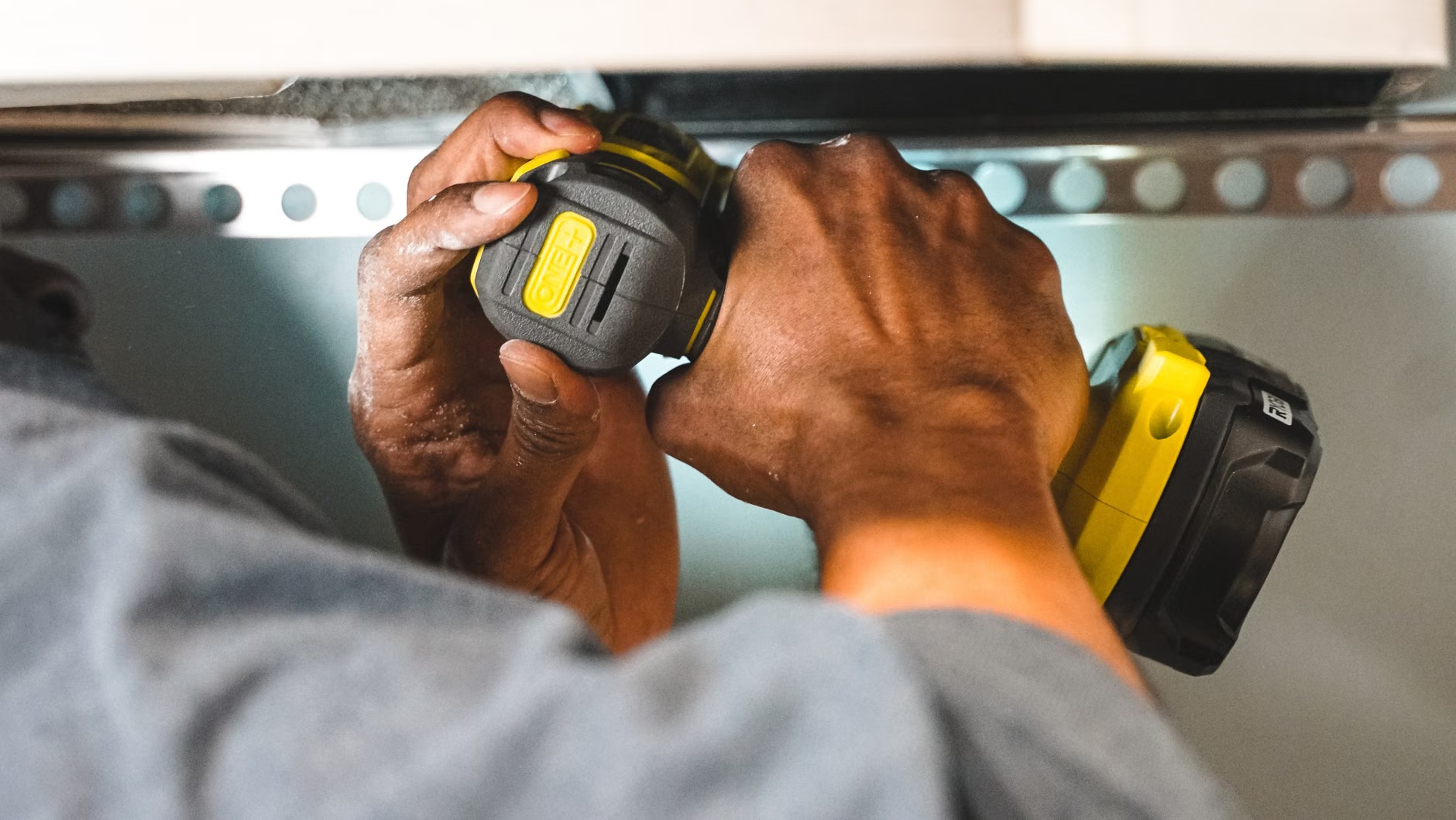
Think about the last time you needed a specific tool for a home repair. Maybe it was a tile cutter for a bathroom backsplash or a tall ladder to clean the gutters. Did you buy it, use it for two hours, and then spend the next six months tripping over it in your storage unit? That is the “sunk cost” trap. By borrowing, you shift your mindset from ownership to access. You get the tool, do the job, and return it. The maintenance of the tool—the sharpening of the blades, the battery charging, the engine tune-ups—is often handled by the library’s volunteer staff.
For parents, this is particularly beneficial. Between the endless stream of kids’ gear, seasonal clothing, and household necessities, our homes are already bursting at the seams. Adding a collection of industrial-grade tools is rarely a smart move unless you are a professional contractor. By utilizing a library, you are essentially “outsourcing” your storage problem to a shared facility.
The Math: Why Buying is Often a Losing Strategy
Let’s look at the financial reality. A decent quality pressure washer can easily set you back $300 to $500. If you use it once a year to clean your patio, that tool is costing you roughly $50 per hour of operation, not including the electricity, storage space, and the eventual cost of repair when the seals dry out from lack of use. Conversely, a tool library membership might cost $50 to $100 per year, granting you unlimited access to that pressure washer, along with a dozen other tools you might need for other projects.
Beyond the raw purchase price, we have to consider the “Hidden Cost of Ownership.” This includes:
- Storage Space: Every square foot of your home has a value. If you live in an urban environment, storing a bulky tool is literally costing you rent or mortgage interest.
- Maintenance: Tools require care. Batteries degrade, oil needs changing, and components rust. If you aren’t using the tool regularly, you are likely neglecting it, which leads to early failure.
- Disposal: When a tool finally breaks, you are responsible for its disposal. E-waste and hazardous materials (like old batteries) are a pain to recycle properly.
When you borrow, you eliminate these headaches entirely. The library staff ensures the tools are in working order. If a tool breaks while you are using it (due to normal wear and tear), you simply return it and report the issue. You are not on the hook for a $200 repair bill or the hassle of finding a service center.
Building Community Through Utility
There is a social element to this movement that shouldn’t be underestimated. Tool libraries often host workshops on Saturday mornings. Imagine learning how to repair a leaky faucet or build a simple bookshelf from a neighbor who has been doing it for thirty years. These spaces become hubs for local knowledge transfer.

For those of us in our 30s and 40s, life can feel incredibly fragmented. We spend our days managing digital workflows, parenting, and navigating a busy social calendar. Finding opportunities to engage with our local community in a non-stressful way is rare. A tool library is a “low-stakes” environment. You aren’t there to join a committee; you are there to get a tool. But in doing so, you might strike up a conversation about home insulation or how to get grass stains out of kids’ clothes. It is a subtle, grounded way to build a network of neighbors who actually know how to do things.
How to Find (or Start) a Local Library
If you are wondering if there is one near you, the first step is to use a search engine with terms like “Tool library near me” or “Library of things [Your City].” Many public library systems have started “Library of Things” programs, where they lend out items like cake pans, sewing machines, and power tools alongside books. This is a fantastic, low-barrier way to start.
If your city doesn’t have one, don’t be discouraged. The movement is growing because people are realizing that consumerism has reached a breaking point. You can start a “tool share” with just three or four neighbors. Create a simple spreadsheet or a shared app group where everyone lists what they own and is willing to lend. You would be surprised how many people are looking for an excuse to declutter their own garages and help their neighbors at the same time.
Common Misconceptions and Reality Checks
There are a few myths that keep people from joining these cooperatives. Let’s address them head-on.
| Myth | Reality |
|---|---|
| “The tools will be broken or low-quality.” | Most libraries are stocked through donations of high-quality professional tools. Staff rigorously test and repair them. |
| “It’s too much hassle to go pick them up.” | Most libraries have online reservation systems. You reserve, you pick up, you return. It’s no different than a grocery run. |
| “I don’t know how to use these tools.” | Most libraries provide manuals, safety guides, and even brief tutorials. They want you to succeed, not get hurt. |
One caveat: Tool libraries are not a substitute for professional-grade gear if you are running a business. If you are a contractor, you need your own reliable, insured equipment. These libraries are designed for the “prosumer” and the homeowner who needs to fix a fence, paint a room, or prune a tree. Respect the tools, return them on time, and clean them before you bring them back. The integrity of the system relies on the users being responsible citizens.
The Environmental Impact of Sharing
We often talk about “going green” in terms of buying expensive new appliances or solar panels. But the most sustainable tool is the one that already exists. Manufacturing a single power drill requires a significant amount of raw material, energy, and global shipping. When you borrow a drill that is already in your community, you are effectively reducing the demand for new production. This is the “circular economy” in action.
For parents, this is a great lesson to teach children. When we show our kids that we don’t need to buy everything brand new, we are teaching them the value of resources and the importance of community cooperation. It shifts the narrative from “I want it, so I buy it” to “I need this, let me see who has one I can borrow.” This is a foundational skill for a more sustainable future.
Deep Dive: Managing Your Home Projects with Borrowed Gear
To make the most of your local tool library, you need to be strategic. Don’t just show up and browse; have a plan. Here is a recommended workflow for tackling a home project using shared resources:
- Project Assessment: Before you start, list exactly what you need. Are you hanging curtains? You need a drill, a level, and a stud finder. Don’t guess.
- Inventory Check: Check the tool library’s online catalog. Many have real-time availability. If a tool is unavailable, adjust your timeline.
- Reservation: Book the tool for the specific weekend you plan to work. Don’t hoard it for a week just in case; someone else might need that specialized sander on Tuesday.
- Safety First: Even if you are borrowing a tool, take five minutes to watch a quick safety video on YouTube. Most tool libraries appreciate users who are safety-conscious.
- Maintenance Return: When you finish, clean the tool. If you used a saw, brush off the sawdust. If you used a drill, make sure the battery is charged. This earns you “good neighbor” points and keeps the library running smoothly.
If you encounter a tool that seems faulty, be honest with the staff. Do not try to “fix” it yourself unless you are qualified. Reporting a problem allows the library to pull the item for repair, ensuring the next person doesn’t have a bad experience. This is the “community” part of the tool library—we are all looking out for one another’s safety and utility.
Addressing Potential Edge Cases
What if you don’t have a car? Many urban tool libraries are located near public transit hubs or are designed to be walkable. If you are borrowing something heavy, like a lawnmower, see if the library offers a cart or has a delivery partnership. Some libraries even have “tool kits” that are pre-packed for specific tasks, like “The Basic Home Repair Kit” or “The Gardening Starter Pack,” which are easy to carry on a bike or public transport.
What about liability? Most reputable tool libraries carry liability insurance and require members to sign a waiver. This is standard legal practice. You are responsible for using the tool according to the manufacturer’s instructions. If you are unsure, ask the library staff. They are usually more than happy to give you a quick “how-to” demonstration.
What if you live in a rural area? The model changes slightly. Rural communities often rely on informal “peer-to-peer” sharing. If there isn’t a central library, consider starting a Facebook group or a Nextdoor thread for your immediate neighborhood. “I’m buying a ladder, who wants to split the cost and share it?” is a powerful way to initiate a local tool-sharing culture. It reduces the financial burden on everyone and creates a stronger local bond.
Final Considerations on Household Management
Living in your 30s and 40s is a balancing act. You are likely juggling work, childcare, and the maintenance of your most expensive asset: your home. It is easy to fall into the trap of thinking that more tools equal better results. The truth is, the best results come from having the right tool at the right time. By offloading the burden of ownership to a community tool library, you are not just saving money; you are reclaiming mental bandwidth.
When your garage is clear, you have more space to move, more space to organize, and less “visual noise” to deal with when you walk through the door. This is a form of minimalism that is actually practical. It’s not about owning nothing; it’s about owning only what you use every day, and accessing everything else through a network of trust.
As you move forward, consider the items currently sitting in your own home that you rarely use. Could you donate them to a local library? By contributing to the pool, you help the system grow. It’s a virtuous cycle. You benefit from the collective, and the collective benefits from your contribution. That is how we build resilient, sustainable, and happy communities.
Frequently Asked Questions
Is there a risk that the tool I need won’t be available when I need it?
Yes, there is always a chance that a popular item might be checked out. This is why planning is key. Most libraries allow you to reserve tools in advance. If you are planning a major project, check the inventory a few weeks ahead of time to ensure the tools you need are available for your target dates.
Do I need to have professional skills to use the tools from a library?
Absolutely not. Most community tool libraries are designed for the average homeowner. While they do carry specialized equipment, they also stock the basics that are very user-friendly. If you are intimidated by a specific tool, just ask the staff—they are usually volunteers who love to help beginners learn the ropes.
What if I break a tool while I am using it?
Accidents happen. Most tool libraries understand that tools wear out or break during normal use. The most important thing is to be honest. Inform the staff exactly what happened so they can determine if it was a mechanical failure or user error. If it was a genuine accident, you are usually not charged for the repair, but it is important to communicate immediately so the tool can be taken out of circulation for safety.
For more information on the global movement and how to find a library near you, check out these resources:
- LocalTools.org – A platform for finding and managing tool libraries worldwide.
- Shareable.net – A hub for news and resources on the sharing economy and community building.
Take a look around your garage this weekend. You might find that you are holding onto a lot of things that could be better served by a community system. Sometimes, the most “cool” thing you can do for your family and your neighborhood is to let go of the clutter and start sharing.