The most effective way to foster a lifelong love of reading in your children is not by assigning books like homework, but by creating a shared space where reading becomes a social, low-pressure ritual. By shifting the focus from “instructional reading” to “conversational reading,” you can transform a daily chore into a bridge that connects your busy life with your child’s developing worldview.
Key Takeaways
- Consistency over intensity: Fifteen minutes of relaxed reading is significantly more impactful than an hour of forced, academic study.
- The “Social” Element: Treat the book club like a dialogue, not a quiz; focus on how the story makes you feel rather than testing reading comprehension.
- Model the behavior: Children are mirrors; they are far more likely to engage with literature if they see you reading for pleasure, rather than just scrolling through your phone.
Why the traditional “reading hour” often fails
If you are a parent in your 30s or 40s, you are likely balancing a career, household management, and the constant digital noise of the 21st century. When we try to introduce reading to our kids, we often default to the methods we experienced in school: reading a chapter, answering questions, and checking for “understanding.”
The problem is that for a child who has spent six hours in a classroom, being asked to “perform” reading at home feels like a second shift of school. It kills the joy. When reading becomes a task to be checked off, the brain stops associating books with adventure and starts associating them with labor. This is why many children hit a “reading slump” around the age of eight or nine, right when the books become more complex and the academic expectations rise.
A parent-child book club isn’t a classroom. It is a sanctuary. The goal here is to reclaim the act of reading as a leisure activity—something you do because you want to, not because you have to. By structuring it as a “club,” you grant the child agency. They get to pick the book, they get to decide how long the “meeting” lasts, and they get to lead the conversation.
Setting the foundation: How to start your home club
You don’t need a fancy library or an elaborate curriculum to start. In fact, the simpler the setup, the more likely you are to stick with it. Start by treating the book club as a recurring appointment, similar to a Friday night movie or a Saturday morning park visit.
First, define the frequency. If you are exhausted from work, a daily meeting might be setting yourself up for failure. A “bi-weekly book club” is often the sweet spot. It allows enough time to finish a chapter or a book without feeling like you are constantly behind schedule. Keep the “meeting” short—20 to 30 minutes is plenty. If the conversation is flowing, you can extend it, but if it hits a wall, don’t force it.
Second, establish a “No-Quiz” rule. This is the most important boundary. If you ask, “What did the main character do in chapter three?” you are acting as a teacher. If you ask, “I was surprised the main character chose to leave home; what would you have done?” you are acting as a peer. That distinction is everything.

Selecting materials: Finding the balance between interest and challenge
One of the biggest hurdles parents face is knowing what to read. We often default to “classics” that may feel dry or disconnected from the modern child’s experience. While there is value in the canon, the priority for a home book club is engagement. If the child is bored, they aren’t learning anything.
When selecting books, use the “Two-Finger Rule” for younger readers or the “Interest-First” rule for older ones. For older children, look for books that mirror their current interests, whether that’s space exploration, fantasy, mystery, or even historical events. Don’t be afraid of graphic novels or audiobooks—both are valid forms of reading that build vocabulary and narrative understanding.
| Age Group | Focus Area | Recommended Approach |
|---|---|---|
| Ages 5-7 | Imagination & Vocabulary | Read-alouds with heavy dialogue and expressive voices. |
| Ages 8-10 | Character Development | Graphic novels or short chapter books with recurring characters. |
| Ages 11-13 | Critical Thinking | Young Adult fiction that touches on social themes or moral dilemmas. |
Consider the “Shared Reading” method. If your child is struggling with a long chapter book, read a page, and then they read a page. This takes the pressure off the child to carry the entire narrative load and allows you to support them through difficult vocabulary in real-time without making them feel self-conscious.
The art of the conversation: Moving beyond “Did you like it?”
The biggest mistake parents make in these discussions is asking “Yes/No” questions. “Did you like the book?” usually results in a one-word answer: “Yes.” Then the conversation dies. To keep the momentum going, you need open-ended questions that invite opinion and speculation.
Instead of testing their memory, test their empathy. Use the “What if” framework. “What do you think would have happened if the character had stayed in the forest?” or “Why do you think the villain felt they had to act that way?” These questions don’t have right or wrong answers. They encourage the child to look at the text as a source of information to support their own theories.
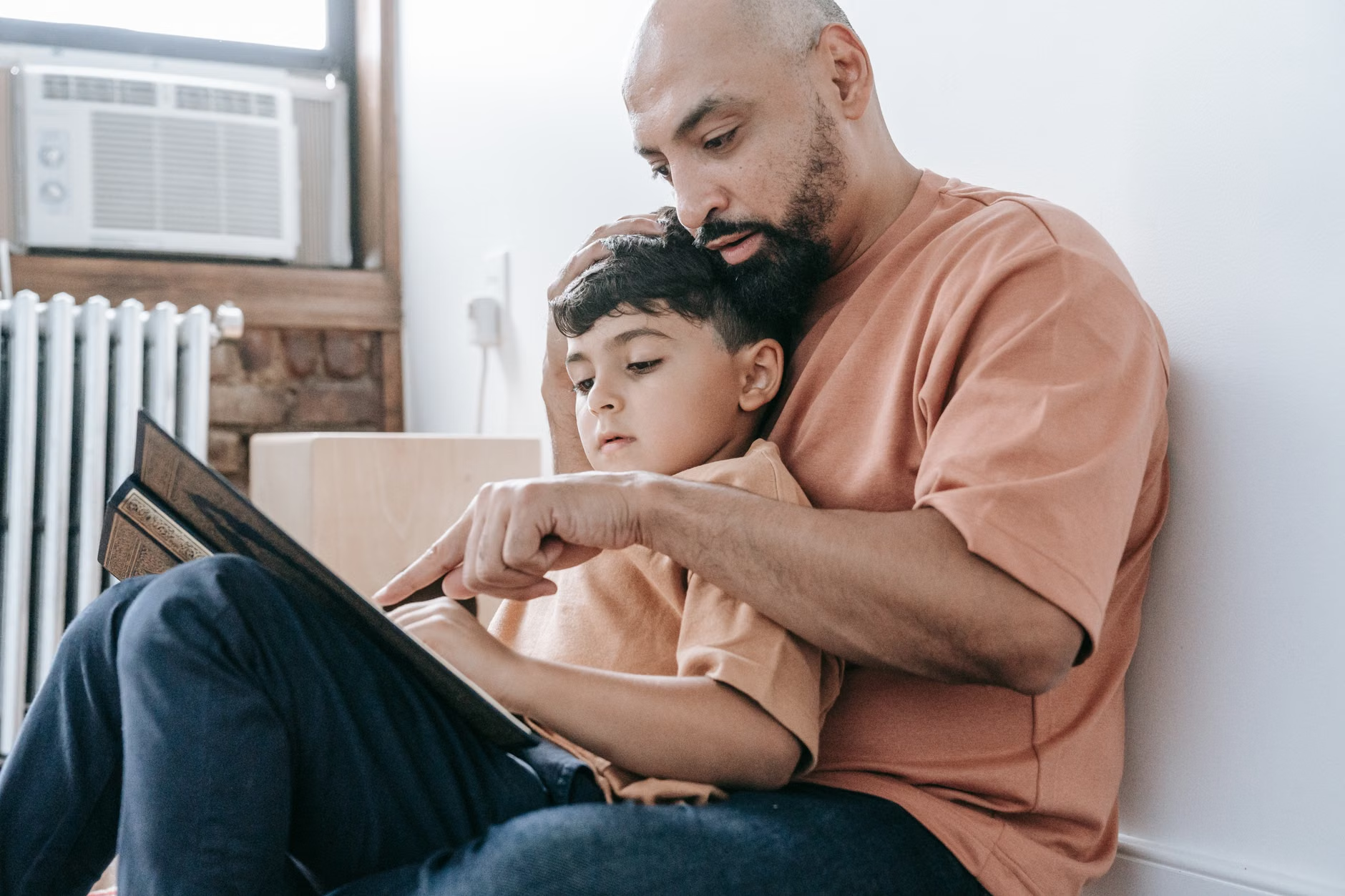
Additionally, share your own reactions. When you tell your child, “I found that part really frustrating because I wanted the character to be more honest,” you are modeling how to interact with a text. You are showing them that books aren’t just collections of words; they are emotional experiences. Your vulnerability in sharing your thoughts will invite them to share theirs.
Managing screen time and the digital distraction
We cannot ignore the elephant in the room: screens. A book club is in direct competition with YouTube, Roblox, and TikTok. If you try to force a book club immediately after a child has been gaming for two hours, you are going to face resistance. The transition is the key.
Create a “Digital Sunset” before the book club. Turn off the TV and put the phones in another room at least 15 minutes before you start. This allows the child’s brain to down-shift from the high-stimulation environment of digital media to the slower, more reflective pace of reading. It is also a good practice for you. If you are checking emails during the book club, your child will notice, and they will lose interest.
If your child is truly resistant to traditional books, consider the “Hybrid Model.” Read a book that has a film adaptation. Read the book first, then watch the movie together. This gives them a tangible reward for finishing the book and provides a fantastic opportunity to discuss the differences between the two media formats. “Why did the director change the character’s hair color?” or “Which version of the ending did you prefer?” These are great analytical conversations that feel like a fun debate.
Common pitfalls and how to avoid them
Even with the best intentions, things will go wrong. Your child might be tired, they might hate the book you chose, or you might have a long day at work and lack the energy to be an enthusiastic reading partner. Here is how to handle these common roadblocks:
- The “I hate this book” moment: Do not force them to finish a book they despise. Life is too short for bad books. If they aren’t enjoying it, abandon it and move on to something else. The goal is to keep the habit alive, not to finish every page.
- The “I’m too tired” excuse: If you are exhausted, switch to an audiobook. Listen to a chapter together while lying on the couch. It still counts as a shared reading experience, and it allows you to rest while still fostering a love for stories.
- The “Performance Anxiety” trap: If your child feels like they are being graded, they will shut down. If you notice them getting quiet or looking for an exit, dial back the questions. Just read, enjoy the story together, and leave the analysis for another day.
Remember, the goal is to build a positive association with reading. If the book club becomes a source of tension, you have defeated the purpose. If you miss a week, don’t stress about it. Just pick it up again when you can. It’s a marathon, not a sprint.

The long-term impact on literacy and family bonding
While the immediate goal is to have fun, the long-term benefits are substantial. Research consistently shows that children who read for pleasure outside of school perform better in almost all academic subjects. But more than that, reading helps develop theory of mind—the ability to understand that other people have thoughts, feelings, and motivations different from your own.
When you discuss a character’s choices with your child, you are essentially practicing emotional intelligence. You are helping them navigate complex human situations in a safe, controlled environment. This is a skill that will serve them far better than rote memorization of facts.
Furthermore, this time becomes a “sacred” space in your relationship. As children grow into their pre-teen and teenage years, they pull away from their parents. Having a shared, non-academic activity that you both enjoy provides a bridge that can last well into their adolescence. It is a way to stay connected, to hear their thoughts on the world, and to keep the lines of communication open.
Final thoughts on building the habit
You don’t need to be a literary expert or a perfect parent to make this work. You just need to be present. The most important thing you can bring to your home book club is your genuine interest in your child’s thoughts. If you are curious, they will be curious.
Start small. Start today. Don’t worry about the “right” way to do it. The best way is the one that brings you and your child closer together. Whether you are reading a graphic novel about a space-traveling cat or a classic adventure story, the value is in the shared experience of the journey.
For more information on supporting literacy at home, you can visit resources like Reading Rockets, which offers excellent, research-backed advice for parents of children at various developmental stages. Keeping the conversation going is the most vital step you can take.
Frequently Asked Questions
1. What if my child is a slow reader and gets discouraged?
This is very common. The best solution is to use the “Shared Reading” method mentioned earlier. By alternating pages or paragraphs, the pressure on the child is reduced significantly. You can also try audiobooks, which allow the child to follow along with the text at their own pace without the frustration of decoding every single word.
2. How do I choose a book that both my child and I will enjoy?
Look for books that have cross-generational appeal. Many modern Middle Grade (MG) novels are written with enough depth to be genuinely interesting to adults while remaining accessible to children. Browse “staff picks” at local independent bookstores or check lists of award-winning children’s literature, such as the Newbery Medal winners, which often feature sophisticated themes.
3. How long should a book club “meeting” actually last?
There is no set time limit, but 20 to 30 minutes is the sweet spot for most children. The goal is to leave them wanting more, not feeling drained. If the discussion is going well, you can go longer, but don’t feel obligated to hit a specific time target. Consistency is far more important than duration.
Note: This article is intended for general information purposes and does not constitute professional educational or child-psychology advice. Every child develops at their own pace; adjust your approach to suit your family’s unique needs.