- Blue light reduction: E-Ink technology mimics real paper, significantly reducing eye strain and the sleep-disrupting effects of traditional backlit screens.
- Focus-first design: Unlike tablets, E-Ink readers lack notifications, social media, and games, which removes the “dopamine loop” that fractures a child’s attention.
- Outdoor readability: Because they rely on ambient light rather than internal backlighting, E-Ink screens remain perfectly readable in direct sunlight, encouraging outdoor reading.
If you have ever tried to convince a child to put down a tablet and pick up a physical book, you know the struggle is real. The glowing, high-contrast, fast-paced world of digital games and videos is essentially a sensory buffet, and a static book often feels like the broccoli of entertainment. However, there is a middle ground that is gaining traction among parents who want to foster a love for reading without relying on traditional, focus-draining backlit screens: the E-Ink reader.
The Science of the Glow: Why Screens Hijack Attention
To understand why E-Ink is different, we first need to look at what happens when a child stares at a typical tablet or smartphone. These devices use LED backlighting to shine light directly into the user’s eyes. This light is often heavy on the blue spectrum, which is the same type of light that signals to our brains that it is daytime. When a child uses a tablet in the evening, this blue light can suppress melatonin production, making it harder for them to fall asleep and stay asleep.
Beyond the biology of sleep, there is the issue of cognitive load. Tablets are designed to be “sticky.” They are built with high refresh rates, vibrant colors, and constant interactive feedback. Every time a child swipes, taps, or gets a notification, their brain receives a small hit of dopamine. This is the “attention economy” at work. When a device is designed to interrupt you, it is nearly impossible to enter a state of “deep work” or “deep reading.”
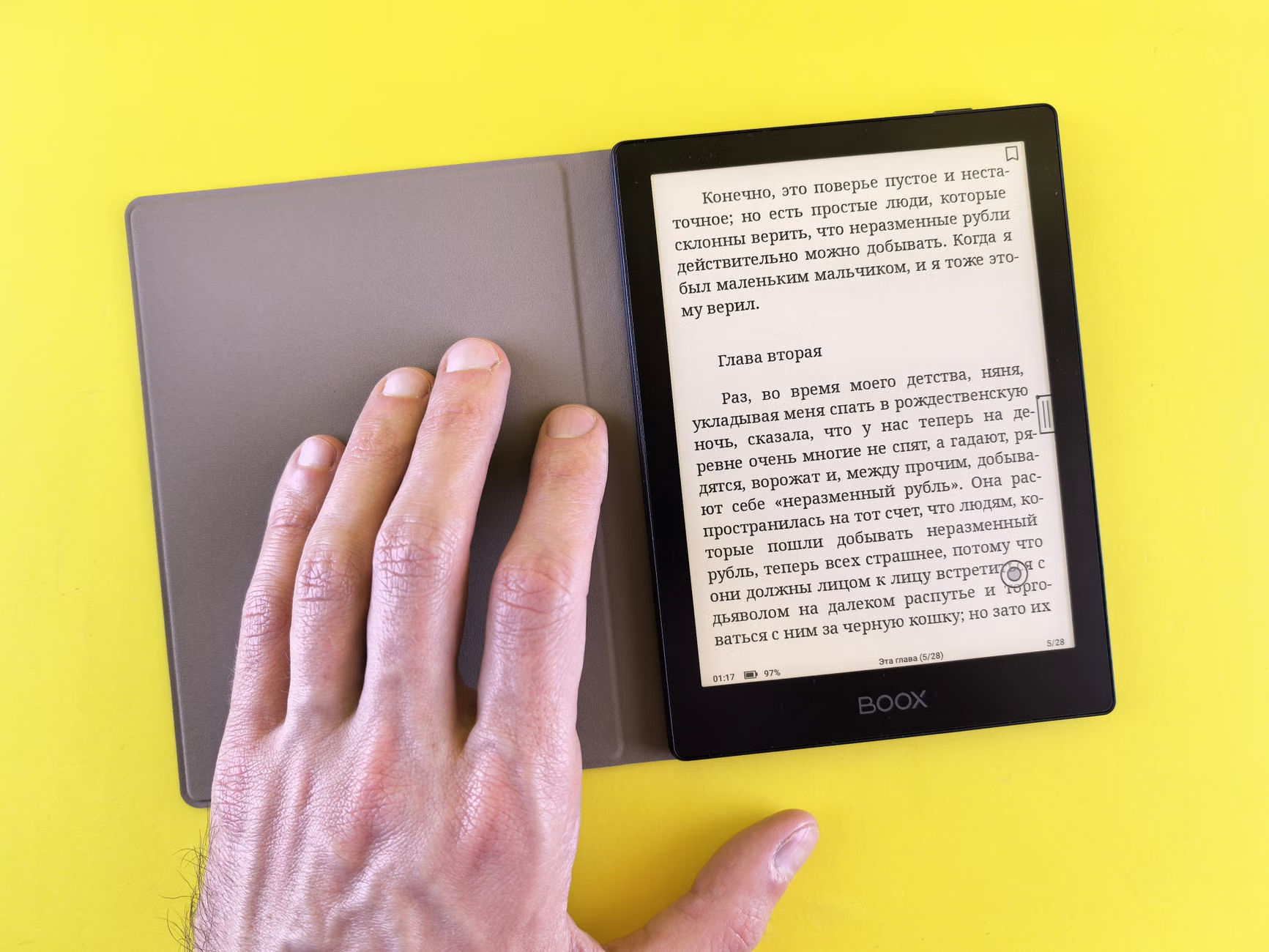
E-Ink—or Electronic Ink—operates on an entirely different principle. Instead of shining light at you, it uses millions of tiny microcapsules filled with black and white pigment. When an electric charge is applied, these pigments shift to form words and images. Once the page is rendered, the screen requires no power to keep the image there. It doesn’t flicker, it doesn’t pulse, and it doesn’t emit a harsh, direct beam of blue light. It is, for all intents and purposes, a digital version of paper.
Distraction-Free Reading: The Case for Single-Purpose Tech
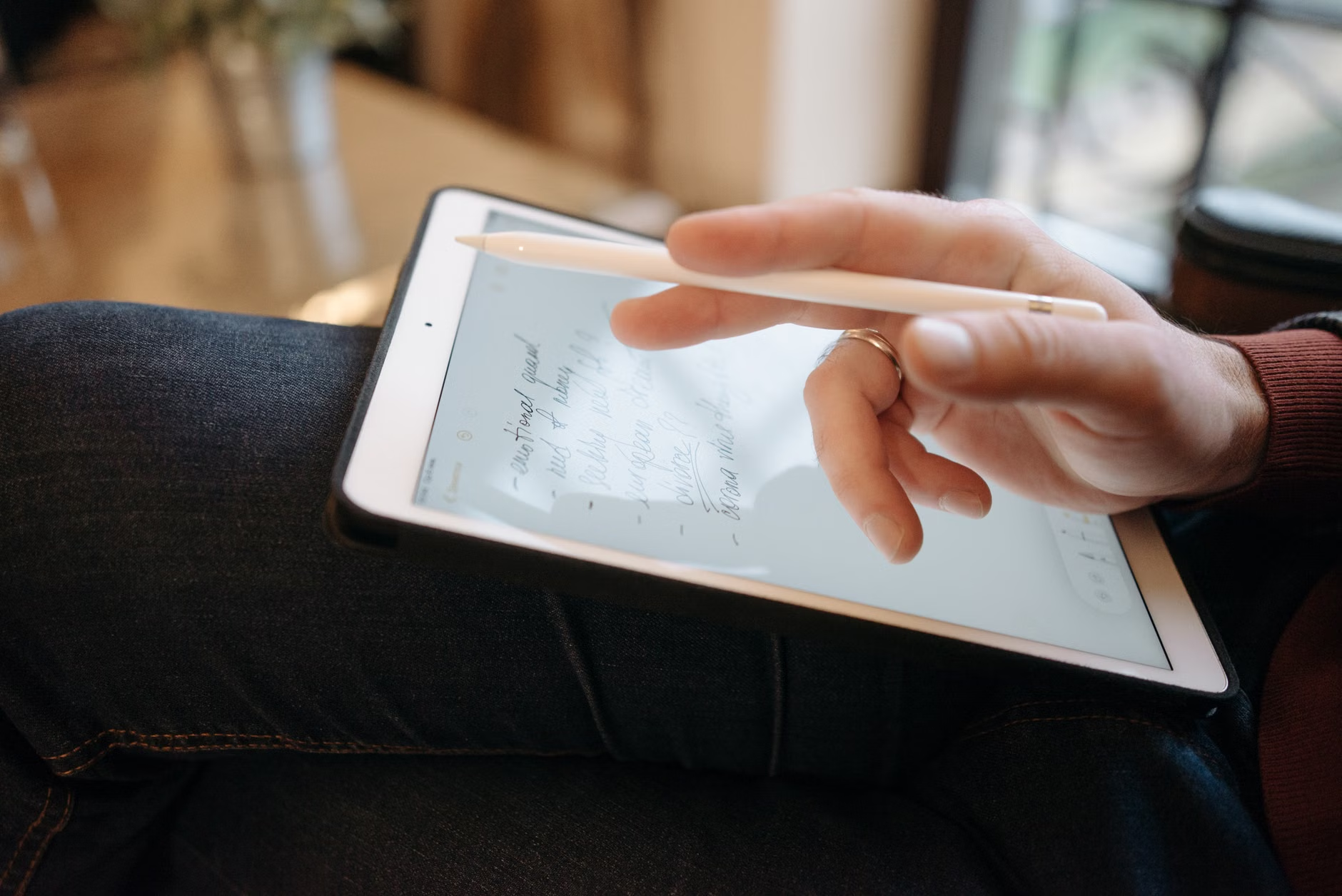
One of the most persistent myths of the modern age is that “more features equal more value.” We look for tablets that can do everything: browse the web, play videos, run apps, and take photos. But for a child trying to build a reading habit, those features are massive liabilities. If you have ever tried to read an e-book on a tablet, you have likely been interrupted by an email notification, a news alert, or the temptation to switch to a game.
Children have even less impulse control than adults. When they are reading on a multi-purpose device, the barrier between “productive reading” and “mindless scrolling” is just one tap away. An E-Ink reader is a single-purpose device. It does one thing: it displays text. Because it cannot play videos or run high-frame-rate games, it removes the temptation to wander off task. This is the ultimate “low-friction” environment for deep focus.
When there are no notifications, no social media feeds, and no flashing graphics, the brain is allowed to settle. Researchers have found that sustained attention—the ability to focus on a single task for an extended period—is a muscle that needs to be exercised. By using a device that doesn’t demand constant engagement, you are effectively training your child’s brain to find satisfaction in the content itself, rather than in the interactive bells and whistles of the interface.
The Practical Benefits for Busy Families
As parents in our 30s and 40s, we are constantly juggling logistics. We are managing school schedules, extracurriculars, and our own work-life balance. We need tools that are not just “good” but also “convenient.” Here is how E-Ink readers make life easier for the modern family:
| Feature | Standard Tablet | E-Ink Reader |
|---|---|---|
| Battery Life | Hours | Weeks |
| Outdoor Usage | Poor (glare) | Excellent (sunlight readable) |
| Distractions | High (notifications/apps) | None |
| Eye Strain | High (blue light) | Low (matte, reflective) |
The battery life alone is a game-changer. Anyone who has ever been on a long road trip or a flight with kids knows the panic of a dying tablet battery. Because E-Ink technology only uses power when the “page” turns, these devices can last for weeks on a single charge. You don’t need to hunt for an outlet at the airport, and you don’t need to worry about bringing a power bank just to keep the device alive for a weekend trip.
Furthermore, the portability of these devices is a massive win for parents of school-aged children. Instead of lugging around a heavy bag of physical books, a child can carry a library of hundreds of titles in a device that weighs less than a single paperback. For families who move around a lot or who want to encourage reading during commute times or at the doctor’s office, this level of access is unparalleled.
Addressing the “Tech” Hesitation: Is It Still Screen Time?
I hear this question all the time from other parents: “If it’s a screen, isn’t it still screen time?” The answer depends on how you define the term. If you define screen time as “any time spent looking at an electronic device,” then yes, it is. But if you define it by the physiological and psychological impact on the child, then no, it is not the same as screen time on a smartphone or a gaming console.
The danger of traditional screens isn’t the glass surface; it is the content and the stimulation. When we talk about the dangers of screen time, we are usually talking about the sedentary, passive, and hyper-stimulated nature of video consumption. E-Ink readers are active tools. The child has to process the information, follow the narrative, and engage their imagination. It is a cognitive workout, not a passive absorption of content.
Think of it like the difference between a treadmill and a couch. Both are in your living room, but one gets your heart rate up and the other leaves you slumped. E-Ink is the treadmill for the brain. It encourages the same mental pathways as traditional paper books. In fact, many literacy experts agree that the format of the text—whether it is on paper or an E-Ink screen—matters far less than the act of deep reading itself.
Overcoming the Learning Curve and Setting Boundaries
Transitioning a child from physical books to an E-Ink reader can be a smooth process if you set the right expectations. Here are a few practical steps to make the transition successful:
- Start with a “Reading Session” ritual: Just like you might have a bedtime story routine, use the E-Ink reader to establish a set time for quiet reading. Consistency is key.
- Curate the library together: Don’t just hand them the device. Sit down with them and help them download books that genuinely interest them. If they love graphic novels, start there. If they are into fantasy series, build a collection of those.
- Use “Parental Mode”: Most modern E-Ink readers for kids come with parental controls. You can set daily reading goals and even reward them with badges or other non-digital incentives.
- Keep it simple: Avoid the temptation to install extra apps if the device allows it. Keep the interface as stripped-down as possible to maintain that “focus-first” environment.
One common mistake parents make is trying to force a child to read something they aren’t interested in just because it’s “educational.” If your child is struggling to get into reading, let them start with lighter content. The goal is to build the habit of sitting still and focusing on text. Once that habit is established, their interests will naturally expand toward more complex literature.
The Role of Ambient Light: Why Outside is Best
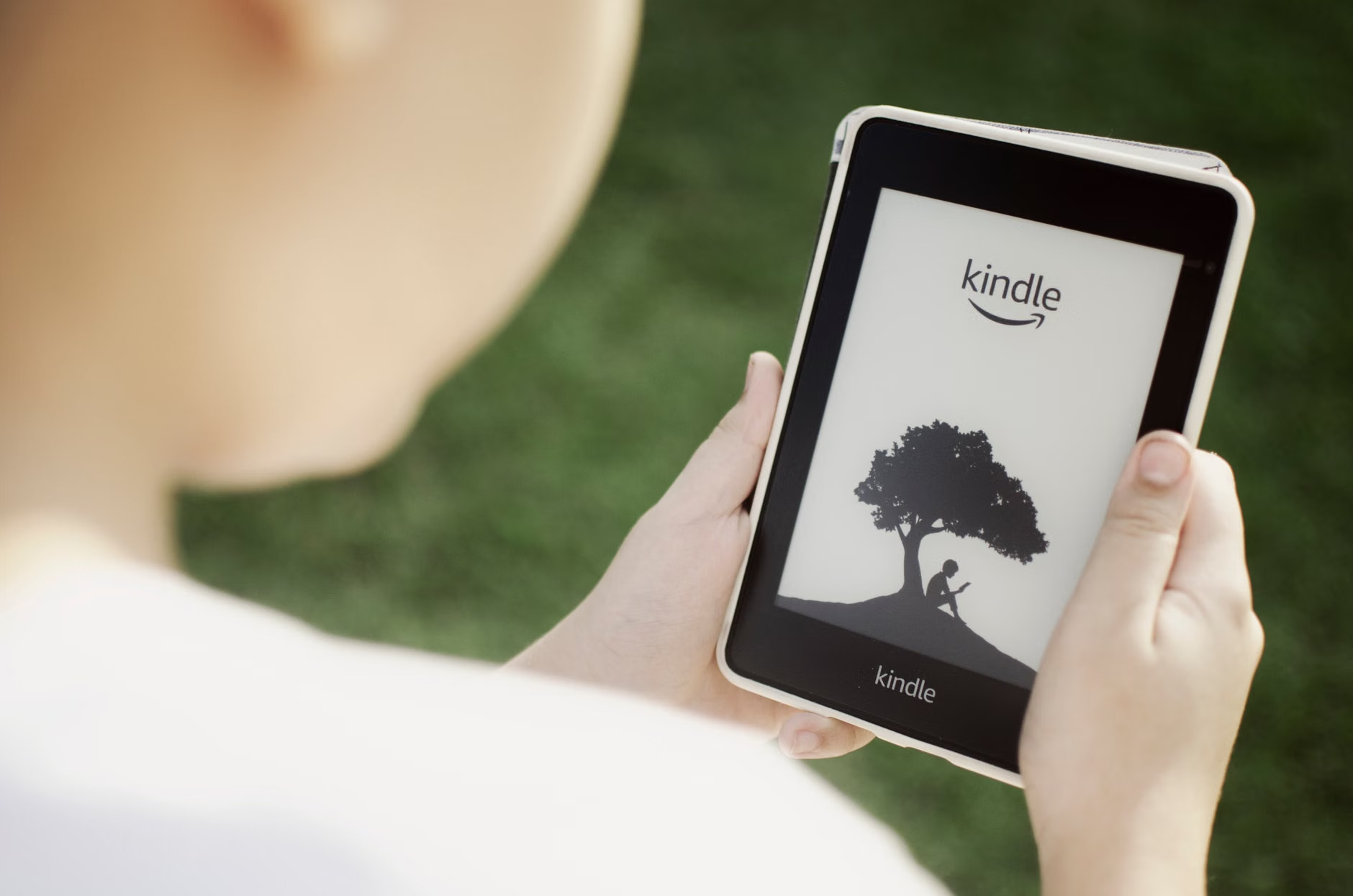
One of the most underrated features of E-Ink is its performance in natural light. We spend so much of our time trying to keep kids away from screens and outside, but these two goals often seem at odds. With an E-Ink device, you don’t have to choose. Because the screen is reflective—just like a page in a book—it actually looks better in direct sunlight. There is no glare, no washing out, and no need to shade the screen with your hand.
This opens up new possibilities for where children can read. They can take their “digital library” to the park, the beach, or the backyard. By removing the tether of the power cord and the limitation of indoor lighting, you are giving them the freedom to make reading a part of their outdoor lifestyle. It breaks down the association that “technology” equals “staying inside.”
Common Misconceptions About E-Ink
There are a few lingering myths that keep parents from investing in E-Ink technology. Let’s debunk them quickly so you can make an informed decision.
Myth 1: “E-Ink is too slow.” It is true that E-Ink does not have the instant, fluid response of an OLED smartphone screen. When you turn a page, there is a slight “refresh” pause. But this is actually a feature, not a bug. It forces a momentary pause, which can actually help with pacing and prevent the frantic, impatient flipping that often happens with digital content.
Myth 2: “It’s too expensive.” While a high-end tablet can cost hundreds of dollars, there are many entry-level E-Ink readers that are quite affordable. When you consider that a physical book costs $10–$20 and a child might read dozens of them a year, the cost of the device is often offset by the savings on digital books, which are frequently cheaper than their physical counterparts.
Myth 3: “It will break easily.” Modern E-Ink readers are surprisingly durable. Many are now water-resistant, making them safe for reading in the bath or by the pool. With a decent case, they can withstand the typical bumps and drops of childhood life. They are generally more robust than a glass-fronted tablet, which is prone to shattering upon impact.
Creating a Sustainable Digital Reading Environment
Building a reading habit is a marathon, not a sprint. The introduction of an E-Ink reader should be seen as a long-term investment in your child’s cognitive development. By providing them with a tool that respects their attention span and protects their eyes, you are signaling that you value their ability to focus and engage deeply with ideas.
It is also important to remember that you are the primary role model. If you are constantly scrolling on your own smartphone, your child will naturally mimic that behavior. If you start using an E-Ink reader yourself, you can create a “family reading time” where everyone is unplugged from the internet and plugged into a good story. This shared experience is often the most effective way to encourage a love of reading.
Finally, keep an eye on the software updates for your device. Manufacturers are constantly improving the “Kids” modes, adding features like vocabulary builders and progress trackers. These can be helpful, but don’t let them overshadow the primary goal: the simple, quiet, and focused act of reading. If a feature feels like it’s becoming a distraction, turn it off. Keep the experience clean, simple, and centered on the books themselves.
Final Thoughts on Digital Literacy
We live in a world where technology is unavoidable. Trying to shield children from all screens is a losing battle and, perhaps, an unnecessary one. The goal shouldn’t be to eliminate technology, but to choose the right technology. We want tools that expand our children’s horizons rather than tools that narrow their focus to a few seconds of viral content.
E-Ink readers represent a rare example of technology that works with our biology, not against it. They offer the convenience of the digital age with the cognitive benefits of the print age. As we continue to navigate the complexities of parenting in a digital world, choosing tools that promote focus and calm is perhaps one of the most practical steps we can take. Start small, keep it consistent, and enjoy the quiet moments that follow.
For more information on the impact of blue light and digital habits, you can consult resources from the National Sleep Foundation regarding light exposure and its effects on children. Additionally, the American Academy of Pediatrics provides ongoing guidance on managing screen time effectively for families.
Frequently Asked Questions
Q: Can my child access the internet on an E-Ink reader?
A: Most E-Ink readers have a basic web browser, but it is notoriously difficult to use compared to a tablet. It is not designed for browsing or video streaming, which effectively discourages children from using it as a general-purpose internet device. You can also restrict or disable this access through parental settings.
Q: Will my child get bored because there are no colors or animations?
A: That is the point! By removing the “sugar rush” of colors and animations, you allow your child’s imagination to take over. It may take a few days of adjustment, but most children find that they actually get more absorbed in a story when their brain isn’t being constantly stimulated by flashy graphics.
Q: Are E-Ink screens better for children with dyslexia?
A: Many E-Ink readers allow you to adjust the font size, line spacing, and even the font type itself. There are specific “OpenDyslexic” fonts available on many devices, which many users find helpful for readability. The ability to customize the text to their personal preference can make a significant difference in a child’s confidence and comfort while reading.