Limiting the number of toys available to your child at any given time is the single most effective way to foster deeper concentration and reduce the daily chaos of a cluttered home.
- Quality over Quantity: A smaller selection of toys encourages children to engage in deeper, more creative play.
- The Rotation System: Regularly swapping out toys keeps the “play environment” fresh without needing to buy new items.
- Psychological Benefits: Reducing visual clutter lowers stress levels for both parents and children, making cleanup manageable.
If you have ever walked into your living room at 7:00 PM and felt like you were wading through a sea of plastic, flashing lights, and half-finished puzzles, you are not alone. It is a universal experience for parents in their 30s and 40s. We want our children to have the tools they need to learn and grow, but the result is often an overwhelming surplus of toys that end up scattered across every surface, eventually ignored by the very children they were bought for.
The “minimalist toy rotation” isn’t about depriving your child of fun. It is about curation. Think of it like a high-end boutique versus a discount warehouse. In a boutique, items are spaced out, easy to see, and inviting. In a warehouse, you get lost in the sheer volume of stuff. By applying the same principles of curation to your home, you can transform your space from a chaotic playroom into a focused, calm environment where your child’s imagination can actually thrive.
Understanding the Psychology of Choice Overload
Why do children, who ostensibly love toys, often ignore a room full of them? It comes down to a concept psychologists call “choice overload.” When presented with too many options, the human brain—regardless of age—experiences a paralysis of decision-making. For a toddler or preschooler, whose executive function is still developing, a massive pile of toys is not a playground; it is a source of cognitive friction.
Research into early childhood development suggests that “less is more.” A study conducted by researchers at the University of Toledo, published in the journal Infant Behavior and Development, found that toddlers who had fewer toys in their immediate environment displayed longer durations of play and higher levels of creativity than those with an abundance of toys. With fewer distractions, children are forced to explore the possibilities of each item more thoroughly.
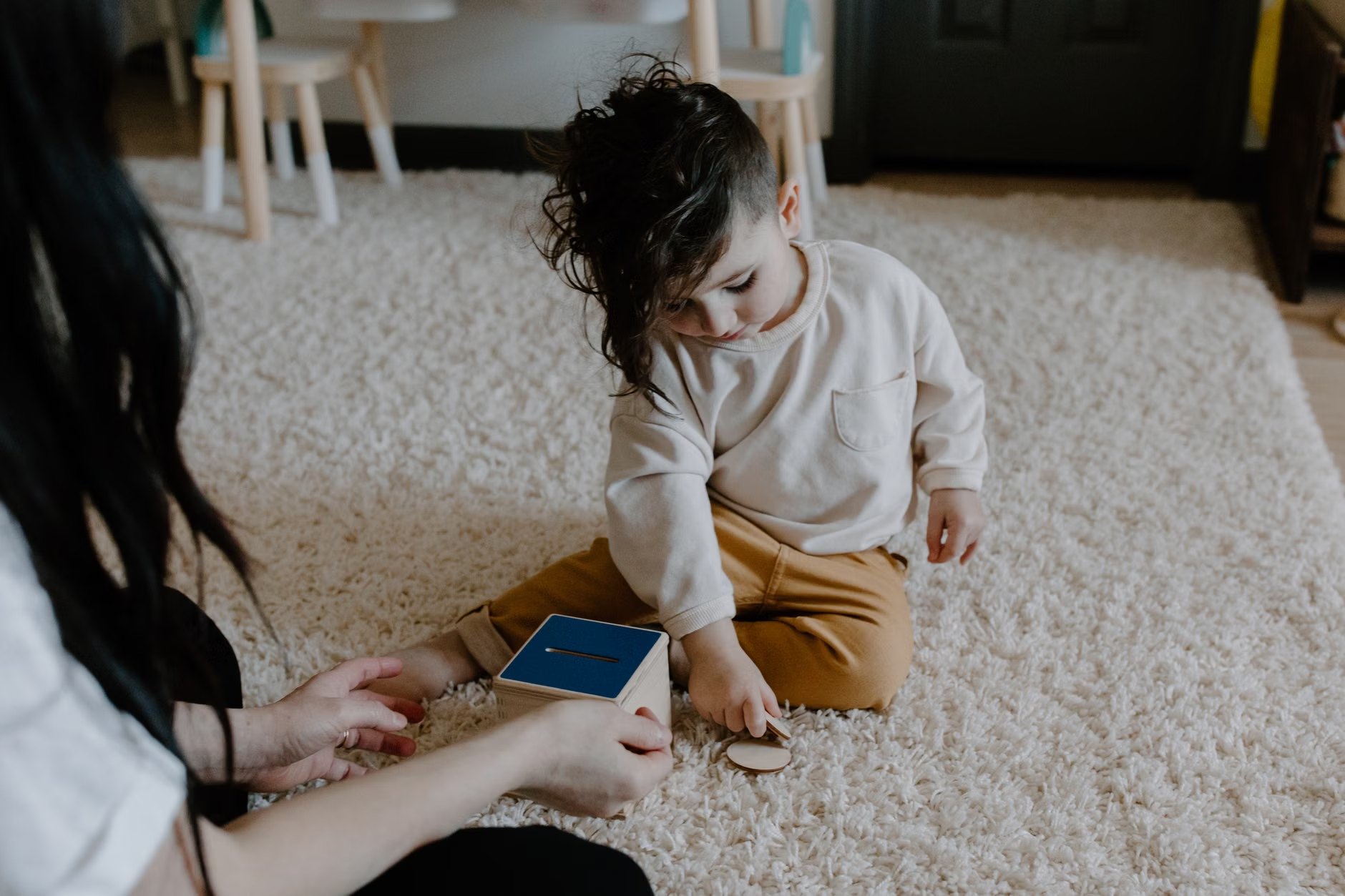
When a child has twenty cars on the floor, they might push each one for three seconds and move on. When they have only two, they are forced to build a road, create a scenario, or invent a narrative. This is the difference between passive consumption and active engagement.
How to Implement Your First Toy Rotation
Starting a toy rotation can feel daunting, especially if you’ve spent years accumulating items. The key is to start slow and view it as a project rather than a chore. Here is a step-by-step framework to get you started.
Phase 1: The Great Purge
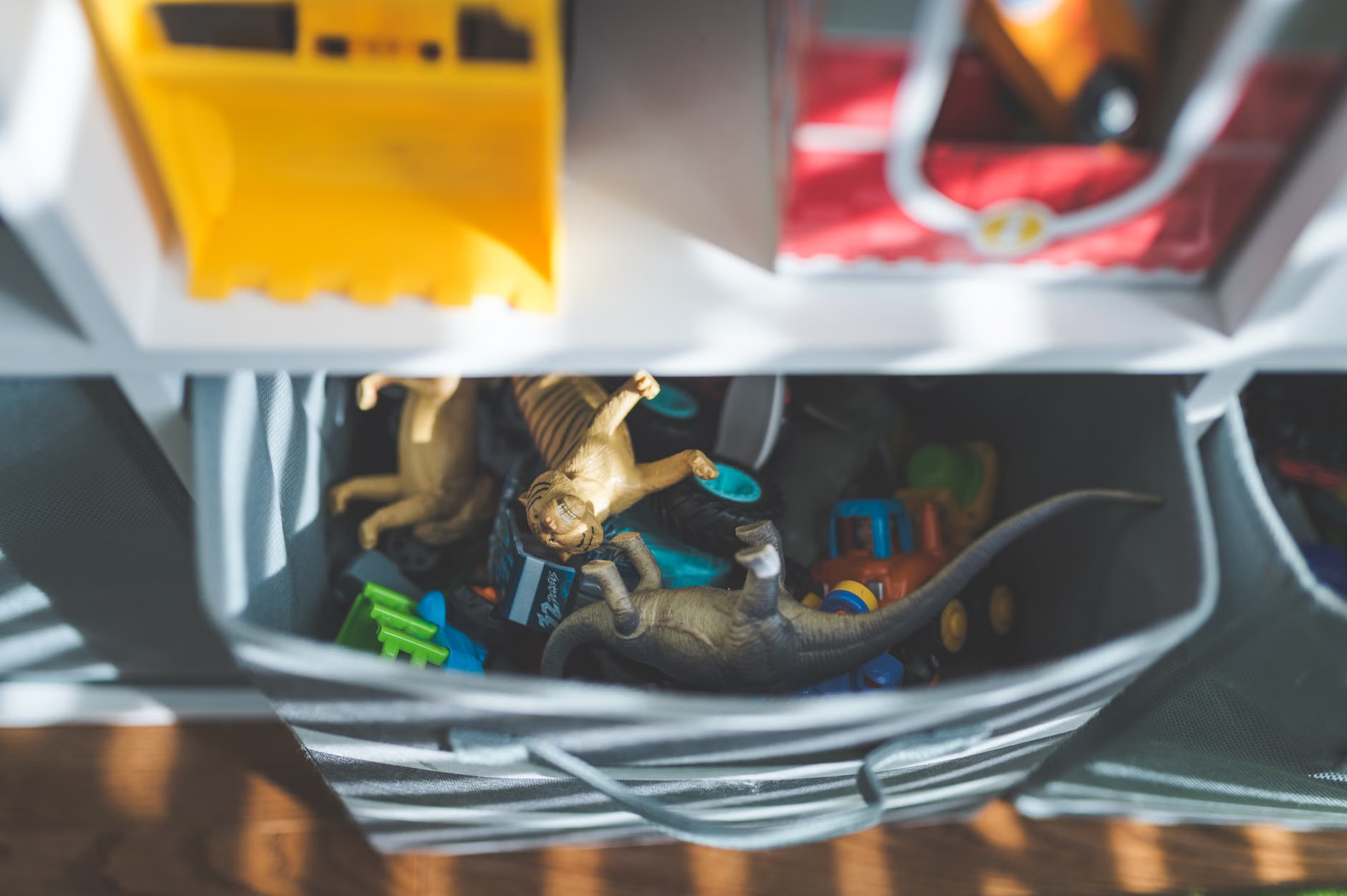
Before you can rotate, you must declutter. Be honest about what your child actually uses. If a toy is broken, missing pieces, or has become a “battery hog” that annoys everyone in the house, it is time for it to go. Sort toys into three piles: Keep, Donate/Sell, and Trash/Recycle.
Phase 2: Categorization
Once you have your “Keep” pile, group the toys by type or function. Common categories include:
- Building/Construction: Blocks, magnetic tiles, LEGOs.
- Pretend Play: Kitchen sets, dolls, action figures, dress-up clothes.
- Educational/Puzzles: Shape sorters, floor puzzles, matching games.
- Sensory/Art: Play-dough, coloring books, sensory bins.
- Active/Gross Motor: Balls, climbing triangles, push toys.
Phase 3: Setting Up the Rotation Containers
You don’t need expensive organizational systems. Plastic bins, fabric boxes, or even cardboard boxes stored in a closet or under a bed will work. The goal is simply to get them out of the main living area. Divide your toys into 3 to 4 “sets.” Each set should contain a balanced variety of the categories listed above.
| Set | Contents | Purpose |
|---|---|---|
| Set A | Wooden blocks, dolls, simple puzzles | Core play staples |
| Set B | Magnetic tiles, toy cars, art supplies | Construction and creative focus |
| Set C | Dress-up, pretend kitchen items, books | Imaginative play |
The Daily Mechanics of Rotation
Consistency is the secret sauce. You don’t need to rotate on a strict schedule, but aiming for once every two to four weeks works for most families. The “trigger” for a rotation is often when you notice your child has lost interest in the current selection or when the room has become consistently messy because they are dumping everything out looking for “something to do.”
When you bring out a new set, do not just dump it in the middle of the room. Set it up intentionally. If you are introducing a set of building blocks, build a small structure to pique their interest. If you are introducing a new puzzle, lay the pieces out. By “staging” the environment, you signal to your child that these toys are special and ready for use.
Common Pitfalls and How to Avoid Them
Even with the best intentions, parents often run into common hurdles. Let’s look at how to navigate them.
The “I Want That Toy!” Crisis
Inevitably, your child will ask for a toy that is currently in storage. This is a great opportunity to practice patience and communication. Instead of just saying “no,” explain the process: “That toy is resting right now. We are playing with the blocks this week, but we can switch them out next weekend.” This teaches them that toys have a place and that they are not always available on demand.
The “Everything is Everywhere” Syndrome
Rotation does not eliminate the need for cleanup, but it does make it faster. When there are only 10 items in the room, cleanup takes two minutes. When there are 200, it takes twenty minutes. If you find your child is still making a massive mess, you might have too many items in your current rotation. Don’t be afraid to pull even more toys out of the mix.
Handling Gifts and New Additions
Birthdays and holidays are the enemy of minimalism. When new toys arrive, it is a perfect time to do a “one-in, one-out” policy. Before the new gift is integrated into the rotation, help your child choose an old toy to donate. This keeps the total volume of toys stable and teaches the value of sharing.
The Long-Term Impact on Play Quality
The beauty of this system is that it changes the child’s relationship with their belongings. They stop seeing toys as disposable items to be discarded and start seeing them as tools for their imagination. When a child has to wait for a toy to return to the rotation, it creates a sense of anticipation. When it finally returns, it feels like receiving a brand-new gift, even though it is something they have owned for years.
Furthermore, this approach saves you money. By rotating, you rediscover what you already have. You will likely find that you stop feeling the urge to “buy something to keep them busy” because your child is already busy with the resources they have. It’s a shift from being a consumer to being a curator.
Creating a Sustainable Environment
For those of us in our 30s and 40s, our homes are often multi-functional. The living room is a playroom, a home office, and a relaxation space. If you are constantly looking at a pile of primary-colored plastic, it is hard to relax. By using neutral storage bins or hiding the rotation toys in a closet, you reclaim your adult space.
Consider the aesthetic of your storage. Using open-weave baskets or wooden crates can make the toys look like part of the decor rather than clutter. When your home feels organized, your mind feels organized. This is not about being a “perfect” parent; it is about creating a system that serves your family’s mental well-being.
Frequently Asked Questions
1. Does this mean I should get rid of all my child’s toys?
Absolutely not. The goal is not to have an empty room, but to have a functional one. Keep the toys your child genuinely loves and engages with. The rotation is simply a tool to manage the volume so that your child can actually focus on what they have.
2. What should I do if my child gets upset during the rotation?
It is normal for children to push back against change. Be gentle but firm. Remind them that the toys are not gone forever—they are just “taking a nap” or being stored away for a while. You can involve them in the process by letting them choose which toys go into the storage bins, which gives them a sense of agency.
3. How do I manage toys that are “all-time favorites”?
If your child has a “lovey” or a specific set of blocks they play with every single day, you do not need to rotate them. The goal is to rotate the toys that are currently creating clutter or being ignored. The “favorites” can stay out permanently, while the supplemental toys rotate in and out.
Final Thoughts
The minimalist toy rotation is not a rigid rulebook; it is a flexible strategy. Some families rotate weekly, others monthly, and some only when they feel the clutter starting to creep back in. The most important thing is that you find a rhythm that works for your family’s specific needs and schedule.
By simplifying the environment, you are giving your child the gift of focus and the space to be truly creative. You are also giving yourself a bit of breathing room in your own home. Remember, parenting is a marathon, not a sprint. Reducing the daily friction of clutter is just one small way to make the journey a little bit smoother.
For further reading on the developmental benefits of simplified environments, you may find the resources at the American Academy of Pediatrics (healthychildren.org) helpful regarding the importance of play and the types of toys that best support cognitive development.