Choosing an open-source, privacy-first approach to home monitoring is the single most effective way to protect your family’s digital footprint while maintaining the convenience of a modern smart home.
- Local Control: Open-source systems keep your data within your four walls, meaning it never reaches a third-party cloud server.
- Future-Proofing: Unlike proprietary ecosystems that can be shut down by companies, open-source platforms are maintained by a global community.
- Customization: You gain granular control over your devices, allowing for automation that actually serves your family’s specific routines.
If you have spent any time in the world of smart home technology, you have likely felt that familiar tug-of-war. On one hand, there is the undeniable appeal of a camera that alerts you when the kids get home from school or a sensor that tells you if the basement is flooding. On the other hand, there is the mounting realization that these “conveniences” often come with a heavy price: your data.
For parents in their 30s and 40s, this is rarely just about “privacy” in the abstract sense. It is about the reality of your living room being recorded, your daily habits being profiled for advertising, and the potential for a security breach to expose your family’s most intimate moments to strangers. We have all seen the headlines about cloud-based cameras being hacked. It is enough to make you want to throw the whole smart home ecosystem out the window. But you don’t have to choose between a “dumb” home and a compromised one. The solution lies in the open-source movement.
The Hidden Cost of “Free” Cloud Services
When you buy a standard smart camera or a motion sensor from a big-box store, you are rarely just buying hardware. You are effectively entering a subscription contract—even if you aren’t paying a monthly fee. The manufacturer provides the “free” cloud storage and the app interface in exchange for metadata about your life. They know when you leave for work, when you go to bed, and how often your kids run through the hallway.
This data is incredibly valuable. It is used to train algorithms, refine marketing profiles, and, in some cases, it is shared with third parties. When we talk about “privacy-first,” we aren’t suggesting that you live in a bunker. We are suggesting that your home’s data should be treated with the same sensitivity as your bank statements. With open-source systems, the data stays on your local network. It doesn’t travel to a server in a different time zone. If your internet goes down, your smart home keeps working. If the company that made your sensor goes bankrupt, your system doesn’t turn into a paperweight.
Understanding the Open-Source Advantage
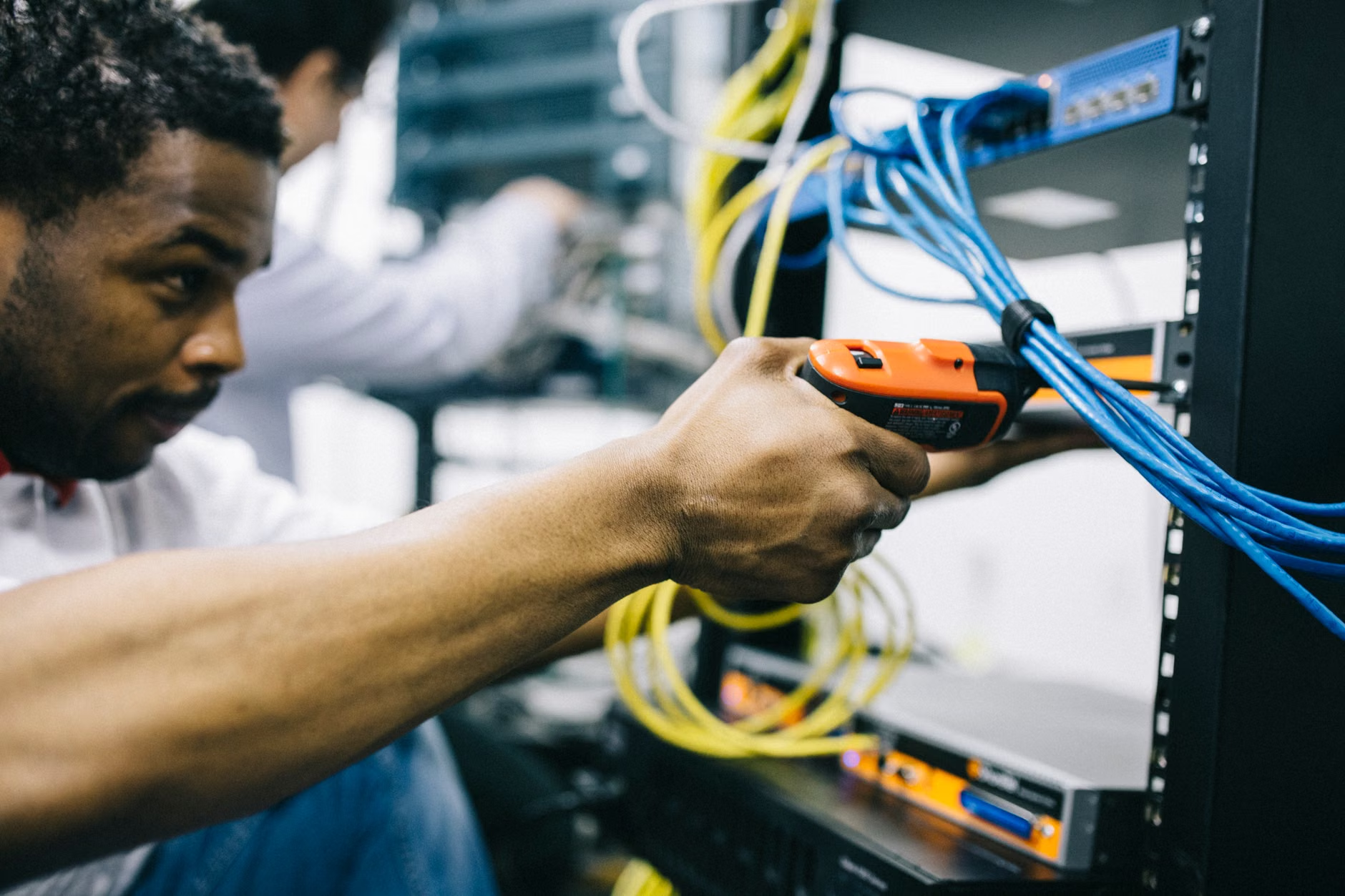
Open-source software means the underlying code is transparent and accessible. Anyone can audit it to ensure there are no “backdoors” or hidden trackers. Platforms like Home Assistant have revolutionized this space. They act as a local hub that connects all your devices—from smart lights to door sensors—without requiring them to talk to a manufacturer’s cloud.
Think of it like the difference between a rental apartment and a home you own. In a rental, the landlord (the manufacturer) can decide to paint the walls, change the locks, or evict you at any time. When you own your home, you decide what goes where, how it is secured, and who has the keys. Open-source is the equivalent of owning your digital home.
The Technical Shift: From Cloud to Local
Most smart home devices are designed to “phone home.” They send a signal to a server, which processes the command and sends it back to your device. This is why you sometimes experience a delay when turning on a light. With a local, open-source hub, the command travels directly from your switch to your light bulb. It is faster, more reliable, and inherently more secure.
| Feature | Proprietary/Cloud | Open-Source/Local |
|---|---|---|
| Data Storage | External Cloud | Local Server/SSD |
| Internet Dependency | High | None |
| Privacy | Low | High |
| Longevity | Depends on Company | Indefinite |
Bridging the Gap: How to Get Started
You do not need a degree in computer science to make the switch. In fact, the barrier to entry has dropped significantly in the last few years. The most popular route is to use a device like a Raspberry Pi or an old thin-client PC to host your home automation software. These devices are low-power, quiet, and can be tucked away in a utility closet.
Once you have your hub, you look for sensors that support local protocols like Zigbee or Z-Wave. These protocols are designed for smart homes; they create a mesh network where your devices talk to each other rather than relying on your Wi-Fi router. This is a massive win for privacy because these sensors don’t have a direct connection to the internet at all. They only talk to your hub, and your hub decides what, if anything, goes to the outside world.
Let’s be honest: your 30s and 40s are characterized by a constant lack of time. You don’t have hours to spend troubleshooting a server. This is why the community support around open-source projects is so vital. If you run into an issue, there is almost certainly a forum post or a YouTube tutorial from someone who faced the exact same problem. You aren’t just a customer waiting for a support ticket to be answered; you are part of a massive, global project.
Common mistakes often involve trying to migrate everything at once. My advice? Start small. Replace one thing—perhaps a light switch or a temperature sensor—and see how it feels to have that control. Once you get comfortable with the dashboard and the automation logic, you can slowly migrate your cameras or other more complex systems. There is no rush.
Security: The “Set and Forget” Myth
One of the biggest misconceptions is that open-source is “less secure” because it isn’t managed by a big company. The reality is the opposite. Because the code is open, thousands of developers are constantly reviewing it for vulnerabilities. When a flaw is found, it is patched within hours, not months. Proprietary software often relies on “security through obscurity,” which is a fancy way of saying they hope hackers don’t notice their mistakes.
Why Your Data Deserves Better
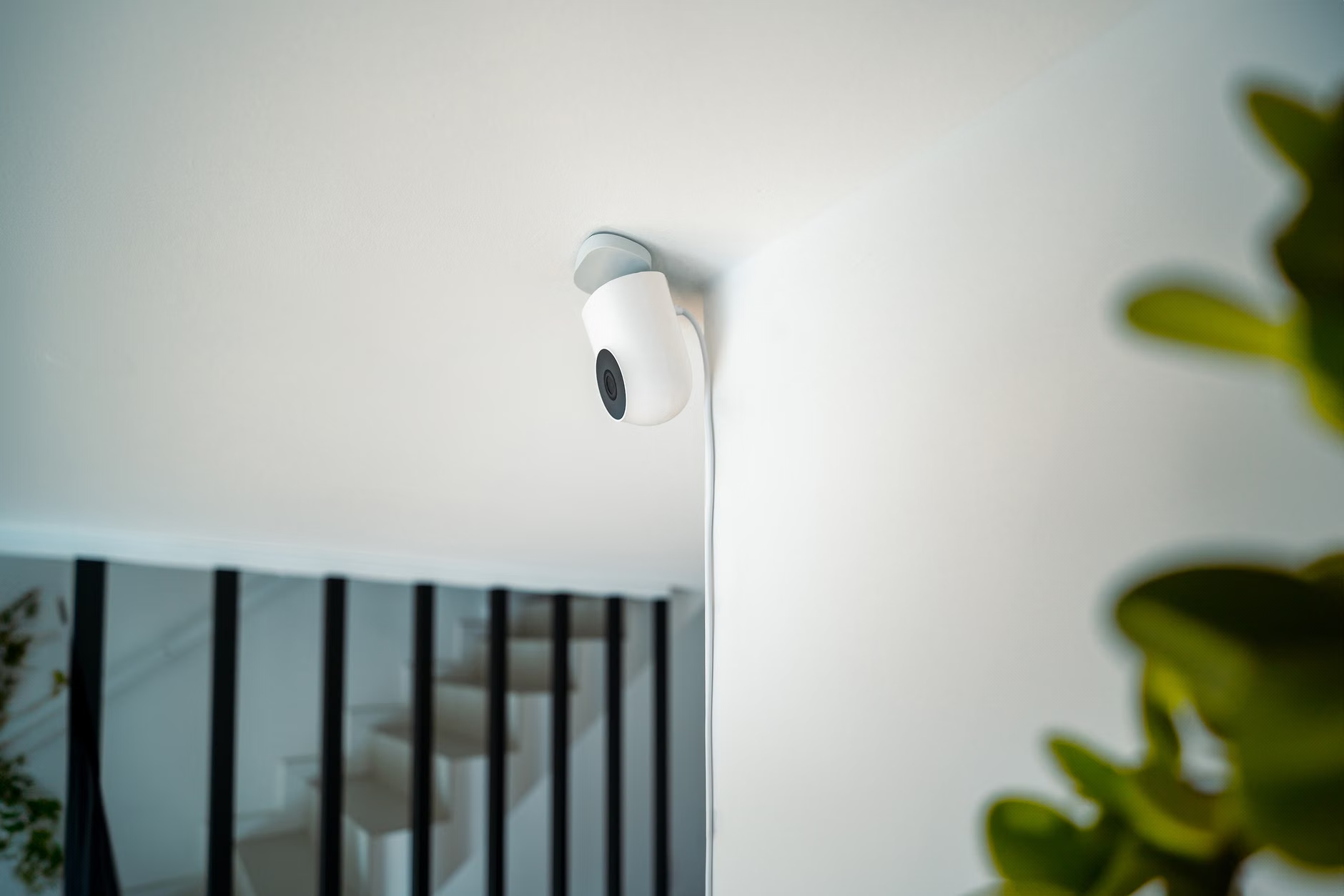
Consider the “smart nursery” scenario. Many parents buy baby monitors that connect to the cloud so they can check on the baby from work. But those monitors are often among the least secure devices on the market. By choosing a local, open-source system, you can stream the video feed directly to a tablet in your living room or a secure app on your phone via a VPN, without the feed ever touching a public server.
This is peace of mind that you cannot buy from a big-box store. It is the assurance that your family’s private moments remain private. It is the realization that you are the architect of your own home, not just a tenant in someone else’s data-collection ecosystem.
Addressing Potential Challenges
Is this for everyone? Perhaps not yet. If you are deeply invested in a specific brand’s ecosystem (like a specific voice assistant or a proprietary smart lock), moving to an open-source system might feel like a big step. However, most open-source platforms are designed to bridge these gaps. You can often keep your existing devices and simply “de-cloud” them by connecting them to your local hub rather than the manufacturer’s app.
The learning curve is real, but it is not steep. Most people find that after the initial setup, the system is more stable than anything they have used before. Because the system isn’t dependent on a remote server, it doesn’t flicker when your internet is slow. It just works.
The Future is Local
We are entering an era where consumers are becoming increasingly aware of the value of their data. The “smart home” label is becoming synonymous with “surveillance home,” and the backlash is already underway. By choosing an open-source path, you are ahead of the curve. You are building a home that respects your boundaries and protects your family.
It is not about being a technophile or a hacker. It is about being a parent who wants to use technology to make life easier without compromising the safety and privacy of the people who matter most. It is about taking back control, one sensor at a time.
Common Questions About Privacy-First Home Monitoring
1. Do I need to be a programmer to set up an open-source home?
Not at all. While some technical knowledge helps, modern platforms like Home Assistant have user-friendly interfaces that allow you to set up automations through simple menus. The community provides extensive documentation and templates that make the process accessible for beginners.
2. Can I still use my voice assistants with an open-source system?
Yes. You can integrate many voice assistants into a local hub. The key is that you configure them to talk to your local hub rather than having your devices talk directly to the manufacturer’s cloud. This gives you the best of both worlds: the convenience of voice control and the security of local data management.
3. How much does it cost to switch to an open-source setup?
It can be very affordable. If you already have a computer or a spare Raspberry Pi, the software is often free. Your main costs will be the sensors and the hub hardware. Because you aren’t paying monthly subscription fees for cloud storage, the system often pays for itself within a year or two compared to proprietary alternatives.
Further Reading and Resources:
To learn more about the technical foundations and the community-driven aspect of this movement, you can explore the official documentation for Home Assistant, which is the gold standard for open-source home automation. Additionally, the Connectivity Standards Alliance provides excellent information on the open protocols that make local-first smart homes possible.
Start small, stay curious, and remember that when it comes to your home, you have the right to be the only one with the keys. A private home is a truly smart home.