Baking is not just a way to satisfy a sweet tooth; it is arguably the most effective, accessible, and delicious laboratory you have in your home for teaching your children fundamental math and chemistry.
- Practical Math: Baking requires real-world application of fractions, ratios, and unit conversions that textbooks struggle to make engaging.
- Edible Chemistry: Processes like leavening, protein coagulation, and caramelization turn the kitchen into a visible science experiment.
- Soft Skills: Beyond academics, baking builds patience, sequence-following, and resilience when a recipe doesn’t go exactly as planned.
If you are a parent in your 30s or 40s, you are likely familiar with the “homework struggle.” After a long day of work and household management, the last thing anyone wants is to sit at a cramped desk forcing a child to memorize multiplication tables or abstract chemical reactions. But what if the classroom was the kitchen, and the lesson ended with chocolate chip cookies?
The beauty of the “Parent-Child Cooking Hour” lies in its ability to strip away the intimidation factor of STEM (Science, Technology, Engineering, and Math) subjects. When a child measures a half-cup of flour, they are physically interacting with the concept of a fraction. When they watch dough rise, they are observing the biological and chemical output of yeast or baking powder. Let’s break down how you can turn your next baking session into a structured, high-value learning experience.
The Kitchen as a Mathematical Foundation
Math in the classroom is often symbolic—numbers on a page. Math in the kitchen is tangible. The primary hurdle for many children is understanding that fractions and measurements are not just arbitrary rules, but essential tools for achieving a specific, delicious outcome. If the ratio of flour to liquid is off, the result is a failure. This provides immediate, non-punitive feedback.
Fractional Mastery: More Than Just Pie Charts
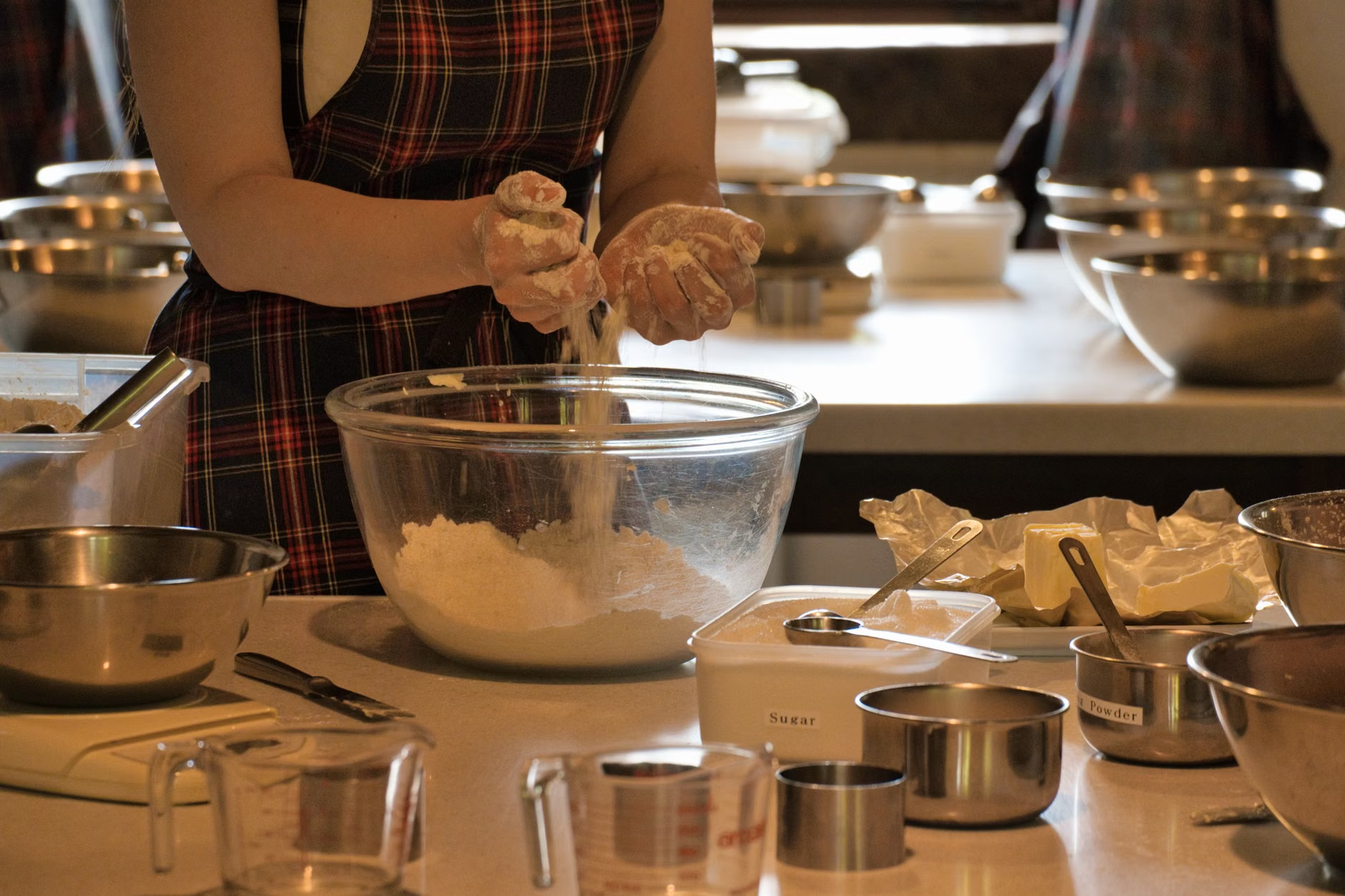
Most standard baking sets come with measuring cups: 1 cup, 1/2 cup, 1/3 cup, and 1/4 cup. This is the perfect entry point for teaching equivalence. Before you even pour the flour, ask your child to solve a problem: “The recipe calls for one cup of flour, but I only have a 1/4 cup measure. How many scoops do we need?”
This simple exercise forces them to visualize the addition of fractions. You can take it a step further by using a balance scale. Place a 1/2 cup measure on one side and two 1/4 cup measures on the other. Watching the scale level out provides a physical “aha!” moment that a worksheet simply cannot replicate.
Scaling Up and Down: The Concept of Ratios
Once your child is comfortable with basic measurements, introduce the concept of ratios by scaling a recipe. If a batch of cookies makes 24, but you need to feed a class of 48, how much of each ingredient do you need? This introduces the concept of multiplication and proportions. It’s an early introduction to algebraic thinking—if you change one variable (the number of cookies), you must change all others (the ingredients) proportionally to maintain the “truth” of the recipe.
The Chemistry of Heat and Reaction
Once the math is settled, the oven becomes your reactor. Baking is essentially a series of chemical reactions triggered by heat, acidity, and mechanical work. Explaining these to a child doesn’t require a PhD; it requires a bit of curiosity and the willingness to ask, “Why did that happen?”
Leavening: The Art of Aeration
Why do cakes rise? The answer is gas. Whether it’s steam, carbon dioxide from yeast, or the chemical reaction between baking soda and an acid (like buttermilk or lemon juice), baking is about trapping gas in a structure.
To demonstrate this, have your child mix baking soda with a little vinegar in a separate glass before you start the recipe. The resulting “volcano” of bubbles is the visual proof of carbon dioxide production. Explain that inside the cake batter, those same bubbles are getting trapped by the protein structure of the flour and eggs, causing the cake to expand. It’s a lesson in states of matter: gas trying to escape a solid-liquid matrix.
Protein Coagulation: The Transformation of Eggs
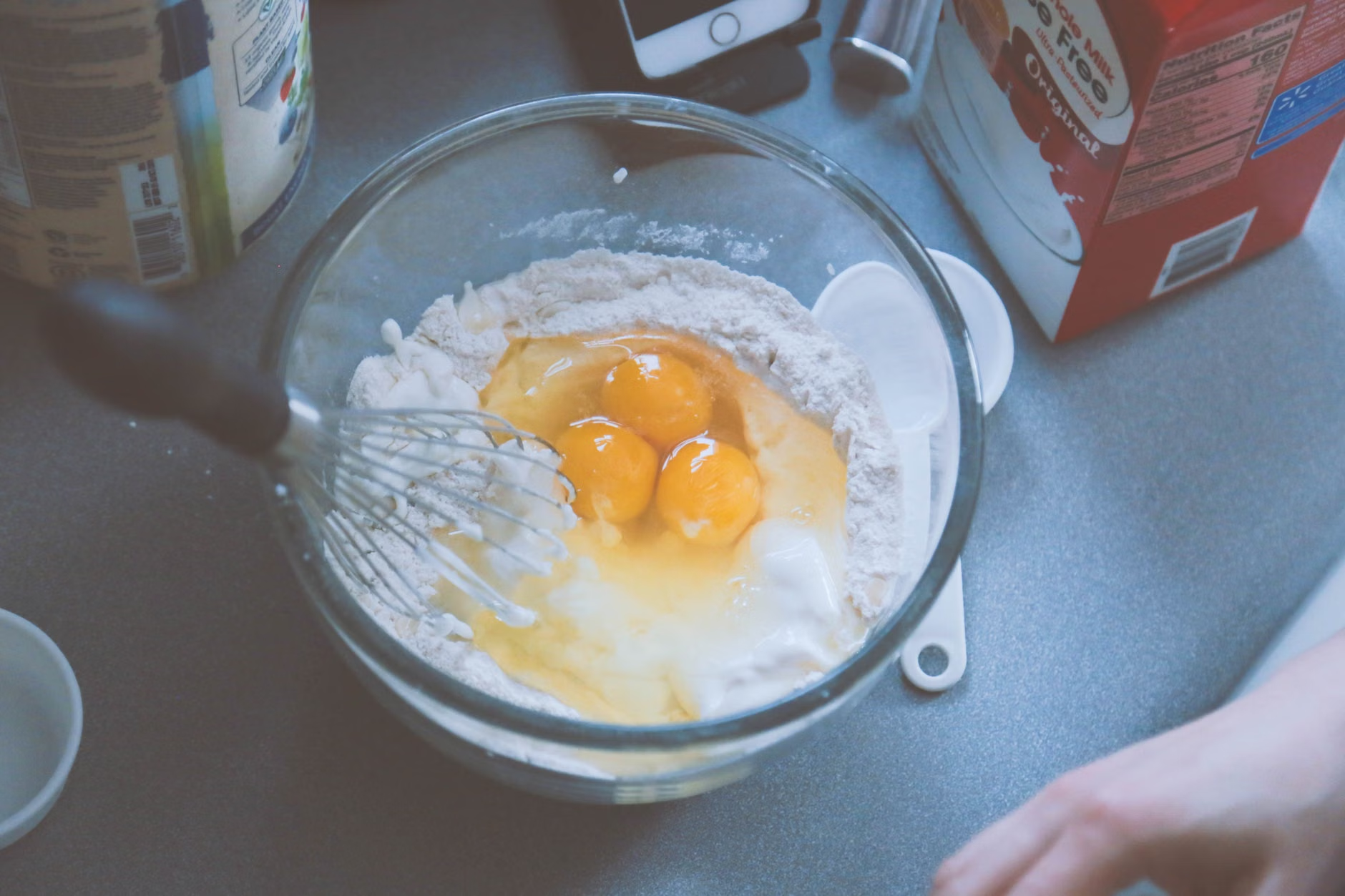
Eggs are the “glue” of baking. When you whisk an egg, you are denaturing the proteins—unfolding them from their tightly coiled state. When you apply heat, those proteins bond together, turning the liquid egg into a firm structure. This is the same principle behind why we cook meat. By discussing how the eggs transition from a clear, runny liquid to a solid, opaque structure, you are teaching your child about thermal denaturation, a core concept in biochemistry.
Structuring the “Cooking Hour” for Success
To ensure this time remains educational rather than chaotic, you need a loose structure. The goal is to move from “following instructions” to “understanding the process.”
| Phase | Learning Objective | Activity |
|---|---|---|
| Preparation | Estimation & Planning | Checking inventory, reading the recipe, and gathering tools. |
| Execution | Math & Measurement | Measuring ingredients, scaling the recipe, calculating timing. |
| Transformation | Chemistry & Observation | Mixing, observing texture changes, managing oven temperature. |
| Review | Critical Thinking | Evaluating the final product: Was it too dry? Too sweet? Why? |
The Importance of the “Why”
Avoid simply giving orders. If you say, “Sift the flour,” follow it up with, “We sift it to break up clumps and add air, which makes the cake lighter.” If you say, “Don’t open the oven door,” explain, “Opening the door lets out the heat and the steam, which can cause the cake to collapse because the structure isn’t set yet.” This shift from imperative to explanatory is what turns a chore into a lesson.
Common Pitfalls and How to Manage Them
If you are a parent, you know that things go wrong. Flour spills, ovens run hot, and sometimes, the cookies just don’t turn out right. This is actually a feature, not a bug, of this educational approach.
The “Failure” Opportunity: If a batch of cookies burns, don’t just toss them out and start over. Analyze the failure. Was the oven temperature too high? Did we leave them in for too long? Did we use a dark pan instead of a light one (which absorbs more heat)? This is the scientific method in action: observation, hypothesis, and conclusion. It teaches children that failure is just data, not a character flaw.
Safety First: The kitchen is full of hazards—sharp knives, hot surfaces, and electrical appliances. Use these as lessons in risk assessment. Teach your child how to handle a knife properly, how to use oven mitts, and why we never leave the stove unattended. These are life skills that build independence and responsibility.
The Psychological Benefits of Cooking Together
Beyond the academic gains, there is a profound psychological benefit to this shared activity. In our increasingly digital world, where children spend hours staring at screens, the tactile, multi-sensory experience of baking is grounding. The smell of cinnamon, the feel of dough between fingers, the sound of the timer—these are sensory-rich experiences that help regulate a child’s nervous system.
For parents in their 30s and 40s, this is also a chance to step away from the “manager” role. You aren’t just telling them to clean their room or finish their homework; you are collaborating on a project. It shifts the dynamic from hierarchical to partnership-based. This creates a safe space for open conversation, as you aren’t staring at each other across a desk but working side-by-side on a shared goal.
Integrating Technology and Modern Tools
While the kitchen is a traditional space, you can use technology to enhance the learning. Use a digital scale to teach precision—the difference between a “cup” (which can vary depending on how packed the flour is) and “grams” (which is exact). Discussing why bakers prefer mass (grams) over volume (cups) introduces the importance of accuracy in scientific endeavors.
You can also use simple apps or online resources to look up the origins of ingredients. Where does cocoa come from? How is vanilla processed? This connects the kitchen to the broader world, teaching geography and global commerce alongside chemistry and math.
Recommended Resources for Further Exploration
If you want to deepen your knowledge, there are several foundational resources that explain the science behind the food. Books like On Food and Cooking by Harold McGee are considered the “bible” of food science. While it is a dense read, it provides the answers to almost any “why” question your child might ask about heat, ingredients, and chemical reactions.
Additionally, look for resources from organizations like the American Chemical Society, which often publishes kid-friendly experiments that overlap with culinary arts. Keeping a simple notebook where your child can record their “experiments”—what they added, how long it baked, and the final result—creates a sense of ownership over their learning process.
Refining the Process: A Checklist for Parents
To keep the “Parent-Child Cooking Hour” consistent, consider keeping a simple checklist on your fridge:
- Read the recipe twice: Ensure you understand the steps before you touch an ingredient.
- Clear the workspace: A tidy station is essential for safety and focus.
- Measure twice, mix once: Emphasize the importance of precision in chemistry.
- Clean as you go: This is a life skill that prevents the kitchen from becoming a disaster zone.
- Document the result: Even if it’s just a quick note, recording the outcome reinforces the scientific method.
The goal isn’t to create master pastry chefs or professional chemists. The goal is to raise children who are curious, who understand that the things they use and eat every day are the result of systems and processes, and who feel comfortable navigating those systems. Baking provides a low-stakes, high-reward environment to foster these traits.
When you start, keep it simple. Don’t try to make a complicated soufflé on your first attempt. Start with something that has clear, distinct steps, like basic sugar cookies or a simple loaf of bread. As you both become more comfortable, you can introduce more complex variables and techniques. Remember that the “hour” is about the process, not the perfection of the final product. If the cookies are a bit misshapen, they will still taste good, and the lesson in chemistry and math will have been learned just the same.
In a world where we often feel like we have to outsource our children’s education to schools and tutors, reclaiming the kitchen as a place of learning is a powerful, grounding act. It reminds us that education isn’t just something that happens in a classroom; it is something that happens in our homes, in our daily routines, and in the moments we share with our children. So, pick a recipe, gather your tools, and get started. The math, the science, and the memories are waiting on the counter.
Frequently Asked Questions
Q: What is the best age to start teaching kids math and science through baking?
A: You can start as early as 3 or 4 with simple tasks like pouring and counting scoops. As they grow older, they can take on more responsibility, such as reading recipes, calculating conversions, and monitoring oven times. The key is to match the complexity of the task to their developmental stage.
Q: My child gets frustrated when a recipe fails. How should I handle this?
A: Frame the “failure” as a scientific data point. Ask them, “What do you think happened?” or “What should we change next time?” This shifts the focus from emotional disappointment to analytical problem-solving, which is a crucial skill in both science and life.
Q: Do I need to be an expert in math or science to do this?
A: Absolutely not. The beauty of this approach is that you are learning alongside your child. You don’t need to know the answer to every question; the best response is often, “I’m not sure, let’s look it up together.” This models the behavior of a lifelong learner, which is the most important lesson you can teach.
For more information on food science and educational activities, you can visit the American Chemical Society or explore the educational resources provided by The Exploratorium, which offers excellent insights into the science of everyday life.