The most effective way to reclaim your weekend sanity as a parent is to stop chasing “big” experiences and start curating “micro” ones within a 30-minute radius of your front door.
- The Distance Advantage: Cutting travel time reduces cortisol levels for both parents and children, turning a “trip” into a true “break.”
- The Micro-Festival Model: You don’t need a massive event; a local farmers market, a community garden open house, or a neighborhood library fair provides all the sensory stimulation kids need.
- The Curated Itinerary: Success relies on a “one-main-event” rule, preventing the common trap of over-scheduling that leads to mid-afternoon meltdowns.
Let’s be honest: the “perfect” family weekend often feels like a logistical nightmare. We spend our Friday nights scrolling through travel blogs, hunting for the next big theme park or destination resort, only to spend Saturday morning packing a car like we’re embarking on an arctic expedition. By the time we arrive, the kids are hungry, the traffic has drained our patience, and the “fun” hasn’t even started yet. If this sounds familiar, you aren’t alone; you are just participating in the high-effort, low-reward cycle of modern family leisure.
The solution isn’t to stop doing things; it’s to change the scale. Enter the “Local-Micro-Festival.” These aren’t multi-day music events with camping gear and expensive tickets. They are hyper-local, low-stakes gatherings—neighborhood block parties, artisan craft fairs, seasonal harvest festivals, or even pop-up community art walks. By focusing on your immediate surroundings, you shift the goal from “making memories at a destination” to “experiencing community in your own backyard.”
Why the ‘Micro’ Approach Fits the 30-Something Lifestyle
In our 30s and 40s, our threshold for chaos has shifted. We have limited time, finite energy, and a growing appreciation for things that don’t require an hour of post-trip laundry. The micro-festival approach works because it honors the reality of the modern parenting experience. It’s not about lowering your standards; it’s about optimizing for recovery.
When you travel three hours for a “big” event, you are essentially gambling. If it rains, or if the kids have a bad day, the entire investment of time and money feels wasted. With a micro-festival, the stakes are almost zero. If the event is underwhelming, you’ve lost 45 minutes of your day, not a hotel deposit. This psychological safety net is the secret sauce to actually enjoying your weekend.
The Architecture of a Low-Stress Weekend
To pull this off, you need to abandon the “go big or go home” mentality. A successful micro-festival weekend follows a specific architecture. First, identify your hyper-local hubs. These are the places that host events you usually ignore because they don’t seem “exciting” enough. Your local library’s summer kickoff, the neighborhood botanical garden’s plant sale, or the town square’s seasonal market are your new primary venues.
Second, implement the “One-Main-Event” rule. Parents often make the mistake of stacking activities to “maximize” the weekend. This is a recipe for disaster. Plan one anchor event—the micro-festival—and leave the rest of the day entirely open. If the kids want to spend two hours chasing pigeons near the festival entrance instead of looking at the booths, let them. That, in itself, is the festival.
How to Scout and Evaluate Micro-Festivals
Not every community event is worth your time. The best micro-festivals share a few key characteristics: they are walkable, they have a clear “end” time, and they offer a mix of sensory engagement and downtime. Here is how you can filter for the best ones in your area.
| Criteria | What to Look For | The “Red Flag” |
|---|---|---|
| Location | Within 15-20 minutes of home. | Requires highway travel or complex parking. |
| Duration | 3 hours or less. | “All-day” events that lack structure. |
| Infrastructure | Available seating and restrooms. | Strictly standing-room only with no shade. |
| Content | Passive and active options. | High-pressure paid activities for every booth. |
When scouting, use local community boards, neighborhood Facebook groups, or the “Events” tab on social media. Do not rely on major travel aggregators, which tend to push high-cost tourist traps. Instead, look for events organized by local nonprofits, school districts, or municipal recreation departments. These are almost always designed with families in mind and prioritize accessibility over profit.
The Logistics of Keeping It Simple
The biggest hurdle to enjoying a day out is the “kit” we feel obligated to carry. If you are going to a micro-festival, you should be able to carry everything you need in one backpack or a single lightweight tote. If you need a wagon, a cooler, and a portable chair for a 2-hour event, you are over-preparing.
Focus on the “Essentials-Only” packing list:
- Refillable water bottles: Hydration is the first line of defense against crankiness.
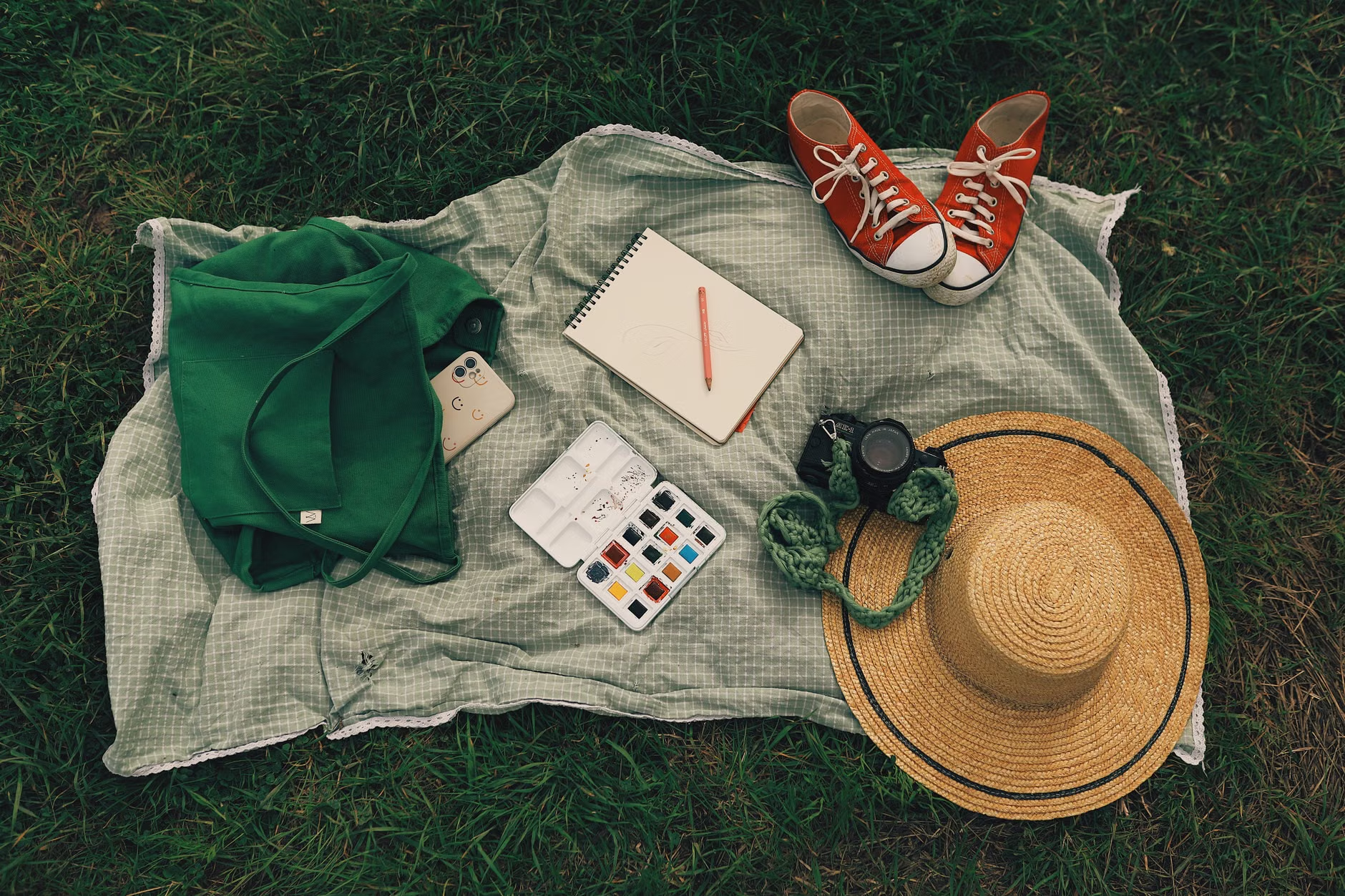
- A single, versatile blanket: It serves as a seat, a base for snacks, or a sunshade.
- Sun protection: Even on cloudy days, hats and sunscreen are non-negotiable.
- Small, low-mess snacks: Think apple slices or crackers, not anything that requires utensils.
- A “go” bag: Keep your essentials (keys, phone, wallet, light first-aid) in a small pouch you can move between bags quickly.
By keeping your gear minimal, you maintain your mobility. If a micro-festival is too crowded, or if the kids get overstimulated, you can leave in under 60 seconds. This mobility is your greatest asset. It allows you to pivot when things go sideways, which is the hallmark of a seasoned parent.
Common Pitfalls and How to Avoid Them
Even with the best intentions, the “micro” experience can fall apart if you aren’t careful. One of the most common mistakes is the “Comparison Trap.” You see a neighbor posting about a high-end, expensive weekend excursion, and suddenly your local neighborhood fair feels inadequate. Remind yourself that the goal is not to impress anyone; it is to lower your stress levels while keeping your children engaged.
Another pitfall is “Activity Overload.” Many parents feel that if they go to a festival, they must participate in every single activity—the face painting, the petting zoo, the stage show, the food court. This turns a leisure activity into a high-pressure performance. Instead, try the “Menu Approach.” Present the child with two or three options and let them pick one. If they want to do nothing but look at a single booth, let them. The experience is for them, not for your social media feed.

Managing Expectations for the Whole Family
Children in their early years are sensory sponges. They don’t need a $200 ticket to a theme park to be overstimulated; a local street fair with loud music, bright colors, and strange smells is often just as intense. Therefore, managing their expectations is just as important as managing your own.
Prepare your kids by talking about the event the night before. Use specific, grounded language: “Tomorrow we are going to the town square to see the art booths. We will stay for about an hour, eat a snack, and then come home.” When you give them a clear beginning and end, you reduce the anxiety that often triggers meltdowns. If they know exactly what to expect, they are less likely to demand “more” when it’s time to head home.
Also, account for “Transition Time.” A micro-festival is exciting, and leaving it can be the hardest part of the day. Build in a “buffer” activity for the journey home—maybe a quick stop at a favorite playground or a treat from a local shop. This creates a bridge between the excitement of the event and the routine of home, making the transition smoother for everyone.
The Long-Term Benefits of Local Exploration
Beyond the immediate relief of a stress-free weekend, there is a deeper benefit to embracing micro-festivals: you become a part of your community. When you frequent local events, you start to recognize the same faces. Your children see their neighbors, teachers, or friends in a different context. This fosters a sense of belonging that you simply cannot replicate in a tourist destination.
This is “place-based parenting.” It encourages children to understand that their world is not just their home and their school, but the entire neighborhood in between. It teaches them that fun is something you find, not something you pay for. It builds a foundation of local awareness that stays with them as they grow older. Plus, it’s remarkably sustainable—both for your wallet and for the environment, as you’re likely walking, biking, or taking a very short drive to get there.
Ultimately, the rise of the micro-festival is a pushback against the “Experience Economy.” We have been sold the idea that we need to consume expensive, curated experiences to be “good” parents. The truth is much simpler: your kids want your presence, not your planning. By choosing to stay local, you are choosing to be present, relaxed, and engaged, rather than frazzled, exhausted, and broke. That is the ultimate upgrade to your family weekend.
Frequently Asked Questions
1. How do I find small, local events that aren’t advertised heavily?
Check the “Community” or “Events” section on your town’s official government website. Often, these are hidden in plain sight. Also, follow your local library, park district, and community center on social media. They are the most reliable sources for small-scale, family-friendly gatherings that don’t rely on massive marketing budgets.
2. What if my kids get bored quickly at a local event?
That is perfectly fine! The advantage of a micro-festival is that you have no “sunk cost” anxiety. If you’ve only traveled 15 minutes, it is not a tragedy to leave after 20 minutes. Keep a list of “Plan B” spots nearby—a favorite park, a library, or a quiet cafe—so you can transition to a different low-stress activity without feeling like the day is a failure.
3. How do I balance the “one-event” rule with the need to keep kids busy all weekend?
The “one-event” rule applies to the *organized* portion of your weekend. The rest of the time should be filled with “unstructured play.” Don’t feel the need to fill every hour with a scheduled activity. Let the kids play in the backyard, help with a simple house project, or just read together. Unstructured time is often when children develop the most creativity and independence.
For further reading on the benefits of community-based activities and urban planning for families, you may find these resources useful:
- Project for Public Spaces: Creating Community-Led Places
- National Recreation and Park Association: Resources for Community Engagement
Remember, the goal of your weekend is rest and connection. If a plan feels like a chore, it’s okay to cancel it. The best weekend is the one that leaves you feeling ready for Monday, not desperate for another day off.