The 2026 Global Climate Adaptation taxes are not just another line item on your property bill; they represent a fundamental shift in how governments are funding the infrastructure required to protect our homes from extreme weather events. If you are a homeowner in your 30s or 40s, you are likely already juggling mortgage payments, childcare costs, and the rising price of groceries, so the prospect of a new, climate-indexed tax can feel like an unwelcome weight on your monthly budget.
- Climate Adaptation vs. Carbon Tax: Understand that these funds are specifically earmarked for local infrastructure projects like flood barriers and fire-resistant power grids, not just general carbon offsetting.
- Home Resilience Credits: Many jurisdictions are introducing “adaptation rebates” where homeowners can offset tax increases by proving they have invested in energy-efficient or weather-resilient home improvements.
- Early Assessment is Vital: Waiting until the 2026 rollout to understand your property’s risk rating could lead to higher tax brackets; check your local municipal flood and fire maps now.
I remember sitting at my kitchen table last month, trying to reconcile the family budget after a surprise repair bill for our HVAC system. It is the classic “sandwich generation” dilemma: we are trying to build equity in our homes while simultaneously paying for the present. When the news about the 2026 Climate Adaptation taxes started gaining traction, it felt like just one more thing to worry about. But after digging into the actual policy frameworks being proposed by international governing bodies and local municipalities, I realized it is not all doom and gloom—provided we know how to play the game.
What is the ‘Climate Adaptation Tax’ and Why Now?
To understand the 2026 tax, we first need to distinguish it from the carbon taxes you might already be familiar with. A carbon tax typically penalizes the emission of greenhouse gases. The Climate Adaptation tax, however, is a capital-improvement levy. Governments are facing a reality where the cost of repairing public infrastructure after storms, wildfires, and floods is becoming unsustainable. Instead of just raising general property taxes, they are creating a dedicated fund to “harden” our cities.
Think of it like a homeowners association (HOA) special assessment. If the roof of your apartment complex fails, everyone chips in to fix it so the building doesn’t collapse. This tax is the same concept, but on a municipal or national scale. By 2026, many regions will transition to a “risk-indexed” property tax system. This means your home’s location—whether it is in a flood plain, a high-heat urban zone, or a wildfire-prone area—will determine your specific contribution rate.
This is a significant departure from traditional flat-rate property taxes. It is a data-driven approach that ties your wallet to your geography. For those of us in our 30s and 40s who are likely locked into 20 or 30-year mortgages, this shift means that the long-term viability of our neighborhood is now a key factor in our home’s financial performance.

Breaking Down the 2026 Financial Impact
The impact of these taxes will not be uniform. It is important to look at how different regions are structuring their rollout. In some jurisdictions, the tax is being phased in over three years, starting with a 0.5% surcharge on property assessments. In others, it is a flat fee per household that increases based on the square footage of “impermeable surface” (like driveways or patios that contribute to runoff).
Let’s look at a hypothetical scenario to make this concrete. If you own a medium-sized family home in a suburban area, your local council might look at your property’s “water footprint.” If you have a large concrete driveway, you are contributing to the runoff that overwhelms the city’s drainage system during heavy rains. The 2026 tax structure may penalize that concrete surface, while offering a discount if you replace it with permeable pavers or a rain garden.
For parents, this is a double-edged sword. We want safe, well-protected neighborhoods for our kids, but we also need to keep the mortgage manageable. The goal is to avoid the “passive payer” trap. If you simply wait for the tax bill to arrive in 2026, you will be paying the maximum rate. If you act now to make your home “adaptation-compliant,” you could potentially lower your assessment or qualify for significant tax credits.
The Risk-Indexed Assessment Table
| Risk Factor | Impact on 2026 Tax | Potential Mitigation Strategy |
|---|---|---|
| High Flood Plain | High Surcharge | Install backflow valves, elevate essential appliances. |
| High Wildfire Zone | High Surcharge | Clear defensible space, install fire-rated roofing. |
| Urban Heat Island | Moderate Surcharge | Green roofing, high-albedo paint, shade trees. |
| Low/Neutral Risk | Standard/Base Rate | Maintain property standards and documentation. |
Practical Steps: Making Your Home ‘Adaptation-Ready’
If you are feeling overwhelmed, you are not alone. The best way to regain control is to treat your home like a project manager would. Start by auditing your property. Most municipal websites now offer interactive “resilience maps.” Spend an evening looking up your address. What is your property’s specific risk rating? If it is high, don’t panic—identify what the local government is actually trying to mitigate.
For example, if your area is focusing on storm-water management, look into “rain-scaping.” This isn’t just about planting flowers; it’s about redirecting downspouts away from the foundation and into a designated garden bed. Not only does this potentially lower your future tax burden, but it also protects your basement from flooding—a win-win for any homeowner.
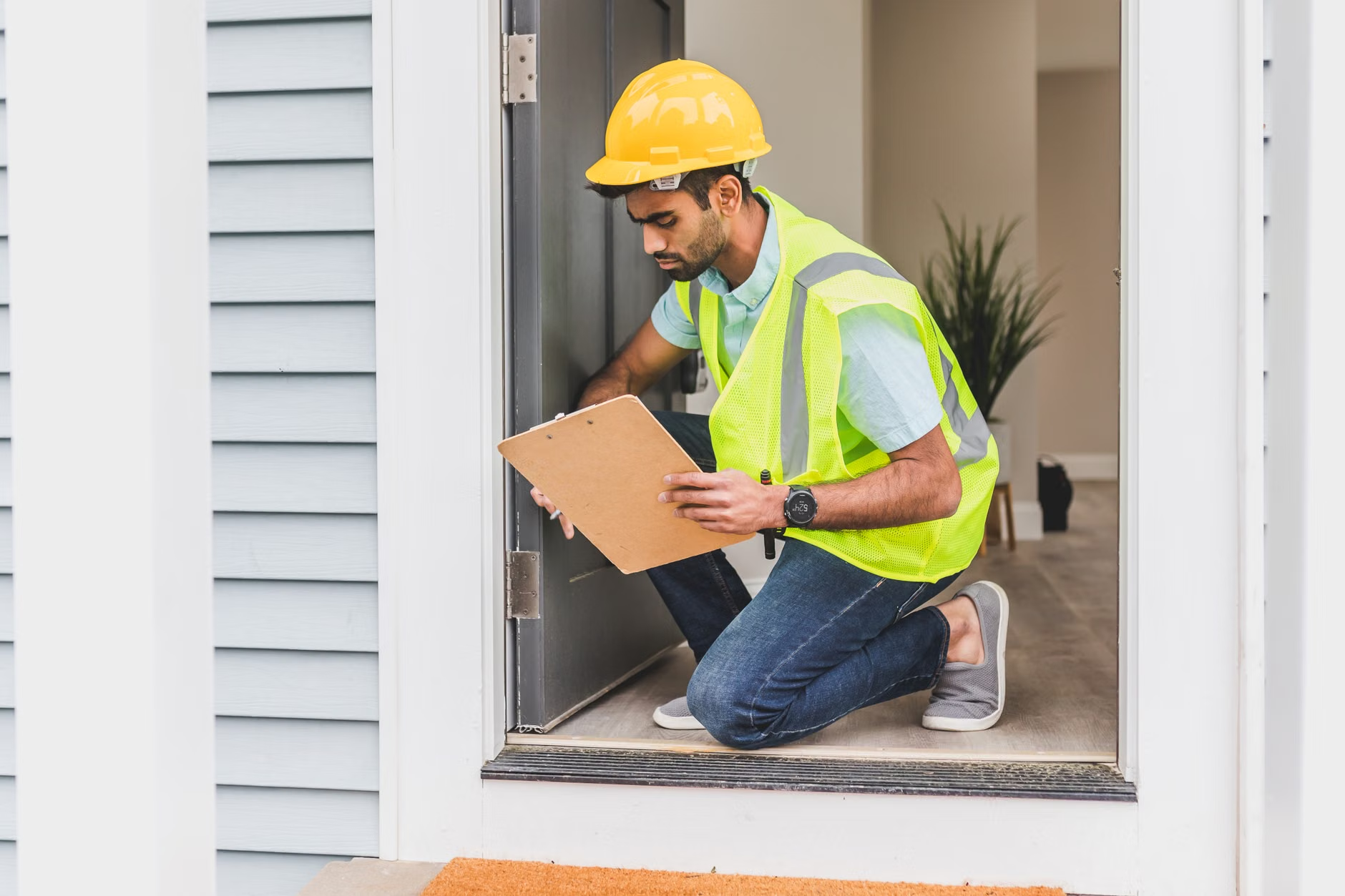
Another area to consider is insulation and energy efficiency. While these are often associated with carbon taxes, they are increasingly being folded into “Climate Adaptation” credits. Why? Because a home that holds its temperature well is more resilient during power grid failures caused by extreme heat or cold. If your home is well-insulated, you are putting less strain on the public energy infrastructure during peak load times, and many governments are starting to reward this behavior.
Keep a digital file of all home improvements. In the coming years, you will likely need to submit “proof of adaptation” to your local tax assessor. Receipts for gutter guards, fire-resistant siding, or energy-efficient windows should be kept in a dedicated folder. Treat this like your tax returns—organized documentation is the difference between a discount and a penalty.
Common Pitfalls and How to Avoid Them
One of the biggest mistakes I see homeowners making is assuming that their insurance covers the same things as these new taxes. Insurance is about recovery after a disaster; the Climate Adaptation tax is about prevention before the disaster. They are two separate buckets. Do not skip your insurance coverage thinking the government’s new infrastructure projects will make your home “invincible.” They won’t.
Another mistake is hiring “green-washing” contractors. As the 2026 deadline approaches, we are going to see a flood of companies offering “Tax-Proofing Services.” Be skeptical. Always verify if the work they are performing is actually recognized by your local municipality as an adaptation measure. Ask, “Does this project qualify for the municipal resilience rebate?” If they can’t answer that, keep looking.
Lastly, avoid the “wait and see” approach regarding your property assessment. Many people ignore their tax assessment notices until they are too high to appeal. In 2025, when the first round of “Climate Adaptation” assessments hits, pay close attention to the methodology. If your home is marked as a high-risk flood zone but you have documented evidence of proper drainage, you need to be ready to file an appeal immediately. Once the tax is locked in, it is much harder to change.

The Bigger Picture: A Shift in Lifestyle
It is easy to look at this as just another expense, but there is a silver lining. These taxes are forcing us to pay attention to the long-term health of our homes. For those of us raising children, this is actually a valuable lesson in stewardship. By making our homes more resilient, we are ensuring they remain comfortable and safe for our families for decades to come. We are moving away from the era of “set it and forget it” homeownership and into an era of proactive maintenance.
Think about the way we talk to our kids about the environment. Instead of abstract concepts, we can show them the rain garden we built, explain why we chose fire-resistant materials, or talk about why we are insulating the attic. It turns a financial burden into a tangible, practical project. It makes the world feel a little bit more manageable, even when the news cycle feels chaotic.
Also, consider the resale value. In the future, a home that is “climate-certified” will be far more attractive to buyers than one that is not. When you go to sell in 10 or 15 years, having a record of your adaptation efforts will be a major selling point. You are effectively “future-proofing” your biggest financial asset.
Final Considerations for Your Household
As we approach 2026, keep these three things in mind:
- Stay Informed: Subscribe to your local municipality’s newsletter. They are the ones who will be setting the specific rules for your area.
- Prioritize: You don’t need to do everything at once. Pick one area—like water management or fire safety—and focus your budget there first.
- Review Insurance: Ensure your home insurance policy is up to date and reflects any major structural changes you make for adaptation purposes.
Ultimately, these taxes are a reaction to a changing world. While the cost is real, the opportunity to make our homes more stable and efficient is also real. Take a deep breath, do your research, and start planning now. Your future self—and your bank account—will thank you.
Frequently Asked Questions
Q: Is the 2026 Climate Adaptation tax a one-time payment or a recurring annual fee?
A: In most jurisdictions, it is structured as a recurring annual property levy, similar to school or municipal taxes. It is designed to provide a steady stream of funding for long-term infrastructure maintenance, so expect it to be a permanent part of your annual tax bill.
Q: Will my home insurance premiums decrease if I pay this tax?
A: Not necessarily. While your home might be safer due to local infrastructure improvements, insurance companies use their own independent risk models. However, if you make individual home improvements (like installing fire-resistant roofing) to satisfy the tax requirements, you should contact your insurer to see if those specific upgrades qualify you for a discount on your premiums.
Q: Can I claim these adaptation costs on my income taxes?
A: This depends heavily on your country’s specific tax code. In many regions, capital improvements to your home are not tax-deductible for income tax purposes, but they may be “capitalized” into your home’s cost basis, which can reduce your capital gains tax when you eventually sell. Consult with a local tax professional to see how your specific improvements will be treated in your jurisdiction.
Disclaimer: This article is for informational purposes and does not constitute professional financial or legal advice. Regulations regarding climate taxes are currently evolving; please consult your local municipal government and a qualified tax professional for advice specific to your property and region.
For more information on global climate resilience frameworks, you can visit the Intergovernmental Panel on Climate Change (IPCC) or your local government’s official planning department website.