Key Takeaways
- Seasonality is your best friend: Buying what is currently in harvest at local markets is almost always cheaper than importing “out-of-season” goods from conventional supermarkets.
- The “End-of-Day” Strategy: Farmers are often willing to lower prices or offer bulk deals in the final hour of a market to avoid hauling produce back to the farm.
- Quality over Quantity: While some organic items carry a premium, the longer shelf life of farm-fresh food reduces waste, meaning you end up throwing away less and spending less overall.
The most effective way to cut your grocery bill isn’t just about hunting for coupons; it’s about aligning your kitchen with the natural rhythm of the land through the hyper-local food movement. If you are in your 30s or 40s, balancing the chaotic demands of parenting, a career, and the rising cost of living, you have likely looked at your receipt from a major supermarket and felt a genuine sting. We are conditioned to believe that “convenience” equals “efficiency,” but when you look at the hidden costs—wasted produce, excessive packaging, and the premium paid for year-round availability—the math starts to shift.
Hyper-local eating isn’t about becoming a homesteader or spending your entire weekend at the market. It is a strategic shift in how you source your family’s fuel. By pivoting toward farmers markets, you aren’t just supporting your local economy; you are tapping into a supply chain that bypasses the massive markups of long-distance logistics and retail overhead.
The Hidden Math of the Supermarket vs. The Market Stall
When you walk into a standard chain grocery store, you are paying for more than just the food in your cart. You are paying for the massive cold-chain logistics, the long-haul trucking, the middle-man distributors, and the retail real estate costs. When you buy a bag of kale at a supermarket, that price is inflated by the fact that it may have traveled three thousand miles to get there. It’s an expensive journey for a leaf of green.
At a farmers market, that chain is broken. The farmer is the grower, the distributor, and the cashier. Because there are no middlemen, the price you pay is closer to the actual cost of production. However, there is a common misconception that markets are “too expensive.” This is usually because we compare organic, heirloom-variety market produce to the cheapest, lowest-grade conventional produce on the supermarket shelf. To save money, you have to compare apples to apples—or in this case, premium to premium.
If you compare the price of high-end organic produce at a supermarket to the price of fresh, local, seasonal produce at a market, the market almost always wins. The key is seasonality. If you demand strawberries in the middle of winter, you will pay a premium at both the store and the market. But if you buy your strawberries in June when they are overflowing in the fields, the price drops significantly.
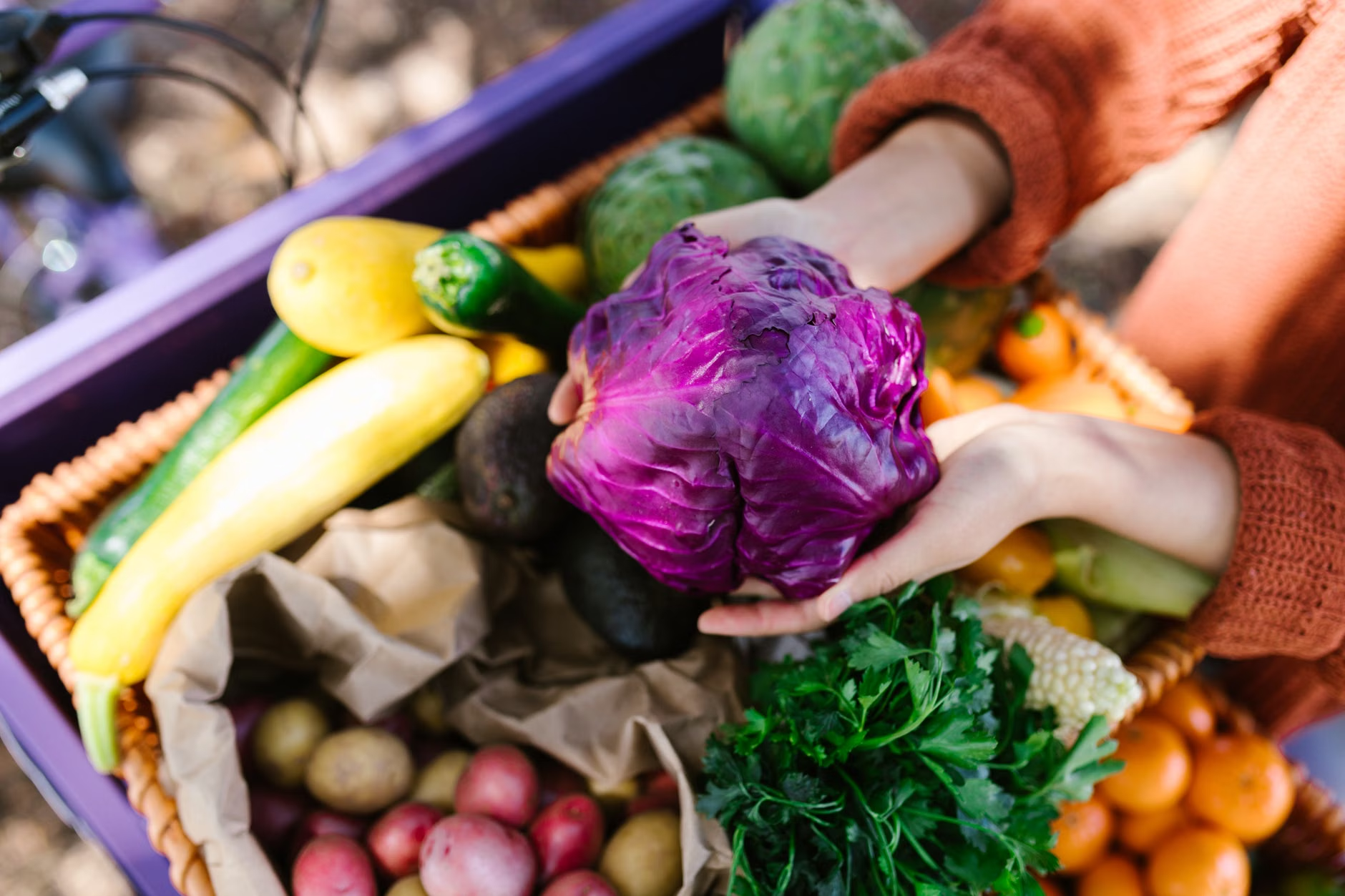
Strategic Shopping: How to Make the Market Work for Your Budget
Going to a farmers market without a plan is a recipe for overspending. It is easy to get caught up in the artisanal cheeses, the fresh-baked sourdough, and the fancy jams. If you want to keep your budget in check, you need to treat the market as your primary grocery source for staples, not a luxury outing.
1. The Last-Hour Advantage
Most farmers markets run on specific schedules, often ending in the early afternoon. In the final hour of operation, farmers are faced with a choice: pack it all up and haul it home, or sell it at a discount. Many vendors will happily sell a half-full crate of tomatoes or a bundle of greens for a fraction of the price just to clear their inventory. It’s a win-win: they save the labor of transport, and you get high-quality food for a bargain.
2. Buy in Bulk for Preservation
One of the biggest budget killers for families is food waste. We buy a bag of spinach, use half, and throw the rest away when it turns into slime. At a market, you can often buy in larger quantities—like a bushel of peaches or a flat of peppers—at a wholesale discount. The trick is having a plan to preserve them. Freezing, canning, or even simple pickling allows you to buy cheap when it’s harvest time and eat for free (or close to it) months later.
3. The “Ugly” Produce Discount
Supermarkets have strict cosmetic standards. An apple can’t have a bruise, and a carrot can’t have a weird curve. Farmers markets are far more forgiving. Many farmers have “seconds”—produce that looks a bit misshapen but tastes identical to the “perfect” versions. Always ask if they have a discount section for seconds. It’s a great way to get high-quality ingredients for soups, stews, and smoothies at a significant markdown.
Comparative Analysis: Market vs. Supermarket
To really understand the impact on your wallet, let’s look at a typical breakdown of a family’s weekly vegetable basket. This table assumes average prices for a mid-sized urban area.
| Item | Supermarket Price (Avg) | Farmers Market (Seasonal) | Savings Potential |
|---|---|---|---|
| Leafy Greens (Bunch) | $3.50 | $2.00 | High |
| Root Vegetables (lbs) | $2.50 | $1.50 | High |
| Seasonal Fruit (lbs) | $4.00 | $3.00 | Medium |
| Artisanal/Specialty | $8.00 | $7.50 | Low |
As you can see, the biggest savings occur with staples like greens and root vegetables. These are the building blocks of most family meals. By focusing your spending here, you optimize your budget. The “Specialty” category shows smaller savings, which is where you should be careful. If you find yourself buying expensive artisanal honey or fancy granola every week, that is where your savings will evaporate.
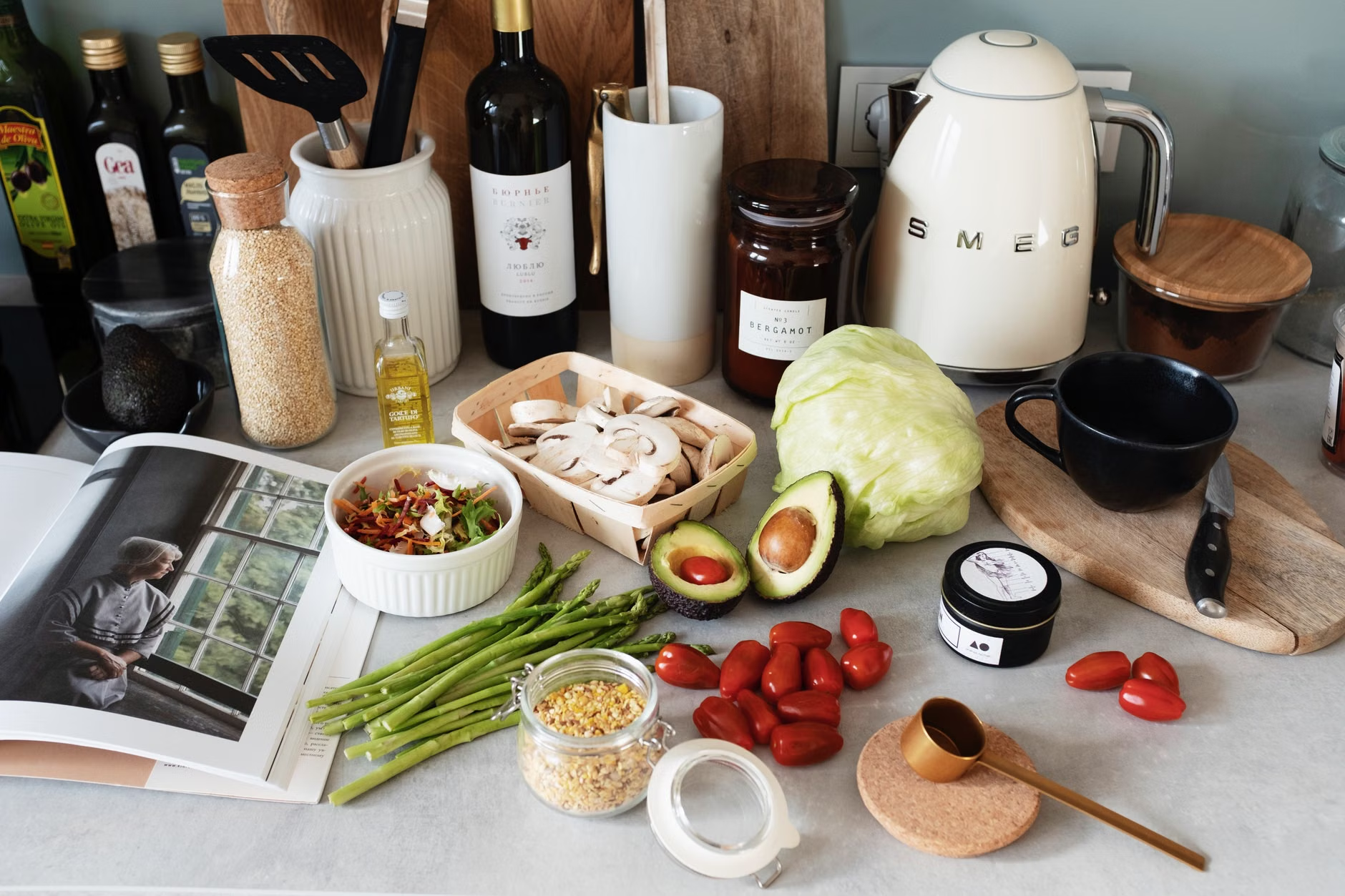
Why “Hyper-Local” Reduces Your Hidden Costs
Beyond the sticker price, there are “hidden” costs to our modern food system that parents in their 30s and 40s often feel acutely. The first is shelf life. Because supermarket produce is often picked weeks before it is ripe and spends time in transit, it hits your fridge already at the end of its life. You might get three days of freshness out of it.
Farmers market produce is usually harvested within 24 to 48 hours of being sold. It hasn’t been gassed to ripen in a truck or coated in wax to look shiny. Because it is fresher, it lasts significantly longer in your refrigerator. If your greens last a week instead of three days, you aren’t throwing away money. This “longevity premium” is one of the most effective, yet overlooked, ways to save money.
Secondly, there is the nutritional density factor. While this is harder to measure in dollars, it matters for long-term health. Higher nutrient content means your family is getting more value per calorie. When you eat produce that has ripened on the vine, it is objectively more nutrient-dense than produce that has ripened in a shipping container. In the long run, investing in better food is a preventative measure against the “costs” of poor health, which is a conversation often ignored in budget planning.
Common Pitfalls and How to Avoid Them
Transitioning to a farmers market routine requires a bit of a mindset shift. Here are the common mistakes I see people make, and how to avoid them:
- The “Impulse Buy” Trap: Markets are sensory experiences. Between the live music and the smell of fresh bread, it’s easy to drop $50 on things you didn’t need. Solution: Make a list, just like you would for a supermarket trip. Stick to it.
- Ignoring the Calendar: If you go to the market expecting asparagus in November, you’ll be disappointed and likely end up overpaying for imported goods if the market stocks them. Solution: Learn what grows in your specific region at what time of year. Most markets provide a seasonal guide on their websites.
- The Payment Hurdle: Some smaller vendors still prefer cash. Solution: Keep a specific “Market Cash” envelope in your car. It helps you stay within your budget because once the cash is gone, the shopping is done.
- Over-buying: It’s tempting to buy everything because it looks so good. But if you don’t have a plan for that huge bag of kale, it will rot. Solution: Only buy what you know you can prep or cook within the next 4-5 days.
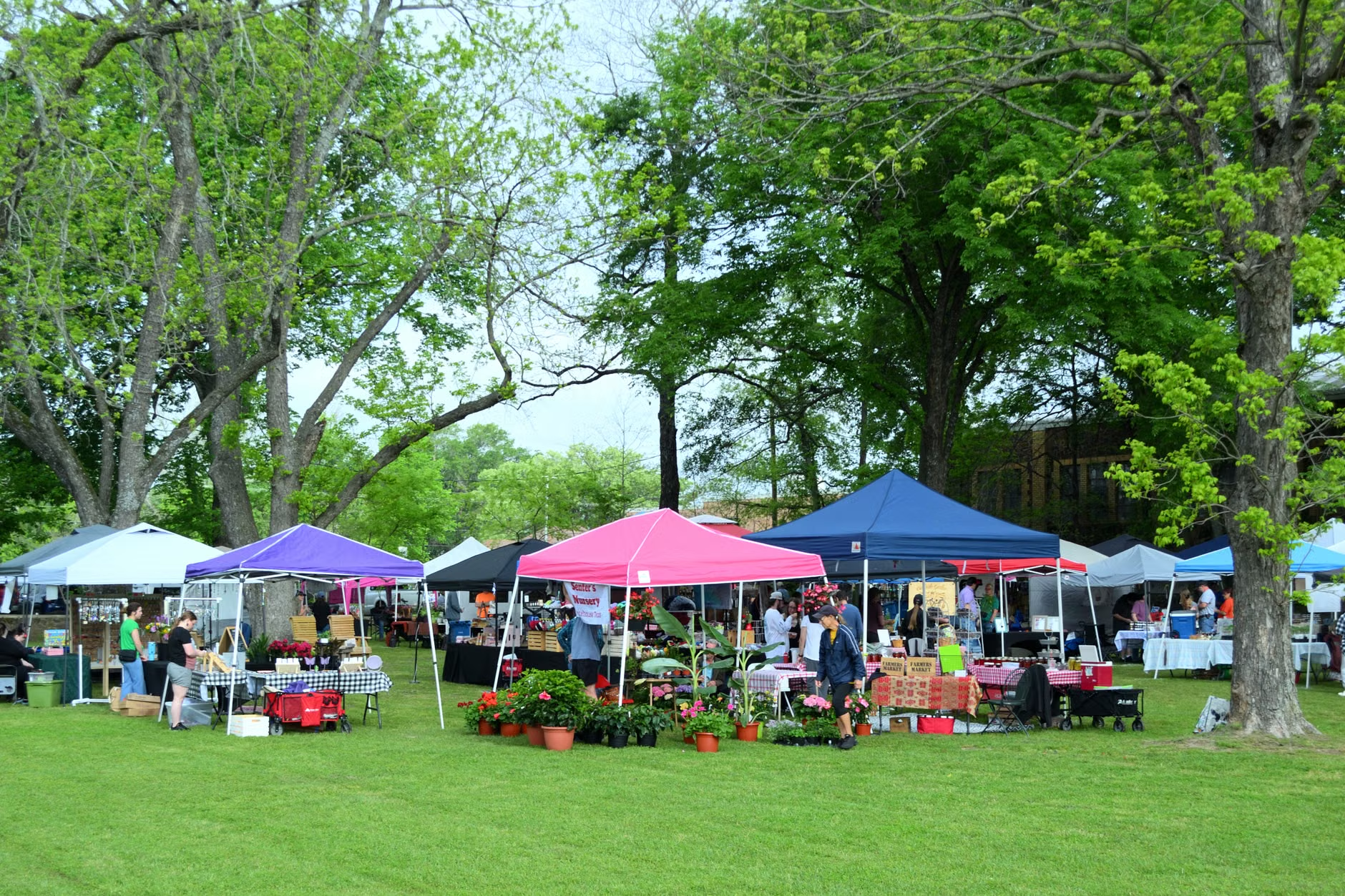
Building a Sustainable Routine for Busy Families
For those of us with school-aged children or demanding jobs, time is our most precious currency. Is a farmers market worth the time it takes to drive there, park, and walk through the stalls? If you treat it as a family activity, the answer is a resounding yes.
Instead of viewing it as a chore, try to incorporate it into your weekend routine. Bring the kids. Let them pick out a fruit they haven’t tried before. It turns a mundane grocery run into an educational outing. Many markets now have food trucks and community spaces, making it a great place to grab a quick, affordable lunch, which is often cheaper than a traditional restaurant visit.
If you really struggle with the time commitment, consider a CSA (Community Supported Agriculture) box. This is essentially a subscription to a local farm. You pay a set fee at the start of the season and receive a box of whatever is in harvest each week. It takes the “decision fatigue” out of the equation. You get the benefits of hyper-local food without having to spend hours wandering through stalls.
The Implications of Shifting Your Habits
Choosing to buy from local farmers isn’t just about saving a few dollars; it’s about participating in a food system that is more resilient. We have seen how fragile global supply chains can be. When you buy from a local grower, you are strengthening the food security of your own community. This is a subtle but powerful way to build a more stable environment for your children to grow up in.
Furthermore, you are voting with your wallet. By supporting local farmers, you are encouraging more sustainable farming practices—less pesticides, better soil health, and more biodiversity. You are essentially paying for the world you want to live in. When you realize that this can be done while actually keeping your grocery budget stable or even reducing it, the choice becomes clear.
Start small. Don’t try to switch 100% of your shopping overnight. Pick one or two items—perhaps your weekly salad greens or your weekend fruit—and commit to buying those exclusively at the farmers market for a month. Track your spending. You will likely find that the quality difference is so stark that you won’t want to go back to the supermarket versions, and the budget impact will be manageable once you get into the rhythm of seasonality.
Be patient with yourself. Some weeks you will overspend; some weeks you will forget your bags and have to deal with the hassle. That is part of the process. The goal isn’t perfection; the goal is a more intentional way of feeding your family that respects your time, your health, and your bank account. It is a slow, steady change, but one that pays dividends in taste, nutrition, and peace of mind.
Frequently Asked Questions
Q: Is organic produce at farmers markets always more expensive?
A: Not necessarily. While “certified organic” labeling carries a cost, many small farmers use organic practices but don’t pay for the certification. These farmers often offer organic-quality produce at prices lower than supermarket organic labels because they lack the massive marketing and distribution overhead.
Q: How do I know if a farmers market is actually local or just a reseller?
A: A true farmers market will usually list its vendors on its website. If you are unsure, just ask the vendor! A real farmer will be happy to tell you exactly where their farm is located and when they harvested the items. If they seem evasive or the produce looks identical to supermarket stock, it might be a reseller.
Q: What if I don’t have time to cook everything from scratch?
A: You don’t have to. Buying fresh vegetables doesn’t mean you have to spend hours in the kitchen. Many farmers sell pre-washed greens or simple items that require minimal prep. Focus on buying high-quality, simple ingredients that taste good with minimal seasoning—a fresh tomato with a little salt and olive oil is a meal in itself.
For more information on the benefits of local food systems and how to find a market near you, you can visit the USDA Local & Regional Food Programs or search your national agricultural ministry’s database for certified local markets.