The most effective way to enjoy a premium coastal vacation without the premium price tag is to embrace the “shoulder season,” the period immediately before or after the peak tourist rush.
- Significant Savings: Off-peak travel typically reduces accommodation and flight costs by 30% to 50%.
- Reduced Stress: Avoiding crowds means shorter lines, easier dining reservations, and a calmer environment for children.
- Better Local Access: Local businesses are less rushed, often leading to more personalized service and a more authentic experience.
If you are in your 30s or 40s, you likely remember the days when “vacation” meant booking a flight and showing up whenever you felt like it. Now, with school schedules, work deadlines, and the sheer logistical weight of traveling with children, the idea of a “coastal escape” often feels more like a chore than a retreat. You’ve probably looked at summer rental prices, sighed at the four-digit weekly rates, and closed your browser tab in frustration.
The secret that seasoned travelers—especially those who have mastered the art of balancing parenting and professional life—have realized is that the beach is often better when the crowds leave. By shifting your perspective on what constitutes a “beach season,” you can unlock a higher quality of travel for a fraction of the cost.
Defining the Shoulder Season: When to Go
The term “shoulder season” isn’t just a marketing buzzword; it is a specific window of time where the weather is usually acceptable, but the demand has dropped. For most coastal regions in the Northern Hemisphere, this falls between late April to early June, and September to October. In the Southern Hemisphere, this shifts accordingly to avoid the peak summer months of December and January.
Why does this work? It’s simple supply and demand. Once the schools go back into session or before they break for the summer, the travel industry experiences a massive dip in occupancy. Hotels, vacation rental owners, and even local tour operators are eager to keep their businesses running. They drop prices to entice travelers who are flexible enough to move outside the traditional mid-July to mid-August window.
For parents, this requires a bit of negotiation with school calendars. However, many schools now offer “professional development” days or long weekends that can be paired with a day or two of remote work. If your work allows for remote flexibility, a “work-from-the-coast” week in late September can provide the same rejuvenation as a summer trip, but with the added bonus of quiet cafes and empty boardwalks.
The Financial Advantage of Timing
Let’s look at the numbers. While prices fluctuate based on location, the difference between peak and off-peak is stark. A beach house that rents for $3,500 per week in July can often be found for $1,800 or even $1,500 in late September. That isn’t just a small saving; that is a fundamental shift in your vacation budget.
When you save 40% on your accommodation, you change the nature of your trip. That extra capital can be redirected toward higher-quality dining experiences, a private excursion, or simply staying a few days longer. It allows you to move from the “budget-conscious, stressed-out parent” mode into a “relaxed, quality-focused traveler” mode.
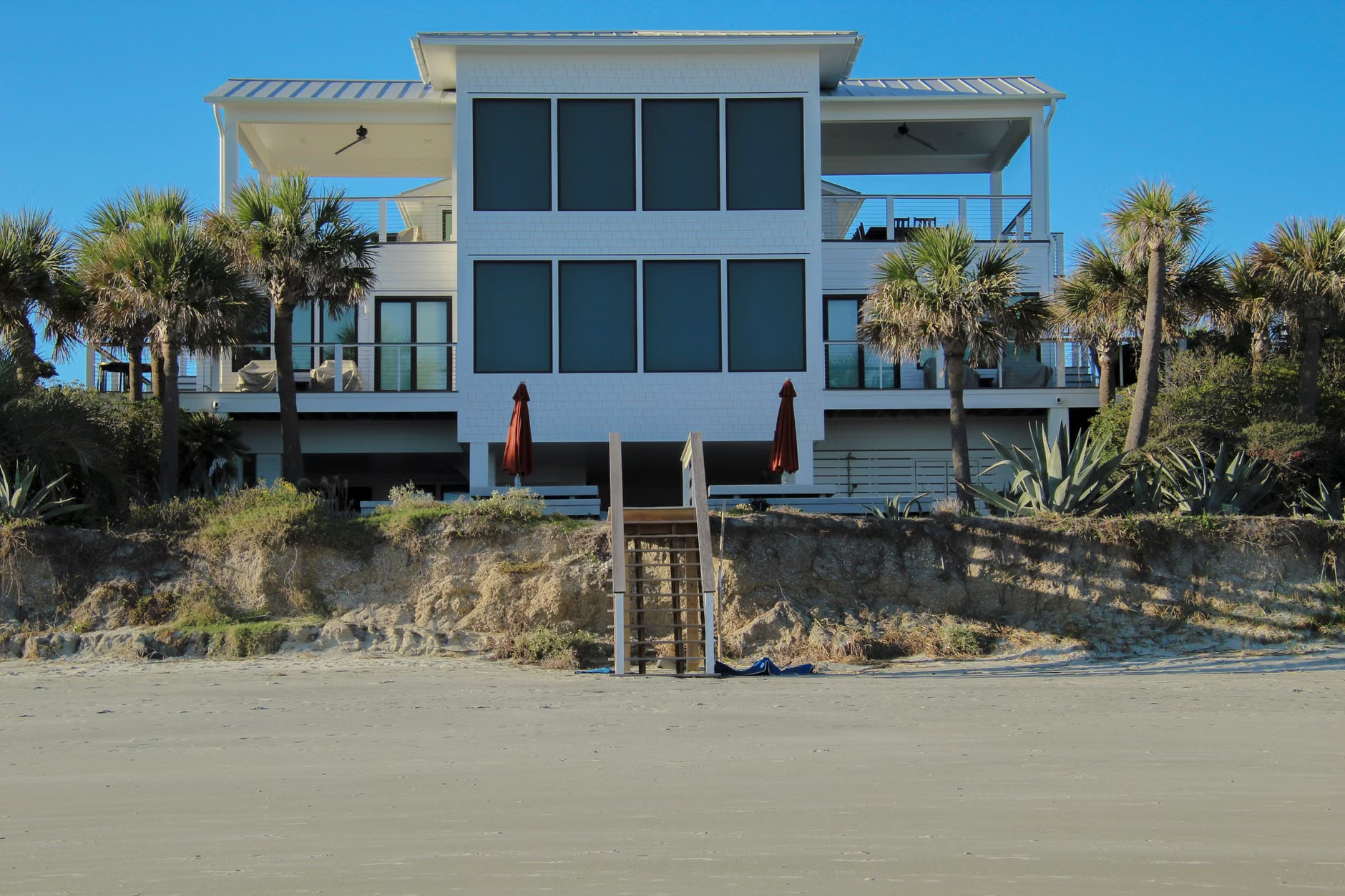
Beyond the raw cost of the rental, consider the “hidden” costs of peak season. During July, you are competing with every other family for a spot at the local bistro. You are paying peak prices for groceries at the local tourist-trap markets. You are paying for parking in beach towns where the cost of a space can reach $30 or $40 per day. In the shoulder season, parking is often free, restaurants have walk-in availability, and local markets return to their standard, non-inflated pricing.
Preparing for the Off-Peak Reality
It is important to manage expectations. The shoulder season is not the peak of summer. You shouldn’t expect 90-degree weather or the ability to swim in the ocean without a wetsuit in some northern climates. This is where the “smart parent” approach comes in. You aren’t going for the intense heat; you are going for the atmosphere, the scenery, and the lack of chaos.
When you choose an off-peak destination, your activities need to evolve. Instead of focusing on “beach days” where the primary goal is sunbathing and swimming, focus on “coastal exploration.” This includes:
- Coastal Hiking: Many beach towns are surrounded by state parks or walking trails that are far more enjoyable in 65-degree weather than in the sweltering heat of August.
- Local Culture: Visit the local museums, lighthouses, and historical sites that are usually buried in lines during the summer.
- Slow Living: Use the time for activities you rarely get to do at home—reading, board games, or simply sitting on a porch with a coffee while the kids play in the sand.
You also need to be more diligent with your research. In the off-peak season, some local amenities might have reduced hours. That favorite ice cream shop might close on Tuesdays, or a specific boat tour might only run on weekends. This is a small price to pay for the tranquility, but it does require a bit of pre-trip planning. A quick email to the local tourism board or a glance at the Google Maps “popular times” feature can save you from a disappointing arrival.
The Logistics of Packing for Variable Weather
One of the biggest hurdles for parents traveling in the shoulder season is the packing list. Because temperatures can shift from a brisk 55 degrees in the morning to a sunny 75 degrees in the afternoon, the “one-outfit-for-all” strategy won’t work. You need to master the art of layering.
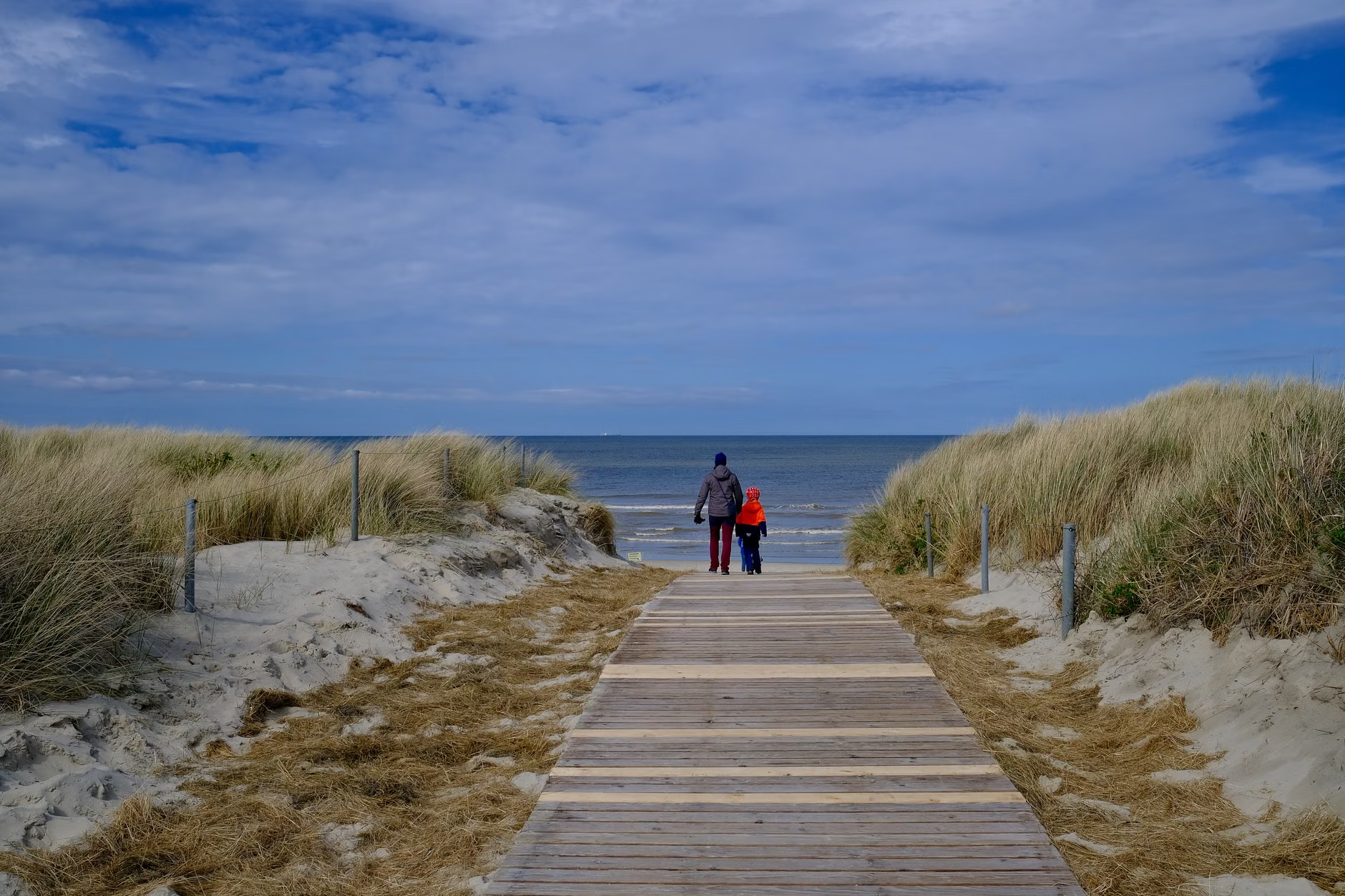
Think about the “Three-Layer Rule” for your children (and yourself):
- Base Layer: Moisture-wicking t-shirts or long-sleeves that keep the skin dry.
- Mid Layer: A fleece or wool sweater that provides actual warmth.
- Outer Layer: A windbreaker or rain shell. Coastal areas are notoriously windy, and a good shell is the difference between a miserable walk on the beach and a refreshing one.
Don’t forget the “indoor kit.” Since you will likely spend more time inside your rental than you would in the peak of summer, pack a small bag of entertainment. This could be a new set of LEGOs, a couple of favorite board games, or a portable projector for movie nights. If you are staying at an Airbnb or VRBO, check the listing to see what they provide. If they don’t have games, bringing your own ensures that a rainy afternoon doesn’t turn into a screen-time marathon.
Selecting the Right Destination
Not all coastal destinations are created equal for off-peak travel. Some places are “summer-only” towns—meaning they effectively shut down entirely after Labor Day. You want to look for “year-round” coastal communities. These are towns that have a local population, functioning schools, and businesses that stay open 12 months a year.
How do you identify these? Look for towns that have a vibrant local dining scene or are located near larger hubs. If a town’s primary industry is seasonal tourism, it might be a ghost town in October. If it’s a town that happens to be on the coast but has a local economy, you will find a much more vibrant experience.
Table 1: Comparing Peak vs. Off-Peak Experience
| Feature | Peak Season | Off-Peak Season |
|---|---|---|
| Accommodation Cost | High (Premium) | Low (Discounted) |
| Crowd Levels | High (Busy) | Low (Quiet) |
| Restaurant Access | Reservations Required | Easy/Walk-in |
| Weather | Hot/Predictable | Variable/Cooler |
Managing Expectations and Potential Pitfalls
While the benefits of off-peak travel are clear, it is only fair to address the potential downsides. The biggest risk is weather unpredictability. If you are heading to a coastal destination in late October, there is a chance of storms or heavy fog. You must be mentally prepared for this. If your idea of a vacation is strictly “sun and sand,” you will be disappointed.
Another common mistake is assuming that all services are available. Some seasonal attractions, such as water parks, outdoor mini-golf, or specific amusement rides, will be closed. Before you book, make a list of the “must-dos” for your family and verify their operating schedules. If your kids have their hearts set on a specific activity that closes in September, you are setting yourself up for a tantrum.
Finally, be wary of “off-season maintenance.” Many coastal towns use the quiet months to perform road work, building renovations, or beach nourishment projects. A quiet, peaceful beach is wonderful; a beach with a bulldozer running in the background is not. A quick search on local news sites or the town’s municipal website for “construction notices” can save you from a noisy surprise.
The Psychological Shift: Why It Matters
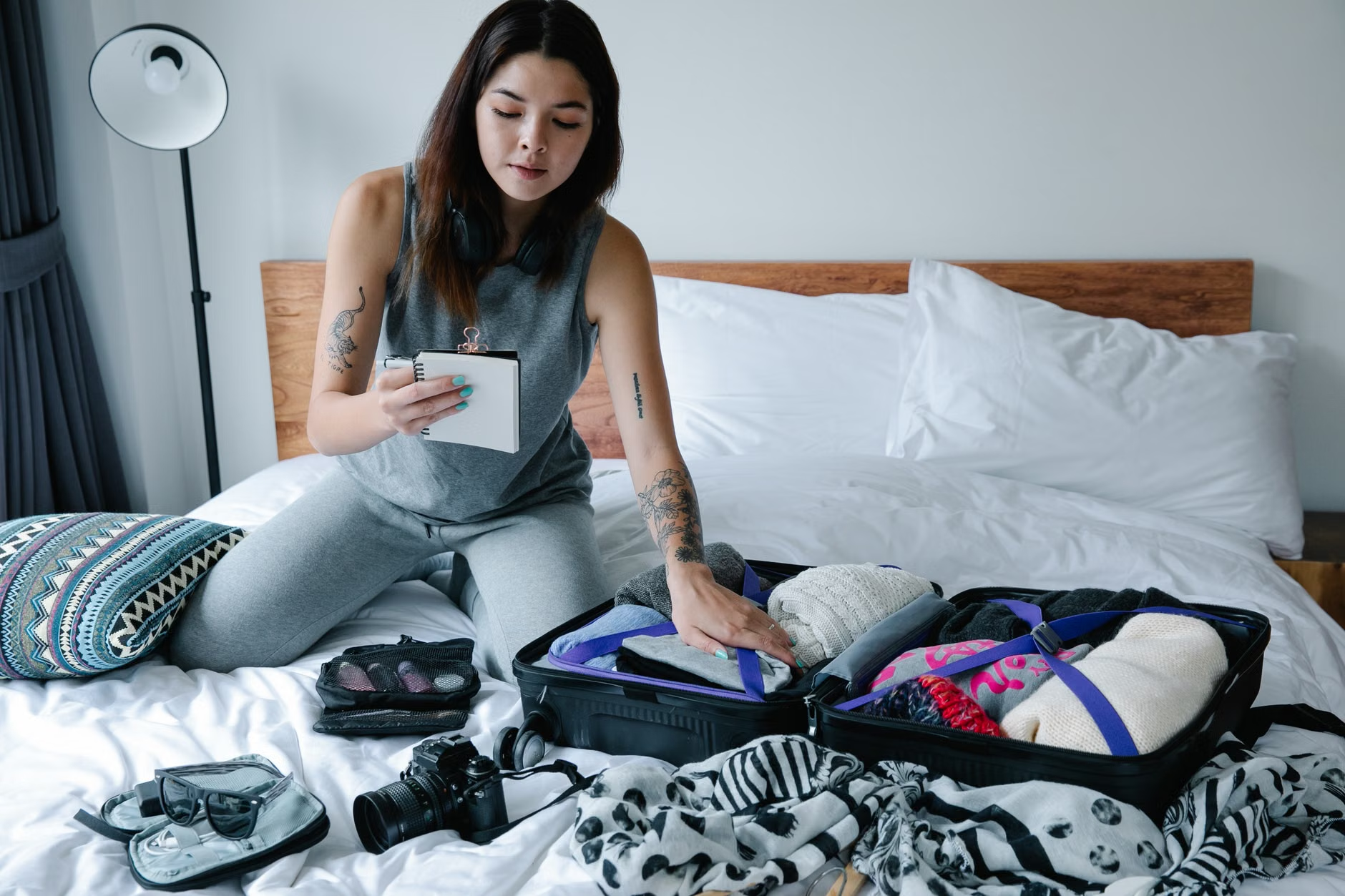
For parents in their 30s and 40s, the mental load of planning a family trip is significant. Between managing school schedules, work projects, and the logistical needs of children, the planning process alone can be exhausting. Off-peak travel forces you to slow down. Because there is no “rush” to get a spot on the beach or a table at dinner, the pace of the entire trip naturally decelerates.
This is the true value of the off-peak experience. It’s not just about the money saved; it’s about the reduced friction. When you aren’t constantly fighting crowds, you have more bandwidth to actually engage with your family. You spend less time “managing” the vacation and more time “experiencing” it.
When you return from a trip that was quiet, peaceful, and unhurried, you feel genuinely rested. You don’t feel like you need a vacation from your vacation. This is a sustainable way to travel that keeps the joy of discovery alive without the burnout that often accompanies the “peak season” rush.
Practical Steps for Your Next Booking
If you are ready to give this a try, start with these steps:
- Pick a Region, Not a Specific Hotel: By focusing on a region (e.g., the Oregon Coast, the Algarve, or the North Norfolk coast), you give yourself more options to find a deal.
- Set a “Shoulder” Date: Check the calendar for the week after Labor Day or the two weeks before Memorial Day. These are the sweet spots.
- Use Flexible Search Tools: Platforms like Google Flights and Booking.com have “flexible dates” features. Use them to see how prices drop as you shift your departure by just a few days.
- Read Recent Reviews: Look for reviews posted within the last six months. They will give you the most accurate picture of what the experience is like outside of the peak summer buzz.
Remember, the goal is to create a rhythm that works for your family. If you can successfully navigate the shoulder season, you will find that you have essentially “hacked” the travel industry. You get the same ocean, the same sunsets, and the same memories, but with a much higher level of comfort and a much lower level of stress.
Frequently Asked Questions
Q: Will everything be closed in a coastal town during the off-season?
A: Most year-round towns remain fully functional. However, seasonal-specific attractions like water parks or outdoor amusements often close. Always check the official website of the town or specific attractions before booking.
Q: Is it safe to travel to the coast during the shoulder season?
A: Yes, but keep an eye on the weather forecast. Coastal areas can experience sudden storms in the autumn or spring. If you are traveling to a hurricane-prone area, ensure you have travel insurance that covers weather-related cancellations.
Q: How do I explain to my kids that we aren’t going during the “hot” beach time?
A: Focus on the “adventure” aspect. Frame it as exploring the coast, looking for sea glass, going on hikes, and having the beach all to yourselves. Kids often enjoy having more space to run around without having to dodge other beachgoers.
Traveling during the off-peak season is a practical, budget-friendly, and sanity-saving strategy for modern families. While it requires a bit more planning and a shift in expectations regarding weather, the rewards—lower costs, more space, and a more relaxed pace—are well worth the effort. Start small with a long weekend, test the waters, and you may find that you never want to go back to the peak-season rush again.
For more information on planning your next trip, check these resources: