Key Takeaways
- Consistency over intensity: You don’t need a deep wilderness expedition; 15 minutes in a local park is enough to build a meaningful nature log.
- Tools for focus: Using a dedicated notebook and simple tools like magnifying glasses helps children transition from “running around” to “intentional observation.”
- Scientific literacy: Nature logging teaches the scientific method—observation, documentation, and questioning—in a way that feels like play.
The most effective way to help your children engage with the natural world is not through expensive field trips or complex equipment, but through the simple, disciplined act of keeping a nature-observation log. By documenting what you see, hear, and notice over time, you transform a casual walk into a structured learning experience that builds patience, scientific curiosity, and a grounded sense of place.
Why Nature Observation Matters in a Digital Age
We are currently living in an era defined by rapid-fire notifications and high-definition screens. For parents in their 30s and 40s, the challenge isn’t just getting kids off their tablets; it’s providing an alternative that is engaging enough to compete with the dopamine loops of modern technology. Nature observation—often called “nature journaling”—acts as a cognitive reset button.
When you ask a child to “go look at the tree,” they might glance at it for three seconds and run off. However, when you give them a task—”Find three different types of bark textures and sketch them”—the brain shifts from passive reception to active processing. This is the difference between seeing and observing. Research in environmental psychology consistently shows that even brief, intentional contact with nature lowers cortisol levels and improves executive function in both adults and children.
The beauty of a nature log is that it requires no expert knowledge. You don’t need to be a botanist or an ornithologist to start. You simply need to be curious. The log is a record of your family’s relationship with the local ecosystem, tracking the subtle shifts of the seasons that are otherwise lost in the blur of our busy weekly schedules.
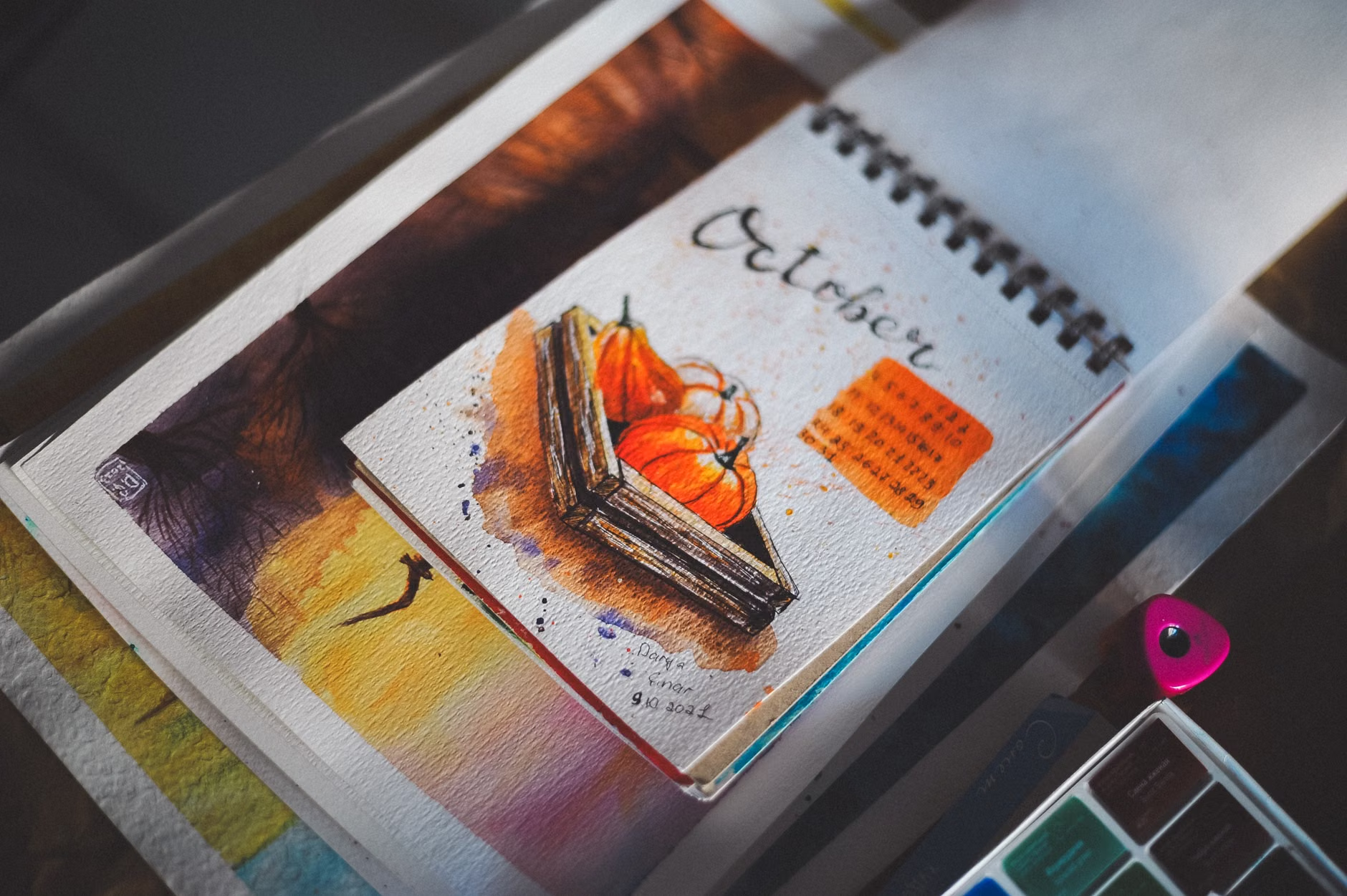
Getting Started: The Minimalist Toolkit
A common mistake is over-preparing. You do not need a $200 set of professional gear to start a family nature log. In fact, keeping the equipment minimal often encourages more creativity. The goal is to make the act of logging as frictionless as possible.
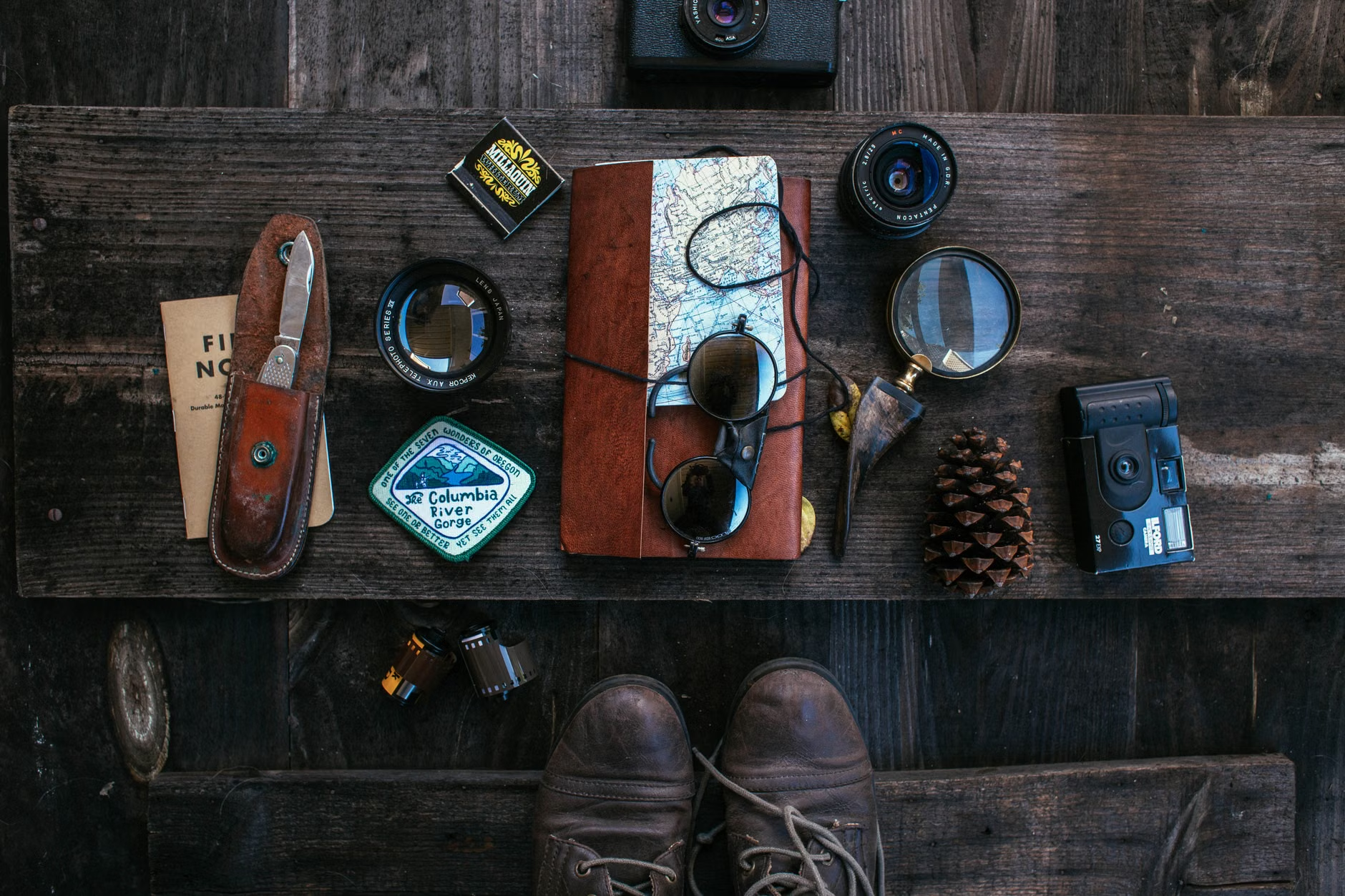
Here is a breakdown of the essential, low-cost tools that will help your family get the most out of your observations:
| Item | Purpose | Recommendation |
|---|---|---|
| The Notebook | Recording data, sketches, and thoughts. | Hardcover, unlined paper works best for both writing and drawing. |
| Magnifying Glass | Revealing the “micro-world” of insects and plant veins. | A simple 3x or 5x handheld lens. |
| Writing Utensils | Documenting findings. | Graphite pencils are better than pens, as they don’t smear in the humidity. |
| Field Guide | Identifying local species. | Use a regional app like iNaturalist or a pocket-sized physical guide. |
When you head out, keep your kit in a dedicated bag. This “grab-and-go” approach ensures that you aren’t spending 20 minutes hunting for a pencil when you could be out the door. The easier it is to start, the more likely you are to make it a weekly habit.
Structuring Your Observation Sessions
If you head out into the woods with no plan, you might find your kids quickly losing interest. Structured observation provides a “scaffold” for their curiosity. Start with these three levels of observation to build depth into your entries:
Level 1: The Inventory (The “What”)
This is the simplest form of logging. List everything you see. “I see a robin, a pine tree, a patch of clover, and a rusted soda can.” This helps with basic identification and encourages children to look at the ground, the canopy, and the mid-level brush. It teaches them that nature isn’t just the “pretty” parts—it’s the entire ecosystem, including the human-made objects that impact it.
Level 2: The Sensory Audit (The “How”)
Once the inventory is done, ask them to engage their other senses. What does the air smell like? Is it damp or dry? What is the texture of the moss? What sounds are present? By shifting focus from the visual to the auditory and tactile, you are teaching them to build a multi-dimensional mental map of their environment. This is where the writing in the log becomes richer and more descriptive.
Level 3: The Scientific Inquiry (The “Why”)
This is the most advanced stage. Ask questions that don’t have immediate answers. “Why is this tree growing sideways?” “Do the ants seem to be moving faster in the sun than in the shade?” “Why are there no leaves on the ground under this specific bush?” Even if you don’t find the answers, the act of questioning is the foundation of the scientific method.
Overcoming Common Obstacles
As a parent, you will inevitably face days where the kids don’t want to go out, or the weather is “too bad.” Here is how to handle those moments without turning the activity into a chore.
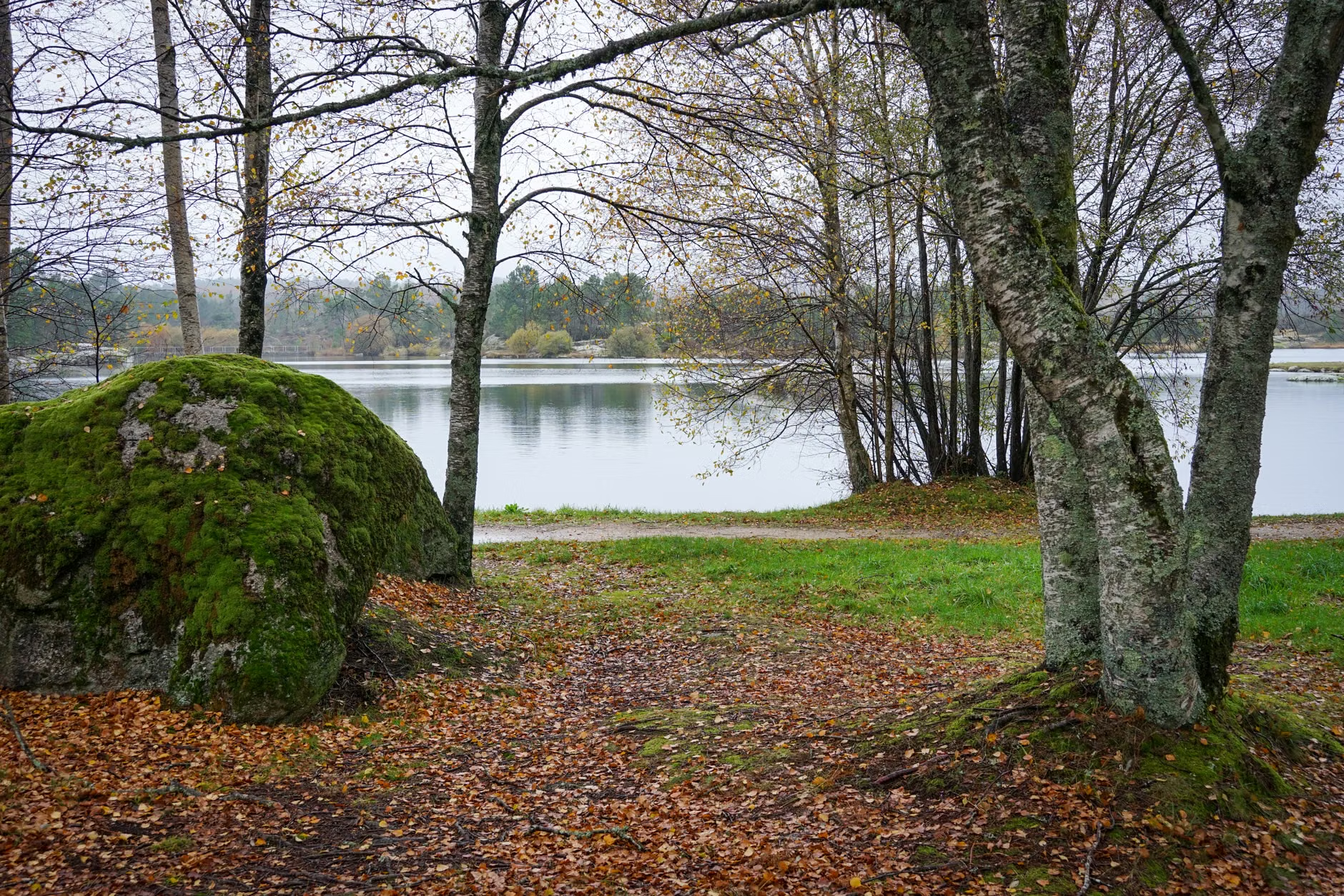
The “Bad Weather” Myth: Most families only go out when the sun is shining. However, some of the most interesting nature observations occur during a light drizzle or immediately after a storm. Looking for worms on the sidewalk, watching how water pools around roots, or seeing how trees sway in the wind provides a different perspective on nature. If it’s raining, keep the observation short—10 minutes is plenty—and finish with hot cocoa at home. The contrast makes the experience memorable.
The Boredom Trap: If your children are bored, it usually means they are looking for a “spectacle” rather than a detail. If they complain that there is “nothing to see,” challenge them to find something that is smaller than their fingernail. This forces them to slow down and zoom in. Once they find one tiny thing—a beetle, a lichen, a seed—their brain will naturally start looking for more.
The Perfectionism Barrier: Many adults stop journaling because they feel they aren’t “good at drawing.” Remind yourself and your children that the log is not an art project; it is a data set. A messy sketch of a leaf that captures the vein pattern accurately is far superior to a beautiful, stylized drawing that ignores the actual characteristics of the specimen. Value utility over aesthetics.
Integrating Technology Responsibly
We are proponents of “tech-assisted” nature observation, provided the technology serves the connection rather than replacing it. Apps like iNaturalist or Seek are incredible tools for identification. When you find a plant you don’t recognize, use the app to identify it, but then make the effort to write down its name, its habitat, and one interesting fact about it in your physical log.
The goal is to use the phone as a bridge to knowledge, not as a destination. If your kids are spending more time looking at the phone screen than the actual plant, it’s time to put the tech away and rely on your own observation skills. The physical act of writing the name and drawing the object helps move the information from short-term memory to long-term understanding.
Building a Family Legacy
Over the course of a year, your nature log will become a fascinating historical document of your family’s life. You will see how your children’s observations change as they grow older. You will notice the specific dates when the first spring flowers appeared, or when the birds began their migration. This creates a sense of “deep time”—the understanding that we are part of a larger, rhythmic cycle that continues regardless of our daily stresses.
This practice is also a wonderful way to teach stewardship. When children observe the same patch of woods week after week, they develop a sense of ownership and care. They notice when trash is left behind, or when a path is being eroded. They transition from being visitors to being participants in the environment.
Remember that the success of a nature-observation log isn’t measured by how many pages are filled, but by the quiet moments of connection you share with your family. If you only manage one entry a month, that is still a success. The goal is to build a habit of noticing the world around you, rather than letting it fade into the background of your daily commute or household chores.
Start small, stay consistent, and don’t be afraid to admit when you don’t know the answer to a question. In fact, saying “I don’t know, let’s find out” is the most powerful sentence you can teach your children. It models the humility and curiosity that are the hallmarks of a lifelong learner. Whether you are in a dense city park or a suburban backyard, the natural world is waiting. Go outside, open your notebook, and start paying attention.
Frequently Asked Questions
1. How do I keep my children motivated to maintain their logs?
Avoid turning it into “homework.” Keep the entries short, let them draw instead of write, and focus on discovering something new together. When they feel like they are “experts” on a specific tree or bird in your neighborhood, their motivation will naturally increase as they feel a sense of mastery.
2. What if we live in an urban area with very little nature?
Nature is everywhere, even in the city. Observe the weeds growing through sidewalk cracks, the types of birds that frequent your balcony, the way shadows change on the side of a brick building, or the patterns of moss on a shaded wall. Urban nature is often more resilient and interesting than people realize.
3. How much time should we spend on an observation session?
For beginners, 15 to 20 minutes is the “sweet spot.” Anything longer might lead to fatigue, especially with younger children. The goal is to leave them wanting a little bit more, which makes them more likely to look forward to the next session. You can increase the time as their interest and stamina grow.
For further reading on the benefits of nature connection and citizen science, you can explore the iNaturalist community platform or the National Wildlife Federation’s educational resources for family-based outdoor activities.