The secret to successful ultralight travel isn’t about owning the most expensive gear; it’s about ruthlessly prioritizing versatility and eliminating the “just in case” items that weigh down your luggage and your stress levels. By shifting your mindset from packing for every possible scenario to packing for the core requirements of your trip, you can transform the way you navigate airports, hotels, and family excursions.
- The 5-4-3-2-1 Rule: A simple framework to build a versatile capsule wardrobe that covers almost any climate or activity.
- Weight is the Enemy: Focus on the weight of the bag itself as much as the contents; lighter gear means more mobility for parents chasing toddlers or navigating public transit.
- Consumables over Carry-ons: Stop packing full-sized toiletries and embrace the reality that most destinations have pharmacies and local shops.
Do you remember the last time you returned from a trip and realized you didn’t touch half of the things you packed? If you are in your 30s or 40s, balancing a career and perhaps a growing family, the “just in case” mentality is likely your biggest travel hurdle. Whether you are prepping for a business trip or a family vacation, the physical and mental load of dragging heavy suitcases through terminals is a tax on your energy that you simply don’t need to pay.
Why Ultralight Travel is a Game Changer for Busy Adults
Ultralight travel is often associated with rugged backpackers or extreme minimalists, but it is actually the most practical strategy for busy parents and professionals. When you travel light, you gain the “freedom of movement.” You can skip the baggage claim carousel, avoid lost luggage nightmares, and navigate cobblestone streets or subway stairs without needing a porter or a prayer.
The goal isn’t to look like a minimalist influencer on social media; it’s about efficiency. When you are traveling with children, your hands are already full. If your luggage is also a burden, you are significantly increasing your risk of burnout before you even reach your destination. By reducing your gear, you increase your situational awareness, which is essential when keeping track of kids in crowded transit hubs.
The Physics of Packing: Why Less Truly is More
There is a direct correlation between the weight of your bag and the quality of your trip. Every additional kilogram adds physical strain and mental fatigue. Research into human movement suggests that added weight changes your gait and reduces your agility. When you are the one responsible for the family’s logistics, being agile is a competitive advantage.
Consider the “friction” of travel. Every time you have to lift a heavy bag into an overhead bin, struggle to pull a massive suitcase over a curb, or reorganize your belongings because you can’t find a specific item, you are creating friction. Ultralight packing is the art of removing that friction. It forces you to be intentional about what you bring, ensuring that everything you carry has a specific purpose or serves multiple functions.
Building Your Capsule Wardrobe
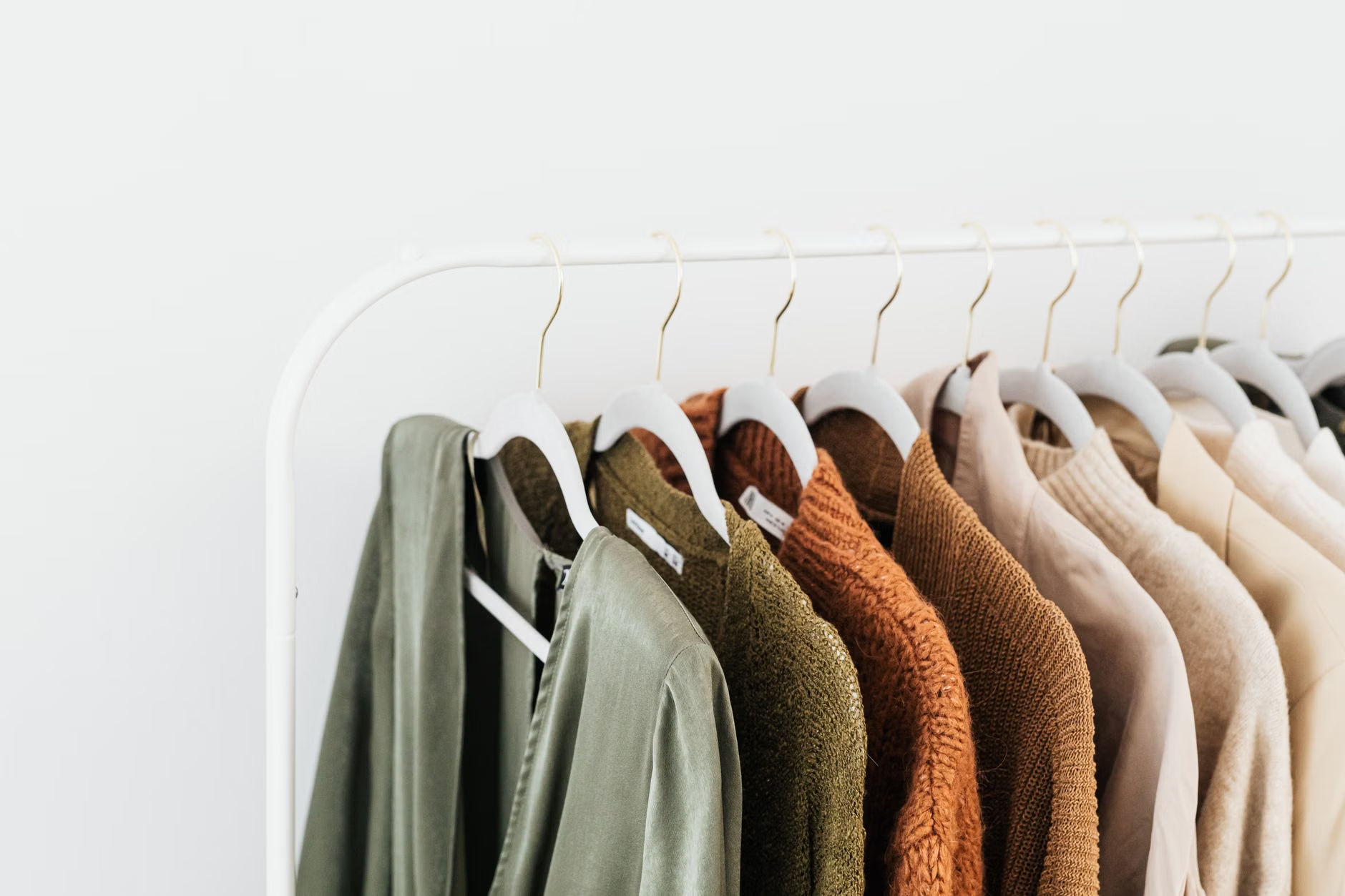
The foundation of ultralight travel is the capsule wardrobe. The idea is to pack items that can be mixed and matched to create a variety of outfits. If your clothes don’t coordinate, you will end up packing more than you need. Stick to a neutral color palette—think navy, gray, black, or earth tones—with one or two accent colors if you must.
Here is a baseline for a one-week trip (which can be extended indefinitely if you are willing to do a quick load of laundry):
| Item Category | Quantity | Strategy |
|---|---|---|
| Tops | 5 | Focus on moisture-wicking, breathable fabrics like merino wool or high-quality synthetics. |
| Bottoms | 4 | Two for active use, one for casual, one for dressier occasions. |
| Outerwear | 3 | A lightweight windbreaker, a mid-layer, and a packable down jacket. |
| Footwear | 2 | One pair of comfortable walking shoes (worn) and one pair of versatile sandals or dress shoes. |
| Accessories | 1 | A multi-purpose scarf or hat that works for various weather conditions. |
The trick here is layering. Instead of packing a heavy winter coat, bring a light, windproof shell and a warm fleece. You can wear the fleece under the shell for warmth or wear the shell alone if it’s raining. This modular approach is far superior to packing bulky, single-purpose items.
The Technology of Organization: Packing Cubes and Compression
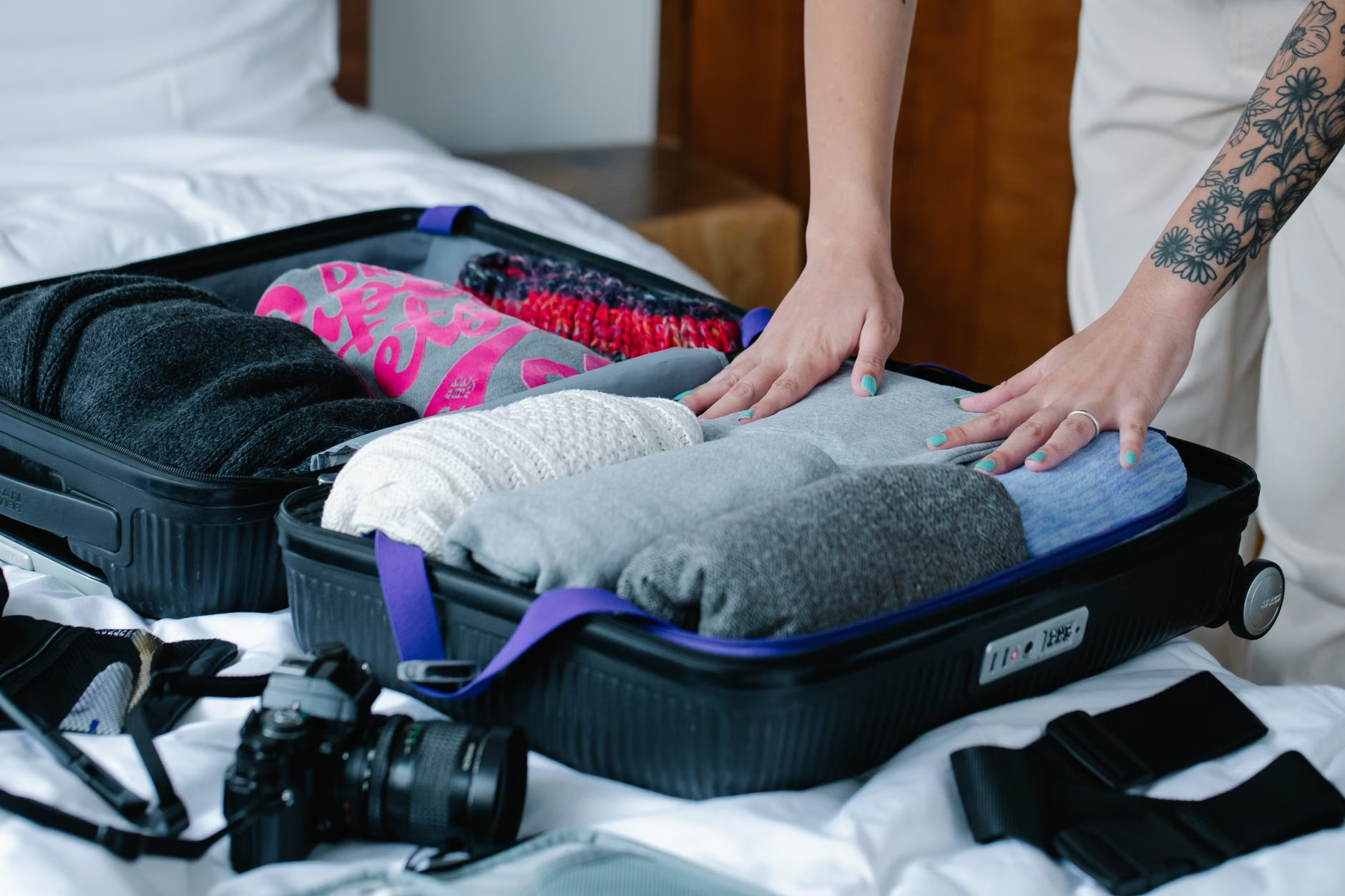
If you aren’t using packing cubes, you are missing out on the single most effective tool for organized travel. Packing cubes act as dresser drawers for your suitcase. They allow you to compress your clothing and categorize items, making it easy to find what you need without dumping your entire bag on the hotel floor.
When packing for a family, assign a different color of packing cube to each family member. This prevents the “whose shirt is this?” argument and makes unpacking at the destination a two-minute task. Compression cubes are particularly useful for bulky items like sweaters or jackets. By removing the excess air, you can reduce the volume of your clothes by up to 30%.
Avoid the temptation to pack “organizer bags” for everything. If you have a bag for your socks, a bag for your chargers, and a bag for your snacks, you are just adding weight. Use your packing cubes for clothing and a single, transparent toiletry bag for liquids to satisfy airport security requirements.
The Toiletry Trap: Why You Don’t Need Your Entire Bathroom
One of the biggest mistakes travelers make is bringing full-sized toiletries. Unless you have highly specific dermatological requirements, the reality is that you can buy shampoo, toothpaste, and soap anywhere in the world. Most hotels provide basic supplies, and even the most rural village usually has a shop.
For your essential items, use leak-proof, silicone travel bottles. If you are traveling for a week, you don’t need a 200ml bottle of sunscreen. A 50ml travel size is usually enough to get you to your destination, where you can buy a larger bottle if needed. This also helps you avoid the stress of liquid restrictions at security checkpoints.
For parents, this is even more critical. Yes, you need specific diapers or wipes, but you don’t need to pack a month’s supply. Pack enough for the travel days and the first 24 hours, then plan to stop at a local supermarket upon arrival. It’s a great way to explore local culture while solving a logistical problem.
Digital Minimalism: Reducing the Tech Load
In the age of remote work, we are often tempted to bring every device we own. However, ask yourself: do you really need your laptop, tablet, e-reader, and a dedicated camera? Most of us can get by with a smartphone and a single, high-performance laptop or tablet.
Choose chargers that are multi-port. A single 65W GaN (Gallium Nitride) charger can often power your laptop, phone, and watch simultaneously. These chargers are smaller, lighter, and more efficient than the standard bricks that come with your devices. A single high-quality international adapter is also a must-have—look for one that includes USB-C and USB-A ports to eliminate the need for extra cables.
If you are traveling with kids, pre-download their favorite shows, games, and books onto one or two tablets. Don’t pack physical toys that can be lost or broken. A few small, high-utility items like a deck of cards or a small sketchpad are usually enough to keep them entertained during downtime.

Managing the “What If” Anxiety
The primary barrier to ultralight travel is the psychological fear of being unprepared. We think, “What if it rains? What if we get invited to a fancy dinner? What if I need a specific tool?” This anxiety is what drives the over-packing epidemic.
The “What If” strategy is simple: if the scenario is truly an emergency (e.g., you need an umbrella because it’s pouring), you can buy an umbrella for $5. If the scenario is highly unlikely (e.g., you get invited to a black-tie gala while on a hiking trip), you probably wouldn’t have packed a tuxedo anyway. Focus on the 90% of your trip that is predictable, and accept that the remaining 10% can be managed with local resources.
Another way to manage this is to create a “master list” on your phone. After every trip, look at what you didn’t use and remove it from the list. Over time, your packing list will naturally evolve into a highly efficient, battle-tested document that eliminates the guesswork.
Choosing the Right Gear: Quality Over Quantity
When you are packing less, the quality of what you carry matters more. A $20 backpack might work for a day trip, but for international travel, you want something that offers proper weight distribution, durable zippers, and enough organization to keep your life in check.
Look for bags that are designed for “carry-on only” travel. These typically fall in the 30L to 40L range. Anything larger than 45L is usually too bulky for the overhead bin and defeats the purpose of being ultralight. Check the dimensions of your preferred airlines, as they vary, but a 35L bag is generally the sweet spot for most international carriers.
Prioritize bags with:
- Internal Compression Straps: These help keep your gear from shifting during transit.
- Dedicated Tech Compartments: Easy access to your laptop and chargers is essential for smooth airport security.
- Water-Resistant Fabric: Protects your gear from the elements without needing a bulky rain cover.
- Ergonomic Straps: If you are carrying your bag for long stretches, the quality of the shoulder straps and back panel is non-negotiable.
Common Mistakes to Avoid
Even experienced travelers fall into these traps. Being aware of them can save you a lot of headache.
- The “Just in Case” Outfit: If you haven’t worn it in the last three months at home, you won’t wear it on vacation. Leave it behind.
- Ignoring Laundry: Many travelers fear doing laundry on the road. A quick hand-wash in a hotel sink with a travel-sized detergent packet takes ten minutes and allows you to pack half the clothes.
- Neglecting Weight Limits: Some budget airlines have strict weight limits (sometimes as low as 7kg). Always weigh your bag before you leave the house.
- Packing Heavy Shoes: Shoes are the heaviest and most awkward items to pack. Wear your heaviest pair on the plane and pack only one lightweight alternative.
Final Considerations for Families
When traveling with children, the goal of ultralight packing shifts slightly. You aren’t just packing for yourself; you are the sherpa for the family. Involve your kids in the process. Give them their own small backpack and let them choose three “special” toys. This gives them a sense of ownership and responsibility, and it keeps their gear contained within their own personal space.
Remember that kids don’t need a fresh outfit for every day of the trip. Focus on durable, stain-resistant clothing that can be layered. If you are staying in an Airbnb or a hotel with a kitchenette, you can easily wash clothes, which significantly reduces the total amount of gear you need to bring.
Lastly, be kind to yourself. If you pack too much on your first try, it’s not a failure. It’s just data. Analyze what you didn’t use and adjust for the next time. Travel is meant to be an experience, not a chore, and the less time you spend managing your luggage, the more time you have to actually enjoy the places you visit.
Frequently Asked Questions
How do I handle laundry while traveling?
For short trips, you likely won’t need to. For trips longer than a week, look for hotels with laundry services or, better yet, find a local laundromat. It’s a great way to see a neighborhood away from the tourist path. Alternatively, keep a small packet of concentrated laundry detergent in your bag for hand-washing smaller items like socks and underwear in the sink.
Is it really possible to travel with just a carry-on for a family?
Absolutely. The key is to standardize your gear. If every family member has a 30L backpack, you can easily manage your own luggage. The biggest challenge is usually gear for infants, such as strollers or car seats. In those cases, consider renting equipment at your destination to avoid the hassle of lugging it through the airport.
What if I need to pack for multiple climates?
The “layering” strategy is your best friend here. Instead of packing a heavy coat for cold weather and shorts for warm weather, pack items that can be layered effectively. A base layer, a mid-layer, and a waterproof outer shell can keep you warm in freezing temperatures, while the base layer and trousers work for mild weather. If you are going to be in extreme conditions, prioritize renting specialized gear at your destination.
For more insights on efficient travel, you can check out the TSA’s official guidelines on what you can bring, or read up on the latest airline baggage policies at IATA to ensure your bag meets size requirements before you head to the airport.
Traveling light is a skill that improves with practice. Once you get the hang of it, you’ll find that the freedom of having only what you need is worth far more than the comfort of having everything you own by your side. Happy travels.