To all the parents out there who are navigating the beautiful, chaotic, and sometimes exhausting journey of raising a child—first of all, you are doing an amazing job. Do you ever find yourself caught in a morning loop of saying “Please focus,” “Finish your breakfast,” or “Where are your shoes?” only to feel like your words are disappearing into thin air?
When our little ones seem unusually distracted, restless, or prone to emotional meltdowns, our first instinct is often to look at their environment, their school, or even our own parenting style. We wonder, “Am I being too easy on them?” or “Is this just a phase?” But what if I told you that the secret to their focus and emotional balance isn’t just in their heads, but actually in their bellies?
Today, let’s dive into a fascinating world that’s changing how we think about child development: the Gut-Brain Axis. It sounds like a complex medical term, but it’s actually a beautiful connection that shows how much our children’s physical health influences their bright, growing minds.

Is the Gut Really a ‘Second Brain’?
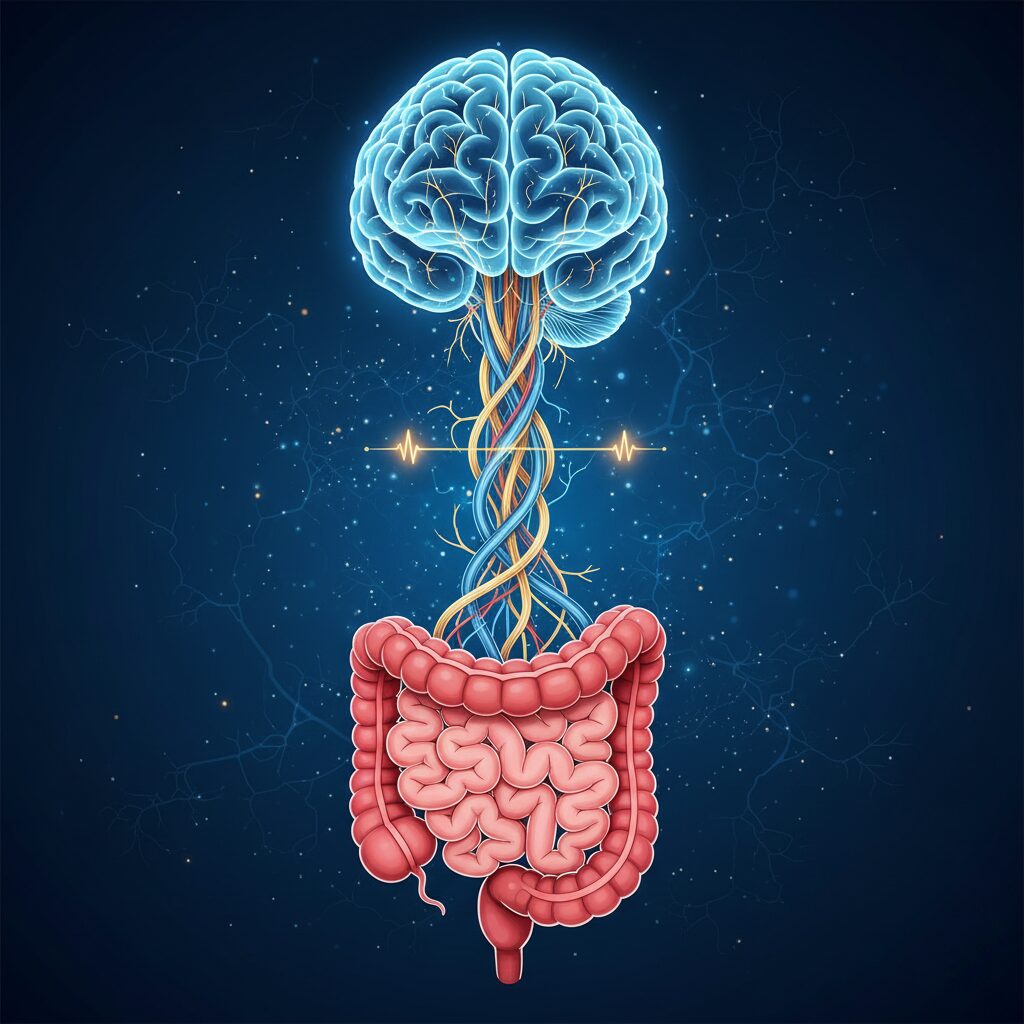
It might sound a bit strange at first. We’re taught that thinking and feeling happen in the brain. However, scientists now widely refer to the gut as the “Second Brain” (technically called the enteric nervous system). The gut and the brain are physically connected by a massive “information superhighway” called the Vagus Nerve.
This connection is a two-way street. They are constantly “chatting” 24/7. Have you ever felt “butterflies” in your stomach when you’re nervous? That’s the gut-brain axis in action! But here’s the most mind-blowing part: about 90% of the body’s Serotonin—the hormone responsible for happiness, mood stability, and sleep—is actually produced in the gut, not the brain.
So, when a child’s gut environment is out of balance, the signals being sent to the brain can become “noisy” or “glitchy.” This can manifest as brain fog, irritability, or an inability to sit still. It’s not that the child is “being bad”; their internal communication system might just be experiencing some interference!
The Hidden Science: Microbes and Mood
You’ve probably heard the word Microbiome. Think of it as a vast, invisible garden living inside your child’s digestive system. This garden is home to trillions of tiny “helpers” (bacteria) that help digest food, train the immune system, and—most importantly—produce chemicals that help the brain function.
Recent studies from places like Harvard and other global research centers have found a striking link between the diversity of these gut microbes and a child’s behavior. Children who have a rich and diverse “garden” of beneficial bacteria tend to show higher levels of concentration and better emotional resilience.
On the flip side, a diet high in ultra-processed sugars and artificial additives can act like “weeds” in this garden. These “weeds” can trigger low-grade inflammation that travels up to the brain, potentially contributing to symptoms associated with ADHD or anxiety. Understanding this gives us a powerful new tool: we can help “parent” our children’s moods by tending to their internal garden.
Building a ‘Brain-Boosting’ Plate
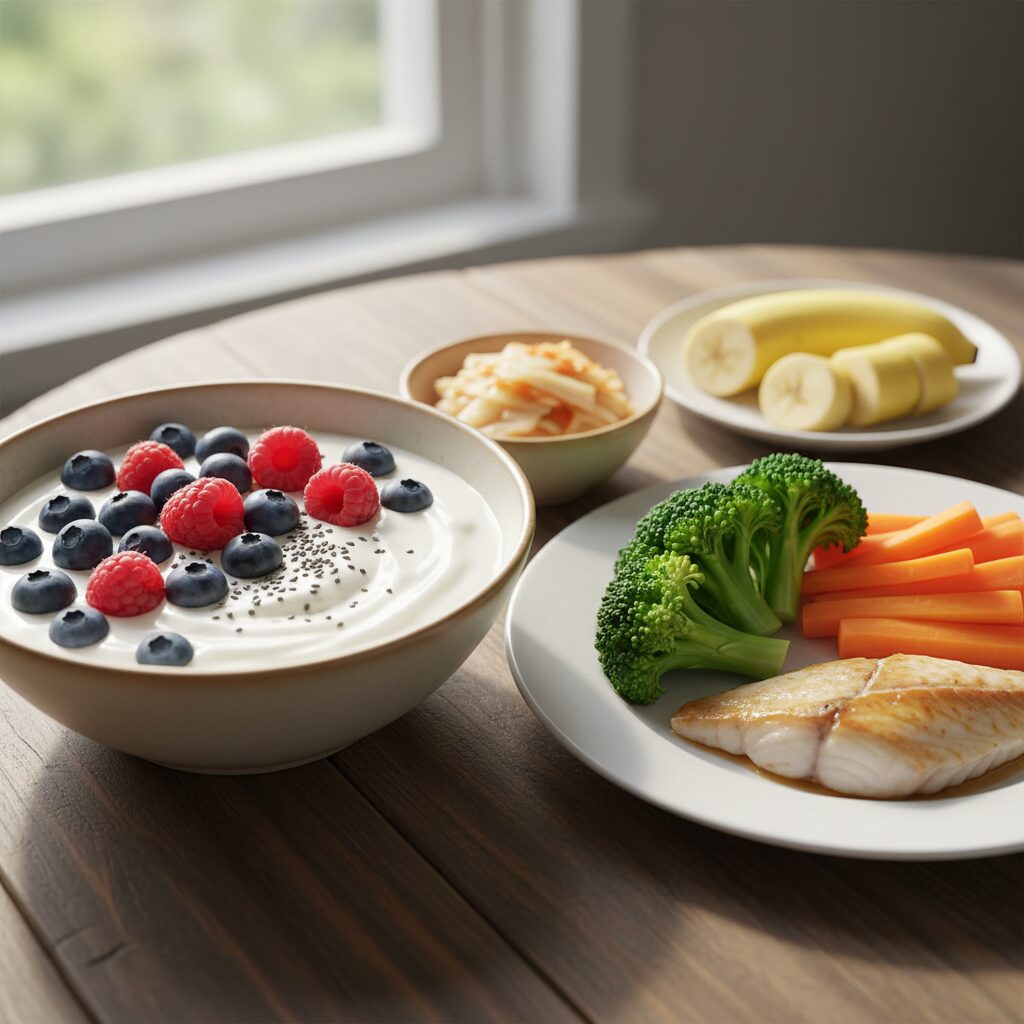
Now, I know what you’re thinking: “SoCooly, it’s hard enough getting them to eat broccoli!” I totally hear you. We don’t need to be perfect, and we don’t need to turn our kitchens into laboratories. It’s about making small, intentional shifts. Here are some simple ways to feed that “Second Brain”:
1. Focus on ‘Prebiotic’ Fiber
Think of prebiotics as the favorite food for the “good guys” in the gut. When the good bacteria eat fiber, they produce compounds that protect the brain.
- Easy wins: Bananas, apples (with the skin), oats, and even cooled-down potatoes or pasta (which contain something called resistant starch).
2. Introduce ‘Probiotic’ Friends
Probiotics are the “good guys” themselves. Adding them to the diet is like sending in a reinforcement team for your child’s health.
- Simple swaps: Try Greek yogurt with a little honey, or if your child is adventurous, a bit of mild kimchi or “white” kimchi (non-spicy). Fermented pickles (the ones found in the refrigerated section) are also great options.
3. The Power of Omega-3s
The brain is about 60% fat. To build a strong brain and maintain a healthy gut lining, kids need high-quality fats. Omega-3s act like a soothing balm for both the gut and the brain.
- Brain foods: Walnuts, chia seeds, salmon, or even a high-quality fish oil supplement can make a noticeable difference in a child’s ability to focus over time.
Lifestyle Habits for a Happy Gut-Brain Connection
It’s not just about what goes into the mouth; it’s about how our children live. The gut-brain axis is highly sensitive to the environment.
- Embrace a Little ‘Clean’ Dirt: This might sound counterintuitive, but our modern world is sometimes too clean. The “Hygiene Hypothesis” suggests that kids need exposure to natural microbes to build a diverse microbiome. Let them dig in the garden, play at the park, and get a little muddy. It’s actually “seeding” their internal garden!
- Prioritize Consistent Sleep: The gut has its own internal clock (circadian rhythm). When kids don’t get enough sleep, it stresses the gut bacteria, which in turn makes the child more impulsive and less focused the next day. It’s a cycle we want to keep in balance.
- The Magic of a Hug: Stress is a “gut-punch” for microbes. When we hug our children and provide a safe, loving environment, we lower their cortisol (stress hormone) levels. This allows the gut to stay in a “rest and digest” state rather than “fight or flight,” leading to better nutrient absorption and a calmer mind.

A Gentle Reminder for Us Parents
As we learn more about the science of the gut-brain axis, it’s easy to feel a bit of “parental guilt” about that pizza night or the extra candy bar. Please, don’t let it weigh you down! The goal isn’t to be a perfect nutritionist; it’s to be an informed ally for our kids.
Think of it this way: every time you choose a whole fruit over a sugary juice, or every time you spend ten minutes cuddling before bed, you are literally helping wire your child’s brain for a calmer, more focused future. You are building their foundation, one “gut-friendly” choice at a time.
Experts suggest that the first 12 years are the most critical for brain and gut development. But the body is incredibly resilient. No matter where you are starting from, today is a perfect day to begin.

Next time your little one seems a bit “off” or can’t seem to focus on their homework, take a deep breath. Instead of just looking at the behavior, maybe ask, “How is their inner garden doing today?” A little more water (fiber), a little more sunshine (nature), and a lot of love can work wonders.
We are all in this together, learning and growing alongside our children. If you found this helpful, why not try one “gut-brain” tip this week and see if you notice a difference in the “vibes” at home? You’ve got this!

[Reliable Resources for Further Reading]
- Harvard Health Publishing: The gut-brain connection
- Johns Hopkins Medicine: The Brain-Gut Connection
- CDC (Centers for Disease Control and Prevention): Healthy Eating for Children