The most effective way to start a zero-waste kitchen transition is to stop viewing it as an all-or-nothing lifestyle change and start seeing it as a series of small, permanent swaps that eventually save you both time and money.
- Focus on reduction first: Before buying sustainable replacements, use up what you already have to avoid creating new waste.
- Prioritize high-impact items: Start by replacing the single-use plastics you use most frequently, such as produce bags, paper towels, and cling film.
- Adopt a “bulk-first” mindset: Buying in bulk isn’t just about saving the planet; it reduces the number of trips to the store and keeps your pantry organized.
If you are in your thirties or forties, your kitchen is likely the busiest hub of your home. Between managing school lunches, prepping dinners, and trying to keep the recycling bin from overflowing by Thursday morning, the idea of “zero-waste” can feel like a luxury reserved for people with infinite free time. But here is the reality: zero-waste is not about living in a cabin and making your own soap. It is about efficiency.
Most of the trash we generate in our kitchens is incidental—a direct result of convenience culture. By tweaking how we shop, store, and dispose of food, we can lower our environmental footprint without adding hours to our weekly schedule. Let’s break down how to make this transition manageable for a household that actually has a life.
The Mindset Shift: Why “Zero-Waste” is a Misnomer
The term “zero-waste” is intimidating. It implies that you must produce literally zero trash. For a parent of two or three, that is essentially impossible unless you plan on living entirely off the grid. Instead, think of it as “low-waste” or “conscious consumption.”
The goal is to move from a linear consumption model (buy, use, toss) to a circular one (buy, reuse, compost). When you stop looking at waste as an inevitable byproduct of daily life and start looking at it as a failure of system design, your kitchen habits change. You stop buying the pre-cut vegetables in plastic trays because you realize you are paying for the plastic, the labor, and the rapid spoilage of the food.
Start by auditing your trash for one week. Don’t change anything yet. Just look at what is filling your bin. Is it snack wrappers? Paper towels? Plastic film from meat packages? Once you identify your top three offenders, you have a roadmap. You don’t need to fix everything at once. Pick one area—like paper waste—and tackle that for a month before moving on.
The Pantry Audit: Eliminating Packaging at the Source
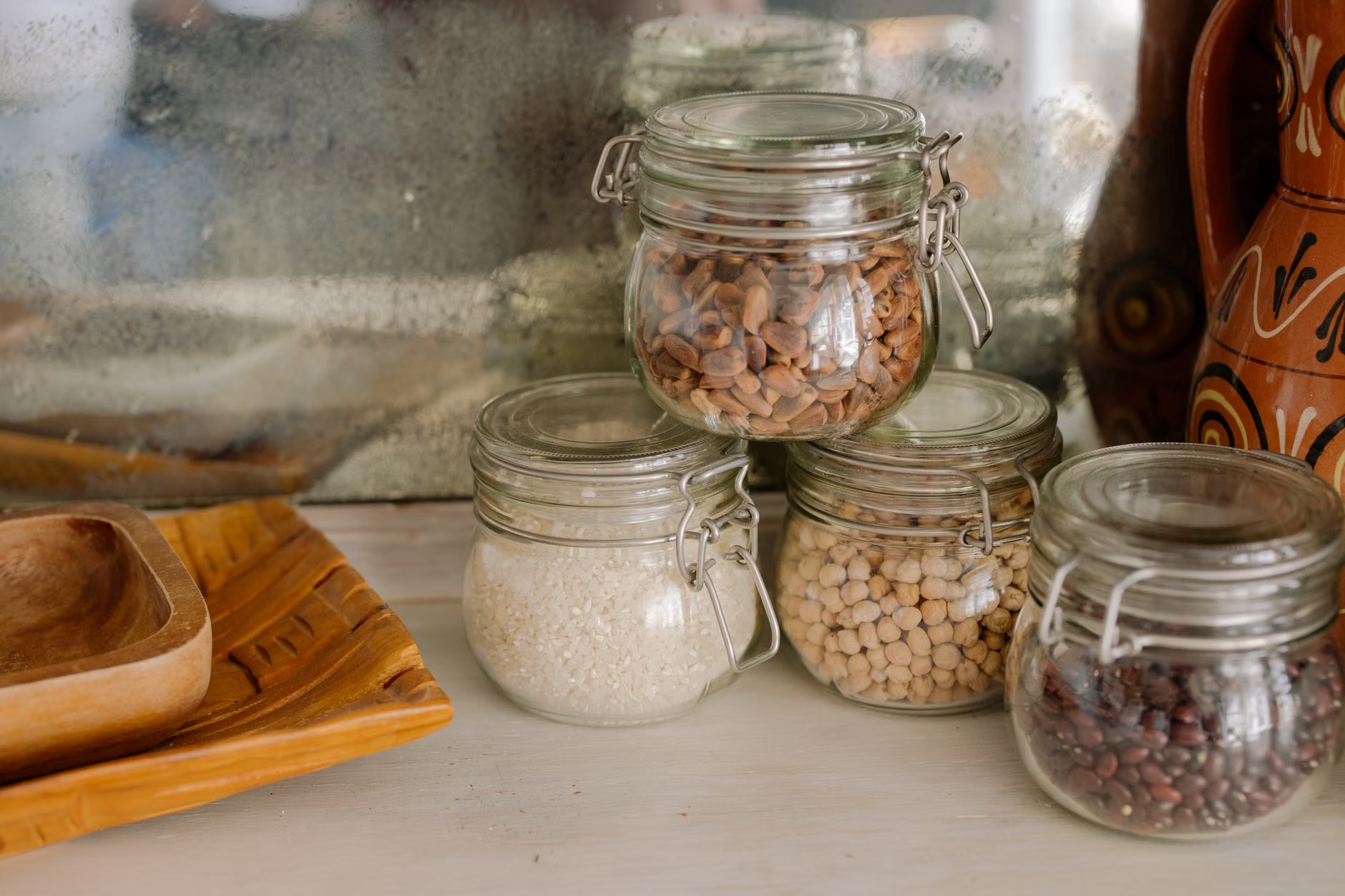
Your pantry is the easiest place to start because dry goods have a long shelf life. The goal here is to shift away from single-use plastic packaging toward bulk storage. This doesn’t mean you need to drive to a specialized, expensive “refill shop.” It just means changing how you purchase basics like rice, pasta, lentils, and flour.
Many modern supermarkets now have bulk sections. If yours doesn’t, look for brands that use cardboard packaging instead of plastic. Once you get home, the key is proper storage. Glass jars are the gold standard here—not just because they look good on Instagram, but because they are inert (they don’t leach chemicals), they are easy to clean, and they allow you to see exactly how much you have left.
Common mistakes to avoid during this transition:
| Mistake | The Better Approach |
|---|---|
| Buying new plastic containers to “get organized.” | Use what you have. Reuse pasta sauce jars or old large-format glass containers. |
| Buying too much in bulk and letting it go stale. | Start with small quantities until you understand your family’s actual consumption rate. |
| Ignoring the “best before” dates. | Use a simple label maker or masking tape to track opening dates to minimize food waste. |
Ditching the Single-Use Plastic “Convenience”
We rely on single-use plastics because they are light and cheap. The problem is that they are designed to be used for five minutes and last for 500 years. For families, the biggest culprits are usually cling film, sandwich bags, and paper towels.
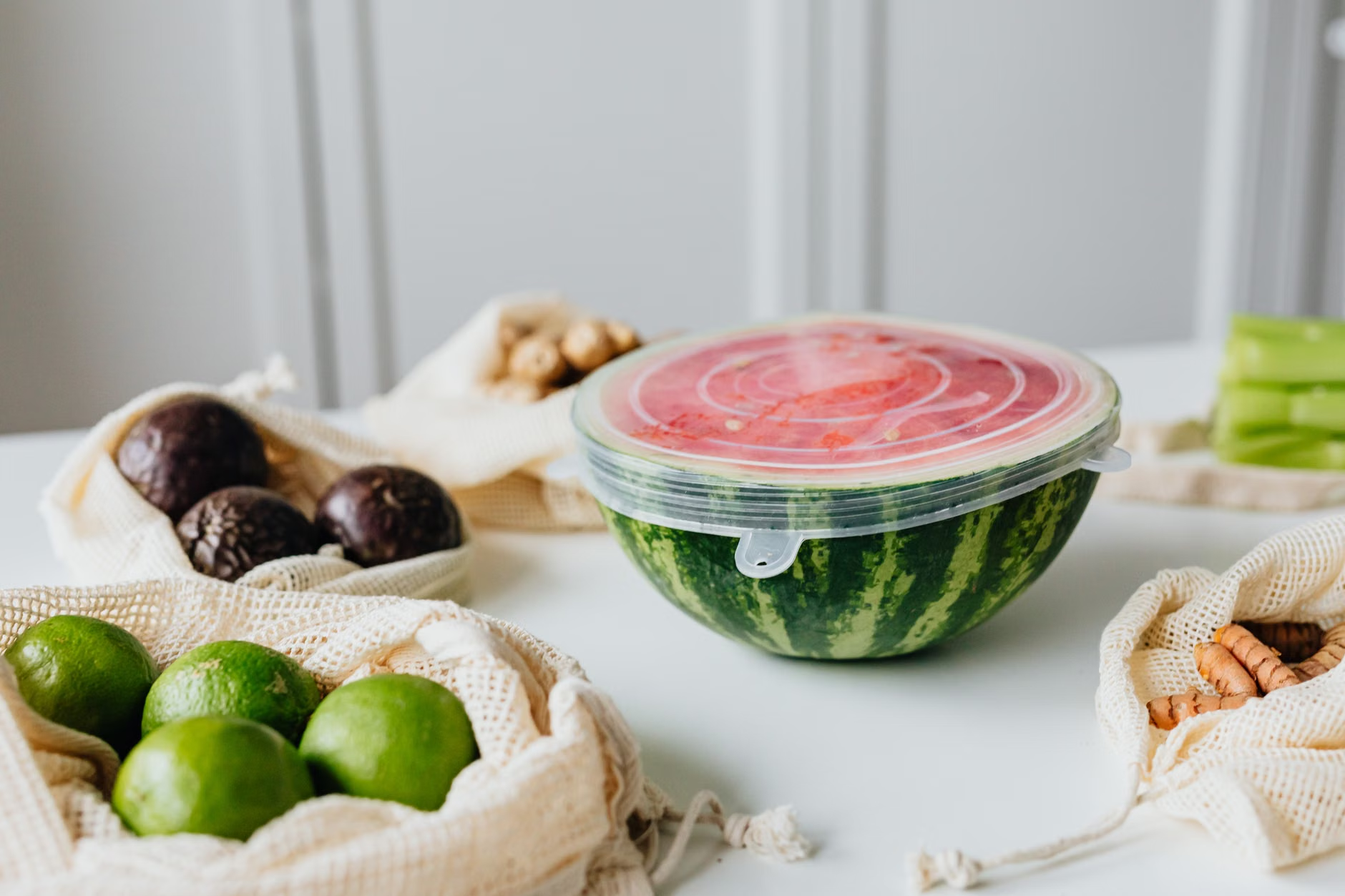
Replacing these doesn’t require a radical lifestyle overhaul. It requires a few high-quality, durable alternatives. Beeswax wraps are a fantastic substitute for cling film. They are breathable, which actually keeps certain produce fresh longer, and they can be washed and reused for months. For sandwiches and snacks, silicone bags or stainless steel containers are durable enough to survive a school backpack.
When it comes to paper towels, the secret is to stop buying them entirely. When you have a roll on the counter, you will use it for everything. If you remove the roll, you will naturally reach for a cloth. Keep a stack of “unpaper towels” or simple cotton rags in a drawer. Once they are dirty, they go into the laundry with your towels. It is a simple habit loop that saves money every single month.
Managing Food Waste: The Hidden Environmental Cost
Did you know that food waste is one of the largest contributors to methane emissions in landfills? When food decomposes in a landfill without oxygen, it creates methane, a potent greenhouse gas. In a home kitchen, the goal is to keep as much food waste out of the trash as possible.
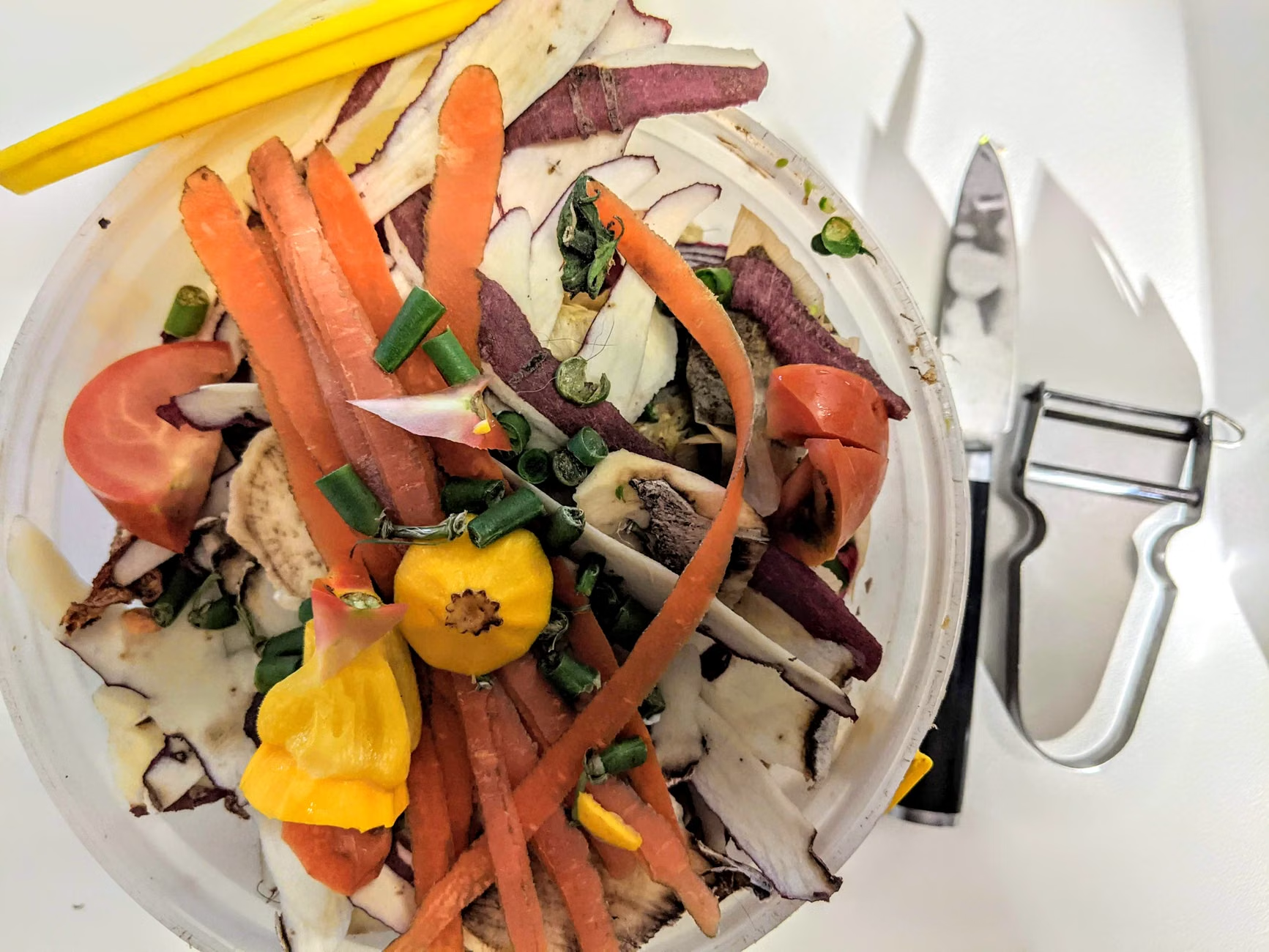
Composting is the ultimate solution, but it isn’t always feasible for everyone. If you have a backyard, a simple compost pile or tumbler is easy to manage. If you live in an apartment, look into vermicomposting (using worms) or bokashi bins, which are compact, odor-free, and perfect for indoor use. Many cities now have municipal compost pickup programs; check your local council website to see if you are eligible.
Beyond composting, rethink your cooking habits. Save vegetable scraps (onion peels, carrot tops, celery ends) in a freezer bag. Once the bag is full, boil it with water to make a nutrient-dense vegetable stock. This turns “trash” into a free, healthy base for soups and risottos, effectively closing the loop on your vegetable prep.
Shopping Habits: The “Zero-Waste” Grocery Trip
The grocery store is where the battle for a zero-waste kitchen is won or lost. If you walk in with a plan, you are much less likely to end up with bags of unnecessary plastic. Here are the rules of engagement:
- The Produce Bag Rule: Stop using the thin plastic rolls provided in the produce section. Bring your own mesh or cotton bags. They are lightweight and machine washable.
- The Pre-Packaging Bias: Always choose the loose produce. If a cucumber is wrapped in plastic, look for one that isn’t. If you cannot find one, choose a different vegetable. Vote with your wallet.
- The “Shopping List” Discipline: Impulse buys are the primary cause of food waste. If you buy it on a whim, you probably won’t have a plan for it, and it will eventually end up in the bin. Stick to your list.
- Local and Seasonal: When you buy food in season, it hasn’t traveled thousands of miles, and it usually requires less heavy-duty packaging to keep it “fresh” during transit.
Dealing with Kids and the “Snack Trap”
If you are a parent, you know the snack struggle. Small, individually wrapped portions are the bane of a low-waste kitchen. It is hard to avoid them entirely, especially when you are running out the door for soccer practice or school pickup. The goal here is “reduction,” not “perfection.”
Instead of buying individual packs of pretzels or crackers, buy the large family-size bag and portion it out into reusable containers on Sunday night. It takes ten minutes, saves a significant amount of money (individual packs have a massive markup), and eliminates a dozen plastic wrappers per week per child.
For school lunches, talk to your children about why you are making the change. Kids are often surprisingly receptive to environmental arguments. Let them pick out their own reusable containers or a cool, insulated lunch bag. When they feel like they are part of the process, they are much more likely to help you maintain the system rather than just tossing the containers at the end of the day.
The Financial Reality of Sustainability
There is a common misconception that living sustainably is expensive. While the initial investment in high-quality glass jars, silicone bags, or a good compost bin can be higher than the cost of a box of plastic bags, the long-term savings are significant. You stop paying for the packaging, you stop paying for the “convenience” markup on pre-cut or pre-packaged goods, and you stop throwing away food that has spoiled in the back of the fridge.
Think of it as an investment in your kitchen infrastructure. Just like buying a good chef’s knife or a heavy-duty blender, these items are meant to last for years. When you stop buying disposables, that recurring expense vanishes from your monthly budget. Over the course of a year, for a family of four, the savings can easily reach hundreds of dollars.
Common Challenges and How to Overcome Them
Even with the best intentions, you will face obstacles. Maybe your local store doesn’t offer bulk options. Maybe your kids refuse to eat anything that doesn’t come in a brightly colored wrapper. That is okay. This is a transition, not a destination.
If you find yourself overwhelmed, go back to the basics. Focus on one category at a time. If you try to change everything in a week, you will burn out. If you change one thing every month, you will build a habit that lasts a lifetime. The most successful zero-waste kitchens are the ones that are sustainable for the *people* living in them, not just the planet.
Remember that you cannot shop your way to a zero-waste life. Buying a hundred new “eco-friendly” products is still consumption. The most sustainable item is the one you already own. Use what you have, repair what you can, and only replace it with a sustainable alternative when it reaches the end of its life.
Maintaining Your New System
Once you have established your routines—your bulk storage, your compost system, and your reusable shopping bags—the challenge shifts to maintenance. Life will get busy. There will be weeks where you rely on takeout or convenience foods. Don’t beat yourself up. The goal is a consistent reduction, not a rigid, stressful standard that makes your life harder.
Keep your systems visible. If your reusable bags are tucked away in the back of a closet, you will forget them. Keep them by the door or in the trunk of your car. If your glass storage jars are in a cabinet you rarely use, move them to the eye-level shelf. Make the sustainable choice the path of least resistance.
Finally, involve your family. A zero-waste kitchen is a team effort. If you are the only one trying to compost, it won’t work. Explain the “why” behind the “how.” Show them the difference in the amount of trash you are producing. When the whole family is invested, the transition becomes a shared value rather than a chore.
Transitioning to a zero-waste kitchen is a journey of small, deliberate steps. By focusing on reduction, reusing what you have, and composting, you can create a kitchen that is not only better for the environment but also more organized, more efficient, and more budget-friendly. Start small, be consistent, and don’t let the pursuit of perfection get in the way of the progress you are making every single day.
Frequently Asked Questions
1. Is it really cheaper to go zero-waste, or is it just for people with more money?
It can be both. While some specialty sustainable products (like high-end silicone bags) have a higher upfront cost, the core principles of zero-waste—buying in bulk, reducing food waste, and avoiding pre-packaged convenience foods—are inherently budget-friendly. By focusing on these, you will save money in the long run.
2. What should I do if my local grocery store doesn’t have a bulk section?
You are not alone. Focus on items that come in paper, cardboard, or glass rather than plastic. Buy larger quantities to reduce the packaging-to-product ratio. If a store has no options, consider asking the manager if they would consider stocking certain bulk items—customer demand is a powerful driver for change in retail.
3. How do I handle food safety when reusing containers for leftovers?
The same rules apply as with plastic. Ensure your glass or stainless steel containers are clean and have airtight lids. If you are storing hot food, let it cool to room temperature before placing it in the fridge to prevent condensation, which can lead to bacterial growth. Use your best judgment; if a container shows cracks or the lid no longer seals properly, it is time to recycle or repurpose it.
For further reading on waste reduction and environmental impact, you may find the following resources helpful: