Regional rail passes are the single most effective way to turn a chaotic family vacation into a flexible, budget-friendly adventure, provided you understand the difference between high-speed connectivity and the “local-hop” strategy.
- Flexibility is currency: Regional passes allow you to change plans on the fly without the price-gouging associated with last-minute high-speed ticket bookings.
- The “Local-Hop” Advantage: Focus on regional trains to discover hidden gems and smaller towns that high-speed lines usually bypass entirely.
- Cost-Benefit Reality: Regional passes are almost always cheaper for families, especially when factoring in “kids-travel-free” promotions often bundled with these passes.
Do you remember the last time you tried to coordinate a family trip with multiple stops? Between the luggage, the inevitable bathroom breaks, and the sheer cost of individual point-to-point tickets, it often feels like you’re paying a premium just for the privilege of being stressed. High-speed rail is fantastic if you need to get from Point A to Point B in a blur of motion, but for families, the magic of travel often lies in the middle—the sleepy villages, the local markets, and the transition between major hubs.
This is where the regional rail pass enters the conversation. It is not about speed; it is about the freedom of the hopper. It’s the difference between a rigid itinerary and a “let’s see where this track goes” afternoon. But like any travel hack, it requires a bit of research before you commit your budget.
Understanding the Regional Rail Mindset
Most travelers in their 30s and 40s have been conditioned by the travel industry to prioritize speed. We want the shortest route, the fastest connection, and the most efficient transit. However, when you are traveling as a family, speed is often the enemy of experience. Regional rail passes—often overlooked in favor of flashy continental passes—are designed for exactly the kind of slow, intentional travel that makes for lasting memories.
A regional pass typically covers a specific geographic area or a specific network of trains. Unlike national or international passes, these are often restricted to slower, local, or regional trains. This might sound like a downside, but consider the logistics: local trains are generally less crowded, they stop at stations in the heart of the town, and they don’t usually require seat reservations. For a parent, the lack of a mandatory reservation is a massive win. If you miss your train because someone needed an extra snack or a quick detour to a playground, you simply catch the next one.
Furthermore, regional trains offer a different sensory experience. You see the landscape change more gradually. You hear the local language spoken by commuters rather than just hearing international announcements. For children, the train itself becomes part of the attraction. It’s a mobile observation deck where they can watch the world go by without the claustrophobia of a cramped car backseat.

The Arithmetic of the Rail Pass
Before you buy, you need to do the math. The primary mistake most travelers make is assuming that a pass is always cheaper than buying individual tickets. In reality, the “break-even point” is the metric that matters most. To calculate this, you need a rough sketch of your itinerary.
Let’s say you are planning a trip through a region like Bavaria in Germany or the Tuscany region in Italy. If you plan to visit three cities in a week, individual tickets might seem manageable. But if you plan to visit five or six smaller towns, the costs of individual, last-minute tickets will balloon. Regional passes often come in “day-use” formats, where you can take as many trains as you want within a 24-hour window.
| Factor | Individual Tickets | Regional Rail Pass |
|---|---|---|
| Flexibility | Rigid; tied to specific times | High; hop on/off at will |
| Cost | Variable; rises with demand | Fixed; predictable |
| Booking | Per segment | One-time purchase |
| Kids | Often full price | Often free or deeply discounted |
The “Kids-Travel-Free” aspect is where these passes truly shine. Many regional rail authorities offer a policy where children under a certain age (often 12 or 14) travel for free when accompanied by an adult with a valid pass. If you have two or three kids, the savings can be substantial. Always verify the age limits and the number of children permitted per adult, as these vary by region and operator.
Logistics: The Art of the “Hopping” Itinerary
Once you have your pass, the next challenge is managing the logistics of hopping from town to town. The most common pitfall is over-scheduling. It is tempting to cram as many destinations as possible into a single day, but remember that you are traveling with family. You have to account for the “transition friction”—the time it takes to pack up, get to the station, find the platform, and settle into the next location.
Step-by-Step Strategy for Successful Hopping:
- The Home-Base Strategy: Instead of moving hotels every night, choose one or two “hub” cities. Use your regional pass to take day trips to smaller towns, returning to your comfortable home base each evening. This eliminates the stress of dragging luggage through cobblestone streets.
- Master the Local Apps: Don’t rely solely on international rail aggregators. Download the app specific to the regional rail provider you are using. These apps often provide real-time updates on track changes, delays, and, crucially, live platform information that general travel sites might miss.
- The “Station Picnic” Rule: Local train stations often have excellent bakeries or small markets. Instead of scrambling for a restaurant in a new town, grab supplies at the station and have a picnic on the train or in a local park. It’s cheaper, faster, and gives the kids a chance to try local snacks.
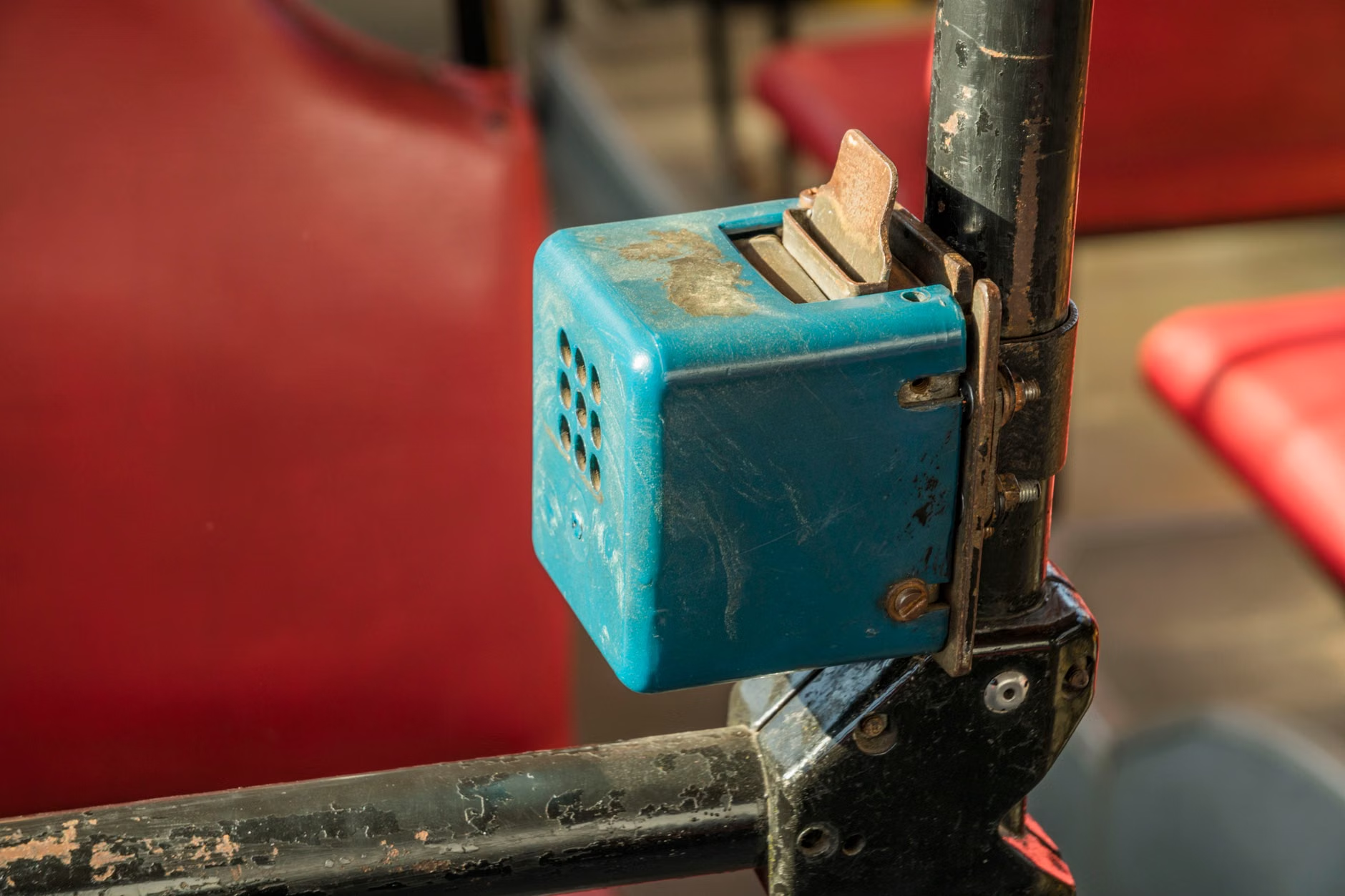
Another often overlooked aspect is the “station-to-center” distance. Regional trains almost always pull into the historic center of a town. High-speed rail hubs, by contrast, are often located on the periphery of cities, requiring a secondary bus or taxi ride to reach the attractions. By choosing regional trains, you are essentially skipping that extra transfer, saving both time and money.
Handling the “What-Ifs” and Common Mistakes
Even with the best planning, things go wrong. Trains get delayed, connections are missed, and children get tired. The beauty of a regional pass is that it provides a safety net. If you miss a train, you aren’t out the cost of a non-refundable ticket; you are just waiting for the next one.
However, you must be aware of the “validation” rule. Many regional passes, especially those in Europe, require you to physically validate the ticket at a machine on the platform before boarding. Skipping this step can lead to hefty fines, even if you have a valid pass. Always look for the little boxes—usually yellow or green—at the station entrance or on the platform. If you’re unsure, ask a station attendant. It’s a five-second step that saves a world of trouble.
Another common mistake is assuming that a pass covers all trains in a region. Some regions have multiple operators. For example, a state-run regional pass might cover all the local trains but not the private, tourist-focused scenic trains that run through the same area. Always check the map provided with the pass. If a line is marked with a dashed line or a different color, it might be an exception. When in doubt, ask: “Is this train included in the regional pass?”
Creating a Rhythm for the Family
When you are in your 30s and 40s, you are likely balancing work, parenting, and a desire for meaningful travel. The goal shouldn’t be to “check off” cities. The goal should be to create a rhythm. A regional rail pass allows you to build a routine where the travel time is actually a period of rest. Use the time on the train to read, play card games, or simply look out the window. If you force the kids to be “tourists” 100% of the time, you will burn out. If you treat the train travel as a scheduled break, the whole trip becomes more sustainable.
Consider the “one-big-thing” rule for your daily stops. When you hop off in a new town, pick one major activity or site to see. Everything else should be secondary. If you see more, great. If you don’t, you’ve still had a successful day. This takes the pressure off and makes the regional pass feel like a tool for exploration rather than a requirement to keep moving.
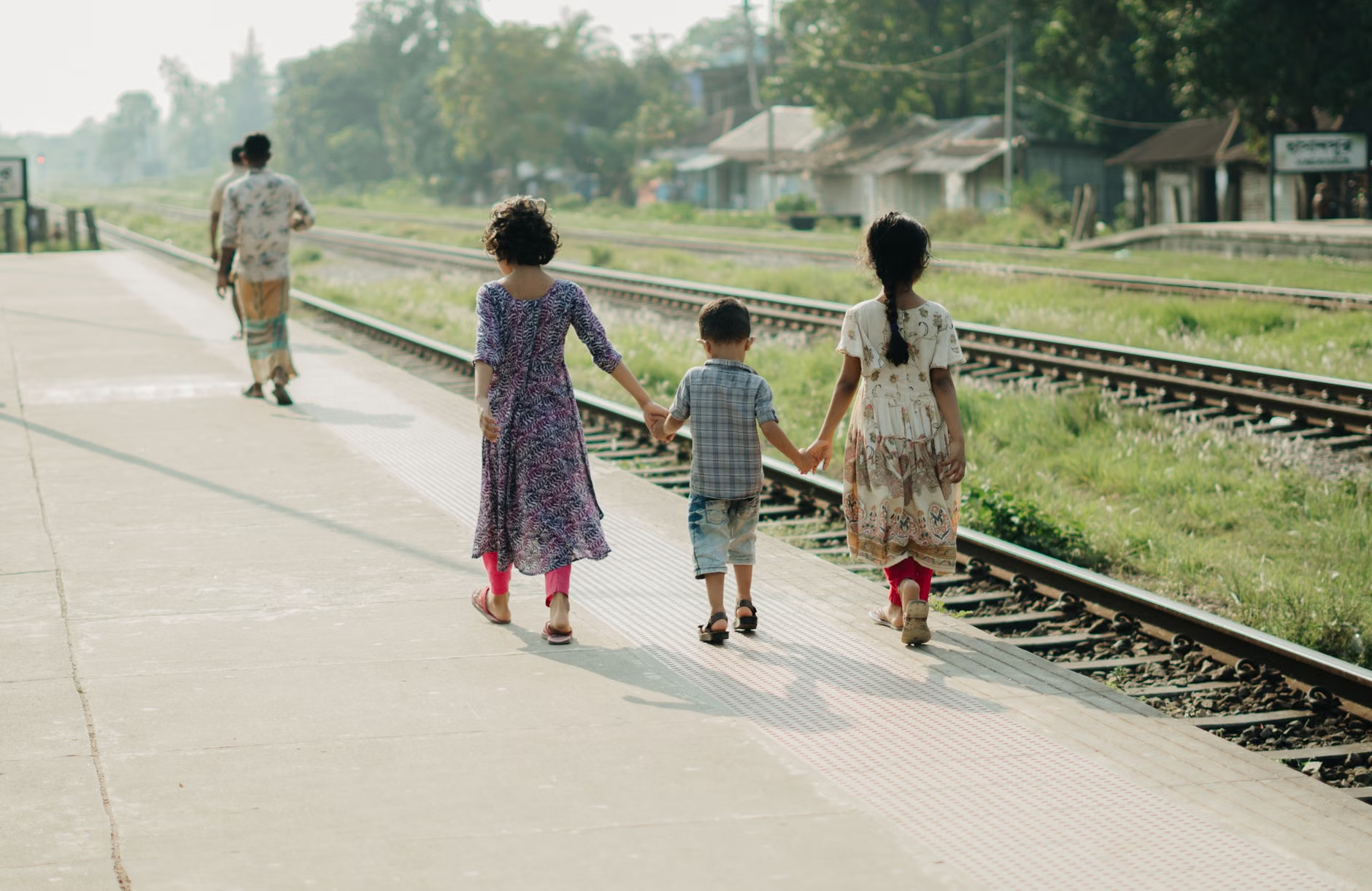
Finally, embrace the imperfection. You might end up in a town that is “boring” by travel guide standards, but where your kids found a great fountain to splash in or a local dog to pet. These are the moments that end up in the photo albums. A regional rail pass gives you the luxury of being wrong about a destination and moving on, or being pleasantly surprised and staying a few hours longer than planned.
Practical Considerations for the Modern Parent
Technology has made regional rail travel significantly easier, but it has also created a dependency on battery life. Always carry a portable power bank. While some modern regional trains have USB ports, older carriages often do not. You do not want to be stuck in a foreign station with a dead phone and no access to your digital tickets or maps.
Packing for rail travel requires a specific mindset: the “one-bag-per-person” rule. If you can’t carry it yourself, don’t bring it. You will be dealing with stairs at stations, narrow aisles on trains, and potentially long walks between the station and your accommodation. Focus on modular luggage—small bags that can be easily managed by each family member. It empowers the children and makes the transit segments much smoother.
Safety is naturally a concern for parents. Regional trains are generally very safe, but they are public spaces. Keep your valuables in a cross-body bag that stays on your person at all times, even when you are sitting in your seat. When you leave your seat to use the restroom or go to another carriage, take your valuables with you. It’s a simple habit that removes the anxiety of having to watch your luggage like a hawk.
The Long-Term Value of the Slow Journey
As we navigate our 30s and 40s, we often find that our travel preferences shift. We value comfort, but we also value authenticity. We want to show our children the world, but we don’t want to exhaust ourselves in the process. Regional rail passes provide a bridge between these desires. They offer a sustainable, affordable, and deeply human way to see a country.
By choosing the local route, you are opting out of the “tourist bubble.” You are engaging with the transit system as the locals do. You are supporting regional infrastructure. And most importantly, you are teaching your children that the journey is just as important as the destination. There is a quiet pride in knowing how to navigate a local train station, how to read a regional timetable, and how to find the hidden gems that the high-speed trains speed right past.
If you are planning your next family getaway, take a moment to look past the major flight hubs and the high-speed rail lines. Look at the regional maps. Find a cluster of towns that pique your interest. Calculate the cost of a regional pass. And then, give yourself the permission to slow down. You might be surprised at how much more you see when you stop trying to go fast.
Frequently Asked Questions
1. Do regional rail passes always save money compared to buying individual tickets?
Not always. Their value depends on the density of your itinerary. If you are taking many short trips within a specific region over a short period, a pass is almost always cheaper. However, if you are only taking one or two long-distance trips, individual advance-purchase tickets (often called “saver fares”) might be cheaper. Always use the local rail operator’s website to simulate your trip costs before committing to a pass.
2. Are regional trains reliable for families with young children?
Yes, but they are different from high-speed trains. They are generally less crowded, meaning it is easier to find a table seat where children can draw or play. However, they lack some of the amenities of long-distance trains, such as dining cars. Always pack your own food and water, as regional stations may have limited options, especially on weekends or evenings.
3. How do I handle seat reservations with a regional pass?
In most regions, regional trains do not offer seat reservations. This is a benefit, as it gives you the flexibility to hop on any train. However, this also means you are not guaranteed a seat during peak commute hours. If possible, try to travel during “off-peak” times—between 10:00 AM and 3:00 PM, or after 7:00 PM—to ensure your family can sit together comfortably.
For further information on specific regional rail networks, consult the official national railway websites for your destination. Many countries offer dedicated English-language portals for their regional rail products. Always check the official government or national rail carrier websites for the most accurate, up-to-date information regarding pass validity, age restrictions, and child-travel policies. Examples of reliable sources include Deutsche Bahn (Germany), Trenitalia (Italy), and SNCF (France).
Travel is rarely about the perfect plan; it is about how you handle the moments when the plan changes. With a regional rail pass in your pocket, those changes become part of the adventure rather than a source of stress. Happy travels.