You don’t need a pair of expensive hiking boots or a trip to a remote national park to experience the mental health benefits of nature; you can start bird-watching right outside your front door with just your eyes and a bit of patience.
- Bird-watching is an accessible, low-cost “micro-hobby” that fits into the gaps of a busy parenting schedule.
- Focusing on your “hyper-local” patch—your yard, a local street, or the nearest park—helps you build a deep, meaningful connection with your immediate environment.
- Technology like identification apps and citizen science platforms can turn a casual walk into a productive data-gathering mission for the whole family.
If you are in your 30s or 40s, life probably feels like a constant juggle between work deadlines, school runs, and the ever-present desire to actually get some fresh air. We are often told that to “connect with nature,” we need to pack a car, drive three hours, and spend a weekend in the woods. But let’s be honest: for most of us, that’s just another logistical hurdle that ends in exhaustion.
The “hyper-local” bird-watching approach flips the script. Instead of chasing the rare, elusive birds that require hours of trekking, you learn to appreciate the avian life that already shares your zip code. It’s not about checking off a list of exotic species; it’s about learning the rhythm of your own backyard.
Why Your Neighborhood is a Wildlife Sanctuary
Most of us treat our neighborhoods as transit zones—places to walk through to get to the car or the grocery store. However, urban and suburban areas are actually complex ecosystems. From the robin that nests in the gutter of your neighbor’s garage to the hawk that perches on the local power line, there is a constant, invisible drama happening just above our heads.
Bird-watching—or “birding,” as the enthusiasts call it—is essentially mindfulness with a purpose. When you are looking for birds, you cannot be checking your emails. You have to be present. You have to listen to the specific cadence of a song or watch the way a branch moves. For a parent who is constantly multitasking, this forced focus is a legitimate relief for the brain.
You don’t need a $2,000 spotting scope. Start with what you have. If you can see a tree, you can see a bird. If you can hear a chirping sound, you are already halfway there. The goal here is to shift your perspective from “I have no time to get out of the city” to “I have five minutes to see what’s visiting my street today.”
Getting Started: The Bare Essentials
One of the biggest mistakes beginners make is over-investing in gear before they know if they actually enjoy the process. You do not need professional-grade equipment to get started. In fact, starting too big can make the hobby feel like a chore.
Here is what you actually need to begin your hyper-local journey:
| Tool | Why You Need It | Budget-Friendly Alternative |
|---|---|---|
| Binoculars | To see details like beak shape and wing bars. | Your eyes—start by observing behaviors first. |
| Identification App | Instant feedback on what you are seeing. | Merlin Bird ID (Free and highly accurate). |
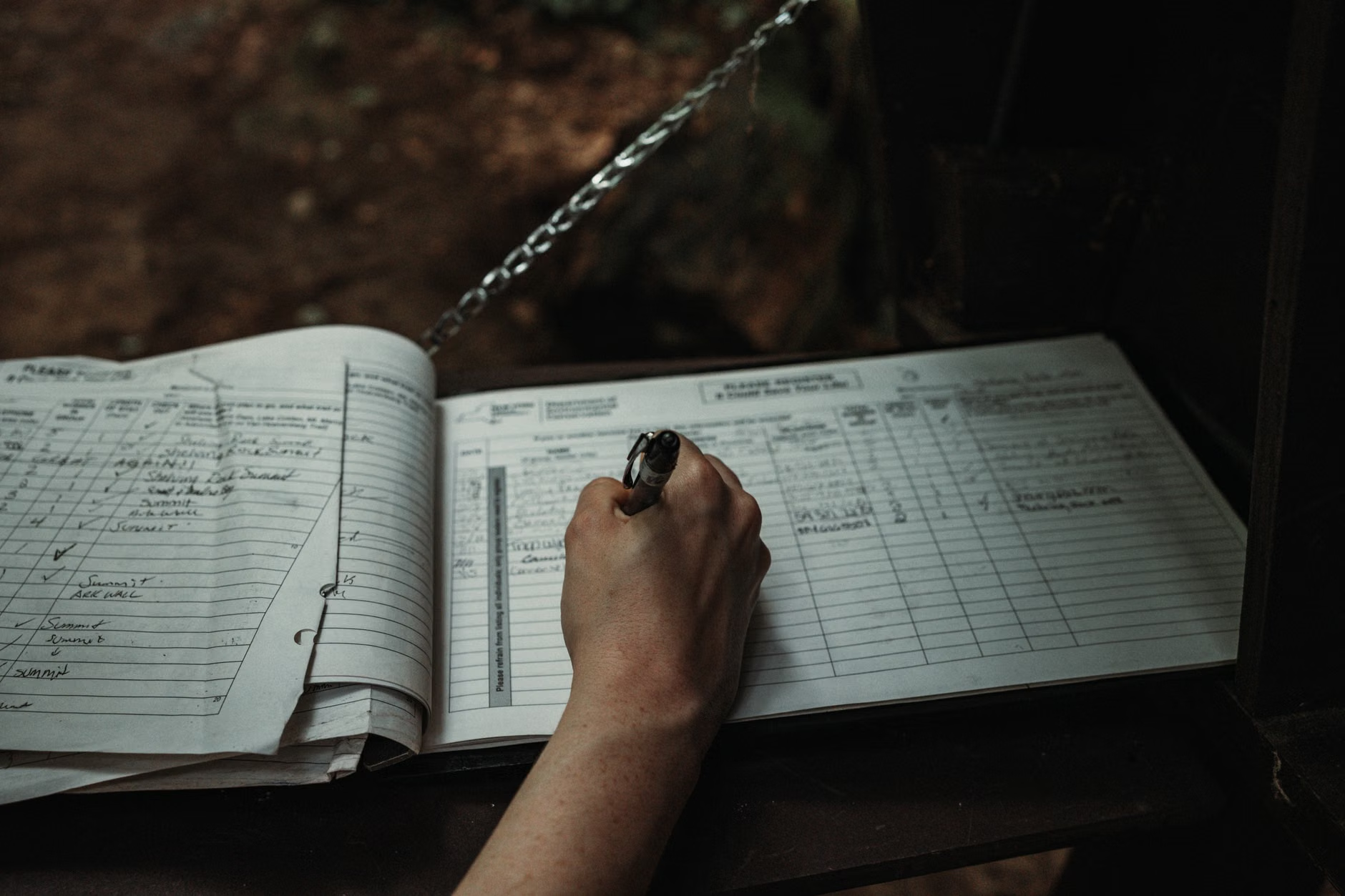
| Notebook | To track patterns and dates. | A simple notes app on your phone. |
| Patience | Birds don’t follow a schedule. | The ability to stand still for 60 seconds. |
If you decide to buy binoculars, look for “8×42” specs. This means 8x magnification and a 42mm objective lens. It’s the gold standard for beginners because it offers a wide field of view, which makes it much easier to actually find the bird you are looking for. Anything more powerful, like 10x or 12x, will make the image jump around every time your hand shakes, which is frustrating when you are trying to track a moving creature.
The Art of the ‘Patch’
In the birding community, a “patch” is a specific area that you visit regularly. It could be your backyard, a local park, or even just the route you take to the school drop-off. The magic of a patch is that it becomes familiar. You start to notice when the seasonal birds arrive or when a specific pair of birds starts building a nest in a bush you’ve walked past a thousand times.
When you focus on a single patch, you stop seeing “a bird” and start seeing individuals. You’ll recognize the bird that always hangs out near the storm drain or the one that has a funny way of hopping. This familiarity is what transforms a casual hobby into a deep, rewarding practice.
To establish your patch, try this simple routine:
- The Morning Check: Spend three minutes while your coffee is brewing looking out the window.
- The Commute Scan: If you are walking the dog or walking to school, look at the trees instead of your feet.
- The Weekend Sit: Once a week, commit to sitting in one place—a park bench or a backyard chair—for 15 minutes without your phone. Just watch.
Technology: Your Digital Field Guide
We are living in a golden age for amateur naturalists. Years ago, you would have needed a massive paper guidebook and a degree in biology to identify a sparrow. Today, you have AI-powered tools that can identify a bird just by its song or a quick photo.
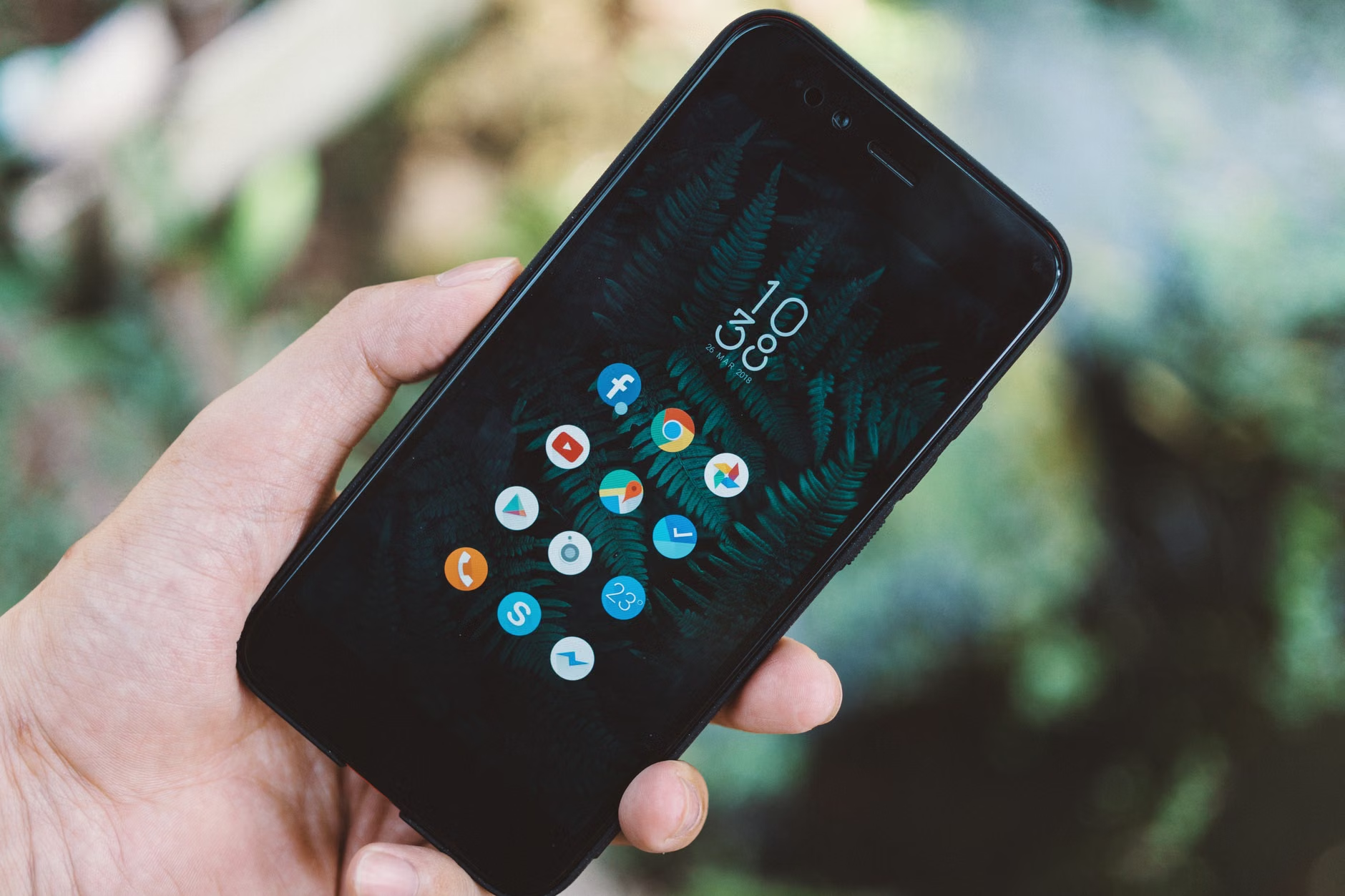
The Merlin Bird ID app, developed by the Cornell Lab of Ornithology, is essentially a superpower for your pocket. You can record the sound of a bird singing, and the app will tell you exactly what it is. It’s incredibly helpful for those of us who have never been taught how to “read” the sounds of nature.
However, a word of caution: don’t let the app do all the work. If you rely entirely on technology, you lose the skill of observation. Use the app to confirm your guesses, not to replace your eyes. Try to describe the bird to yourself first: “It has a yellow chest, a black cap, and it’s about the size of a sparrow.” This descriptive process trains your brain to look for patterns, which is the core of the hobby.
Overcoming the ‘I’m Too Busy’ Barrier
The most common pushback I hear is, “I don’t have time for a hobby.” But birding is unique because it doesn’t require a dedicated “block” of time. You don’t have to go to a class or set up a studio. You do it while you are already doing other things.
If you are a parent, this is the perfect hobby to do with your kids. Children are natural observers. They are already closer to the ground, they move slower, and they have an innate curiosity about animals. Instead of viewing bird-watching as a “parenting task” (like a chore), view it as a shared adventure. “Let’s see how many different birds we can find on the way to the playground” is a much more effective way to get kids to walk to school without complaining.
If you are worried about your children scaring the birds away, don’t be. Part of the lesson is learning how to be quiet and still. It’s a valuable skill for kids to learn, and it’s a great way to practice emotional regulation. If they make noise and the bird flies away, that’s a natural consequence. You can talk about why the bird felt threatened. It’s a biology lesson and a life lesson rolled into one.
Common Mistakes and How to Avoid Them
We’ve all been there: you buy a fancy feeder, fill it with expensive seeds, and then… nothing happens. It can be discouraging. Here are the most common pitfalls and how to steer clear of them.
1. Giving Up Too Soon
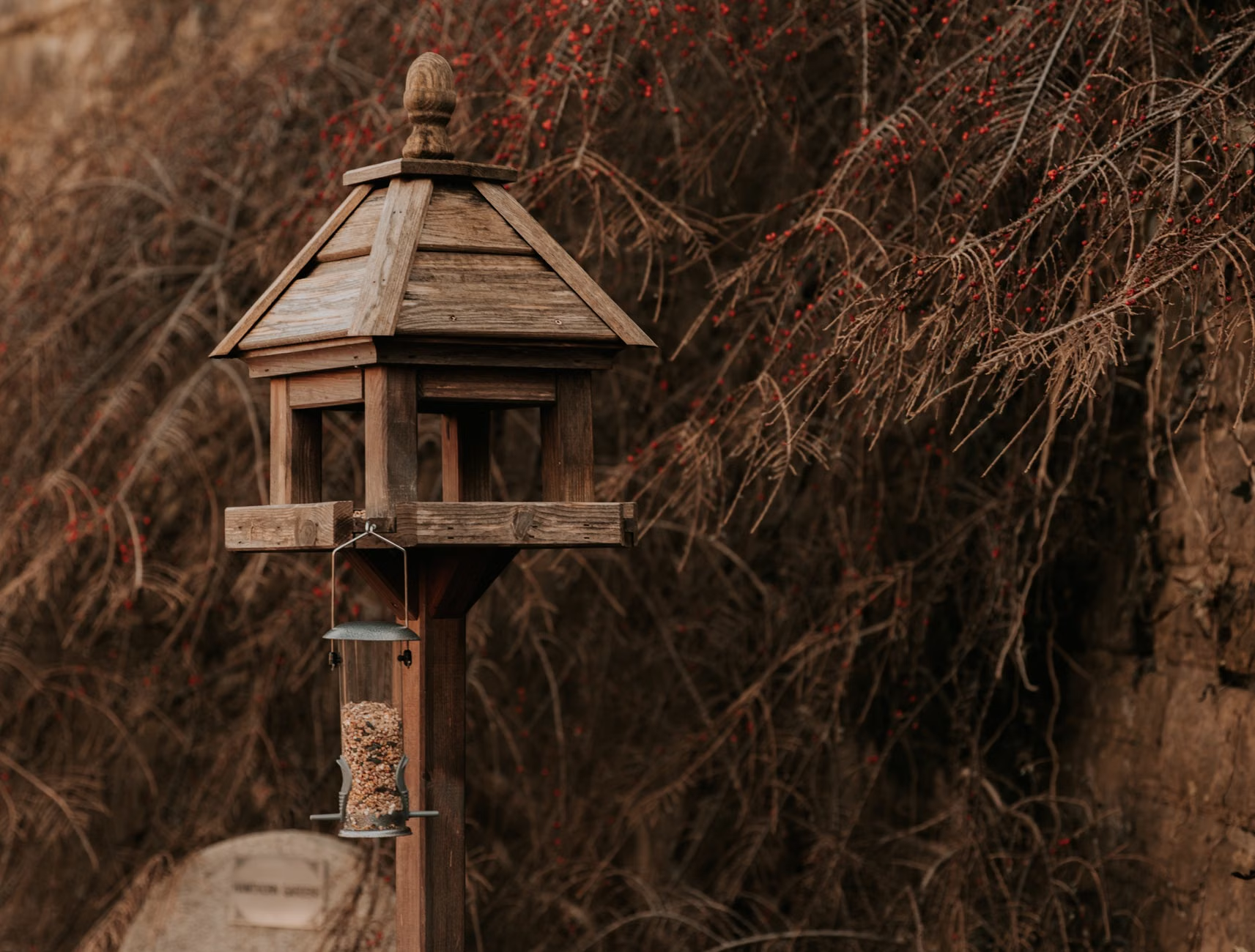
Birds are creatures of habit. If you put up a feeder, it might take a week or even a month for the local bird population to realize it’s there and safe to visit. Don’t pull the feeder down after two days because it’s empty. Consistency is key.
2. Ignoring the Water
People focus heavily on seeds and suet, but water is actually a much bigger draw. A bird bath—or even a shallow tray of water—will attract birds that aren’t interested in your feeder. Birds need to drink and bathe daily, and in many urban areas, clean water is harder to find than food.
3. Forgetting the ‘Edge’ Effect
In ecology, the “edge” is where two habitats meet (like a lawn meeting a tree line). This is where you will find the most bird activity. If you are in a park, don’t stand in the middle of a wide-open field. Stand near the bushes, the fence line, or the pond edge. That is where the birds feel safe.
The Ethics of Hyper-Local Birding
When you start birding, you become an ambassador for your local environment. It’s important to remember that these animals are wild, even if they live in your backyard. The golden rule is: the bird’s welfare always comes first.
If you see a bird that appears to be nesting, keep your distance. If you use a playback feature on an app to attract a bird, don’t overdo it. Constant playing of bird songs can stress the birds out, as they think there is an intruder in their territory. Keep it brief and respectful.
Furthermore, if you are putting out food, keep your feeders clean. Dirty feeders can spread diseases like conjunctivitis among house finches. A quick scrub with hot, soapy water every few weeks is essential. It’s a small price to pay for the joy they bring to your morning coffee routine.
Reflecting on the ‘Quiet’ Benefits
There is a quiet, almost meditative quality to bird-watching that is rarely talked about. In a world where we are constantly bombarded by screens and notifications, the simple act of watching a bird navigate its day is an antidote to digital burnout. You aren’t being sold anything. You aren’t being asked to comment or like or share. You are just witnessing.
For those of us in our 30s and 40s, we are often in the “sandwich” phase of life—caring for children and perhaps aging parents, while managing our own careers. Our mental bandwidth is constantly stretched. Bird-watching provides a “mental reset” that doesn’t require a vacation. It’s a way to reclaim small pockets of time for yourself, even if those pockets are only five minutes long.
You might find that after a few weeks of this, you start to look at your neighborhood differently. You notice the trees that provide cover, the bushes that provide berries, and the way the light hits the park in the afternoon. You stop being a visitor in your own home and start becoming a part of the local ecosystem.
Moving Forward: A Sustainable Habit
To make this a lasting part of your life, don’t put pressure on yourself to be “good” at it. You don’t need to identify every single bird you see. If you see a “little brown bird” and you can’t figure out what it is, that’s perfectly fine. The joy is in the looking, not necessarily in the naming.
Create a simple rhythm. Maybe you keep a small notepad by the back door to jot down the first bird you see every morning. Maybe you and your partner or kids have a “bird of the week” that you look out for. Whatever keeps it fun and low-stakes is the right way to do it.
The world is loud, fast, and demanding. Bird-watching is the opposite. It’s quiet, slow, and restorative. By focusing on your hyper-local patch, you are proving that you don’t need to go far to find wonder. You just need to open your eyes.
If you want to dive deeper into the science of your local birds, check out these resources:
- The Cornell Lab of Ornithology: The definitive source for bird science and identification.
- eBird: A global platform where you can log your sightings and contribute to real-world science.
- The National Audubon Society: Excellent guides on how to make your backyard bird-friendly.
Frequently Asked Questions
1. Do I need expensive gear to start?
Not at all. Your eyes are your best tool. Start by learning to identify birds by their movement and color. If you decide to stick with it, an entry-level pair of 8×42 binoculars is plenty. Avoid cheap, low-quality binoculars, as they can cause eye strain and make the experience frustrating.
2. How do I attract more birds to my yard?
Water is the biggest attractant. A clean bird bath is more effective than most expensive feeders. Aside from that, try to plant native shrubs and bushes that provide natural food and cover. Avoid using pesticides, as they eliminate the insects that many birds rely on for protein, especially during the nesting season.
3. Is it okay to bird-watch with young children?
Absolutely. It’s a fantastic way to teach patience and observation skills. Keep the sessions short—10 to 15 minutes is plenty for a young child. Focus on the “story” of the bird (what is it doing? where is it going?) rather than the technical name. If they get bored, let them move on. The goal is to keep the experience positive.
Nature isn’t somewhere you go; it’s something you are already in. Whether you have a sprawling garden or just a window looking out onto a busy street, there is a world of life waiting for you to notice it. Start small, stay curious, and enjoy the view.