The most effective way to maintain a thriving landscape while reducing your utility bills is to switch to a low-energy smart irrigation controller that adjusts watering schedules automatically based on real-time local weather data.
Key Takeaways
- Efficiency: Smart controllers use hyper-local weather data to prevent overwatering, saving up to 50% on outdoor water usage.
- Low-Energy Tech: Modern devices utilize low-power connectivity (like LoRaWAN or Zigbee) to minimize electricity consumption while maintaining constant monitoring.
- Set-and-Forget: Once configured, these systems require minimal manual intervention, freeing up your time for family and work commitments.
If you are in your 30s or 40s, your “to-do” list is likely already overflowing. Between school runs, professional meetings, and the never-ending cycle of household maintenance, the last thing you want to worry about is whether you remembered to turn off the sprinklers before a rainstorm. Yet, we all want a green space that feels like a sanctuary rather than another chore.
The frustration of “water waste” is real. Not only does it hit the wallet, but it also feels increasingly irresponsible in a world where resource conservation is becoming a top priority for families. This is where the evolution of low-energy smart irrigation enters the conversation. It is not just about gadgets; it is about reclaiming time and resources.
Understanding the Mechanics of Smart Irrigation
At its core, a smart irrigation controller is a device that replaces your traditional, timer-based sprinkler clock. Traditional controllers are “dumb”—they run on a rigid schedule regardless of whether it is pouring rain or scorching hot. If you set them to run at 6:00 AM on Tuesday, they will run at 6:00 AM on Tuesday, even if a thunderstorm is currently flooding your lawn.
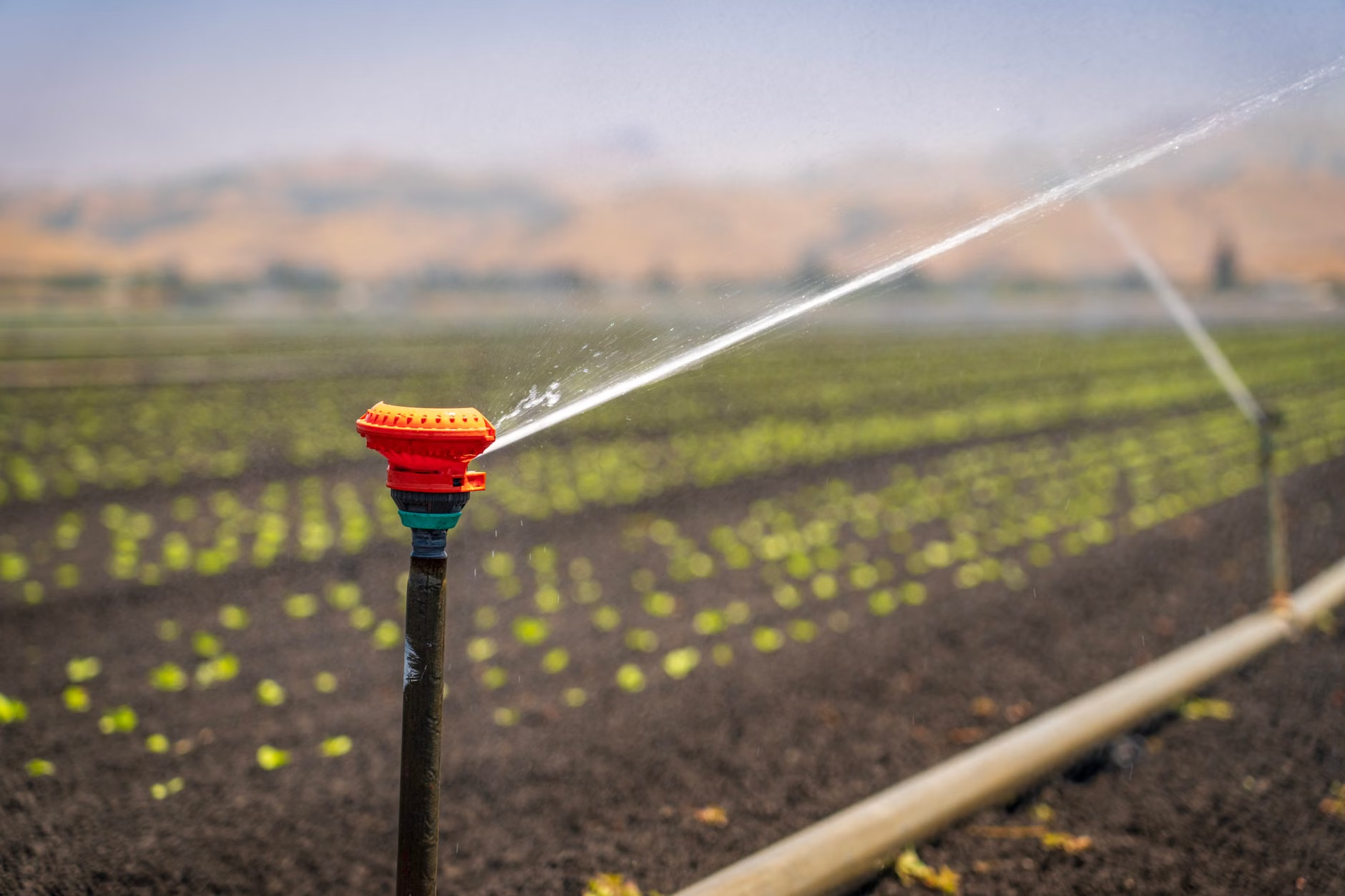
Smart controllers, by contrast, are reactive. They connect to the internet via your home Wi-Fi or, in the case of ultra-low-energy versions, via dedicated long-range, low-power protocols. They pull data from local weather stations and soil moisture sensors to determine exactly how much water your plants need. If the forecast calls for a 90% chance of rain, the controller simply skips the cycle. If there is a heatwave, it adjusts the duration to ensure your plants survive without drowning them in excess.
The “low-energy” aspect is particularly important. Many early smart devices were power-hungry, requiring constant connectivity and high-speed data processing. Newer models are designed with energy efficiency in mind, using low-power chips that can run on minimal current, or even battery-powered setups that last for months or years. This makes them ideal for homeowners who want to reduce their home’s overall “vampire power” load—that silent energy drain from all the devices plugged into your walls.
Why Low-Energy Matters for Your Household
When we talk about “smart” technology, there is often a fear of complexity. Will this be another app that requires constant troubleshooting? Will it break my home network? The beauty of the current generation of low-energy irrigation controllers is their simplicity. They are designed for the “set-it-and-forget-it” lifestyle.
Beyond the convenience, consider the environmental and economic impact. According to the Environmental Protection Agency (EPA), as much as 50% of the water used for irrigation is wasted due to evaporation, wind, or runoff caused by inefficient systems. For a family living in a suburban area, that is thousands of gallons of water annually that could be saved. By optimizing your system, you are not just saving money on your water bill; you are actively contributing to the health of your local watershed.
Furthermore, these devices often integrate with broader home automation systems. If you are already using platforms like Home Assistant or Apple HomeKit, a low-energy controller can become part of your home’s “brain.” You can get notifications if a pipe bursts, monitor water usage trends through a dashboard, or even manually trigger a cycle from your smartphone while you are sitting in a meeting or waiting in the carpool line.
Choosing the Right System: What to Look For
Not all smart controllers are created equal. When browsing for your home, focus on these three criteria:
| Feature | Why it matters |
|---|---|
| Weather Sensing | Ensures the system reacts to rain, wind, and temperature changes in real-time. |
| Energy Protocol | Look for Zigbee, Z-Wave, or low-power Wi-Fi to keep your home’s energy footprint small. |
| Sensor Compatibility | Ability to add soil moisture sensors for the most accurate, plant-specific watering. |
When evaluating these systems, look for compatibility with your existing valves. Most smart controllers are essentially a drop-in replacement for the wiring hub of your current sprinkler system. If you have basic DIY skills, you can usually swap out the old controller for the new one in about an hour. However, always check the voltage requirements—some older residential systems use 24V AC, and you must ensure your new controller matches that standard.
Another factor is connectivity. If your garden is large or the controller is located in a garage far from your router, standard Wi-Fi might struggle to maintain a connection. In these cases, look for systems that use mesh networking or long-range protocols. These systems “talk” to each other, creating a stronger, more reliable signal that doesn’t rely on being right next to your home’s main internet gateway.

The Practical Side: Installation and Maintenance
Installing a smart controller is one of the most rewarding weekend projects. Before you begin, take a photo of your existing wiring. This is your “map.” Every wire corresponds to a specific zone in your garden. Keeping this reference handy will save you from a major headache later.
Once the unit is mounted and wired, the setup happens entirely through an app. You will likely be asked to input your location so the device can pull data from the nearest meteorological station. Some advanced users prefer to install a localized weather station or soil moisture sensor, which provides even more granular data. For most, however, the “cloud-based” weather data provided by the manufacturer is more than sufficient.
Maintenance is minimal. Because these devices are “smart,” they usually perform self-diagnostics. If a valve fails or a wire is cut, the app will ping your phone with a notification. Compare this to the “old way,” where you might not notice a broken sprinkler head for weeks, only realizing it when you see a massive puddle or a patch of dead grass. The early warning system alone pays for the device in saved water and avoided landscaping costs.
Common Pitfalls and How to Avoid Them
Even the best technology can fail if it is poorly implemented. Here are a few mistakes I have seen people make when upgrading their irrigation systems:
- Ignoring Soil Type: Different soils (clay vs. sandy) hold water differently. A smart controller needs to know what kind of soil you have to calculate run times correctly. Don’t skip the setup questions regarding soil composition.
- Over-automating: Sometimes, the “smart” features are too aggressive. If your lawn looks a bit dry, don’t be afraid to manually override the settings for a day or two. The goal is to assist your garden, not to let the machine dictate its health completely.
- Neglecting Winterization: Even a smart controller cannot stop water from freezing in your pipes. You still need to follow standard procedures for blowing out your lines or shutting off the main water supply before the first freeze of the season.
There is also the “Wi-Fi dropout” scenario. If your internet goes down, what happens to your garden? Most high-quality smart controllers are designed to store their schedule locally. If the Wi-Fi connection is lost, they will revert to a “fail-safe” schedule, ensuring your plants don’t die just because your router had a bad day.
The Future of Your Home Garden
As we move toward more sustainable living, the tools we use in our homes will continue to get smarter and more efficient. Low-energy irrigation is a perfect example of how technology can reduce our impact without adding to our daily stress. It is about working smarter, not harder.
For the parent in their 30s or 40s, this technology represents a small victory. You have checked one more thing off the list, saved a bit of money, and done something positive for the environment. It is not a massive lifestyle overhaul, but it is one of those small, compounding changes that makes managing a household just a little bit easier.
If you are still on the fence, start by monitoring your current water usage for a month. Look at your utility bill and see how much you are paying for outdoor water. The math usually speaks for itself. The investment in a smart controller often pays for itself within two to three seasons through water savings alone, especially in regions with high water costs or strict watering restrictions.
Be patient with the learning curve. These systems are designed to be intuitive, but it may take a few weeks for the controller to “learn” the unique micro-climates of your yard. Once it settles in, you will wonder why you ever relied on a manual timer in the first place.
Frequently Asked Questions
1. Do I need a professional to install a smart irrigation controller?
In most cases, no. If you can handle a screwdriver and follow basic wiring instructions, you can install it yourself. Most manufacturers provide excellent step-by-step videos. However, if you are uncomfortable working with electrical wiring or your existing system is very old/complex, a landscape professional can handle the installation in about an hour.
2. Will my smart irrigation controller work if I lose my internet connection?
Yes. Most reliable smart controllers have “onboard memory.” If they lose their connection to the cloud, they will continue to run the last known good schedule until the connection is restored. You won’t lose your garden just because your Wi-Fi is down.
3. How much water can I actually save with these devices?
The amount varies depending on your climate and current habits, but many users report savings between 30% and 50%. By preventing watering during rain, wind, or high-humidity days, the system eliminates the most common causes of water waste, which adds up significantly over the course of a year.
For further reading on water conservation and smart irrigation standards, you can visit the EPA WaterSense program website, which offers extensive resources on efficient water use in residential landscapes.
Embracing these small upgrades is a great way to build a more resilient and manageable home environment. Take it one zone at a time, and enjoy the extra time you gain back for yourself and your family.