The secret to surviving a long-distance journey with children on a “Quiet-Train” or in a designated quiet carriage isn’t about silencing your kids—it’s about proactive preparation and respecting the shared space of fellow passengers.
Key Takeaways
- Preparation is paramount: Pack “quiet-engagement” kits that focus on low-noise activities like drawing, tactile puzzles, or tablet-based games with headphones.
- Understand the rules: Quiet carriages are not “child-free” zones, but they do require a higher standard of behavioral management regarding volume and movement.
- Proactive communication: If your child is struggling, a quick apology to nearby passengers goes a long way in fostering patience and understanding.
We have all been there. You are standing on the platform, tickets in hand, coffee in the other, and your toddler decides that this is the exact moment to practice their operatic vocal range. You look at your booking and realize—with a sudden drop in your stomach—that you have accidentally reserved seats in the “Quiet Carriage.”
Is this a travel disaster waiting to happen? Not necessarily. The “Quiet-Train” concept, which has become a staple of rail networks from the UK’s LNER to Japan’s Shinkansen and various lines across Europe, isn’t designed to be an exclusionary zone. It is designed to be a sanctuary for people who need to work, rest, or simply travel without the ambient noise of loud phone calls or boisterous conversations. As parents in our 30s and 40s, we are often the ones seeking that silence, but we are also the ones most likely to be traveling with the very people who break it.
Understanding the Quiet Carriage Culture
Before we dive into the “how-to,” we need to define what these spaces actually are. A quiet carriage is not a library; it is not a soundproof vacuum. It is a social contract. Passengers who book these seats are essentially agreeing to a voluntary code of conduct: keep voices down, silence all electronic devices, and avoid moving around the carriage unnecessarily.
When you are traveling with children, the “quiet” aspect can feel like a high-stakes performance. However, most rail operators explicitly state that children are welcome in quiet carriages, provided they can adhere to the general spirit of the rules. The problem arises when parents assume that because they have paid for a ticket, they have a right to let their children be as loud as they want. That is a misunderstanding of public etiquette. The goal is to minimize the “noise footprint” of your family.

This is where our role as parents shifts from “caregiver” to “facilitator.” You aren’t just managing your child; you are managing your child’s interaction with the environment. If your child is in a phase where they are prone to loud outbursts or uncontrollable energy, it is perfectly acceptable—and often recommended—to book seats in a standard carriage instead. But if you find yourself in the quiet zone, you need a strategy.
The “Low-Noise” Engagement Kit
The biggest mistake parents make is relying on “passive” entertainment. A movie on a tablet is great, but if the volume is leaking through the headphones, or if the child is tapping the screen aggressively, it can still be intrusive. You need a curated “low-noise” kit.
What should go into this kit? Think about activities that are tactile, visual, and require zero verbal participation. Here is a breakdown of what works best for different age groups:
| Age Group | Recommended Activities | Noise Level |
|---|---|---|
| Toddlers (1-3) | Silicone sensory toys, reusable sticker books, finger puppets. | Very Low |
| Preschoolers (4-6) | Drawing pads, magnetic drawing boards, shape sorting puzzles. | Low |
| School Age (7+) | Headphone-based gaming, reading, intricate coloring, card games. | Moderate (if contained) |
The key here is avoiding items that have “clicky” buttons, screeching plastic, or require the child to call out to you for help. If you are using a tablet, ensure you have high-quality, over-ear headphones that provide a seal. Earbuds for children often leak sound, which is the fastest way to annoy a neighbor who is trying to draft an email on their laptop.
The Art of the “Exit Strategy”
Even with the best preparation, children are unpredictable. Sometimes, the “Quiet-Train” etiquette requires you to accept that a child simply cannot be quiet at that moment. This is where the “Exit Strategy” comes into play.
If your child is having a meltdown or simply cannot sit still, do not try to “discipline” them into submission while in the quiet carriage. That often leads to more noise (your voice, their crying). Instead, have a plan. Know where the vestibule (the area between carriages) is. If things get heated, calmly stand up, take your child to the vestibule, and let them get their energy out there.

The vestibule is the “pressure valve” of the train. It is usually noisier due to the mechanical sounds of the tracks, which actually helps mask the sound of a child letting off steam. Once they are calm, you can return to your seats. This shows the other passengers that you are aware of the environment and are taking active steps to minimize the disruption. People are generally very forgiving of a parent who is clearly trying to be considerate.
Snack Management for the Quiet Carriage
Food is a double-edged sword. It is the ultimate pacifier, but it can also be the ultimate distraction. In a quiet carriage, the sound of a crinkly bag is surprisingly loud. It cuts through the silence like a knife.
The fix is simple: “de-packaging.” Before you leave home, take snacks out of their noisy, crinkly original packaging and place them into silicone pouches or hard plastic containers. This eliminates the “crinkle factor.” Also, avoid foods that are excessively crunchy—like hard corn chips—if you are in a particularly tense, silent environment. Opt for soft fruits, cheese cubes, or sandwiches. It sounds minor, but in a quiet carriage, these small details prevent you from being the “loud neighbor.”
Quiet carriages often feel more cramped because the expectation is that everyone is staying in their assigned seat. Children, however, have a biological need to move. If you are on a long journey, you must break the trip up.
Plan “walk-about” breaks. Every 45 to 60 minutes, take your child to the buffet car or a different part of the train. Let them walk, stretch, and talk at a normal volume. By giving them these scheduled releases, you reduce the likelihood of them needing to “explode” in their seat. When you return, they are more likely to be settled for another stretch of time.
Also, keep an eye on their feet. A common, unintentional annoyance is the child kicking the seat in front of them. In a quiet carriage, where people are trying to focus, that rhythmic thumping is infuriating. If your child is young, consider bringing a small footrest or a cushion that can help them find a comfortable position without their legs dangling and hitting the seat.
Communicating with Fellow Passengers
We often feel a sense of “parental guilt” when we are in public spaces with children. We assume everyone is judging us. The truth is that most people are just trying to get to their destination. However, the “Quiet-Train” demographic is specific—it’s often business travelers or people who are exhausted and just want a nap.
If your child does make a noise, a simple, non-defensive acknowledgment goes a long way. A quick, quiet “I’m so sorry, we’re working on it,” goes much further than ignoring the situation or, conversely, over-apologizing. You don’t need to be subservient, just polite. You are a passenger with as much right to be there as anyone else, provided you are respectful of the rules.
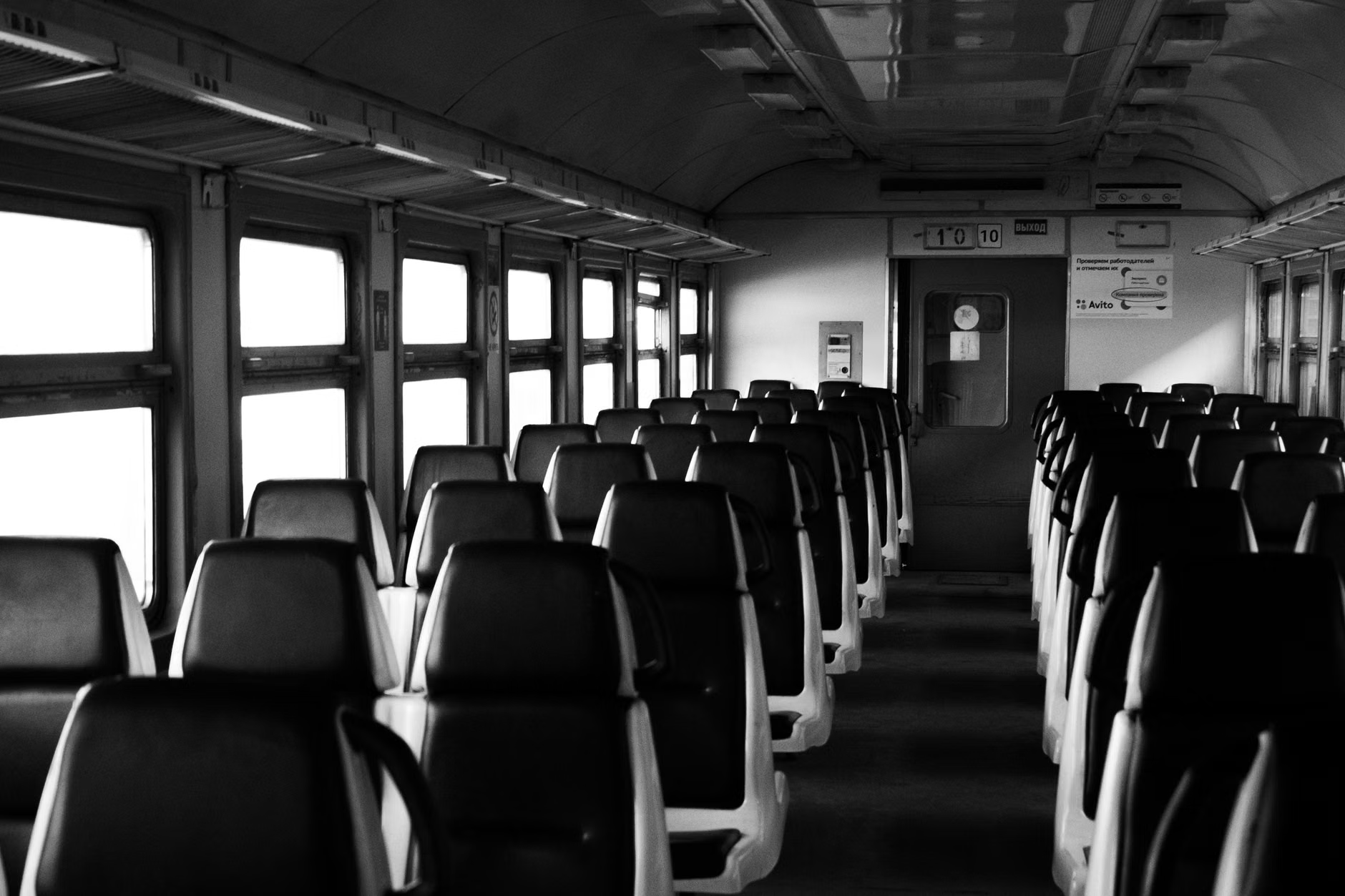
If you find that the carriage is filled with people clearly trying to work, and your child is having a particularly “loud” day, don’t be afraid to ask a staff member if there is space in another carriage. Most conductors are happy to help a parent move to a less restrictive area if the quiet carriage is clearly not working for the child. It’s a win-win for everyone.
The Psychology of the “Quiet Zone”
Why do we choose these carriages in the first place? It’s usually because we are tired. We are balancing work, parenting, and travel, and we want a moment of peace. If we want that peace for ourselves, we have to model it for our children. If you are talking loudly on your phone or having a loud conversation with your partner, your child will naturally follow suit.
You cannot expect a child to be quiet if the adults are not. Set the tone. Use whispers, keep your devices on silent, and model the behavior you want to see. Children are excellent mimics. If they see you respecting the space, they are much more likely to adopt the same attitude. It turns the “quiet” into a game—a “secret mission” to stay silent—which can actually be quite engaging for younger children.
Common Pitfalls and How to Avoid Them
Even with the best plans, things go wrong. Let’s look at the most common mistakes:
- The “Volume Creep”: This happens when you start whispering, but over the course of an hour, your conversation gradually returns to normal volume. Check yourself periodically. If you can hear yourself clearly, you are too loud.
- The “Forgotten Device”: We’ve all done it. You plug in the headphones, but the sound is still coming through the speaker. Always double-check that the audio output is correctly routed to the headphones before hitting play.
- The “Last Minute” Rush: If you are rushing to get on the train, your adrenaline is high, and your child will mirror that energy. Arrive early. Give your child time to settle into the seat and understand the environment before the train starts moving.
By avoiding these pitfalls, you turn a potentially stressful situation into a manageable, even pleasant, part of your trip. Travel is an opportunity to teach our children about social awareness and empathy for others. Being in a quiet carriage is a perfect, low-stakes lesson in being a good neighbor in a public space.
Summary and Final Thoughts
Traveling with children on a “Quiet-Train” is entirely possible and often perfectly fine if you approach it with the right mindset. It’s not about perfection; it’s about preparation and consideration. Focus on low-noise activities, have a clear exit strategy for when things get too much, and maintain a quiet, calm demeanor yourself. You are not an intruder in the quiet carriage; you are a fellow traveler who happens to have a smaller, more energetic companion. By being proactive and respectful, you ensure that both your family and your fellow passengers have a smooth, comfortable journey.
Remember, the goal isn’t to make your child invisible. The goal is to make your family’s presence in the carriage compatible with the environment. If you find that the quiet carriage is simply too restrictive for your child’s current developmental stage, don’t force it. There is no shame in choosing a standard carriage where the atmosphere is naturally more forgiving. Travel should be an adventure, not a test of your endurance.
For more information on train etiquette and travel tips, you can visit the official guides from major rail operators like LNER or the Man in Seat 61, which provides comprehensive advice on rail travel across the globe.
Frequently Asked Questions
Q: Are children strictly forbidden from sitting in quiet carriages?
A: No, most rail operators do not ban children from quiet carriages. However, they do expect all passengers, regardless of age, to adhere to the rules of maintaining a quiet environment. If a child is unable to remain quiet, it is considered good etiquette to move to a standard carriage.
Q: What should I do if my child starts crying in a quiet carriage?
A: Don’t panic. Gently soothe your child, and if they cannot be calmed quickly, move to the vestibule (the area between carriages). This allows your child to release their energy in a space where noise is expected and helps you maintain the integrity of the quiet zone.
Q: How can I prepare my child for a quiet carriage before the trip?
A: Talk to them about the “quiet game” before you board. Explain that the train is a place where people go to rest and that being quiet is a way of being kind to others. Practice using “indoor voices” at home and pack their favorite, non-noisy activities to keep them focused during the trip.