The secret to a stress-free weekend in your 30s and 40s isn’t found in a crowded, expensive music festival three hours away, but right in your own backyard through the rising trend of “local micro-festivals.”
- Reduced Friction: Micro-festivals eliminate the logistical nightmares of travel, parking, and overnight stays.
- Community Connection: These events foster genuine relationships with neighbors rather than anonymous crowds.
- Sustainable Spending: They offer a more affordable, low-pressure alternative to global entertainment giants.
Do you remember the last time you attended a major concert or a city-wide festival? If you are in your 30s or 40s, the memory likely involves a cocktail of excitement mixed with the distinct, nagging anxiety of logistics: “Where will we park?” “Is it too loud for the kids?” “How much is a bottle of water going to cost?” By the time you arrive, you’re exhausted. It’s no wonder that many of us have started retreating from the “mega-event” culture in favor of something much smaller, quieter, and significantly more intentional.
The Shift from Mega-Events to Meaningful Micro-Moments
The term “micro-festival” isn’t just a buzzword; it represents a fundamental shift in how we prioritize our leisure time. As we balance the demands of careers, parenting, and maintaining a household, our “social bandwidth” has shrunk. We no longer have the energy to navigate massive crowds, overpriced food stalls, and the sensory overload of a ten-thousand-person event. Instead, we are seeing a global trend toward hyper-local gatherings—events that take place in community parks, neighborhood streets, or local community centers.
Why now? The answer is rooted in the “experience economy.” For a long time, we were told that bigger was better. If a festival didn’t have a massive headliner, it wasn’t worth the ticket price. But the pandemic, combined with the rising cost of living, has recalibrated our expectations. We are finding that the value of an event is no longer determined by the size of the production, but by the quality of the interaction. A micro-festival—defined as an event with fewer than 500 attendees—allows for a level of intimacy that a stadium concert simply cannot replicate.

The Anatomy of a Micro-Festival: What Makes Them Different?
Unlike traditional festivals that rely on global touring acts and corporate sponsorship, micro-festivals are usually grassroots efforts. They are often organized by local business owners, community associations, or even groups of parents looking to create a space for their children to play safely while enjoying high-quality entertainment. The structure is inherently different:
| Feature | Mega-Festival | Micro-Festival |
|---|---|---|
| Logistics | Complex, travel-heavy | Walking distance/neighborhood |
| Atmosphere | High-intensity, anonymous | Intimate, community-focused |
| Cost | High (tickets, travel, food) | Low (often free or nominal) |
| Audience | Strangers from everywhere | Neighbors and local families |
This structural difference has profound implications for parents. When you attend a micro-festival, you aren’t just a consumer of content; you are a participant in a community. Your children are likely to see their classmates, and you are likely to bump into the neighbor you’ve been meaning to invite for dinner. The stress of “losing” your kids in a crowd is replaced by the comfort of a shared, enclosed space where everyone is looking out for one another.
Why Your 30s and 40s are the Perfect Time for This Trend
In our 20s, we often equated “fun” with “intensity.” We wanted the loud music, the late nights, and the sheer scale of a festival. But as our lives have become more complex, our definition of fun has evolved. We now crave “low-friction” entertainment. We want to be able to leave the house at 2:00 PM and be home by 7:00 PM to start the bedtime routine, without spending three hours sitting in traffic.
Furthermore, there is a growing desire for “slow living” that extends to our social lives. We are increasingly aware of the environmental impact of massive events. Micro-festivals, by design, are more sustainable. They use local vendors, require less transportation, and generate less waste. They align with the values of a generation that is increasingly conscious of its footprint, both carbon and social.
The Psychological Benefit of Small-Scale Socializing
Research into community psychology suggests that “weak ties”—the brief, friendly interactions we have with people who are not our close friends or family—are essential for our well-being. A micro-festival is the perfect incubator for these ties. You aren’t committed to a three-day, deep-dive friendship; you are simply sharing a space and a moment. This is significantly less draining for an introvert or a busy parent than navigating a large-scale social event.
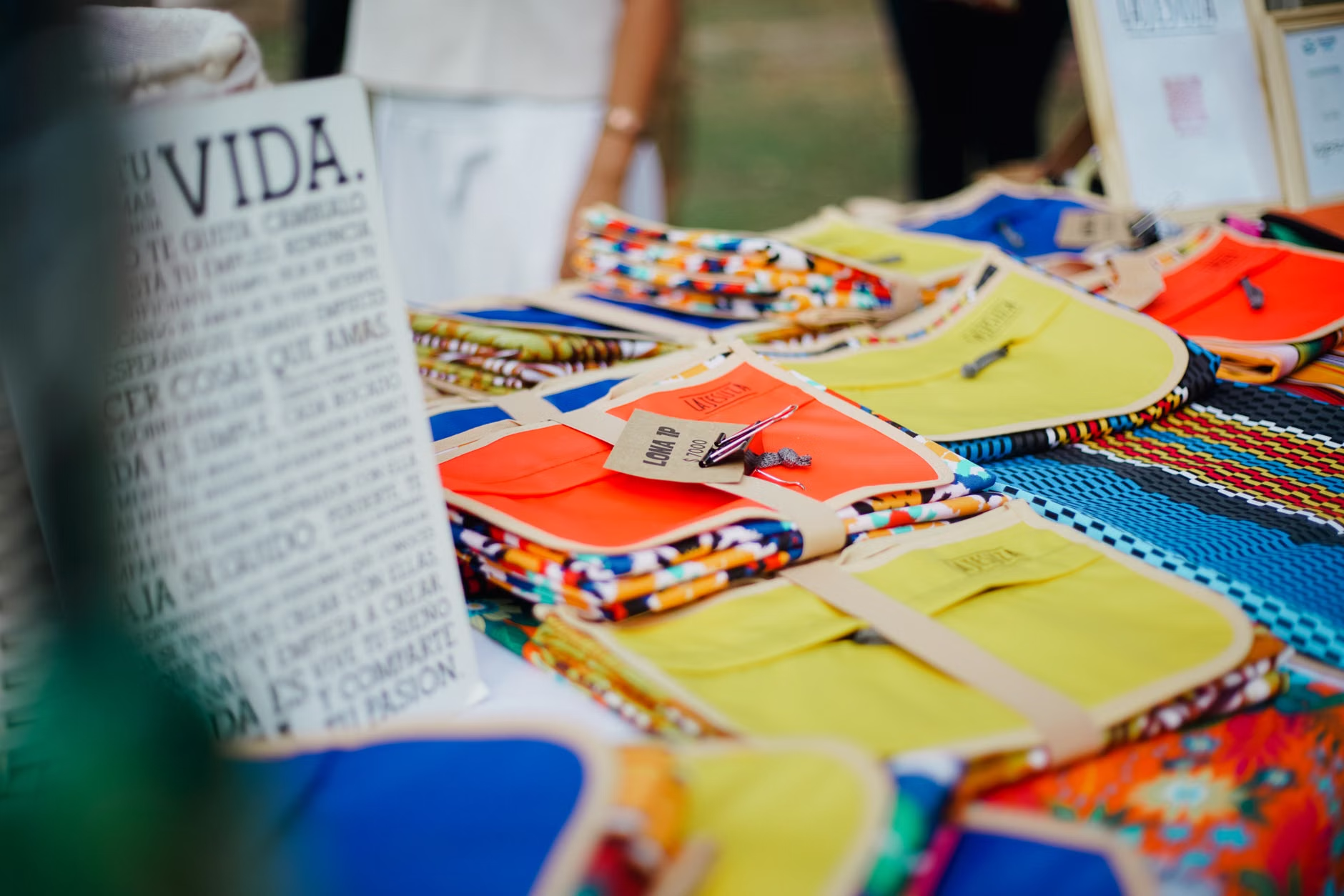
Additionally, the “local” aspect creates a sense of place. When you attend an event in your town, you are investing in your own neighborhood. You are supporting local artisans, local musicians, and local food trucks. This creates a positive feedback loop: the money you spend stays in your community, which makes your neighborhood a better place to live, which in turn leads to more, and better, micro-festivals.
Practical Advice: How to Find and Evaluate Micro-Festivals
If you’re ready to trade the massive crowds for a more grounded experience, you might be wondering where to start. These events are often not advertised on global ticket platforms like Ticketmaster or Eventbrite. They live on hyper-local channels.
- Check Community Bulletin Boards: Look at your local library, community center, or the physical boards at your local coffee shop.
- Utilize Local Facebook Groups: While social media has its flaws, local “Community Notice” or “What’s Happening in [Your Town]” groups are goldmines for micro-festival announcements.
- Follow Local Makers and Musicians: If you find a band or an artisan you like, follow them on social media. They are the ones most likely to be playing or vending at these smaller, community-focused events.
- The “Two-Block Rule”: If you see a flyer for an event happening within two blocks of your home, make it a priority to attend. These are the events that define the character of your neighborhood.
When evaluating whether a micro-festival is worth your time, look for transparency in their planning. A well-organized micro-festival will have a clear schedule, a list of vendors, and, crucially, an FAQ section on their website or social media page that addresses parking, accessibility, and whether the event is family-friendly. If an event doesn’t provide these basic details, it’s a sign that the organizers might be overwhelmed, which can lead to a chaotic experience.
Managing Expectations: The “Anti-Glamour” Reality
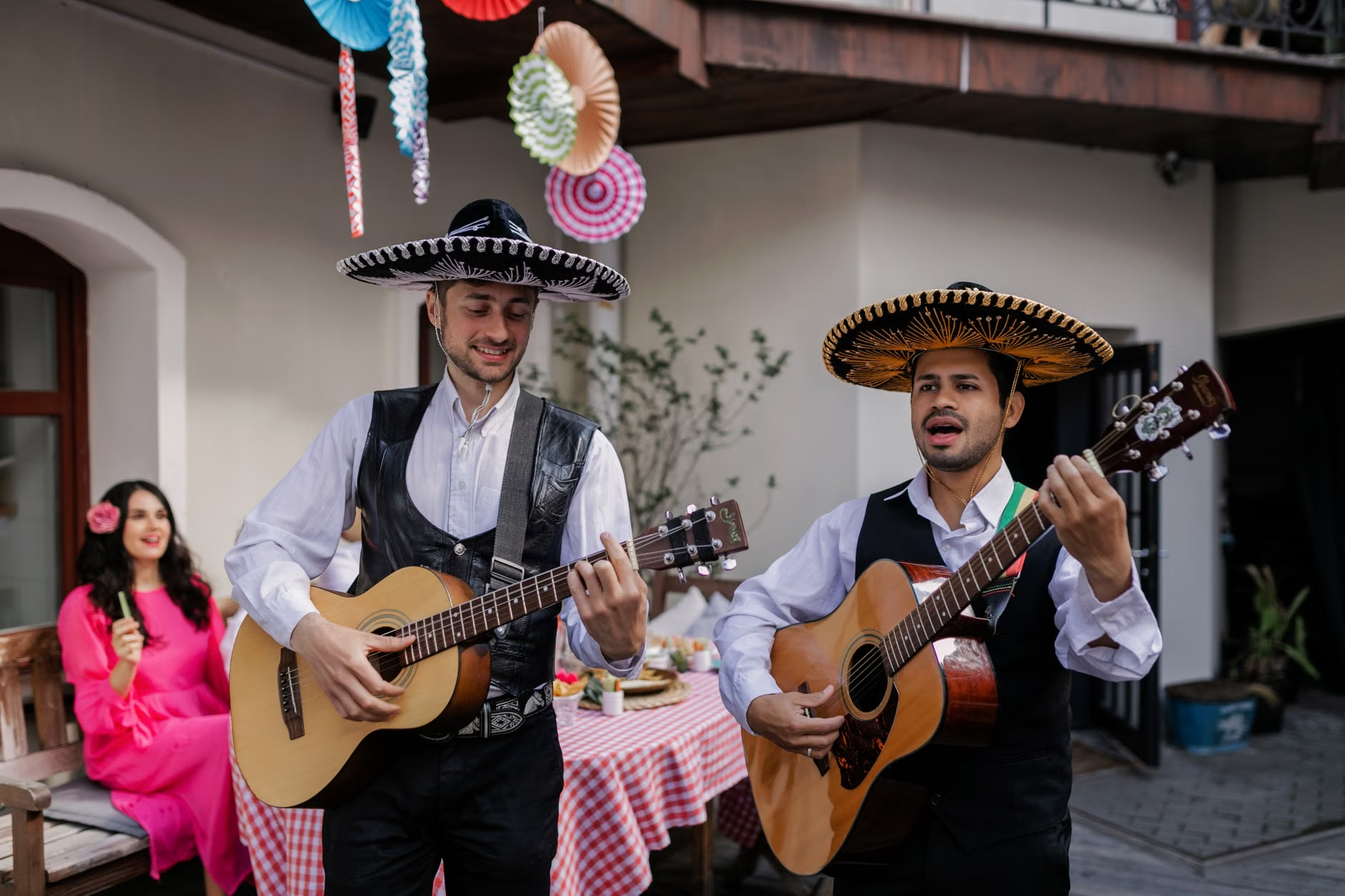
It is important to be realistic. A micro-festival will not have the high-gloss production of a Coachella or a Lollapalooza. The sound system might be a bit tinny. The food options will be limited to three or four local trucks rather than a global culinary tour. There might not be a massive light show or an expensive pyrotechnic display.
If you go in expecting a “spectacle,” you will be disappointed. You must approach these events with a mindset of “connection” rather than “consumption.” The joy of a micro-festival comes from the fact that it is a bit rough around the edges. It’s the sound of a local kid trying to sing a song, the taste of a cookie baked by a neighbor, and the sight of your own town transformed into a place of celebration. Embracing this “anti-glamour” is the key to enjoying the experience.
Common Mistakes When Attending Local Events
Even with smaller events, there are pitfalls that can ruin the experience for parents. Here is how to avoid them:
- Over-planning: Don’t try to schedule your entire day around the festival. The beauty of a micro-festival is its spontaneity. Go for an hour or two, see what happens, and leave when the kids get restless.
- Assuming “Family-Friendly” Means “Childcare”: Never assume that an event is a place to drop off your kids. While these events are safe, they are still community spaces. Always plan to supervise your children.
- Ignoring the Weather: Because these events are almost exclusively outdoors, a sudden downpour can be a major disruptor. Always have a “Plan B” (like a local café or a quick retreat home) ready.
- Underestimating the Value of Cash: While many vendors now accept digital payments, small local events can have spotty internet connectivity. Always carry a small amount of cash to avoid being the person stuck at the front of the line.
The Long-Term Impact on Community Health
There is a broader societal argument for the rise of micro-festivals. In an era where we are increasingly polarized and isolated behind screens, these small, physical gatherings act as a vital social glue. When you sit next to someone on a picnic blanket at a neighborhood park, you are forced to break down the digital silos that usually separate us. You hear about the local school board issues, the upcoming road construction, or just a good book recommendation.
This is “low-stakes” democracy in action. By participating in your local micro-festival, you are helping to build a more resilient community. You are creating a network of people who know each other’s faces, which makes it easier to organize larger, more impactful community initiatives later on. It’s not just about having a nice afternoon; it’s about participating in the health of your own backyard.
Reflecting on the Future of Our Social Lives
As we move further into the decade, it is likely that the “micro-festival” trend will continue to grow. We are reaching a saturation point with digital entertainment. We are tired of the “fear of missing out” (FOMO) that comes with global events we aren’t at. We are trading that for the “joy of being here” (JOMO)—the satisfaction of being exactly where we are, with the people who live around us.
This shift isn’t just a trend; it’s a correction. It’s a move away from the unsustainable, high-pressure models of the past and toward a more human-scale way of living. For parents in their 30s and 40s, this is a welcome change. It allows us to reclaim our weekends, reduce our stress, and build a sense of belonging that no mega-festival could ever provide.
If you haven’t yet, take a look at your local community calendar this weekend. You might be surprised to find that the best event of the year is happening just a few streets away, with no ticket lines, no massive crowds, and no need to pack a suitcase. Sometimes, the best way to expand your horizons is to look closer to home.
Frequently Asked Questions
Q: Are micro-festivals really cheaper than traditional events?
A: Generally, yes. Many micro-festivals are free to enter because they are supported by local business associations or community grants. Even when there is an entry fee, it is usually a fraction of the cost of a major festival, and you save significantly on travel, parking, and accommodation costs.
Q: How can I start my own micro-festival if my neighborhood doesn’t have one?
A: Start small. You don’t need a permit for a massive event to start. Begin with a “block party” or a “picnic in the park” for your immediate neighbors. Use a platform like Nextdoor or a simple email list to gauge interest. Once you have a core group of people interested, you can reach out to your local council or community center to discuss using public space for a larger, more organized event.
Q: Are these events actually safe for young children?
A: Most micro-festivals are designed specifically with families in mind. Because they are localized, they are far less likely to have the crushing crowds or the security risks associated with massive festivals. However, always check the event’s specific details regarding crowd control and whether they have designated “quiet zones” or family areas.
For more information on community engagement and local event planning, you can explore resources provided by the Project for Public Spaces, which offers excellent guides on how to make your neighborhood more vibrant and connected.