A “Green Lease” is essentially a contractual agreement between a landlord and a tenant that aligns both parties’ interests toward energy efficiency, waste reduction, and lower utility costs, proving that you don’t need to be a homeowner to shrink your carbon footprint and your monthly bills.
- Alignment of Incentives: Green leases solve the “split incentive” problem where landlords pay for upgrades but tenants reap the savings.
- Practical Cost Savings: Small, non-structural changes like smart thermostats and LED lighting can lead to significant annual savings on energy bills.
- Negotiation is Key: You can advocate for green clauses in your lease, such as requests for energy-efficient appliances or permission to install low-impact upgrades.
If you are in your 30s or 40s, you are likely familiar with the “renter’s dilemma.” You want a comfortable, efficient home for your family, but you feel limited by the fact that you aren’t the owner. You watch the energy bill spike in the winter, notice the drafty windows that seem to swallow your heat, and realize that your landlord has little incentive to fix these issues because they aren’t the ones paying the electricity bill.
This is where the concept of the “Green Lease” comes into play. While traditionally reserved for large commercial real estate, the principles of the green lease are trickling down into the residential market. It’s no longer just a buzzword for corporate offices; it’s a framework for how we, as modern renters, can live better and spend less.
Understanding the “Split Incentive” Problem
To understand why green leases matter, we have to talk about the “split incentive.” This is the core reason why many rental properties are energy-inefficient. In a typical scenario, the landlord owns the property and decides on the appliances, insulation, and windows. However, the tenant pays the utility bills.
Because the landlord doesn’t see a financial benefit from lower energy usage, they often choose the cheapest possible appliances or the least expensive insulation during renovations. The tenant, meanwhile, is stuck paying higher monthly costs but lacks the permission or the legal right to make permanent, structural changes to the property. It’s a classic stalemate.
A green lease seeks to break this. It creates a formal or informal structure where both parties agree to share the benefits of energy efficiency. For example, a landlord might agree to install high-efficiency HVAC systems if the tenant agrees to maintain them properly, or they might split the cost of upgrades in exchange for a longer lease term.
How to Start the Conversation with Your Landlord
You don’t need to be a lawyer to bring up “green” concepts in your next lease renewal. Most landlords are reasonable people who want to keep good tenants. If you frame your request in terms of property value and tenant retention, you are much more likely to get a “yes” than if you just ask for “green stuff.”
When approaching your landlord, focus on the following pillars:
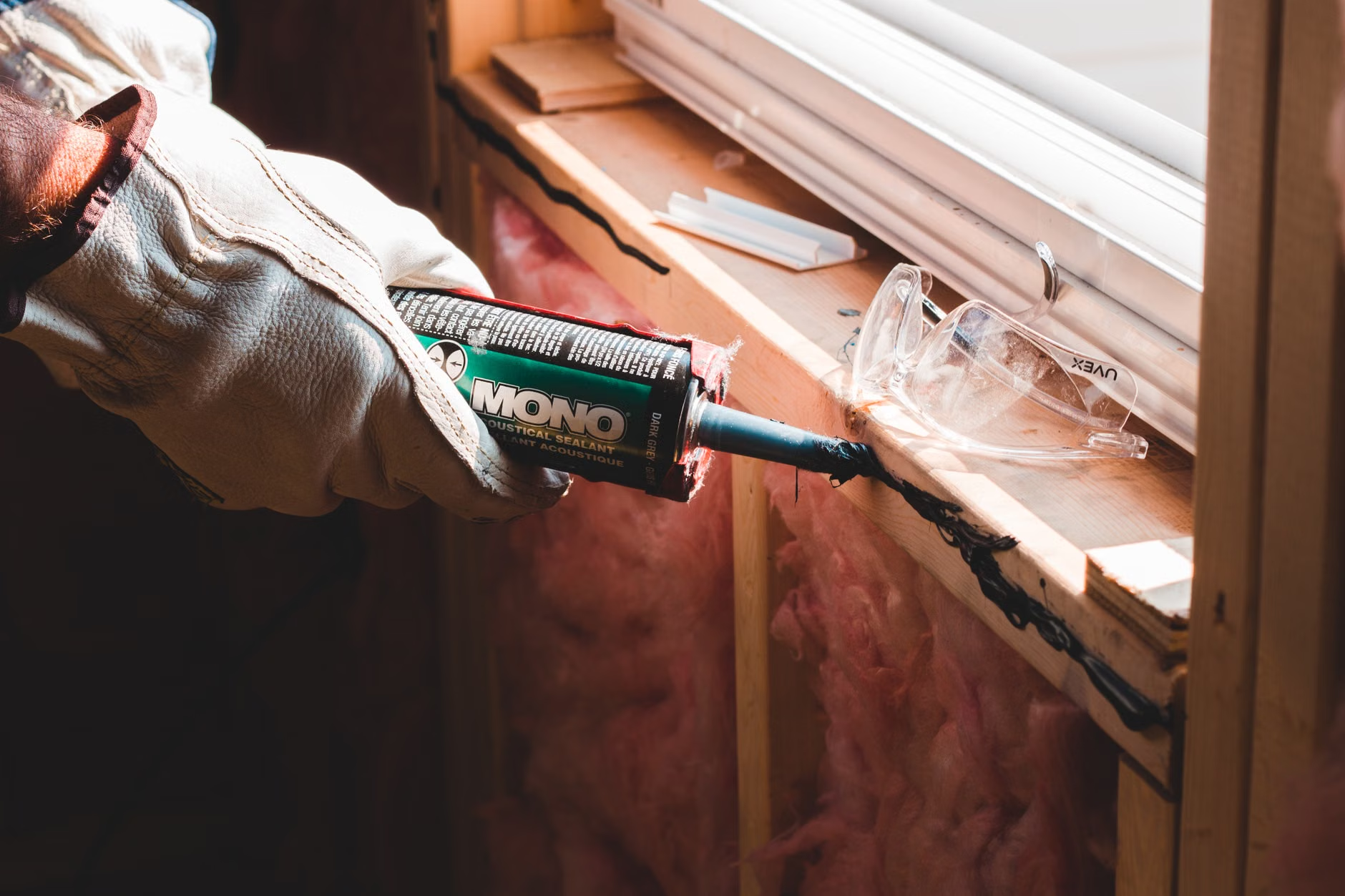
- Maintenance and Upkeep: Point out areas where energy is being lost—like old, cracked weather stripping on doors or windows that don’t seal properly. These are low-cost fixes that save both of you money.
- Appliance Upgrades: If an appliance is nearing the end of its life, suggest a model with a high energy-efficiency rating. You can even offer to pay a small portion of the cost difference in exchange for the long-term utility savings.
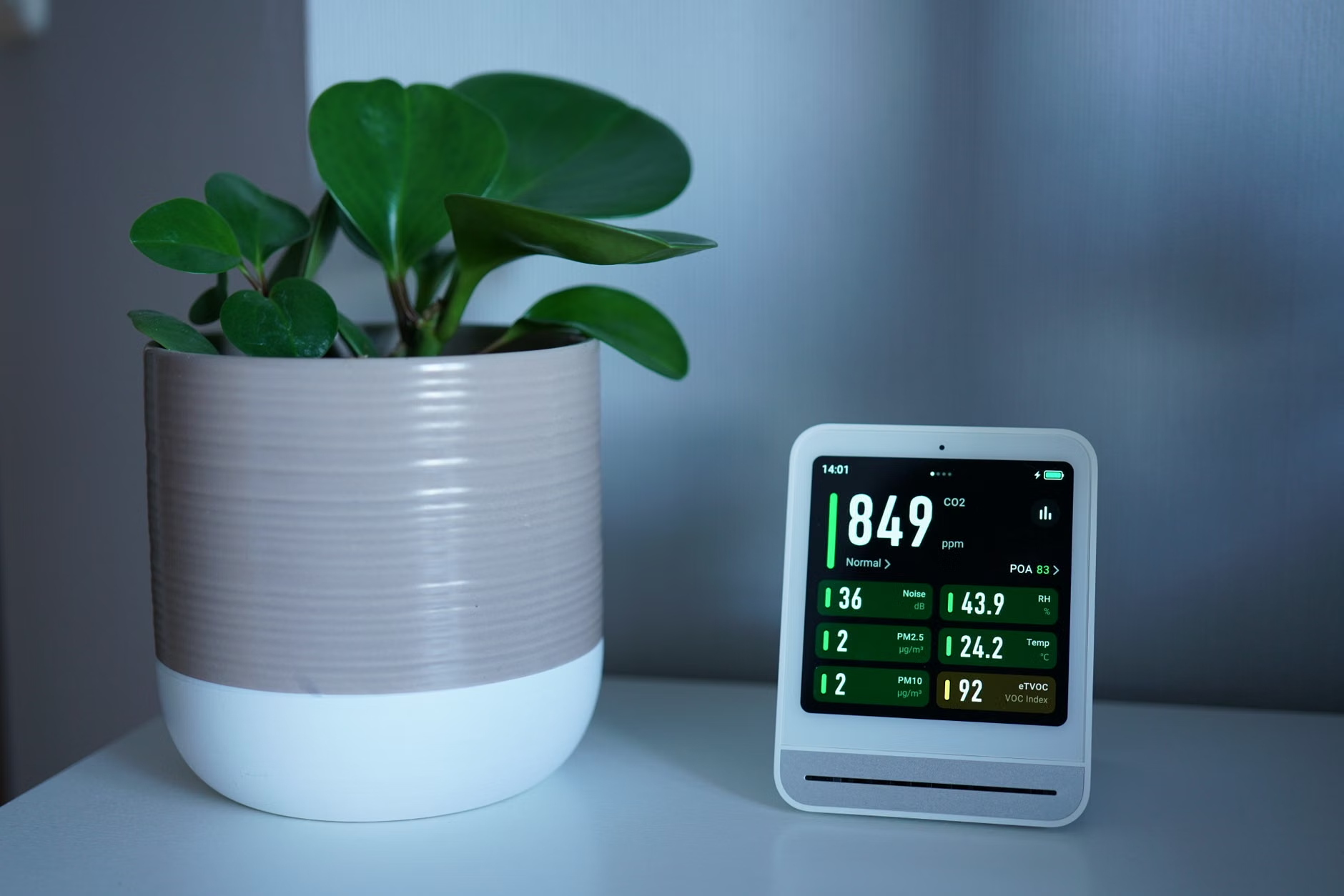
- Smart Technology: Many landlords are open to smart thermostats (like Nest or Ecobee) because they prevent pipes from freezing and provide data on how the home is performing.
It is important to remember that communication should be professional and documented. Send an email summarizing your request so there is a paper trail. Use phrases like, “I’m looking to help lower the utility costs for this unit, which would make it more attractive to future tenants,” rather than just focusing on your own personal savings.
The DIY Side of the Green Lease: What You Can Do Alone
Even if your landlord isn’t interested in a formal green lease agreement, you can still apply the “green” mindset to your daily life. Modern renting is about working with the space you have. You would be surprised at how much energy leaks out of a standard apartment due to poor seals and inefficient lighting.
Here is a breakdown of high-impact, low-effort changes you can make today:
| Action | Cost | Impact |
|---|---|---|
| Install LED light bulbs | Low | High (instant reduction in lighting costs) |
| Apply window film | Medium | Medium (reduces heat gain/loss) |
| Add weather stripping | Low | High (stops drafts) |
| Smart power strips | Medium | Medium (prevents phantom energy drain) |
Lighting is often the easiest win. If you are still using older halogen or incandescent bulbs, switching to LEDs can reduce your lighting energy consumption by up to 75%. Many of these bulbs now come in “warm” tones, so you don’t have to sacrifice the cozy atmosphere of your home for the sake of efficiency.

The Role of Smart Technology in Modern Renting
Technology has made it easier than ever to monitor your home’s “health.” In the past, you had to wait for the utility bill to arrive at the end of the month to see how much energy you used. Now, smart plugs and energy monitors give you real-time feedback.
Why does this matter for a renter? Because you can identify “energy vampires”—appliances that draw power even when they are turned off. This includes gaming consoles, printers, and older televisions. By using a smart power strip, you can cut power to these devices completely when you aren’t using them. It’s a small, automated way to shave dollars off your bill every single month.
Furthermore, if you have a smart thermostat, you can create heating and cooling schedules that align with your family’s routine. If the kids are at school and you are at work, there is no reason to keep the house at 72°F (22°C). Reducing the load during those hours is the most effective way to lower your monthly footprint.
Common Pitfalls and How to Avoid Them
The biggest mistake renters make when trying to go “green” is investing in permanent upgrades that they cannot take with them when they move. If you are going to spend your own money, make sure the investment is portable.
Think in terms of “assets” versus “improvements.” A high-end showerhead is a great investment—it saves water, costs very little, and you can simply unscrew it and take it with you when you move out. A built-in smart light system that requires hardwiring, on the other hand, is a bad investment for a renter because you will likely have to leave it behind or spend money to uninstall it.
Another common pitfall is ignoring the “envelope” of the building. You can buy the most efficient space heater in the world, but if your windows have gaps, you are just heating the outside air. Always prioritize sealing the home before you buy expensive gadgets. A $5 roll of weather stripping tape is often more effective than a $200 high-tech heater.
The Long-Term Value of Efficient Living
As we navigate our 30s and 40s, we are often balancing a dozen different responsibilities—career, children, social obligations, and financial planning. It’s easy to look at energy efficiency as “one more thing” on the to-do list. However, framing it as a “Green Lease” mentality actually reduces stress. It gives you a sense of agency over your environment.
When you take control of your utility usage, you are building habits that will eventually carry over if and when you do decide to purchase your own home. You learn to spot inefficiencies, you understand how to maintain appliances, and you develop a better relationship with your living space.
Moreover, there is an intangible benefit to living in a home that isn’t wasting resources. It’s cleaner, quieter, and often more comfortable. A well-sealed home is less drafty in the winter and stays cooler in the summer, which directly impacts the quality of sleep for you and your family.
Before you start making changes, always check your existing lease. Most standard lease agreements have a clause about “alterations.” This is usually a blanket statement that says you cannot make changes to the property without written consent.
Do not be intimidated by this. Written consent is not hard to get if your request is reasonable. If you want to paint a room a different color, that’s an aesthetic change. But if you want to add low-flow aerators to your faucets to save water, that is an improvement that benefits the property. Most landlords will happily sign off on it if you phrase it correctly.
If you are signing a *new* lease, this is your best opportunity to negotiate. Ask about the energy history of the unit. Ask if the landlord is open to “green” clauses, such as a commitment to install LED lighting before you move in. You have more leverage when you are a prospective tenant than at any other time.
Resources and Further Reading
To stay informed on global standards for sustainable housing, you can look into resources provided by organizations like the World Green Building Council. While they focus heavily on large-scale development, their reports on building performance provide excellent context for what makes a home truly “efficient.”
Additionally, check your local government’s energy portal. Many cities now offer free home energy audits for residents, regardless of whether they own or rent. An energy auditor can come to your home, point out exactly where you are losing energy, and sometimes even provide free materials like LED bulbs or insulation strips.
Summary and Final Encouragement
The “Green Lease” is ultimately about partnership and awareness. By recognizing that you have a stake in the efficiency of your home, you can move from being a passive consumer of utilities to an active manager of your household’s impact. Start small, focus on portable upgrades, and don’t be afraid to communicate your goals to your landlord.
Your home should be your sanctuary—a place that works for you, not against you. By taking these steps, you are not just saving money; you are creating a more comfortable, sustainable environment for your family. It is a quiet, steady way to make a big difference.
Frequently Asked Questions
Q: Can I really ask my landlord to pay for energy-efficient upgrades?
A: Yes, but keep it realistic. It is unlikely they will pay for a new HVAC system, but they may be willing to cover the cost of a programmable thermostat or new weather stripping if you present it as a way to protect the property from moisture and temperature damage.
Q: What is the most effective “green” upgrade for a renter on a budget?
A: Weather stripping and door sweeps are the most effective. They stop the “envelope” of your home from leaking, which is the root cause of high heating and cooling bills. They are cheap, easy to install, and can be removed when you move.
Q: How do I know if an appliance is “energy efficient” or just marketing?
A: Look for official energy rating labels specific to your region (such as ENERGY STAR in the US, or the EU Energy Label in Europe). These are based on standardized testing and are much more reliable than marketing claims like “eco-friendly” or “green.”
Sources: World Green Building Council (worldgbc.org), ENERGY STAR (energystar.gov), and local housing authority energy efficiency guidelines.