Local-micro-festivals are rapidly becoming the preferred weekend antidote for families and professionals tired of the logistical nightmare and sensory overload of massive, commercialized events. By shifting the focus from global headliners to hyper-local artisans, neighborhood food scenes, and community-led workshops, these smaller gatherings offer a more sustainable, affordable, and genuinely relaxing way to spend your limited leisure time.
- Reduced Friction: Micro-festivals eliminate the need for long-distance travel, expensive tickets, and complex childcare logistics.
- Community Connection: These events foster meaningful interactions with neighbors and local business owners, building a stronger sense of belonging.
- Sustainable Leisure: Smaller footprints mean less waste, lower carbon impact, and a higher focus on locally sourced goods and services.
Do you remember the last time you attended a major music festival or a large-scale cultural event? If you are in your 30s or 40s, you probably remember the exhaustion more than the music. Between the two-hour queues for a lukewarm drink, the hunt for a clean restroom, and the constant anxiety of keeping track of your children in a sea of thousands, the “fun” often feels like a full-time job. It’s no wonder that many of us have started retreating to our own backyards—or, more accurately, our own neighborhoods.
The “local-micro-festival” is not a new concept, but it is experiencing a significant renaissance. It represents a pivot away from the “bigger is better” ethos of the early 2000s toward a philosophy of “closer is better.” These events are typically defined by their scale: they are usually neighborhood-based, last for one or two days, and prioritize human-scale interaction over massive production values.
Understanding the Shift: Why Smaller is Gaining Ground
The rise of these events is driven by a convergence of factors. For parents, the primary motivator is simplicity. When you have children, the overhead of a large festival is astronomical. You aren’t just paying for the ticket; you are paying for the hotel, the gas, the babysitter, and the inevitable “meltdown management” that comes with being away from home comforts. Micro-festivals allow you to dip in and out. If the kids get tired, you are ten minutes away from your own living room.
From an economic perspective, micro-festivals are also a reaction to the rising costs of commercial entertainment. Ticket prices for major festivals have skyrocketed, often pricing out the very people who contribute to the local culture. Micro-festivals, often supported by local councils, business improvement districts, or neighborhood associations, are usually free or have a nominal entry fee that goes directly back into the community.
Furthermore, there is a psychological shift at play. We are suffering from “event fatigue.” The digital age has made us feel like we need to be everywhere at once, witnessing the “biggest” moments. Micro-festivals offer a digital detox of sorts. Because they are hyper-local, you are rarely tempted to document every moment for social media. Instead, you are encouraged to actually be present, to talk to the person selling the local honey, or to watch your child engage with a local artist. It is a slow-burn experience rather than a high-octane spectacle.
The Anatomy of a Local-Micro-Festival
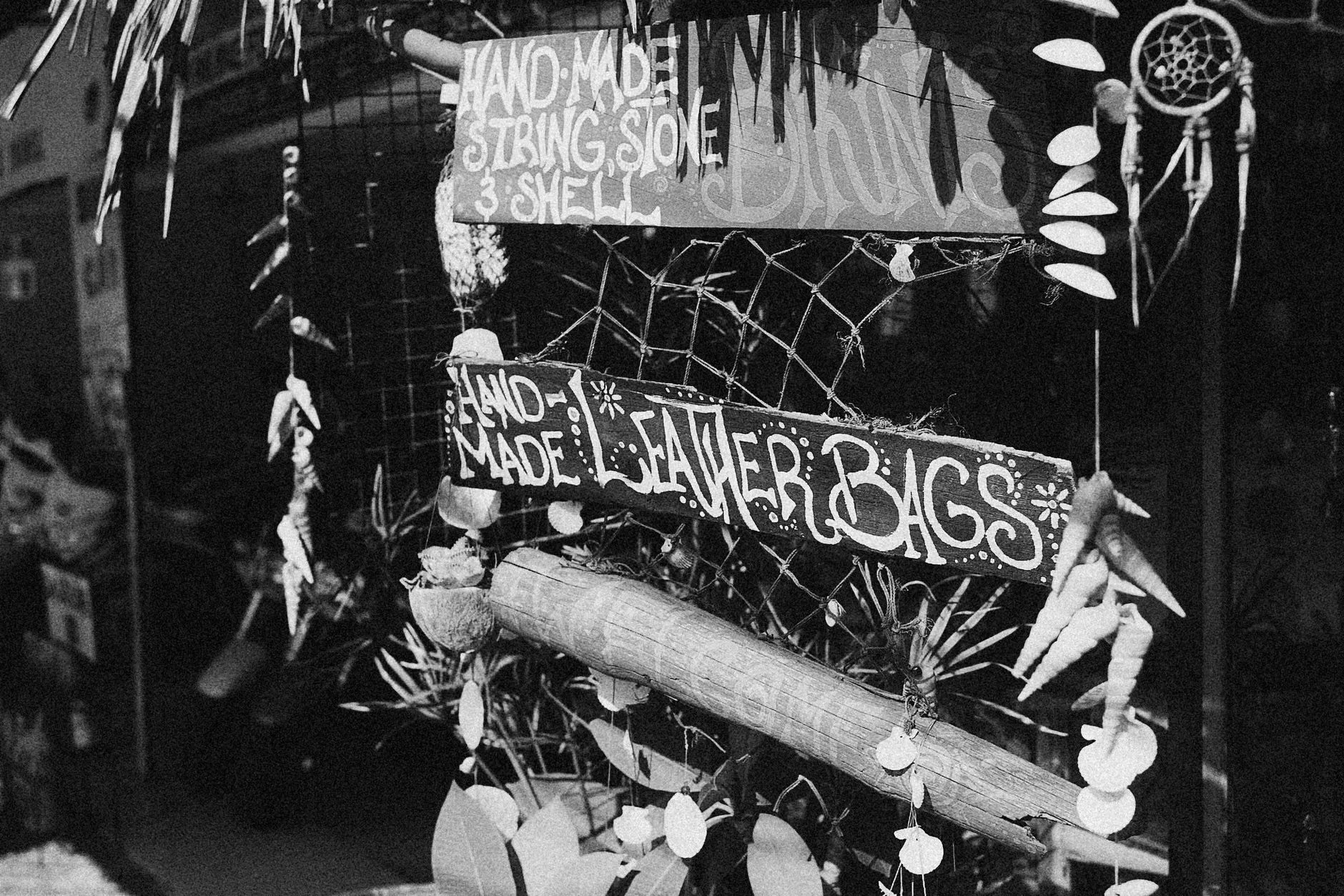
What exactly makes a festival “micro”? It isn’t just about the headcount. It is about the intent. A micro-festival is curated to serve the immediate community. You won’t find global brand activations here; you will find local bakeries, independent bookshops, amateur musicians from the next street over, and neighborhood gardening groups.
To help you distinguish between a standard neighborhood gathering and a true micro-festival, consider the following table:
| Feature | Mega-Festival | Micro-Festival |
|---|---|---|
| Logistics | Flights, hotels, shuttles | Walking, biking, local transit |
| Audience | Global crowds | Local neighbors/families |
| Cost | High entry/vendor prices | Free or low-cost |
| Atmosphere | High-intensity/Spectacle | Intimate/Participatory |
The “why” behind these events is often rooted in civic engagement. Many micro-festivals began as a response to the “hollowing out” of city centers. When small businesses struggle, the local neighborhood loses its identity. These festivals provide a platform for local entrepreneurs to showcase their products, and for residents to rediscover the talent that exists right on their doorstep. It is a form of local economic stimulus, but it feels like a party.
How to Find (and Enjoy) Your Neighborhood Gems
Finding these events requires a different approach than searching for major concerts. You won’t see these advertised on global ticketing platforms or massive billboards. They hide in plain sight.
Step 1: The Digital Hunt
Don’t rely on global algorithms. Check your local council’s website, the Facebook groups for your specific neighborhood, or the “Events” section on local news sites. Often, these events are publicized via physical flyers in local libraries or coffee shops. If you see a flyer, take a photo—that’s your primary source of truth.
Step 2: The “Low-Stakes” Approach
When you go to a micro-festival, let go of the “itinerary mindset.” You don’t need to see every stall or hear every band. The goal is to spend time in a space that feels comfortable. If you find a bench, sit on it. If your kids start playing with other children, let them. The lack of a rigid schedule is the biggest luxury you have as an adult.
Step 3: Contributing to the Ecosystem
Because these are small, they rely on community support. Buy a coffee from the local vendor instead of bringing one from a chain. If there is a donation box for the organizers, contribute a few dollars. These small acts ensure that the festival can return next year. It is a cycle of support that keeps the neighborhood vibrant.
Common Pitfalls and How to Avoid Them
While the micro-festival model is generally more relaxed, it is not without its challenges. The biggest mistake people make is expecting the same level of “service” as a commercial event. You won’t find hundreds of portable toilets, high-speed Wi-Fi, or constant security patrols. You are in a public space, and you are part of the community, not just a customer.
Preparation is key:
Since you aren’t in a controlled stadium environment, you need to be self-sufficient. Bring a portable blanket, sunscreen, water bottles, and perhaps a small bag for trash. Remember, these festivals are often run by volunteers, not a professional events team. If there is a delay in the music or a stall runs out of food, be patient. The charm of the event is its human element, and that includes the occasional hiccup.
Another common mistake is “over-planning.” If you try to force a micro-festival to be a “big day out,” you will be disappointed. These events are designed to be fluid. If you feel like leaving after an hour, leave. There is no sunk-cost fallacy here because you haven’t spent a fortune on tickets.
The Future of Localized Leisure
We are seeing a long-term trend toward “hyper-localism.” As global supply chains become more complex and the world feels increasingly unpredictable, the value of our immediate surroundings has increased. In our 30s and 40s, we are often managing the “sandwich generation” stress—caring for children while balancing career demands. We don’t have the bandwidth for the complexity of global travel for leisure.
Local-micro-festivals serve as a pressure valve. They remind us that we don’t need to go far to experience something new. We can find art, music, food, and community within a three-mile radius of our homes. This isn’t just a trend; it is a sustainable lifestyle shift that values time, connection, and the people we see at the grocery store every Tuesday.

As you look for your next weekend activity, consider skipping the major city center events. Look for the small, the local, and the community-led. You might be surprised by how much more refreshed you feel after a day spent in your own neighborhood compared to a day spent fighting crowds in a city you don’t call home.
Remember, the goal of these festivals is connection. If you go, make an effort to say hello to a neighbor you haven’t met. Ask the local potter about their process. These small interactions are the foundation of a resilient, happy community. And if you find a festival that you love, consider volunteering for the next one. It’s the best way to ensure that these micro-moments continue to grow.
Frequently Asked Questions
1. How can I distinguish between a commercial street fair and a true micro-festival?
A commercial street fair is usually dominated by large, national vendors and standardized corporate branding. A true micro-festival is characterized by local businesses, community-led activities, and a focus on neighborhood identity. If it feels like a “pop-up” for national brands, it’s a commercial fair. If it feels like a gathering of your neighbors, it’s a micro-festival.
2. Are micro-festivals really suitable for young children?
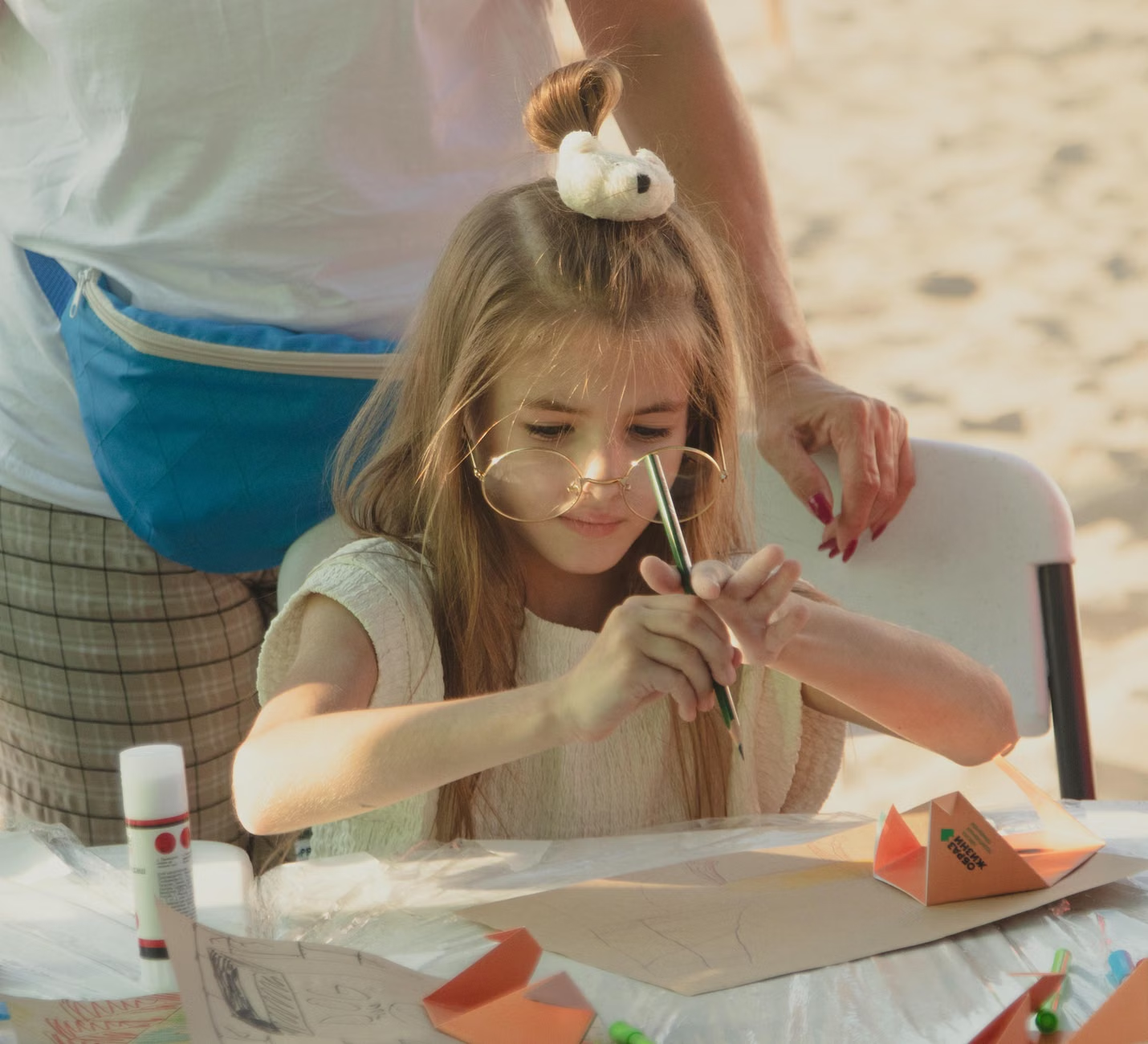
Yes, often more so than large events. Because they are smaller, they are less overwhelming. You aren’t navigating thousands of people, and the noise levels are usually more manageable. However, they lack the “kid-zone” infrastructure of big festivals, so bring your own simple entertainment like a sketchpad or a small toy.
3. What if my neighborhood doesn’t have any micro-festivals?
You might be the catalyst! Start small by talking to a local coffee shop owner or a community center representative. A “micro-festival” can start as a simple “block party” or a “street market.” Community-led initiatives often start with a conversation, not a massive committee. Start by organizing a small gathering, and see where it goes.
For more information on community-led event planning and urban development, you can explore resources from the Project for Public Spaces, which provides excellent insights into how to build more vibrant, community-focused neighborhoods.
Note: Always check local government websites for permits and safety guidelines if you decide to organize your own neighborhood event. Community safety and inclusivity are the pillars of a successful local festival.