Starting a community tool library is the single most effective way to reclaim your garage space and save thousands of dollars on one-time-use equipment, provided you prioritize liability insurance and a dedicated volunteer rotation from the very beginning.
- Inventory Curation over Quantity: Focus on high-demand, expensive items like power washers and miter saws rather than filling shelves with cheap screwdrivers everyone already owns.
- Legal Safety First: Never open your doors without a signed liability waiver and a robust insurance policy that specifically covers “lending library” activities.
- Software is Your Best Friend: Use dedicated inventory management platforms to track loans, manage late fees, and automate reminders, saving your volunteers from administrative burnout.
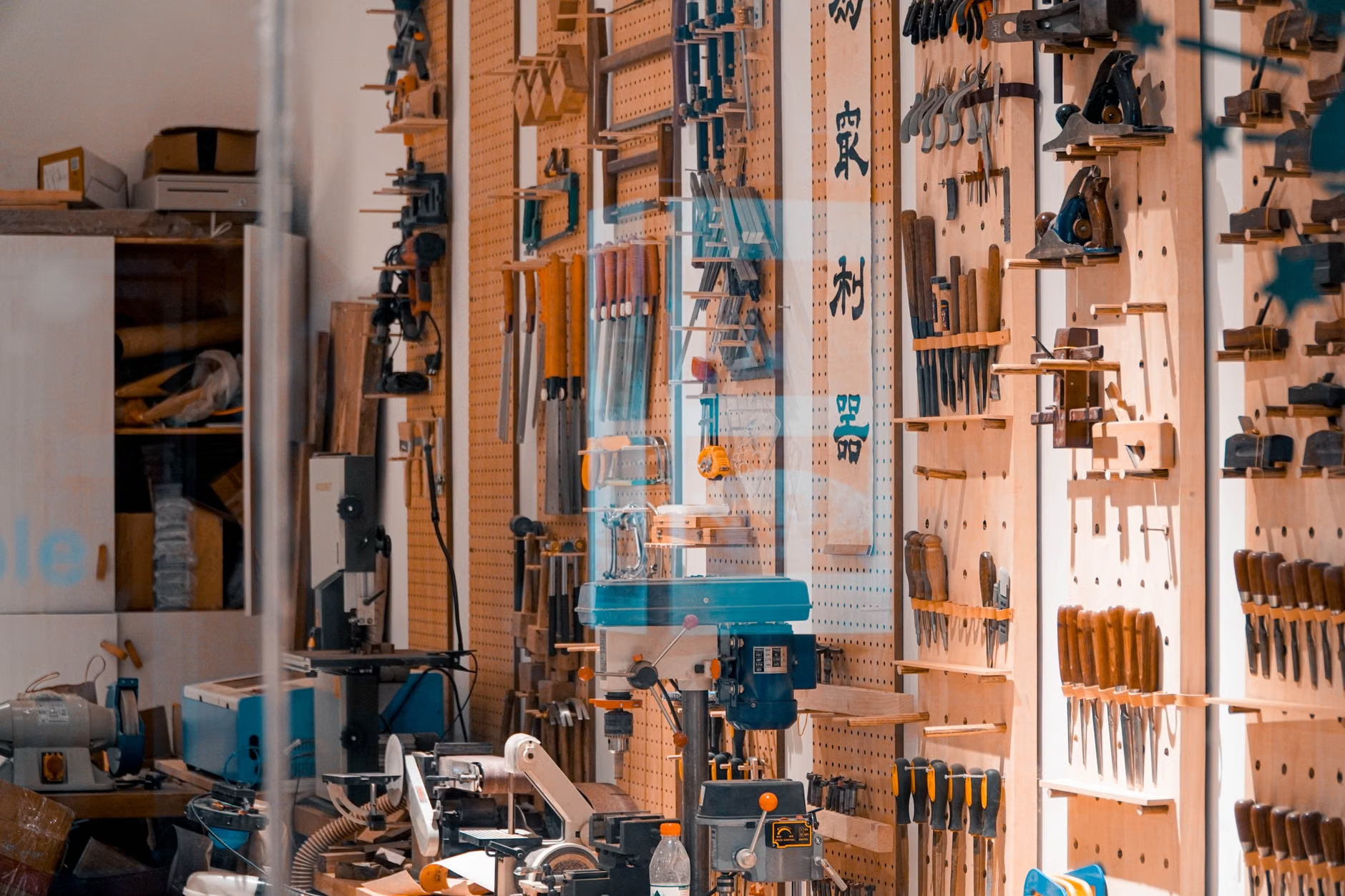
I don’t know about you, but my garage has become a graveyard for “ambitious Saturday morning versions of myself.” There is a tile saw I used once in 2018, a power washer that sees the light of day every two years, and a post-hole digger that I’m pretty sure is just there to trip me when I’m trying to reach the Christmas decorations. For those of us in our 30s and 40s, balancing the demands of kids, mortgages, and the never-ending list of home repairs, the financial drain of these “single-use” tools is frustrating. We buy them because we need them for exactly four hours, and then they occupy expensive real estate in our homes for a decade.
This is where the concept of a Community Tool Library (CTL) moves from “nice idea” to “essential neighborhood infrastructure.” A tool library functions exactly like a book library, but instead of The Great Gatsby, you’re checking out a heavy-duty hammer drill or a long-reach hedge trimmer. It’s a practical, grounded solution to the clutter and cost of modern homeownership. But how do you actually move from a messy garage to a functioning community resource? It isn’t just about putting a sign on your lawn. It requires a bit of strategy, a dash of legal prep, and a solid group of people who are tired of buying things they don’t have room for.
Why Your Garage is a Graveyard for Good Intentions
Before we dive into the “how,” we need to understand the “why” to keep the motivation high when you’re elbow-deep in inventory spreadsheets. The average power drill is used for a total of 13 minutes in its entire lifetime. Think about that. You paid $150 for something that spends 99.9% of its existence doing absolutely nothing. For parents, this isn’t just about the money; it’s about the mental load. Every tool you own is something you have to organize, maintain, and eventually move when the kids need more space for their sports gear.
A tool library solves the ownership vs. access dilemma. By sharing resources, a neighborhood can access professional-grade tools that no individual family would justify buying. It democratizes home repair. It means the family down the street can fix their leaky porch without choosing between a repair bill and their grocery budget. It also builds a specific kind of “social glue.” When you borrow a tool from a neighbor-run library, you aren’t just getting a wrench; you’re getting advice on how to use it, a conversation about the neighborhood, and a sense of belonging that Amazon Prime simply cannot ship to your door.
Building the “Founding Three”: Your Core Team
Do not try to do this alone. I’ve seen many well-meaning DIY enthusiasts burn out in six months because they tried to be the librarian, the mechanic, the lawyer, and the janitor all at once. To start a sustainable tool library, you need a core team of at least three people with distinct “superpowers.”
| Role | Primary Responsibility | Ideal Personality Trait |
|---|---|---|
| The Organizer | Software, scheduling, and memberships. | Obsessively organized, loves spreadsheets. |
| The Mechanic | Tool maintenance, safety checks, and vetting donations. | Handy, patient, knows the difference between a bit and a blade. |
| The Outreach Lead | Fundraising, social media, and neighborhood relations. | Extroverted, persuasive, good at “the ask.” |
The “Organizer” is the one who will pick the software and make sure people actually return the tools. The “Mechanic” (or the Handy Person) ensures that the circular saw being checked out isn’t going to spark and cause a lawsuit. The “Outreach Lead” is the one who convinces the local hardware store to donate their floor models or talks the city council into letting you use a corner of the community center for free.

The Boring (But Vital) Legal and Insurance Shield
Let’s talk about the elephant in the room: liability. What happens if a neighbor borrows your library’s chainsaw and loses a finger? Without the right legal structure, the organizers could be personally liable. This is the part where you need to be 70% serious and 30% cautious. You must establish a legal entity, usually a non-profit (like a 501(c)(3) in the US or a Community Interest Company in the UK). This creates a “corporate veil” that protects your personal assets.
Liability Waivers: Every member must sign a waiver. This document should explicitly state that the member assumes all risk, that they know how to use the tool, and that the library is not responsible for any injury. It won’t make you bulletproof, but it is your first line of defense. Many existing tool libraries share their waiver templates online; don’t reinvent the wheel, but do have a local paralegal or lawyer friend give it a quick look to ensure it meets regional laws.
Insurance: You need General Liability Insurance. Most standard small-business policies don’t quite know what to do with a “tool library,” so you may need to look for “Lending Library” or “Specialty Non-Profit” coverage. Expect to pay anywhere from $500 to $1,200 a year for a solid policy. This might seem steep, but it’s the cost of sleeping soundly at night. You can cover this cost through modest annual membership fees (e.g., $40 per year per household).
Finding a Home: Where Do the Tools Live?
Location is often the biggest hurdle. You need somewhere dry, secure, and accessible. In our 30s and 40s, we don’t have time to drive 45 minutes across town to borrow a ladder. The library needs to be “hyper-local.”
- The Public Library Partnership: Many public libraries are looking to expand into “libraries of things.” They already have the staff, the building, and the check-out software. This is the gold standard if you can negotiate it.
- The Shipping Container: If you have a supportive local park or church, a 20-foot shipping container can be dropped in a parking lot. It’s secure, weather-proof, and relatively inexpensive.
- The Underutilized Garage: Sometimes a local business or a generous neighbor will donate the use of a garage. Just be careful about long-term access and zoning laws.
- The “Mobile” Library: Some groups use a heavy-duty trailer. They park it at the farmers’ market on Saturdays and a park on Sundays. It’s great for visibility but a nightmare for logistics and weight limits.
Curating Your Inventory: Quality Over Random Junk
When you announce a tool library, people will try to give you their trash. You will be offered rusted screwdrivers, broken lawnmowers, and drills from the 1970s that weigh 20 pounds and have frayed cords. Be ruthless in your vetting. A tool library is only useful if the tools actually work.
Start with a “Tool Drive,” but provide a specific “Wish List.” Tell your community exactly what you need. Focus on items that are:
1. Expensive: Things people don’t want to buy (Power washers, sliding miter saws).
2. Bulky: Things people don’t want to store (Extension ladders, long-handled garden rakes).
3. Occasional: Things used once a year (Aerators, tile cutters, carpet cleaners).
The “Essential 50” Starter List
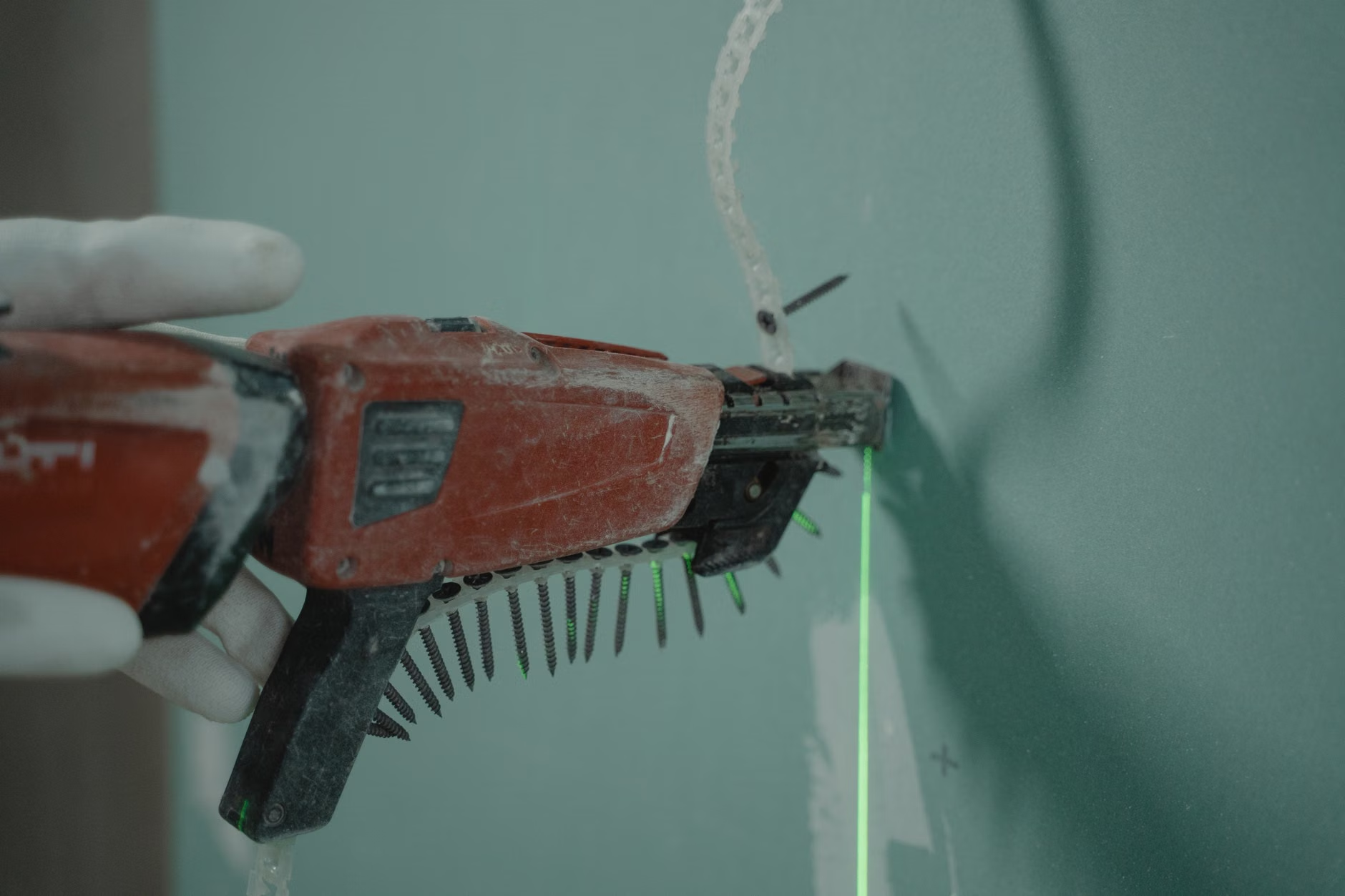
If you have these 50 items, you can handle 90% of household DIY requests. Don’t worry about having ten of each; start with one or two high-quality versions.
| Category | Must-Have Items |
|---|---|
| Power Tools | Cordless Drills, Impact Drivers, Circular Saws, Jigsaws, Orbital Sanders. |
| Lawn & Garden | Lawnmowers (Electric), Weed Whackers, Leaf Blowers, Post-hole Diggers, Pruning Saws. |
| Home Maintenance | 24ft Extension Ladder, Step Ladders, Stud Finders, Laser Levels, Power Washers. |
| Specialty | Carpet Cleaners, Wet/Dry Vacuums, Tile Saws, Pipe Wrenches, Torque Wrenches. |
A note on batteries: If possible, try to standardize your cordless tools to one or two brands (like DeWalt, Milwaukee, or Makita). This allows you to share batteries across multiple tools and simplifies the charging station at your library headquarters. Mixing five different battery platforms is a recipe for a volunteer’s nervous breakdown.
The Tech Stack: Don’t Use a Paper Logbook
It’s tempting to use a notebook or a simple Google Sheet, but you will regret it within a month. You need a system that handles memberships, tracks due dates, and automatically sends “Hey, you’re late!” emails so you don’t have to be the “mean neighbor.”
The industry leaders for this are myTurn and Lend-Engine. These platforms are designed specifically for tool libraries. They allow members to browse the inventory online, reserve tools for the weekend, and pay their dues via credit card. Using professional software makes your library look legitimate, which helps when you’re asking for grants or corporate sponsorships. It also allows you to track “Impact Data”—you can tell your city council, “In our first year, we saved our residents $45,000 in tool purchases and diverted 2 tons of electronic waste from the landfill.” That data is gold.
Operations: The “Three-Check” Safety System
Maintenance is what kills tool libraries. If a member returns a circular saw with a dull blade and the next person tries to use it, they’ll get a bad cut or burn the motor. You need a simple “Three-Check” system:
- The Check-Out: The volunteer and the member quickly look at the tool. “Does it have the guard? Is the cord intact? Does it turn on?”
- The Check-In: When the tool comes back, the volunteer asks, “Did it work okay? Did it make any weird noises?” This is when you catch the “it started smoking a little” issues.
- The Monthly Deep-Clean: Once a month, the “Mechanic” spends a Saturday morning sharpening blades, oiling joints, and blowing dust out of motors with compressed air.
Pro Tip: Attach a “Laminated Instruction Tag” to every major tool. Include a QR code that links to a YouTube video of how to use that specific model. This drastically reduces “user error” damage and keeps your neighbors’ fingers attached to their hands.
Financial Sustainability: Beyond the Launch
The first year is usually funded by a small “Founders’ Grant” or a successful crowdfunding campaign. But how do you keep the lights on in Year Three? You need a multi-stream income model. Relying solely on memberships is risky.
Membership Tiers: Offer a “Basic” tier (e.g., $40/year) and a “Supporter” tier ($100/year for those who want to help the cause). You can also offer “Day Passes” for $10 for people who just need one specific thing once.
Late Fees: Don’t be afraid of them. They aren’t meant to generate profit; they are meant to ensure the tool is available for the next person. A $2-per-day fee is standard. If someone is consistently late, they lose their borrowing privileges. It sounds harsh, but a library without tools isn’t a library; it’s just an empty room.
Workshops: This is where the magic happens. Charge $20 for a “How to Use a Power Drill” or “Build Your Own Planter Box” class. You provide the tools and the expertise; they provide the revenue. This also brings in new members who might be intimidated by the tools themselves.
Common Pitfalls and How to Sidestep Them
I’ve talked to dozens of CTL organizers, and the same few problems pop up everywhere. First: The “Hoarder” member. This is the person who checks out the lawnmower in April and tries to keep it until September. Your software will track this, but you need a clear policy: “Tools can be borrowed for 7 days, renewable once if no one else has reserved it.”
Second: The “Ghost” volunteer. People love the idea of a tool library, but they hate sitting in a cold garage for four hours on a Tuesday night waiting for someone to return a shovel. Keep your hours limited. You don’t need to be open 40 hours a week. Saturday morning (9 AM – 12 PM) and Wednesday evening (6 PM – 8 PM) are usually enough for most communities.
Third: Consumables. Do you provide the sandpaper? The drill bits? The saw blades? Most successful libraries use a “Hybrid Model.” You provide the tool and one basic blade/bit, but you sell high-quality consumables at the front desk. “The drill is free, but the specialized masonry bit is $5 to keep.” This prevents your inventory from being depleted by wear and tear.
Starting a community tool library isn’t a weekend project; it’s a three-to-six-month marathon. But the payoff is immense. You’ll find that once the library is open, the “vibe” of the neighborhood changes. People start talking over fences about their projects. The “expert” DIYer down the street starts mentoring the young couple who just bought their first fixer-upper. The garage clutter disappears, and the “Saturday Morning You” finally has the right tool for the job.
It’s a grounded, practical way to push back against the “buy-and-discard” culture that dominates our lives. It’s better for your wallet, better for your stress levels, and significantly better for the planet. So, stop looking at that dusty tile saw and start looking for two neighbors who are as tired of the clutter as you are.
Official Resources for Starting a CTL:
- ShareStarter – Provides a free “Tool Library Startup Kit.”
- myTurn – The leading software platform for lending libraries.
- LocalTools.org – A directory and resource hub for existing tool libraries worldwide.
Frequently Asked Questions
1. What if someone breaks a tool?
This is the most common fear. Most tool libraries operate on a “good faith” basis. If a tool breaks during normal use (e.g., a motor burns out due to age), the library covers it. If a tool breaks due to obvious negligence (e.g., someone tried to cut a metal pipe with a wood blade), the member is usually asked to pay for the repair or replacement cost. This should be clearly outlined in your membership agreement.
2. How do we prevent theft?
Theft is surprisingly rare in tool libraries because they are community-based. We require a valid ID and a credit card on file for all memberships. When people know their neighbors are watching and their card is linked to the system, they tend to be very respectful. Using GPS trackers on high-value items (like $500 power washers) is also an option for extra security.
3. Can we start a library without a physical building?
Yes, but it’s much harder. Some “virtual” libraries exist where people list tools they own on an app for others to borrow, but this creates massive logistical headaches regarding pick-up times and privacy. A physical “hub”—even if it’s just a locked shed or a mobile trailer—is highly recommended for long-term success.
Starting a community tool library is a journey from individual ownership to collective empowerment. It’s hard work, but seeing a neighbor finish a project they couldn’t afford otherwise makes every spreadsheet and insurance meeting worth it. Good luck, and keep those blades sharp.